
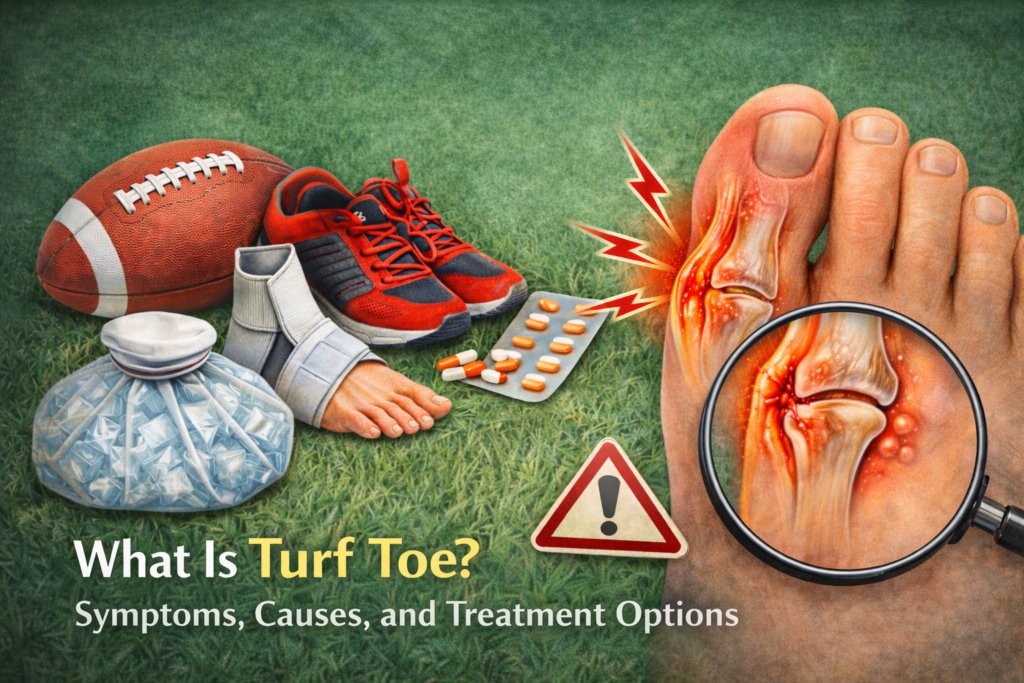
What Is Turf Toe? Symptoms, Causes, and Treatment Options
Foot injuries are common among athletes and physically active individuals, but some conditions are often misunderstood or ignored until they become severe. Turf toe is one such injury. While it may sound minor, turf toe can be painful, limiting, and slow to heal if not managed properly.
This article explains what turf toe is, its symptoms, common causes, treatment options, and how to prevent it from becoming a long-term problem.
What Is Turf Toe?
Turf toe is a sprain of the big toe joint, specifically the metatarsophalangeal (MTP) joint, where the big toe meets the foot. It occurs when the toe is forcibly bent upward beyond its normal range of motion, causing damage to the ligaments, tendons, and soft tissues surrounding the joint.
The injury is called turf toe because it became more common with the rise of artificial turf, which is harder than natural grass and provides less shock absorption. However, turf toe can happen on any surface and is not limited to athletes.
Anatomy of the Big Toe Joint
Understanding the anatomy helps explain why turf toe can be so painful. The big toe joint includes:
- Bones of the big toe and first metatarsal
- Ligaments that stabilize the joint
- Tendons that help move the toe
- Sesamoid bones that absorb pressure during walking and running
When these structures are overstretched or torn, movement becomes painful and unstable.
Common Causes of Turf Toe
Turf toe usually occurs during activities that place repetitive or sudden stress on the big toe. Common causes include:
1. Sports Activities
Athletes in sports such as football, soccer, basketball, rugby, and track are at higher risk. Sudden acceleration, jumping, or pushing off the foot can force the toe into hyperextension.
2. Playing on Artificial Turf
Artificial turf is less forgiving than natural grass, increasing the impact on the foot and toe joint.
3. Improper Footwear
Shoes with thin soles or flexible toe boxes fail to protect the big toe joint, making injury more likely.
4. Repetitive Stress
Repeated pushing off the toe during running or jumping can gradually weaken the joint, leading to injury over time.
5. Previous Foot Injuries
A history of toe, foot, or ankle injuries can increase susceptibility to turf toe.
Symptoms of Turf Toe
Symptoms vary depending on the severity of the injury but often include:
Early Symptoms
- Pain at the base of the big toe
- Mild swelling
- Tenderness when walking or running
- Stiffness in the toe
Moderate Symptoms
- Increased swelling and bruising
- Pain when pushing off the foot
- Reduced range of motion
- Difficulty walking normally
Severe Symptoms
- Severe pain even at rest
- Significant swelling and bruising
- Joint instability
- Inability to bear weight on the foot
Ignoring early symptoms can lead to chronic pain and long-term joint problems.
Types and Severity of Turf Toe
Turf toe injuries are classified into three grades:
Grade 1 (Mild)
- Minor stretching of ligaments
- Minimal swelling
- Pain only during activity
Grade 2 (Moderate)
- Partial tearing of soft tissues
- Noticeable swelling and bruising
- Pain with movement and weight-bearing
Grade 3 (Severe)
- Complete ligament tear
- Significant swelling and bruising
- Severe pain and joint instability
- Difficulty or inability to walk
How Turf Toe Is Diagnosed
A healthcare provider will usually diagnose turf toe through:
- Physical examination to assess pain, swelling, and movement
- Medical history, including activity level and recent injuries
- Imaging tests such as X-rays to rule out fractures
- MRI or ultrasound in severe cases to assess ligament damage
Accurate diagnosis is essential to choose the right treatment approach.
Treatment Options for Turf Toe
Treatment depends on the severity of the injury.
1. Rest and Activity Modification
Avoid activities that put pressure on the toe. Rest is crucial for healing, especially in the early stages.
2. Ice Therapy
Applying ice for 15–20 minutes several times a day helps reduce pain and swelling.
3. Compression and Elevation
Compression bandages and elevating the foot can help control swelling.
4. Pain Relief
Over-the-counter anti-inflammatory medications may reduce pain and inflammation when used appropriately.
5. Footwear Modifications
- Stiff-soled shoes
- Rocker-bottom soles
- Turf toe plates or inserts
These limit toe movement and reduce stress on the joint.
6. Physical Therapy
Once pain improves, physical therapy can help restore:
- Range of motion
- Strength
- Stability of the big toe joint
7. Immobilization
Moderate to severe cases may require:
- Walking boots
- Toe taping or splinting
This prevents further injury during healing.
8. Surgical Treatment
Surgery is rarely needed but may be considered if:
- There is a complete ligament tear
- Chronic pain persists
- Joint instability affects daily activities
Recovery Time for Turf Toe
Recovery depends on injury severity:
- Grade 1: 1–2 weeks
- Grade 2: 4–6 weeks
- Grade 3: 8–12 weeks or longer
Returning to activity too soon increases the risk of re-injury.
Potential Complications
Untreated or poorly managed turf toe can lead to:
- Chronic toe pain
- Reduced joint mobility
- Arthritis in the big toe joint
- Decreased athletic performance
Early treatment significantly reduces the risk of long-term complications.
How to Prevent Turf Toe
Preventive strategies include:
1. Proper Footwear
Choose shoes with adequate support and a stiff sole, especially for sports.
2. Strength and Flexibility Training
Strengthening foot and ankle muscles improves joint stability.
3. Warm-Up and Stretching
Proper warm-up before physical activity reduces injury risk.
4. Use of Orthotics
Custom or over-the-counter orthotics can provide extra protection for the big toe.
5. Avoid Overtraining
Allow time for rest and recovery to prevent repetitive stress injuries.
Turf Toe vs Other Toe Injuries
Turf toe is often confused with conditions like:
- Toe fractures
- Sesamoiditis
- Gout
- Arthritis
Unlike fractures, turf toe involves soft tissue damage rather than broken bones. Proper diagnosis is essential for correct treatment.
When to See a Doctor
Seek medical attention if:
- Pain persists for more than a few days
- Swelling and bruising worsen
- Walking becomes difficult
- Symptoms interfere with daily activities
Early evaluation leads to faster and safer recovery.
Conclusion
Turf toe is a common but often underestimated injury that affects the big toe joint. While mild cases heal with rest and care, severe turf toe can significantly impact mobility and athletic performance if left untreated.
Understanding the symptoms, causes, and treatment options allows for early intervention, faster recovery, and prevention of long-term complications. With proper care, most people can return to normal activity without lasting issues.
Frequently Asked Questions (FAQs)
1. Is turf toe a serious injury?
It can be mild or severe. Untreated turf toe may lead to chronic pain and joint problems.
2. Can turf toe heal on its own?
Mild cases may heal with rest, but moderate to severe injuries need medical care.
3. How long should I rest with turf toe?
Rest periods range from a few weeks to several months, depending on severity.
4. Can non-athletes get turf toe?
Yes. Anyone who hyperextends the big toe can develop turf toe.
5. Can I walk with turf toe?
Mild cases allow limited walking, but severe cases may require immobilization.
6. Does turf toe increase arthritis risk?
Yes, especially if the injury is severe or repeatedly aggravated.
If you are passionate about writing about health, search for us with the query “write for us health” in search engines. Medical Doze always welcomes writers with new ideas and uniqueness in their content.