
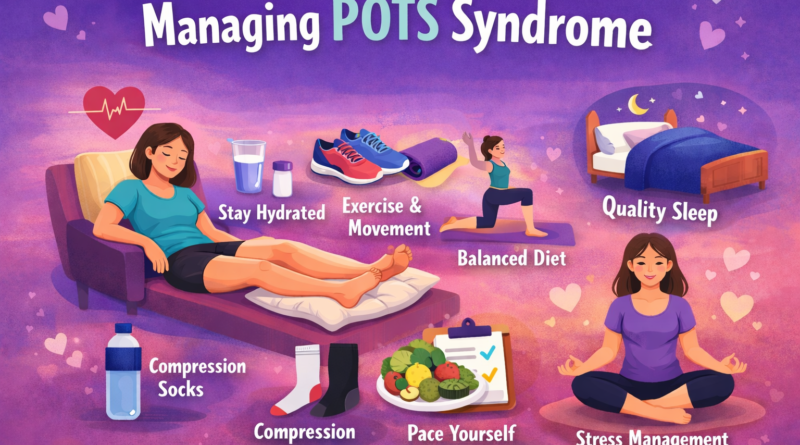
Managing POTS Syndrome: Tips for Daily Life and Wellness
Introduction
Living with a chronic health condition can make everyday activities more challenging, especially when symptoms affect energy levels, heart rate, and overall stability. Understanding Managing POTS Syndrome Tips For Daily Life And Wellness can help individuals develop practical habits that improve comfort, reduce symptoms, and support long-term well-being. Postural Orthostatic Tachycardia Syndrome (POTS) affects how the body regulates blood flow and heart rate when changing positions, such as moving from sitting to standing. While the condition varies from person to person, many people find that lifestyle adjustments, proper hydration, balanced nutrition, and stress management can make a noticeable difference in daily life. This guide explains what POTS syndrome is, common symptoms, and practical strategies that can help people manage their health more effectively.
What Is POTS Syndrome?
POTS syndrome is a condition related to the autonomic nervous system, which controls automatic body functions such as heart rate, blood pressure, and circulation.
When someone with POTS stands up, the body may struggle to regulate blood flow properly. This can cause a rapid increase in heart rate and lead to symptoms like dizziness, fatigue, or weakness.
POTS can affect people of different ages, but it is more commonly diagnosed in adolescents and young adults. The severity of symptoms can vary widely, with some individuals experiencing mild discomfort while others may face more significant daily challenges.
Common Symptoms of POTS Syndrome
Symptoms can differ from person to person, but there are several signs commonly associated with the condition.
Rapid Heart Rate When Standing
One of the main characteristics of POTS is a noticeable increase in heart rate when moving from lying down or sitting to standing.
This may cause:
- Lightheadedness
- Palpitations
- Feeling unsteady
Dizziness or Fainting
Reduced blood flow to the brain when standing can lead to dizziness or, in some cases, fainting. This is one of the most common symptoms reported by individuals with POTS.
Chronic Fatigue
Many people with POTS experience persistent fatigue even after getting enough sleep. Daily activities may feel more exhausting than usual.
Brain Fog and Difficulty Concentrating
Some individuals report trouble focusing, memory issues, or mental fatigue. This is often referred to as brain fog.
Headaches and Migraines
Headaches may occur due to changes in blood flow and circulation.
Exercise Intolerance
People with POTS may find it difficult to tolerate intense physical activity, especially activities that involve standing for long periods.
Digestive Issues
In some cases, POTS can affect digestion, leading to symptoms such as:
- Nausea
- Bloating
- Loss of appetite
What Causes POTS Syndrome?
The exact cause of POTS is not always clear, but several factors may contribute to the condition.
Nervous System Imbalance
POTS is often related to dysfunction in the autonomic nervous system, which regulates heart rate and blood pressure.
Blood Circulation Problems
Some individuals with POTS experience blood pooling in the lower body when standing, which can reduce blood flow to the brain.
Dehydration
Low fluid levels can worsen symptoms because hydration plays a key role in maintaining proper blood volume.
Illness or Viral Infections
In some cases, POTS symptoms develop after infections or prolonged illness.
Hormonal Changes
Hormonal fluctuations may also influence symptoms, especially in younger individuals.
Daily Life Tips for Managing POTS Syndrome
Managing POTS requires a combination of lifestyle adjustments that support circulation, energy levels, and overall health.
Stay Properly Hydrated
Hydration is one of the most important factors in managing POTS symptoms. Drinking enough fluids helps increase blood volume and supports circulation.
Helpful hydration habits include:
- Drinking water throughout the day
- Starting the morning with a glass of water
- Avoiding long periods without fluids
- Including electrolyte-rich drinks when needed
Proper hydration can significantly reduce dizziness and fatigue.
Increase Salt Intake (When Recommended)
Some individuals with POTS benefit from increasing salt intake because it helps the body retain fluids and improve blood circulation.
Common ways to include healthy sodium levels include:
- Adding salt to meals
- Consuming electrolyte drinks
- Eating balanced meals with adequate minerals
However, this should always be done under guidance from a healthcare professional.
Avoid Sudden Position Changes
Moving too quickly from sitting or lying down to standing can trigger symptoms.
Helpful strategies include:
- Standing up slowly
- Sitting on the edge of the bed before standing
- Avoiding sudden posture changes
These adjustments allow the body time to regulate blood flow.
Wear Compression Garments
Compression stockings or garments can help improve circulation by preventing blood from pooling in the legs.
Many people with POTS find that compression wear helps reduce dizziness and fatigue during daily activities.
Focus on Small, Frequent Meals
Large meals may worsen symptoms because digestion requires increased blood flow.
Eating smaller meals throughout the day may help:
- Maintain energy levels
- Reduce dizziness after eating
- Support stable digestion
Balanced meals that include protein, healthy fats, and complex carbohydrates are especially helpful.
Exercise Tips for People With POTS
Exercise can be beneficial, but it should be approached carefully and gradually.
Start With Low-Impact Activities
Exercises that do not require prolonged standing are often easier for individuals with POTS.
Examples include:
- Recumbent cycling
- Swimming
- Seated strength training
- Gentle yoga
These activities support circulation without placing too much stress on the body.
Build Strength Gradually
Strengthening muscles, especially in the legs and core, can improve blood circulation and stability.
Gradual progression helps prevent symptom flare-ups.
Focus on Consistency Instead of Intensity
Short and consistent exercise sessions are often more effective than intense workouts.
Regular movement helps improve endurance over time.
Nutrition Tips That May Help Manage Symptoms
Nutrition plays an important role in energy levels, circulation, and overall health.
Eat Balanced Meals
Meals that include a combination of nutrients help maintain stable energy levels.
Helpful components include:
- Lean protein
- Whole grains
- Fruits and vegetables
- Healthy fats
Balanced meals support overall body function.
Avoid Skipping Meals
Skipping meals can lead to drops in energy and worsen symptoms like dizziness or weakness.
Eating regularly helps maintain stable blood sugar levels.
Include Electrolyte-Rich Foods
Electrolytes help regulate fluid balance in the body.
Examples include:
- Bananas
- Coconut water
- Leafy greens
- Yogurt
- Nuts and seeds
These foods support hydration and circulation.
Lifestyle Habits That Improve Wellness With POTS
Daily routines can make a big difference in managing symptoms effectively.
Prioritize Quality Sleep
Adequate sleep helps the body recover and regulate nervous system function.
Healthy sleep habits include:
- Maintaining a regular sleep schedule
- Limiting screen time before bed
- Creating a calm sleep environment
Better sleep often leads to improved symptom control.
Manage Stress Levels
Stress can worsen symptoms because it affects the nervous system.
Helpful stress management techniques include:
- Deep breathing exercises
- Meditation
- Gentle stretching
- Spending time outdoors
Reducing stress supports overall health and stability.
Plan Activities Strategically
People with POTS may benefit from pacing their activities throughout the day.
This includes:
- Taking breaks when needed
- Avoiding overexertion
- Planning important tasks during higher-energy periods
Energy management helps prevent symptom flare-ups.
When to Seek Medical Advice
While lifestyle adjustments can help manage symptoms, professional medical guidance is important for proper diagnosis and treatment.
You should consult a healthcare professional if:
- Symptoms worsen over time
- Fainting occurs frequently
- Daily activities become difficult
- Severe fatigue persists
- Heart palpitations become intense
Early support and personalized care plans can improve quality of life.
Final Thoughts
Understanding Managing POTS Syndrome Tips For Daily Life And Wellness can help individuals take practical steps toward improving their daily routine and overall health. Although POTS can present challenges, many people find that consistent lifestyle habits such as proper hydration, balanced nutrition, gradual exercise, and stress management can significantly reduce symptoms.
Every individual’s experience with POTS is unique, which is why listening to the body and making gradual adjustments is important. With the right strategies and medical support, many individuals are able to manage symptoms effectively and maintain a fulfilling lifestyle.
FAQs
What is the main cause of POTS syndrome?
The exact cause is not always clear, but it is often related to dysfunction in the autonomic nervous system, circulation issues, dehydration, or hormonal changes.
Can POTS syndrome improve over time?
Yes, some individuals experience improvement over time, especially with proper management, lifestyle adjustments, and medical support.
What triggers POTS symptoms the most?
Common triggers include dehydration, standing for long periods, heat exposure, sudden posture changes, and stress.
Is exercise safe for people with POTS?
Yes, gentle and gradual exercise can help improve circulation and endurance. Low-impact activities are usually recommended.
How much water should someone with POTS drink?
Hydration needs vary, but many people with POTS benefit from increasing fluid intake throughout the day along with electrolytes when recommended.
Can diet help manage POTS symptoms?
Yes, balanced meals, adequate salt intake (when advised), and electrolyte-rich foods can support circulation and reduce symptoms.
Does POTS affect daily life significantly?
For some individuals, symptoms can impact daily routines, but with proper strategies and lifestyle adjustments, many people learn to manage their condition effectively
If you are passionate about writing about health, search for us with the query “write for us health” in search engines. Medical Doze always welcomes writers with new ideas and uniqueness in their content.