
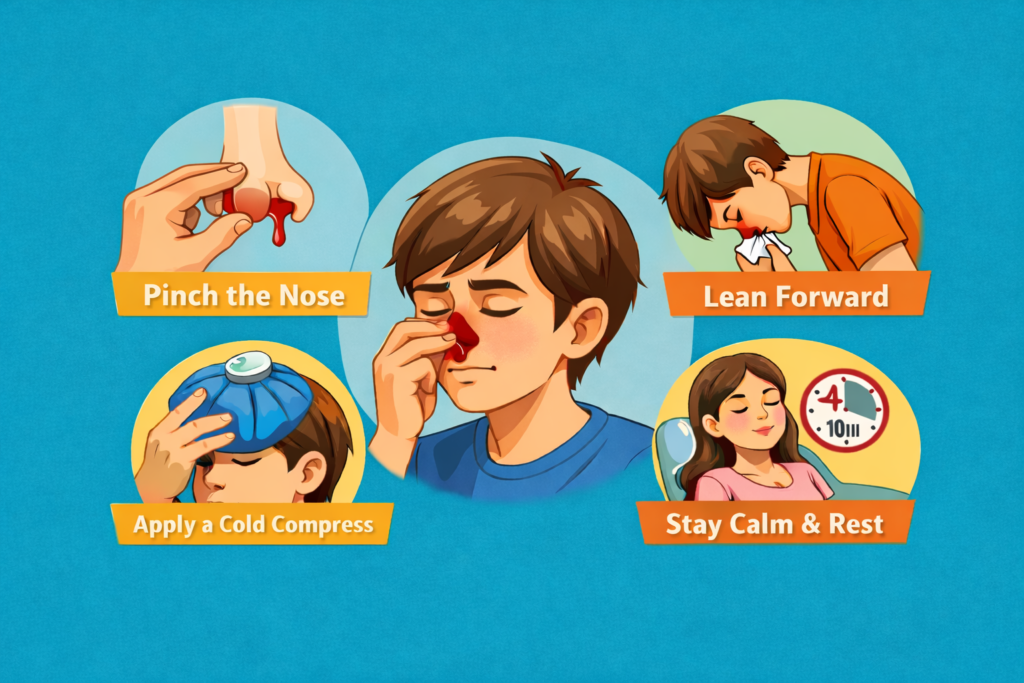
How to Stop a Nosebleed Quickly and Safely
Nosebleeds are common and can be alarming, especially when they happen suddenly. Most nosebleeds are minor and not a sign of serious health problems, but knowing how to manage them safely is important. With the right approach, you can stop a nosebleed quickly, minimize discomfort, and prevent complications.
Understanding Why Nosebleeds Happen
A nosebleed, or epistaxis, occurs when tiny blood vessels inside the nose break. There are two main types:
- Anterior nosebleeds – These happen at the front of the nose and are the most common. They usually come from the soft part of the nasal septum.
- Posterior nosebleeds – Less common, but more serious. They occur deeper in the nasal cavity and may require medical attention.
Common causes of nosebleeds include:
- Dry air or low humidity
- Nose picking or frequent rubbing
- Allergies or colds
- Trauma or injury to the nose
- High blood pressure
- Certain medications, like blood thinners
Knowing the cause can help prevent future episodes and guide safe treatment.
Step-by-Step Method to Stop a Nosebleed Quickly
1. Stay Calm and Sit Upright
- Why it helps: Sitting upright reduces blood pressure in the veins of your nose, which can slow the bleeding.
- Avoid lying down, as this can cause blood to flow down the throat, leading to nausea or vomiting.
2. Lean Forward Slightly
- Why it helps: Leaning forward prevents swallowing blood, which can irritate your stomach and cause vomiting.
- Use a tissue or cloth to catch the blood.
3. Pinch the Soft Part of Your Nose
- How to do it: Use your thumb and index finger to pinch the lower, soft part of your nose just below the bridge.
- Duration: Maintain pressure for 10–15 minutes without checking too early.
- Why it works: Continuous pressure helps blood vessels clot naturally.
4. Apply a Cold Compress
- Where to place it: Hold a cold pack or a wrapped ice pack against the bridge of your nose.
- Why it helps: The cold constricts blood vessels, reducing blood flow and swelling.
5. Breathe Through Your Mouth
- Why it helps: Breathing through your mouth keeps you comfortable while your nose is pinched.
- Avoid blowing your nose or sniffing immediately after the bleeding stops.
6. Avoid Certain Actions After a Nosebleed
- Do not bend down or lift heavy objects for several hours.
- Avoid rubbing or picking your nose.
- Avoid hot drinks, spicy foods, or alcohol immediately after, as they can restart bleeding.
When to Seek Medical Help
Most nosebleeds are minor and stop with home care. However, you should seek medical attention if:
- Bleeding lasts longer than 20 minutes despite pressure
- Nosebleed occurs after a serious injury or fall
- You experience repeated nosebleeds
- Bleeding is heavy or includes clots
- You have other symptoms such as dizziness, weakness, or high blood pressure
Posterior nosebleeds, which originate deeper in the nose, often require medical intervention, sometimes including nasal packing or cauterization.
Preventing Future Nosebleeds
Taking steps to keep your nasal passages healthy can reduce the frequency of nosebleeds. Consider the following:
- Moisturize the nasal passages – Use saline sprays or gels to prevent dryness.
- Humidify your environment – Use a humidifier during dry seasons or in air-conditioned rooms.
- Avoid picking or rubbing your nose – Be gentle when cleaning the inside of your nose.
- Manage allergies and colds – Treating inflammation and congestion reduces irritation to blood vessels.
- Control blood pressure – Keeping blood pressure in check lowers the risk of bleeding.
- Be cautious with medications – Blood thinners or anti-inflammatory drugs can increase nosebleeds. Consult a doctor if needed.
Additional Tips
- Keep tissues and a small cold pack handy for quick response.
- Teach children proper nose care to prevent accidental injuries.
- If frequent nosebleeds occur, consider a check-up to rule out underlying conditions.
Frequently Asked Questions (FAQs)
How long does it take to stop a nosebleed?
Most minor nosebleeds stop within 10–20 minutes if proper pressure is applied.
Can I use a tissue inside my nose?
Yes, gently placing tissue in the nostrils is fine, but avoid deep insertion which may worsen bleeding.
Should I tilt my head back?
No, tilting your head back can cause blood to flow into the throat, leading to nausea or vomiting.
Can high blood pressure cause nosebleeds?
Yes, high blood pressure can increase the risk and intensity of nosebleeds.
What should I do if a child has a nosebleed?
Have the child sit upright, lean slightly forward, pinch the soft part of the nose, and stay calm. Apply a cold compress if needed.
Are nosebleeds dangerous?
Most nosebleeds are not dangerous. Posterior nosebleeds or repeated episodes may require medical attention.
If you are passionate about writing about health, search for us with the query “write for us health” in search engines. Medical Doze always welcomes writers with new ideas and uniqueness in their content.