
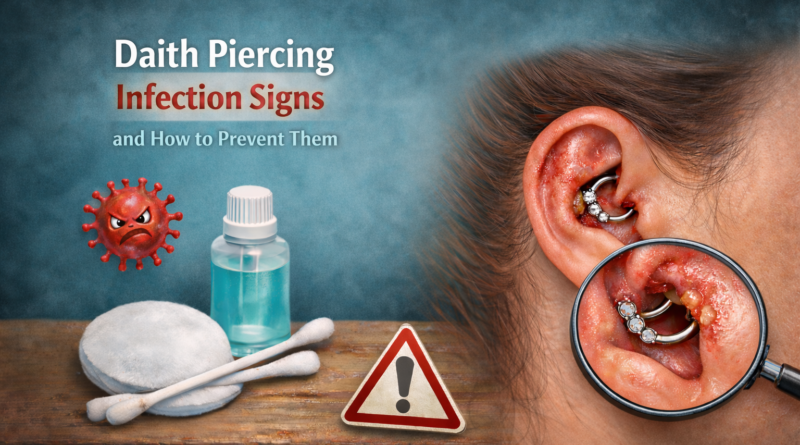
Daith Piercing Infection Signs and How to Prevent Them
Daith piercings have gained popularity in recent years for both their unique aesthetic appeal and potential therapeutic benefits. Located in the innermost cartilage fold of the ear, daith piercings are intricate and stylish, often adorned with rings or small hoops. However, like all piercings, they carry a risk of infection if not cared for properly.
This guide explains the common signs of daith piercing infection, the causes, prevention methods, and safe aftercare practices to ensure a healthy healing process.
What Is a Daith Piercing?
A daith piercing passes through the thick cartilage fold closest to the ear canal. Its name comes from the Hebrew word da’at, meaning “knowledge,” though its popularity stems from its unique appearance.
Unlike standard lobe piercings, daith piercings:
- Are more painful due to cartilage thickness.
- Take longer to heal, often 8–12 months.
- Require special care to avoid infection or irritation.
Common Causes of Daith Piercing Infection
Daith piercings are at higher risk of infection because they go through dense cartilage, which receives less blood flow than the ear lobe. Common causes of infection include:
- Poor Piercing Technique
- Using unsterilized needles or tools can introduce bacteria.
- Using unsterilized needles or tools can introduce bacteria.
- Touching the Piercing With Dirty Hands
- Handling the piercing unnecessarily can transfer germs.
- Handling the piercing unnecessarily can transfer germs.
- Improper Jewelry
- Non-hypoallergenic or low-quality metals can trigger irritation or allergic reactions.
- Non-hypoallergenic or low-quality metals can trigger irritation or allergic reactions.
- Inadequate Aftercare
- Failing to clean the piercing regularly with a sterile solution can allow bacteria to accumulate.
- Failing to clean the piercing regularly with a sterile solution can allow bacteria to accumulate.
- Swimming in Contaminated Water
- Pools, lakes, and hot tubs may contain bacteria that can infect the piercing.
- Pools, lakes, and hot tubs may contain bacteria that can infect the piercing.
- Sleeping on the Piercing
- Pressure and friction can cause irritation, slow healing, and increase infection risk.
- Pressure and friction can cause irritation, slow healing, and increase infection risk.
Signs of Daith Piercing Infection
Recognizing infection early is crucial to prevent complications. Common symptoms include:
- Redness and Swelling
- Mild redness is normal during initial healing, but persistent redness or swelling may indicate infection.
- Mild redness is normal during initial healing, but persistent redness or swelling may indicate infection.
- Pain or Tenderness
- Increasing pain after the first few days or throbbing pain can be a warning sign.
- Increasing pain after the first few days or throbbing pain can be a warning sign.
- Pus or Discharge
- Yellow or green pus, especially with a foul smell, is a clear sign of infection.
- Yellow or green pus, especially with a foul smell, is a clear sign of infection.
- Warmth Around the Piercing
- Infected tissue often feels hot to the touch.
- Infected tissue often feels hot to the touch.
- Fever or Chills
- Systemic symptoms such as fever may indicate a more serious infection requiring medical attention.
- Systemic symptoms such as fever may indicate a more serious infection requiring medical attention.
- Hard Lumps or Bumps
- Formation of keloids, granulomas, or abscesses can be related to infection or irritation.
- Formation of keloids, granulomas, or abscesses can be related to infection or irritation.
Important: If the piercing shows severe symptoms like spreading redness, high fever, or extreme pain, seek immediate medical attention.
How to Prevent Daith Piercing Infection
Preventing infection is far better than treating it. Here are best practices:
1. Choose a Professional Piercer
- Ensure your piercer uses sterilized equipment and needles.
- Avoid piercing guns—they can damage cartilage and increase infection risk.
2. Use High-Quality Jewelry
- Opt for surgical steel, titanium, or 14k gold to reduce allergic reactions.
- Avoid cheap metals or jewelry that may contain nickel.
3. Maintain Proper Hygiene
- Wash hands thoroughly before touching the piercing.
- Clean the piercing 2–3 times daily with a sterile saline solution.
- Avoid harsh soaps, alcohol, or hydrogen peroxide, as they can irritate tissue.
4. Avoid Excessive Touching or Twisting
- Frequent manipulation can slow healing and introduce bacteria.
- Only touch the piercing when cleaning it.
5. Protect the Piercing From Trauma
- Avoid sleeping on the pierced ear.
- Be cautious with headphones, hats, or hair products.
6. Avoid Contaminated Water
- Stay away from swimming pools, hot tubs, or natural water sources until fully healed.
- If exposure is unavoidable, rinse the piercing thoroughly afterward.
7. Monitor for Early Symptoms
- Inspect the piercing daily for unusual redness, swelling, or discharge.
- Early intervention can prevent severe infection.
Daith Piercing Aftercare Tips
Proper aftercare is essential for healing and preventing infection:
- Saline Soaks
- Use a sterile saline solution or make your own: 1/4 teaspoon salt in 1 cup of warm distilled water.
- Soak the piercing 2–3 times per day for 5–10 minutes.
- Use a sterile saline solution or make your own: 1/4 teaspoon salt in 1 cup of warm distilled water.
- Avoid Irritants
- Keep hair products, perfumes, and makeup away from the piercing.
- Keep hair products, perfumes, and makeup away from the piercing.
- Rotate Jewelry Only When Advised
- Moving jewelry before full healing can cause trauma or infection.
- Moving jewelry before full healing can cause trauma or infection.
- Keep It Dry
- Pat the area dry gently with a clean paper towel after cleaning. Avoid cloth towels that harbor bacteria.
- Pat the area dry gently with a clean paper towel after cleaning. Avoid cloth towels that harbor bacteria.
- Be Patient
- Cartilage piercings take longer to heal than lobes. Healing can take 6–12 months.
- Cartilage piercings take longer to heal than lobes. Healing can take 6–12 months.
Treatment for Daith Piercing Infection
If an infection occurs despite precautions:
- Mild Infection
- Continue saline cleaning and avoid touching the piercing.
- Warm compresses may help reduce swelling.
- Continue saline cleaning and avoid touching the piercing.
- Moderate to Severe Infection
- Seek medical advice.
- A healthcare provider may prescribe topical or oral antibiotics.
- Avoid removing the jewelry unless instructed by a professional; removing it prematurely can trap bacteria inside.
- Seek medical advice.
- Abscess Formation
- Do not attempt to drain at home. Medical attention is necessary to prevent worsening infection.
- Do not attempt to drain at home. Medical attention is necessary to prevent worsening infection.
Myths About Daith Piercings
- “Daith piercings cure migraines” – While anecdotal reports exist, there is no scientific evidence supporting this claim.
- “Healing is fast” – Cartilage piercings inherently heal slowly; patience and care are required.
- “All infections require piercing removal” – Many mild infections heal with proper cleaning and care. Jewelry removal is only necessary for severe cases.
Conclusion
Daith piercings are stylish and unique, but they require careful hygiene and attention due to the risk of infection. Recognizing early signs of infection like redness, swelling, pain, and pus is crucial. By following proper aftercare practices, choosing high-quality jewelry, and avoiding contaminated environments, you can enjoy a safe and successful daith piercing.
Key Takeaways:
- Daith piercings can take 6–12 months to fully heal.
- Infection risks are higher in cartilage than in earlobes.
- Early detection and proper care prevent complications.
- Seek medical attention for severe or persistent symptoms.
Frequently Asked Questions (FAQs)
1. How long does it take for a daith piercing to heal?
Healing usually takes 6–12 months, depending on individual healing rates and care practices.
2. Can I sleep on a daith piercing?
No, sleeping on the pierced ear can cause irritation, swelling, and infection.
3. What is normal after a daith piercing?
Mild redness, tenderness, and slight swelling are normal in the first few weeks. Persistent pain, pus, or spreading redness indicates infection.
4. Should I remove jewelry if infected?
Not immediately. Removing jewelry can trap bacteria inside. Consult a professional for guidance.
5. Can daith piercings cause permanent damage?
When done professionally and cared for properly, permanent damage is rare. Improper care or severe infection can lead to scarring.
6. How do I clean a daith piercing?
Use a sterile saline solution 2–3 times daily. Avoid alcohol, hydrogen peroxide, or harsh soaps.
7. Are daith piercings painful?
Yes, daith piercings go through cartilage and are more painful than earlobe piercings, but pain subsides during healing.
If you are passionate about writing about health, search for us with the query “write for us health” in search engines. Medical Doze always welcomes writers with new ideas and uniqueness in their content.