
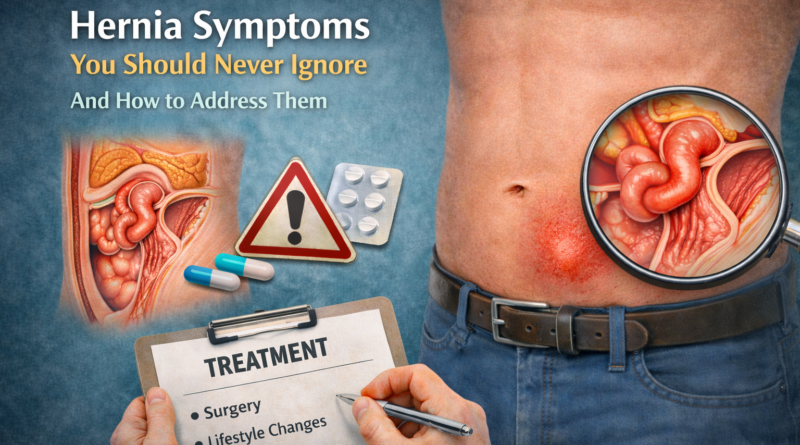
Hernia Symptoms You Should Never Ignore And How To Address Them
Hernias are a common health issue that can affect people of all ages. While some hernias may start small and painless, ignoring the symptoms can lead to serious complications. Recognizing hernia symptoms early is crucial to ensure proper treatment and prevent worsening conditions. In this article, we’ll explore the most common types of hernias, warning signs, causes, and effective ways to address them.
What is a Hernia?
A hernia occurs when an organ or tissue pushes through a weak spot in the surrounding muscle or connective tissue. Most commonly, hernias develop in the abdominal region, but they can also appear in other areas like the groin, diaphragm, or near surgical scars.
The most common types of hernias include:
- Inguinal Hernia: Occurs in the groin, more common in men.
- Femoral Hernia: Found just below the groin, more common in women.
- Umbilical Hernia: Appears near the belly button, often in infants but can occur in adults.
- Hiatal Hernia: Develops when part of the stomach pushes up into the chest through the diaphragm.
- Incisional Hernia: Can occur at the site of a previous surgical incision.
Understanding the type of hernia you have is essential, as symptoms, risks, and treatments can vary.
Common Hernia Symptoms You Should Never Ignore
Hernias can sometimes be subtle at first, but certain warning signs indicate the need for immediate attention:
1. A Bulge or Lump
The most noticeable symptom is a visible bulge or lump in the affected area. This bulge may disappear when lying down and become more pronounced when coughing, lifting heavy objects, or straining.
2. Pain or Discomfort
Hernias often cause pain, aching, or a burning sensation, especially when bending, lifting, or standing for long periods. Some people may experience sharp or stabbing pain if the hernia becomes trapped or strangulated.
3. Weakness or Pressure
A feeling of heaviness, pressure, or weakness in the abdomen or groin is common. This sensation may worsen during physical activity or prolonged standing.
4. Digestive Issues
In some hernias, particularly hiatal hernias, symptoms may include heartburn, acid reflux, nausea, or difficulty swallowing. These digestive issues often mimic other conditions like gastritis or GERD.
5. Changes in Bowel Movements
Severe hernias can cause constipation or difficulty passing stool if a portion of the intestine is trapped in the hernia sac. This is a serious symptom and may require urgent medical attention.
6. Redness or Swelling
Redness, tenderness, or swelling around the hernia site can indicate inflammation or infection, requiring immediate medical evaluation.
7. Sudden, Severe Pain (Strangulated Hernia)
A strangulated hernia occurs when the blood supply to the trapped tissue is cut off. Symptoms include sudden intense pain, nausea, vomiting, fever, and an irreducible bulge. This is a medical emergency and requires immediate surgery.
Causes and Risk Factors
Several factors contribute to the development of hernias:
- Weakness in the abdominal wall: Congenital or acquired muscle weakness.
- Straining during bowel movements or urination: Often due to constipation or prostate problems.
- Heavy lifting: Repeated strain can increase risk.
- Chronic cough: Smoking or lung conditions may cause pressure on the abdominal wall.
- Obesity: Excess weight increases abdominal pressure.
- Pregnancy: Can weaken abdominal muscles and increase risk.
- Previous surgery: Incisional hernias can occur at the site of surgical scars.
Understanding these risk factors can help in preventing hernias and reducing the severity of symptoms.
Diagnosing a Hernia
Diagnosis usually involves a physical examination, where a doctor checks for bulges while the patient stands, coughs, or strains. Imaging tests may also be used:
- Ultrasound: Often used for groin or abdominal hernias.
- CT scan or MRI: Helpful in complex cases or internal hernias.
- Endoscopy: Used to diagnose hiatal hernias.
Early diagnosis allows for timely management and reduces the risk of complications such as strangulation or obstruction.
How to Address Hernia Symptoms
Treatment depends on the type, size, and severity of the hernia.
1. Lifestyle and Home Remedies
Mild hernias without pain may be managed temporarily with lifestyle adjustments:
- Avoid heavy lifting or straining
- Maintain a healthy weight
- Eat a high-fiber diet to prevent constipation
- Use supportive garments or hernia belts if recommended
2. Medications
For hiatal hernias, medications can help relieve symptoms such as acid reflux and heartburn:
- Antacids
- H2 blockers
- Proton pump inhibitors
These medications do not fix the hernia itself but can alleviate discomfort.
3. Surgical Treatment
Surgery is often necessary for hernias that are painful, growing, or at risk of complications. Surgical options include:
- Open Hernia Repair: The surgeon makes an incision to push the tissue back and reinforce the abdominal wall with mesh.
- Laparoscopic Hernia Repair: A minimally invasive technique using small incisions and a camera.
- Hiatal Hernia Surgery: Tightens the diaphragm opening and may involve anti-reflux procedures.
Surgical intervention is usually safe and effective, especially when performed before complications develop.
Potential Complications of Ignoring Hernia Symptoms
Ignoring hernia symptoms can lead to serious health issues:
- Strangulation: Blood supply to trapped tissue is cut off, causing tissue death.
- Obstruction: Blockage in the intestine can lead to vomiting, severe pain, and constipation.
- Infection: In cases of strangulated or inflamed hernia.
- Chronic pain and mobility issues: Larger hernias can restrict movement and daily activities.
Prompt recognition and treatment of hernia symptoms are essential to prevent these complications.
Prevention Tips
While not all hernias can be prevented, certain measures reduce the risk:
- Strengthen abdominal muscles with core exercises
- Lift objects properly using your legs, not your back
- Maintain a healthy weight
- Avoid smoking and manage chronic cough
- Eat a fiber-rich diet to prevent constipation
- Seek timely medical attention for abdominal pain or bulges
Summary
Hernias are more than just a visible bulge—they can impact digestion, mobility, and overall health. Understanding hernia symptoms and acting early is essential. Whether it’s an inguinal, umbilical, hiatal, or incisional hernia, recognizing the warning signs can prevent serious complications like strangulation or bowel obstruction. While lifestyle changes and medications help manage mild cases, surgical intervention is often the definitive solution.
By paying attention to your body, managing risk factors, and consulting a healthcare professional, you can address hernia symptoms effectively and protect your long-term health.
Frequently Asked Questions (FAQs)
1. What are the first signs of a hernia?
The earliest sign is usually a small bulge or lump in the affected area, sometimes accompanied by mild discomfort or pressure.
2. Can a hernia go away on its own?
No, hernias do not heal naturally. Small, painless hernias may be monitored, but medical evaluation is essential to prevent complications.
3. Are hernias dangerous?
Yes, especially if the hernia becomes strangulated or obstructed, which can be life-threatening and requires immediate surgery.
4. What is the difference between a reducible and irreducible hernia?
A reducible hernia can be gently pushed back into the abdomen, while an irreducible hernia cannot, increasing the risk of complications.
5. Can exercise make a hernia worse?
Strenuous exercise and heavy lifting can worsen a hernia, but gentle core-strengthening exercises may help prevent worsening when done safely.
6. How is a hiatal hernia treated?
Hiatal hernias can be managed with lifestyle changes, dietary modifications, medications, or surgery in severe cases.
7. When should I see a doctor about a hernia?
Seek medical attention if you notice a sudden bulge, severe pain, nausea, vomiting, or tenderness, as these could indicate a serious complication.
8. Is hernia surgery safe?
Yes, hernia surgery is generally safe and highly effective, especially when performed before the hernia enlarges or causes complications.
If you are passionate about writing about health, search for us with the query “write for us health” in search engines. Medical Doze always welcomes writers with new ideas and uniqueness in their content.