
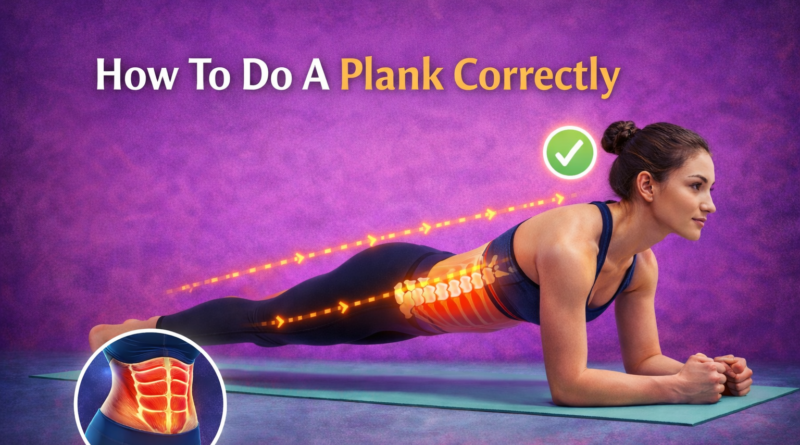
How To Do A Plank Correctly Core Strength And Posture Tips
Core strength is one of the most important foundations of overall fitness, yet many people overlook simple exercises that can build it effectively. One of the most powerful bodyweight movements you can add to your routine is the plank. Learning How To Do A Plank Correctly Core Strength And Posture Tips can help improve stability, reduce back pain, strengthen muscles, and enhance posture. Although the plank looks simple, doing it the right way makes a big difference in how effective it is and how safe it is for your body. In this guide, you will learn the proper plank technique, common mistakes to avoid, posture improvements, and expert tips to strengthen your core safely.
What Is a Plank Exercise?
A plank is a core-strengthening exercise that involves holding your body in a straight, stable position while supported by your forearms or hands and toes. The goal is to keep your body aligned from head to heels while engaging multiple muscle groups.
Unlike many other exercises, the plank targets several areas of the body at the same time, including:
- Core muscles
- Abdominal muscles
- Lower back
- Shoulders
- Glutes
- Legs
Because it works multiple muscles together, the plank is considered one of the best exercises for improving stability and posture.
Benefits of Doing Planks
Practicing planks regularly offers many health and fitness benefits beyond just building abs.
Strengthens the Core
The plank activates deep core muscles that support the spine and stabilize the body. A stronger core helps improve balance and reduces the risk of injuries.
Benefits of a strong core include:
- Better body control
- Improved athletic performance
- Reduced lower back strain
- Increased stability during workouts
Improves Posture
Many people experience poor posture due to long hours of sitting or working on computers. Planks strengthen the muscles that support proper alignment of the spine.
This helps:
- Keep shoulders aligned
- Support the lower back
- Improve standing and sitting posture
- Reduce slouching
Reduces Back Pain
Weak core muscles often lead to pressure on the lower back. Plank exercises strengthen the muscles that protect the spine and reduce strain.
Over time, this may help relieve mild back discomfort and improve spinal support.
Enhances Balance and Stability
Planks train the body to maintain stability while engaging several muscle groups. This improves coordination and balance in daily activities and sports.
Supports Overall Fitness
Because the plank engages multiple muscles, it helps build endurance and strength across the body without requiring equipment.
How To Do A Plank Correctly
Proper form is essential to get the full benefit of the exercise and avoid injuries.
Follow these steps to perform a plank correctly.
Step 1: Start on the Floor
Begin by lying face down on the floor or exercise mat. Place your forearms on the ground and position your elbows directly under your shoulders.
Your forearms should be parallel to each other.
Step 2: Lift Your Body
Push your body up by lifting your torso and legs off the floor while keeping your forearms and toes on the ground.
Your body should form a straight line from head to heels.
Step 3: Engage Your Core
Tighten your abdominal muscles and avoid letting your stomach drop toward the floor.
At the same time:
- Squeeze your glutes
- Keep your legs strong
- Maintain a neutral spine
Step 4: Keep Your Neck Neutral
Your head should remain aligned with your spine. Avoid looking too far up or dropping your head downward.
Look slightly toward the floor to maintain proper alignment.
Step 5: Hold the Position
Hold the plank position for as long as you can while maintaining good form.
Beginners may start with:
- 15 to 30 seconds
With practice, you can increase the time gradually.
Proper Body Alignment During a Plank
Correct posture during the plank is key to strengthening the right muscles.
Your body should follow this alignment:
- Head in a neutral position
- Shoulders directly above elbows
- Straight back
- Engaged abdominal muscles
- Tight glutes
- Straight legs
- Heels pushing slightly backward
This alignment helps distribute body weight evenly and protects the lower back.
Common Plank Mistakes to Avoid
Many people perform planks incorrectly, which reduces effectiveness and may lead to discomfort or injury.
Dropping the Hips
One of the most common mistakes is letting the hips sink toward the floor. This places pressure on the lower back and reduces core engagement.
Instead, keep your hips level with the rest of your body.
Raising the Hips Too High
Some people lift their hips too high, turning the plank into a different position. This reduces the challenge for the core muscles.
Your body should remain in a straight line.
Holding Your Breath
Proper breathing is essential during planks. Holding your breath can create unnecessary tension in the body.
Focus on slow and steady breathing.
Incorrect Elbow Placement
Elbows should remain directly below the shoulders. Incorrect placement can strain the shoulders and reduce stability.
Not Engaging the Core
Simply holding the position is not enough. You must actively tighten your abdominal muscles for the plank to be effective.
Plank Variations for Different Fitness Levels
Once you understand how to do a plank correctly, you can try different variations to challenge your body.
Beginner Plank
If you are new to this exercise, start with a modified plank.
Options include:
- Knee plank
- Short-duration plank
- Wall plank
These variations help build strength gradually.
Standard Forearm Plank
This is the most common plank position and is ideal for building core strength.
It targets:
- Core stability
- Shoulder endurance
- Lower back support
High Plank
This variation is similar to a push-up position.
Benefits include:
- Increased shoulder engagement
- Improved upper body strength
- Better core activation
Side Plank
The side plank focuses on strengthening the oblique muscles along the sides of the abdomen.
It helps:
- Improve balance
- Strengthen side core muscles
- Support spinal stability
Plank With Leg Lift
Lifting one leg at a time during a plank increases the challenge and engages additional muscles.
This variation improves coordination and core stability.
How Long Should You Hold a Plank?
The duration of a plank depends on your fitness level.
General recommendations include:
Beginners:
20 to 30 seconds
Intermediate:
40 to 60 seconds
Advanced:
1 to 2 minutes
Consistency matters more than duration. Performing planks regularly with proper form leads to better results over time.
Core Strength Tips for Better Plank Performance
Improving core strength will help you hold planks longer and with better posture.
Train Your Core Regularly
Adding core exercises to your routine improves plank endurance.
Helpful exercises include:
- Leg raises
- Bicycle crunches
- Dead bugs
- Mountain climbers
Focus on Breathing
Controlled breathing improves endurance and helps stabilize the body during the exercise.
Inhale through your nose and exhale slowly.
Increase Duration Gradually
Instead of pushing too hard at the beginning, gradually increase plank duration over time.
Small progress leads to stronger results.
Maintain Consistency
Practicing planks a few times per week can significantly improve core strength and posture.
Consistency is more important than intensity.
Posture Tips While Doing Planks
Maintaining correct posture ensures the plank targets the right muscles and protects your spine.
Key posture tips include:
- Keep your back flat and straight
- Avoid arching the lower back
- Engage the glutes and core
- Keep shoulders stable
- Do not strain the neck
- Distribute weight evenly
These adjustments help improve overall body alignment.
Who Should Include Planks in Their Routine?
Planks are suitable for many people because they require no equipment and can be adjusted for different fitness levels.
They are especially helpful for:
- Beginners starting fitness routines
- People who want stronger core muscles
- Individuals working on posture improvement
- Athletes looking to improve stability
- Office workers who sit for long hours
However, individuals with serious back or shoulder injuries should consult a professional before starting.
Final Thoughts
Learning How To Do A Plank Correctly Core Strength And Posture Tips can greatly improve your fitness routine and overall body strength. Even though the plank is a simple exercise, performing it with proper form activates important muscles that support the spine, improve posture, and build core stability.
By focusing on correct alignment, avoiding common mistakes, and practicing regularly, you can strengthen your core safely and effectively. Over time, consistent plank training can lead to better balance, improved posture, and reduced risk of injury.
Small improvements in technique can make a big difference in the results you achieve.
Frequently Asked Questions
How long should beginners hold a plank?
Beginners should start by holding a plank for about 20 to 30 seconds and gradually increase the duration as their core strength improves.
Is doing planks every day safe?
Yes, planks can be done daily if performed with proper form and without causing strain or discomfort.
What muscles do planks work the most?
Planks mainly target the core muscles, including the abdominals, lower back, shoulders, glutes, and legs.
Why do I feel plank exercises in my shoulders?
Shoulder engagement is normal during planks because they help stabilize the body. However, if the strain is excessive, check your form and elbow placement.
Can planks help improve posture?
Yes, planks strengthen the muscles that support the spine, which helps improve posture over time.
How long does it take to see results from planks?
With consistent practice, many people begin to notice improved core strength and stability within a few weeks.
Are planks better than crunches?
Planks work multiple muscle groups and improve stability, making them a more complete core exercise compared to crunches.
If you are passionate about writing about health, search for us with the query “write for us health” in search engines. Medical Doze always welcomes writers with new ideas and uniqueness in their content.