
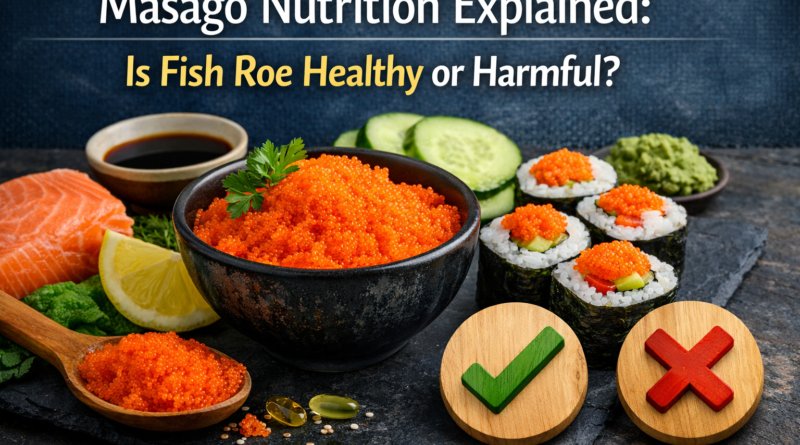
Masago Nutrition Explained: Is Fish Roe Healthy or Harmful?
Masago, also known as capelin roe, is a type of fish egg commonly used in Japanese cuisine, particularly sushi. Its vibrant orange color, crunchy texture, and unique salty flavor make it a popular topping for sushi rolls, poke bowls, and gourmet dishes. But beyond its culinary appeal, many people wonder: Is masago good for your health, or can it be harmful?
This article breaks down the nutritional content, health benefits, and potential risks of masago, helping you understand whether it deserves a place in your diet.
What Is Masago?
Masago comes from capelin, a small forage fish found in the North Atlantic and Arctic Oceans. It is harvested primarily for its roe, which is tiny, orange, and crunchy.
Unlike other fish roe such as ikura (salmon roe) or tobiko (flying fish roe), masago is smaller in size and has a milder taste. It is often flavored with wasabi, yuzu, or soy sauce for added taste in sushi restaurants.
Masago is also sometimes used as a cheaper substitute for tobiko because of its similar appearance and texture.
Nutritional Profile of Masago
Masago is low in calories but packed with nutrients. Here’s a breakdown per 1 tablespoon (16 grams):
- Calories: 20–25 kcal
- Protein: 2 grams
- Fat: 1–2 grams
- Omega-3 fatty acids: 200–300 mg
- Cholesterol: 15–20 mg
- Sodium: 150–200 mg
- Vitamin B12: ~15% of daily value
- Selenium: ~10% of daily value
Masago is rich in protein, omega-3 fatty acids, and essential vitamins and minerals, making it a nutrient-dense option despite its small portion size.
Health Benefits of Masago
1. High in Protein
Masago is a good source of protein, which is essential for muscle repair, tissue growth, and overall body function. For sushi lovers or those on a high-protein diet, it provides a small but valuable contribution to daily protein intake.
2. Rich in Omega-3 Fatty Acids
Omega-3 fatty acids are vital for heart health, brain function, and reducing inflammation. Even though masago contains less omega-3 than salmon roe, it still contributes to overall intake when consumed regularly.
3. Packed With Vitamins and Minerals
Masago contains important micronutrients, including:
- Vitamin B12 – Supports red blood cell production and nerve function.
- Selenium – Acts as an antioxidant, supporting immune health.
- Phosphorus – Important for bone health.
4. Low in Calories
For those mindful of calorie intake, masago provides flavor and texture without adding excessive calories, making it suitable for low-calorie diets.
5. May Support Metabolism and Energy Levels
With its mix of protein, omega-3s, and B vitamins, masago may help support energy production and metabolic function, especially in combination with other nutrient-dense foods.
Potential Risks of Masago
Despite its health benefits, there are a few considerations to keep in mind:
1. High Sodium Content
Masago is naturally salty, and processed versions often contain added salt. Excessive sodium intake can contribute to high blood pressure and water retention, so moderation is important.
2. Cholesterol Concerns
Masago contains cholesterol, which may be a concern for individuals with heart disease or high cholesterol levels. One tablespoon has around 15–20 mg, which is modest, but it can add up if consumed in large amounts.
3. Allergies
Fish roe can trigger allergic reactions in some people, especially those with seafood allergies. Symptoms may include hives, swelling, or digestive issues.
4. Purine Content
Like other fish eggs, masago contains purines, which can be a concern for individuals prone to gout or kidney issues.
5. Contaminants
As with any seafood, masago may contain trace mercury or environmental toxins, although capelin generally has lower levels compared to larger fish like tuna. Choosing trusted, high-quality sources can reduce risk.
How to Include Masago in Your Diet
Masago can be enjoyed in various ways while balancing health considerations:
- Sushi Rolls – Sprinkle a small amount on top of rolls for flavor and texture.
- Poke Bowls – Add masago for extra crunch and protein.
- Garnishes – Use as a topping for avocado toast, salads, or seafood dishes.
- Moderation – Limit intake to small portions to avoid excessive sodium or cholesterol.
Tips for Choosing Masago
- Check for Added Salt or Flavors – Some masago is marinated in soy sauce or flavored, which increases sodium content.
- Opt for Fresh or Frozen – Fresh or properly frozen masago retains nutrients better than canned or heavily processed versions.
- Source from Reputable Brands – Look for brands that follow strict quality and safety standards.
Masago vs Other Fish Roe
| Type of Roe | Flavor | Omega-3 Content | Best Use | Cost |
| Masago | Mild, crunchy | Moderate | Sushi, bowls | Affordable |
| Tobiko | Slightly sweet, crunchy | Moderate | Sushi, garnishes | Higher |
| Ikura | Rich, large eggs | High | Sushi, appetizers | Expensive |
Masago is a lighter, more affordable option while still providing many of the benefits of fish roe.
Conclusion
Masago is a nutrient-dense, low-calorie, and protein-rich food that can be a healthy addition to your diet when eaten in moderation. It provides essential omega-3 fatty acids, vitamins, and minerals, supporting heart, brain, and metabolic health.
However, due to its sodium, cholesterol, and purine content, overconsumption may pose risks for certain individuals. Choosing high-quality masago and limiting portions ensures you can enjoy its flavor and health benefits safely.
Bottom line: Masago is generally healthy, but like all seafood, it should be consumed mindfully as part of a balanced diet.
Frequently Asked Questions (FAQs) About Masago
1. Is masago safe for children?
Yes, in small amounts, masago is safe for children. However, due to its salt content, limit portions and avoid frequent consumption.
2. Can pregnant women eat masago?
Pregnant women can eat masago in moderation, but it’s important to choose high-quality, low-sodium sources and avoid raw seafood from unknown sources.
3. How many calories are in a serving of masago?
One tablespoon (16 grams) of masago has approximately 20–25 calories.
4. Does masago contain mercury?
Capelin, the source of masago, is a small fish and generally low in mercury compared to larger fish like tuna.
5. Is masago high in protein?
Yes, it contains about 2 grams of protein per tablespoon, making it a modest but valuable source for a small portion.
6. Can masago cause allergies?
People with seafood or fish allergies may react to masago, so it should be avoided if you have known sensitivities.
7. How should I store masago?
Keep fresh masago refrigerated and consume it within a few days. Frozen masago can last several months if properly stored.
8. Is masago better than tobiko or ikura?
Masago is milder and more affordable. While it has slightly lower omega-3 content than ikura, it still provides a nutritious, flavorful option for sushi and other dishes.
If you are passionate about writing about health, search for us with the query “write for us health” in search engines. Medical Doze always welcomes writers with new ideas and uniqueness in their content.