
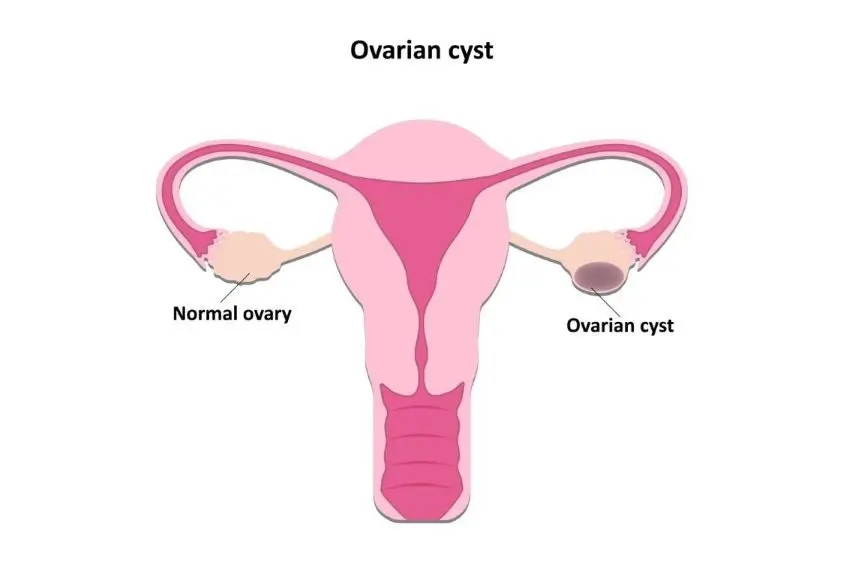
Ovarian Cysts: Types, Symptoms, and When They Need Treatment
Ovarian cysts are common findings that can sound alarming when they appear on an ultrasound or pelvic examination. The good news is that most ovarian cysts are benign, many cause no symptoms, and a large proportion disappear without treatment. The important question is not simply whether an ovarian cyst exists, but what type it is, how large it is, what it looks like on imaging, whether it is causing symptoms, and whether the person is before or after menopause.
An ovarian cyst is a fluid-filled sac or pouch that develops in or on an ovary. Some cysts contain blood, tissue, or other material rather than simple fluid. The American College of Obstetricians and Gynecologists (ACOG) notes that ovarian cysts can occur during the reproductive years and after menopause, with most being benign and resolving without treatment.
Ovarian cysts are also common enough that an abnormal finding does not automatically mean cancer, infertility, or the need for surgery. NCBI’s 2026 InformedHealth review estimates that about 10 in 100 women have ovarian cysts, while population studies show that prevalence varies substantially depending on age, symptoms, imaging method, and whether very small cysts are counted.
This guide explains the major types of ovarian cysts, common and less obvious symptoms, causes and risk factors, how doctors diagnose them, when observation is appropriate, when surgery may be considered, how cysts can affect fertility, and which symptoms require urgent medical attention.
What Is an Ovarian Cyst?
An ovarian cyst is a sac or pouch that forms in or on an ovary. The ovaries are reproductive organs located on either side of the uterus. They release eggs and produce hormones including estrogen and progesterone.
Many ovarian cysts develop as part of normal ovulation. During a typical menstrual cycle, an egg develops inside a fluid-filled structure called a follicle. Normally, the follicle opens to release the egg and then changes into the corpus luteum. If the follicle does not release the egg or the corpus luteum does not shrink as expected, a functional cyst can develop.
This explains why ovarian cysts are particularly common before menopause. In many cases, they are temporary changes related to the menstrual cycle rather than a disease.
However, not every ovarian cyst is functional. Some develop from abnormal cell growth, endometriosis, or other conditions. A cyst can also have a different appearance on ultrasound, which is why doctors consider imaging characteristics rather than relying only on its size.
The distinction matters because treatment ranges from simply repeating an ultrasound after several weeks or months to surgery in selected cases.
How Common Are Ovarian Cysts?
Ovarian cyst prevalence is difficult to express with one universal percentage because many cysts never cause symptoms and are never diagnosed.
The NCBI InformedHealth review updated in May 2026 estimates that approximately 10% of women have ovarian cysts and emphasizes that most are benign and resolve without treatment.
Other studies demonstrate why prevalence estimates vary. A review indexed by PubMed reported presumed benign adnexal cysts in approximately 7% of asymptomatic women of childbearing age and 14%–18% of postmenopausal women, depending on the population and definition used.
The U.S. Office on Women’s Health reports that most women with regular periods develop at least one follicle or corpus luteum cyst during a menstrual cycle, although they may never know it is present. It estimates that about 8% of premenopausal women develop large cysts requiring treatment.
These figures demonstrate an important point: finding a cyst does not automatically mean that something is seriously wrong.
Types of Ovarian Cysts
Doctors generally classify ovarian cysts according to how they develop and what they contain. Some are related to the menstrual cycle, while others result from endometriosis or growth of ovarian cells.
Functional Ovarian Cysts
Functional cysts are the most common type and are closely connected to ovulation.
The two major functional cysts are follicular cysts and corpus luteum cysts.
A follicular cyst forms when a follicle does not rupture to release an egg. Instead, it continues to grow. These cysts often disappear on their own within one to three months.
A corpus luteum cyst develops after ovulation. Normally, the follicle becomes the corpus luteum, which produces hormones needed to support the menstrual cycle and early pregnancy. If the structure seals and fluid or blood accumulates inside it, a corpus luteum cyst can develop.
ACOG states that functional cysts often resolve without treatment within 6 to 8 weeks.
Because these cysts are part of reproductive physiology, they are much more common before menopause.
Hemorrhagic Ovarian Cysts
A hemorrhagic cyst occurs when bleeding develops within a cyst, commonly a functional cyst.
Some hemorrhagic cysts cause no symptoms and resolve naturally. Others can cause pelvic pain, particularly if bleeding stretches the cyst or the cyst ruptures.
Mayo Clinic notes that small or medium hemorrhagic cysts without significant symptoms are often monitored, while larger cysts or those causing substantial symptoms may require additional evaluation or surgery depending on the clinical situation.
The ultrasound appearance helps doctors determine whether a cyst has characteristics consistent with a hemorrhagic cyst or whether another diagnosis needs to be considered.
Endometriomas
An endometrioma is an ovarian cyst associated with endometriosis.
Endometriosis occurs when tissue similar to the lining of the uterus grows outside the uterus. When this tissue involves an ovary, an endometrioma can develop.
Endometriomas can be associated with pelvic pain, painful periods, pain during sex, and fertility difficulties. Unlike many functional cysts, an endometrioma does not simply represent a temporary part of normal ovulation.
Mayo Clinic notes that endometriomas may be associated with reduced chances of becoming pregnant, although fertility outcomes depend on the individual and other factors.
For readers researching both conditions, this article can naturally link internally to your existing “Endometriosis: Symptoms, Causes & Treatment” article using anchor text such as “endometriosis and ovarian cysts.”
Dermoid Cysts
Dermoid cysts, also called mature cystic teratomas, arise from cells capable of developing into different tissue types. They may contain structures such as hair, skin, or other tissue.
ACOG describes teratomas as cysts or benign tumors that can contain different types of body tissue. They may be present from birth and grow during the reproductive years. Very rarely, a teratoma can become cancerous.
Dermoid cysts may not cause symptoms when they are small. As they become larger, however, they can contribute to pelvic pressure or complications such as ovarian torsion.
Cystadenomas
Cystadenomas are benign tumors that develop from cells on the outer surface of the ovary.
They can contain watery or mucus-like material and sometimes become quite large. A cystadenoma is not the same thing as a functional cyst, so it may persist rather than disappearing after a menstrual cycle.
ACOG notes that cystadenomas are generally benign but can grow very large.
The size and appearance of a persistent cystadenoma may influence whether doctors recommend monitoring or surgical removal.
Cysts Associated With Pregnancy
Ovarian cysts can also occur during pregnancy. A corpus luteum cyst can be a normal finding during early pregnancy because the corpus luteum produces hormones that help support the pregnancy until the placenta takes over this function.
Some pregnancy-associated cysts disappear as pregnancy progresses. Others may require monitoring depending on their appearance, size, symptoms, or persistence.
A new ovarian mass during pregnancy should therefore be evaluated in the context of gestational age and ultrasound findings rather than assumed to be either harmless or dangerous.
Ovarian Cysts and PCOS
Polycystic ovary syndrome (PCOS) is often confused with having ordinary ovarian cysts.
Despite its name, PCOS is not simply a condition in which an ovary contains a few large cysts. PCOS is a hormonal and metabolic condition associated with features such as irregular ovulation and elevated androgen activity. The small ovarian follicles seen on ultrasound are not the same thing as the typical ovarian cysts discussed in this article.
This distinction is particularly important when discussing fertility. PCOS can affect ovulation and therefore conception, while many functional ovarian cysts do not cause infertility.
What Causes Ovarian Cysts?
The cause depends on the cyst type.
For functional cysts, normal hormonal changes surrounding ovulation are the most common explanation. Problems with follicle development or the normal regression of the corpus luteum can result in cyst formation.
Other causes include endometriosis, pregnancy-related hormonal changes, medications used to stimulate ovulation, and abnormal cell growth.
The U.S. Office on Women’s Health also identifies severe pelvic infections as a potential cause of cyst-like growths involving the ovaries and fallopian tubes.
It is therefore not accurate to attribute every ovarian cyst to a single lifestyle factor, dietary habit, or hormone imbalance.
Ovarian Cyst Symptoms
Most ovarian cysts cause no symptoms.
When symptoms do occur, they often depend on the cyst’s size, location, type, and whether a complication develops.
Possible ovarian cyst symptoms include:
- Pelvic or lower abdominal pain
- A dull ache or sharp pain on one side
- Pelvic pressure or heaviness
- Abdominal bloating or swelling
- Pain during sexual activity
- Changes in menstrual bleeding
- More frequent urination
- Difficulty emptying the bowel
- Feeling unusually full after eating
- Lower back or thigh discomfort
The NHS notes that symptoms are more likely when a cyst becomes very large, ruptures, or causes ovarian torsion.
Mayo Clinic similarly describes pelvic pain, abdominal pressure, fullness, and bloating as possible symptoms of larger cysts.
Importantly, these symptoms are not specific to ovarian cysts. Endometriosis, fibroids, pelvic infections, urinary problems, gastrointestinal conditions, pregnancy-related conditions, and other gynecologic disorders can produce similar symptoms.
That is why symptoms alone cannot determine whether an ovarian cyst is present.
Can Ovarian Cysts Cause Pain?
Yes, but many do not.
Pain may develop when a cyst becomes large enough to put pressure on surrounding structures. Pain can also occur if a cyst bleeds, ruptures, or causes the ovary to twist.
The character of the pain can vary. Some people describe a dull or heavy sensation, while others experience sharp pain.
Pain during sex can also occur. ACOG lists ovarian cysts among possible gynecologic causes of painful intercourse, although there are many other potential causes.
Persistent pelvic pain should therefore be assessed rather than automatically attributed to a known ovarian cyst.
When an Ovarian Cyst Becomes an Emergency
Most ovarian cysts are not emergencies. Two complications deserve particular attention: ovarian torsion and cyst rupture.
Ovarian Torsion
Ovarian torsion occurs when the ovary twists around its supporting tissues and potentially restricts its blood supply.
A cyst or ovarian mass can increase the risk because it may make the ovary heavier or change its shape.
A typical warning pattern is sudden or severe pelvic or abdominal pain, sometimes accompanied by nausea or vomiting.
ACOG notes that a larger cyst can cause ovarian twisting and that torsion may produce pain on one side that comes and goes or starts suddenly.
Because prolonged loss of blood flow can damage ovarian tissue, suspected torsion requires urgent medical assessment.
Ruptured Ovarian Cyst
A cyst can sometimes rupture, releasing its contents into the pelvic cavity.
A rupture may cause sudden, severe pelvic or abdominal pain. Some ruptures are uncomplicated, while others can involve significant internal bleeding.
The U.S. Office on Women’s Health recommends immediate medical attention for sudden severe abdominal pain, pain accompanied by fever and vomiting, faintness, dizziness, weakness, or rapid breathing.
If severe pain occurs during pregnancy or pregnancy is possible, ectopic pregnancy must also be considered because it can produce similar emergency symptoms.
When Should You See a Doctor About an Ovarian Cyst?
You should arrange medical evaluation if you have persistent pelvic pain, unexplained abdominal swelling or bloating, abnormal vaginal bleeding, pain during sex, or other symptoms that concern you.
An existing ovarian cyst also deserves appropriate follow-up when your clinician recommends repeat imaging.
Postmenopausal women require particular attention because the likelihood that an ovarian mass is malignant is higher after menopause than during the reproductive years. This does not mean that an ovarian cyst after menopause is automatically cancerous; most ovarian cysts are still benign, but persistent or complex findings require appropriate evaluation.
How Are Ovarian Cysts Diagnosed?
Diagnosis usually begins with a medical history and pelvic examination, followed by imaging when appropriate.
Pelvic Ultrasound
Ultrasound is one of the main tools used to evaluate an ovarian cyst.
A pelvic ultrasound can show:
- Cyst size
- Location
- Shape
- Whether it appears fluid-filled or solid
- Internal structures
- Whether there are features requiring further evaluation
ACOG notes that ultrasound can be performed transabdominally or transvaginally depending on the information needed.
Mayo Clinic also identifies pelvic ultrasound as a key diagnostic test for determining a cyst’s location, composition, and characteristics.
Pregnancy Test
A pregnancy test may be appropriate when someone of reproductive age has pelvic pain or an ovarian mass.
This is particularly important because pregnancy changes the differential diagnosis and because ectopic pregnancy can become a medical emergency.
Blood Tests
Blood tests may be used selectively.
CA-125 is one marker that can be elevated in ovarian cancer, but it is not specific enough to diagnose ovarian cancer by itself. CA-125 can also rise in benign conditions such as endometriosis and pelvic inflammatory disease.
Doctors interpret CA-125 together with age, symptoms, examination findings, ultrasound characteristics, and other clinical information.
Additional Imaging or Procedures
Depending on the cyst’s appearance and clinical context, doctors may use MRI, additional ultrasound, or laparoscopy.
Laparoscopy is a minimally invasive surgical procedure in which a camera is inserted through a small abdominal incision. It can sometimes be used to diagnose and treat an ovarian cyst at the same time.
When Do Ovarian Cysts Need Treatment?
The presence of an ovarian cyst does not automatically mean treatment is required.
Doctors typically consider:
- Cyst type
- Size
- Ultrasound appearance
- Symptoms
- Whether it is growing or persistent
- Age and menopausal status
- Pregnancy status
- Fertility goals
- Family or personal cancer history
- Signs of complications
ACOG states that watchful waiting is appropriate for many cysts, with repeat ultrasound used to determine whether the cyst changes or resolves. Many cysts disappear after one or two menstrual cycles.
The NHS similarly states that most ovarian cysts disappear within a few months without treatment.
Watchful Waiting and Follow-Up
Watchful waiting does not mean ignoring an ovarian cyst.
Instead, it means the clinician believes immediate treatment is not necessary and plans to monitor the cyst.
A follow-up ultrasound may be scheduled after several weeks or months depending on the patient’s age, symptoms, and cyst characteristics.
If the cyst disappears, additional treatment may not be necessary. If it persists, enlarges, develops concerning features, or continues to cause symptoms, the treatment plan may change.
This approach avoids unnecessary surgery for cysts that are likely to resolve naturally.
Medications for Ovarian Cysts
Pain relievers may be used to manage symptoms when appropriate.
Hormonal contraception may sometimes be prescribed for people who repeatedly develop functional ovarian cysts because it can suppress ovulation and reduce the formation of new functional cysts.
However, hormonal birth control does not generally shrink an existing ovarian cyst. Mayo Clinic specifically notes that contraceptive pills may reduce the development of future cysts but do not shrink an existing cyst.
Treatment should therefore be directed at the type and cause of the cyst rather than assuming that hormones will eliminate every ovarian cyst.
When Is Ovarian Cyst Surgery Needed?
Surgery may be considered when an ovarian cyst is:
- Very large
- Persistent
- Increasing in size
- Causing significant symptoms
- Associated with complications
- Suspicious on imaging
- Concerning for malignancy
ACOG states that surgery may be recommended if a cyst is very large, causes symptoms, or raises concern for cancer.
The goal is not always to remove the entire ovary. Depending on the circumstances, surgeons may remove only the cyst, a procedure called an ovarian cystectomy.
If ovarian tissue cannot safely be preserved, an oophorectomy, or removal of an ovary, may be necessary.
Laparoscopy vs Laparotomy
When a cyst appears benign and can safely be removed through minimally invasive surgery, laparoscopy is commonly considered.
Laparoscopy uses small abdominal incisions and a camera to access the pelvis. ACOG identifies minimally invasive surgery as the preferred approach when a cyst is thought to be benign.
A laparotomy involves a larger abdominal incision and may be considered when a cyst is extremely large or when cancer is suspected and a larger surgical field is required.
The surgical approach depends on the individual clinical situation rather than cyst size alone.
Ovarian Cysts and Fertility
An ovarian cyst does not automatically mean infertility.
Functional cysts generally do not interfere with fertility. In fact, their presence can reflect the normal processes involved in ovulation.
Mayo Clinic notes that functional cysts, cystadenomas, and dermoid cysts generally are not associated with infertility, whereas endometriomas and cysts associated with PCOS can be linked with fertility difficulties through their underlying conditions.
Endometriomas deserve particular attention because endometriosis itself can affect fertility.
Surgery can also have implications for ovarian reserve depending on the cyst type, surgical technique, and amount of ovarian tissue affected. For anyone planning pregnancy, fertility goals should therefore be discussed before elective ovarian surgery.
The NHS notes that surgeons generally try to preserve fertility when removing an ovarian cyst before menopause, often removing the cyst while leaving the ovary intact when medically appropriate.
Ovarian Cysts During Pregnancy
An ovarian cyst discovered during pregnancy is not automatically dangerous.
Some cysts, particularly corpus luteum cysts, can be normal during early pregnancy. The key factors are the cyst’s appearance, size, symptoms, gestational age, and whether it changes over time.
A clinician may recommend observation when a cyst appears benign and does not cause symptoms.
Surgery during pregnancy is considered only when the potential benefits outweigh the risks, such as when there is significant concern about malignancy, torsion, rupture, or another complication.
Anyone who is pregnant and develops sudden severe pelvic pain, fainting, significant bleeding, or persistent vomiting should seek urgent medical evaluation.
Ovarian Cysts After Menopause
An ovarian cyst after menopause deserves careful evaluation because ovarian cancer becomes more likely with increasing age.
This does not mean that a postmenopausal ovarian cyst is cancerous. Many postmenopausal cysts remain benign.
However, doctors may use a combination of ultrasound findings, blood tests, symptoms, medical history, and follow-up imaging to determine whether additional investigation is appropriate.
ACOG notes that CA-125 can contribute to the assessment of ovarian growth, particularly after menopause, but it must be interpreted alongside other findings.
The NHS also notes that postmenopausal women with ovarian cysts have a somewhat higher risk of ovarian cancer and may require ultrasound and blood-test follow-up.
Are Ovarian Cysts Cancerous?
Most ovarian cysts are not cancerous.
ACOG states that most ovarian cysts are benign and disappear without treatment, while malignant cysts are uncommon.
Risk assessment changes with age and imaging characteristics. A complex or solid ovarian mass, persistent growth, certain ultrasound findings, or postmenopausal status may lead to more detailed evaluation.
It is also important to understand that an elevated CA-125 does not prove ovarian cancer. The marker can be elevated for several noncancerous reasons.
Similarly, a simple cyst on ultrasound does not automatically indicate cancer.
Doctors use the total clinical picture to determine whether further testing is needed.
Can Ovarian Cysts Be Prevented?
There is no reliable way to prevent all ovarian cysts because many functional cysts are part of normal reproductive physiology.
Some hormonal contraceptives may reduce the likelihood of developing new functional cysts by preventing ovulation, but they do not eliminate all ovarian cyst types and do not shrink an existing cyst.
There is also no scientifically established diet, supplement, detox program, or home remedy that can reliably dissolve ovarian cysts.
If a cyst is associated with endometriosis, PCOS, or another underlying condition, treating that condition may be part of the overall management strategy.
Ovarian Cyst vs Endometriosis vs Fibroids
Pelvic symptoms can overlap among several gynecologic conditions.
Ovarian cysts are growths in or on the ovaries. Endometriosis involves tissue similar to the uterine lining growing outside the uterus and can produce endometriomas. Fibroids are benign growths arising from the muscle of the uterus.
Because all three can cause pelvic pain or menstrual symptoms, symptoms alone may not identify the cause.
For a website building a comprehensive women’s-health topic cluster, this article provides a strong internal-link opportunity to your existing articles on:
- Endometriosis: Symptoms, Causes & Treatment
- Uterine Fibroids: Symptoms, Causes & Treatment
- Common Vaginal Infections: Symptoms & Prevention
- Male Infertility: Causes, Testing & Treatment
- Low Sperm Count: Causes, Symptoms & Treatment
These links can help readers distinguish ovarian cyst symptoms from other causes of pelvic pain, abnormal bleeding, and fertility problems.
Final Takeaway
Ovarian cysts are common, and most are not dangerous. Functional cysts related to ovulation often disappear naturally, meaning that immediate treatment is frequently unnecessary. Other cysts, including endometriomas, dermoids, and cystadenomas, have different causes and may require different forms of monitoring or treatment.
The decision to observe or treat an ovarian cyst depends on the whole clinical picture: cyst type, size, ultrasound appearance, symptoms, persistence, age, menopausal status, pregnancy status, fertility goals, and the possibility of complications or malignancy.
Sudden severe pelvic pain, particularly when accompanied by nausea, vomiting, fever, dizziness, weakness, or fainting, requires urgent medical assessment because ovarian torsion or cyst rupture can be serious.
For most people, the next step after discovering an ovarian cyst is not automatic surgery. It is appropriate evaluation and, when recommended, follow-up imaging to determine whether the cyst resolves, remains stable, changes, or needs further treatment.
Medical disclaimer: This article is for general educational purposes and does not diagnose or treat ovarian cysts. Individual treatment decisions depend on a person’s symptoms, medical history, examination, imaging, age, pregnancy status, and other clinical factors. Sudden severe pelvic or abdominal pain or symptoms of significant illness require prompt medical attention.
Frequently Asked Questions
What is the most common type of ovarian cyst?
Functional ovarian cysts are the most common type. They develop as part of the menstrual cycle and often disappear without treatment. ACOG states that functional cysts commonly resolve within 6 to 8 weeks.
How do you know if you have an ovarian cyst?
Many ovarian cysts cause no symptoms and are discovered incidentally during a pelvic examination or imaging test. When symptoms occur, they can include pelvic pain, pressure, bloating, pain during sex, menstrual changes, or urinary and bowel symptoms. Ultrasound is commonly used to evaluate a suspected cyst.
Can ovarian cysts go away on their own?
Yes. Many functional ovarian cysts disappear without treatment, often within one or two menstrual cycles.
What size ovarian cyst requires surgery?
There is no single cyst-size threshold that automatically means surgery is required. Doctors consider size together with symptoms, ultrasound appearance, persistence, age, menopausal status, and suspicion of malignancy. Very large, persistent, symptomatic, or concerning cysts may require surgery.
Can ovarian cysts cause infertility?
Most functional ovarian cysts do not cause infertility. Endometriomas and conditions such as PCOS can be associated with fertility difficulties, but the effect varies from person to person.
Can an ovarian cyst cause a positive pregnancy test?
An ovarian cyst itself generally does not cause a positive pregnancy test. A pregnancy test detects human chorionic gonadotropin (hCG), which is produced during pregnancy. However, ovarian cysts can occur during pregnancy, particularly corpus luteum cysts.
What happens if an ovarian cyst ruptures?
A ruptured cyst can cause sudden pelvic or abdominal pain. Some ruptures resolve with observation, while others can cause significant bleeding and require urgent treatment. Sudden severe pain, dizziness, weakness, fainting, fever, or vomiting should be treated as warning signs requiring prompt medical evaluation.
What does ovarian torsion feel like?
Ovarian torsion can cause sudden or severe pain, often on one side, and may be accompanied by nausea or vomiting. It is a medical emergency because twisting can reduce blood flow to the ovary.
Are ovarian cysts common after menopause?
Ovarian cysts can occur after menopause, although they are less common than during the reproductive years. Because the risk of ovarian cancer is higher after menopause, persistent or concerning cysts require appropriate medical evaluation.
Does birth control shrink ovarian cysts?
Hormonal birth control can reduce ovulation and may reduce the development of new functional cysts in some people, but it does not generally shrink an existing ovarian cyst.
Can diet dissolve an ovarian cyst?
There is no reliable evidence that a particular diet, detox, or supplement can dissolve ovarian cysts. Management depends on the cyst’s type, symptoms, size, imaging characteristics, and underlying cause.
Are ovarian cysts cancerous?
Most ovarian cysts are benign. A small proportion of ovarian masses are malignant, and the likelihood of cancer depends on factors such as age, menopausal status, symptoms, and imaging findings.
Is CA-125 enough to diagnose ovarian cancer?
No. CA-125 is not a standalone diagnostic test for ovarian cancer. It can be elevated for cancer as well as several benign conditions, so doctors interpret it together with imaging, symptoms, age, and other findings.
What happens if an ovarian cyst does not go away?
A persistent cyst may be monitored with additional ultrasound examinations or evaluated further depending on its size, appearance, symptoms, and the person’s age and menopausal status. Surgery may be considered when a cyst remains persistent, becomes larger, causes symptoms, or has concerning characteristics.
Can ovarian cysts come back after treatment?
Yes. Removing a particular cyst does not necessarily prevent new functional cysts from developing later, because functional cysts are related to ovulation. Recurrence risk also depends on the underlying condition and cyst type.
When should I go to the emergency room for an ovarian cyst?
Seek urgent medical attention for sudden or severe pelvic or abdominal pain, especially when accompanied by nausea, vomiting, fever, faintness, dizziness, weakness, rapid breathing, or other signs of significant illness. These symptoms can occur with ovarian torsion or a ruptured cyst with significant bleeding.