
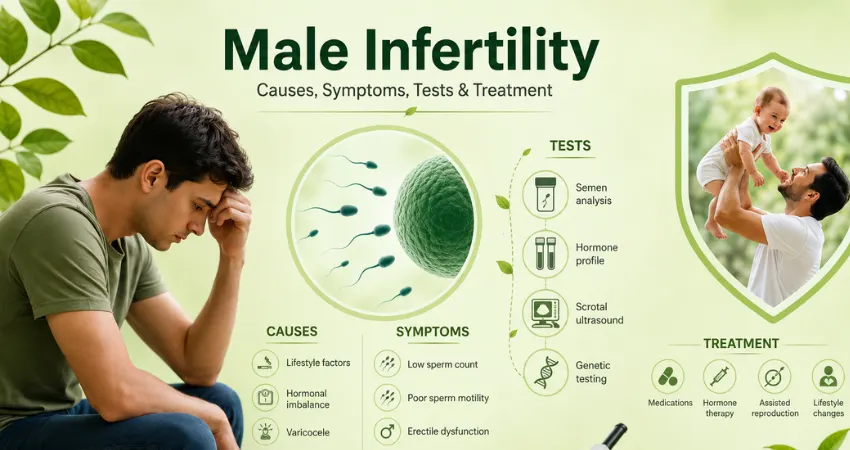
Male Infertility: Causes, Risk Factors, Testing, and Treatment
Male infertility is a common reproductive health issue that can make it difficult for a couple to achieve pregnancy. It may result from problems with sperm production, sperm quality, sperm transport, ejaculation, hormones, genetics, or other medical conditions. In some cases, several factors occur together, while in others, no clear cause can be identified.
Infertility is not exclusively a female health issue. According to the American Society for Reproductive Medicine (ASRM), male factors alone account for approximately 20% to 30% of infertility in couples and contribute to another 20% to 30%. Taken together, male factors are involved in about half of infertile couples.
The World Health Organization (WHO) estimates that approximately 17.5% of adults worldwide—about 1 in 6 people—experience infertility during their lifetime. The WHO defines infertility as the inability to achieve pregnancy after 12 months or more of regular unprotected sexual intercourse.
Importantly, male infertility does not necessarily mean that a man can never father a child. Some causes are treatable, some can be managed with assisted reproductive technologies, and some may be addressed by correcting an underlying medical problem. The right approach depends on the cause, sperm findings, the health and fertility of the female partner, age, reproductive goals, and other individual circumstances.
What Is Male Infertility?
Male infertility refers to difficulty achieving pregnancy because of a factor affecting the male reproductive system.
For pregnancy to occur naturally, sperm must be produced in sufficient numbers, mature normally, move effectively, reach the reproductive tract, and successfully fertilize an egg. The reproductive system must also be able to transport and ejaculate sperm.
Problems at any stage can reduce the probability of conception.
Male infertility can involve:
- Low sperm production
- Absent sperm production
- Poor sperm movement, known as reduced motility
- Abnormal sperm shape, known as abnormal morphology
- Blockage of the reproductive tract
- Problems with ejaculation
- Hormonal disorders
- Testicular disorders
- Genetic conditions
- Varicocele
- Effects of medications or cancer treatment
The CDC similarly describes male infertility as potentially resulting from disruption of testicular or ejaculatory function, hormonal disorders, and genetic conditions. A semen analysis is generally an important part of the initial evaluation.
A man can also have a normal sexual function and still have a fertility problem. Erectile function, libido, and ejaculation do not necessarily tell you whether sperm production or sperm quality is normal.
How Common Is Male Factor Infertility?
Male factors are involved in approximately half of infertile couples when cases caused exclusively by male factors and cases involving both partners are combined. ASRM estimates that male factors alone account for 20% to 30% of infertility cases and contribute to another 20% to 30%.
This makes evaluation of the male partner an important part of a couple’s fertility assessment.
The WHO’s global estimate also demonstrates the scale of infertility as a public health issue. Its 2023 analysis found a lifetime infertility prevalence of approximately 17.8% in high-income countries and 16.5% in low- and middle-income countries.
These statistics also highlight why fertility evaluation should involve both partners rather than automatically assuming that difficulty conceiving is caused by the woman.
What Causes Male Infertility?
There is no single cause of male infertility. A useful way to understand the condition is to divide causes into problems with sperm production, sperm transport, ejaculation, hormones, genetics, and external or lifestyle factors.
Problems With Sperm Production
Healthy sperm production takes place primarily in the testes and depends on functioning testicular tissue and appropriate hormonal signaling.
When the testes do not produce enough sperm, the resulting condition may be called oligospermia or oligozoospermia. When sperm are absent from the ejaculate, the condition is called azoospermia.
Reduced sperm production may be associated with testicular injury, infection, varicocele, certain genetic conditions, hormonal disorders, cancer treatment, medications, or other medical conditions.
Not every abnormal semen analysis means permanent infertility. Sperm parameters can vary between samples, which is one reason clinicians may repeat testing before reaching conclusions.
Poor Sperm Motility
Sperm motility describes how effectively sperm move.
Even when sperm are present in an adequate number, impaired movement can make it harder for sperm to travel through the female reproductive tract and reach an egg.
A semen analysis typically evaluates sperm concentration, motility, and morphology. ASRM describes semen analysis as a central component of male fertility evaluation.
Abnormal Sperm Morphology
Morphology refers to the size and shape of sperm cells.
Some sperm naturally have atypical shapes, and an abnormal morphology result by itself does not necessarily mean that conception is impossible. Fertility specialists interpret morphology alongside sperm concentration, motility, medical history, and other findings.
This is important because fertility should not be judged from a single semen parameter in isolation.
Varicocele
A varicocele is an enlargement of veins in the scrotum. It is one of the recognized conditions associated with male infertility.
A varicocele can be detected during a physical examination and may sometimes be associated with abnormal semen parameters or discomfort.
However, having a varicocele does not automatically mean that a man is infertile. ASRM notes that most men with varicoceles are not infertile and do not have problems related to the condition.
Treatment may be considered in selected men who are trying to conceive, have a clinically significant varicocele and abnormal semen analysis, and have no major competing infertility factor in the female partner.
Blockage of the Reproductive Tract
Sperm may be produced normally but fail to reach the ejaculate because of an obstruction.
Blockages can occur in different parts of the reproductive tract. Previous vasectomy, infections, trauma, and certain surgeries can contribute to reproductive tract obstruction.
WHO identifies obstruction of the reproductive tract as one potential cause of male infertility, including blockage involving structures responsible for transporting or ejaculating semen.
Depending on the location and cause, treatment may involve surgery or sperm retrieval combined with assisted reproductive technology.
Hormonal Problems
Hormones regulate sperm production.
The hypothalamus and pituitary gland communicate with the testes through reproductive hormones, including follicle-stimulating hormone (FSH) and luteinizing hormone (LH). Testosterone also plays an important role in male reproductive physiology.
Hormonal disorders can interfere with this system and reduce sperm production.
Some men with infertility and low testosterone may therefore require a specialized endocrine evaluation rather than simply receiving testosterone replacement.
This distinction is particularly important because externally administered testosterone can suppress sperm production.
Genetic Causes
Some cases of male infertility have a genetic basis.
Examples can include chromosomal abnormalities and specific genetic conditions affecting sperm production or reproductive tract development.
Genetic testing may be recommended in men with very low sperm counts or certain patterns of azoospermia, depending on clinical findings.
ASRM notes that genetic testing may be appropriate when sperm counts are extremely low and that genetic causes can also have implications for potential offspring.
A genetic evaluation can therefore provide information not only about the cause of infertility but also about reproductive planning.
Male Infertility Risk Factors
Some risk factors cannot be changed, while others may be modifiable.
Age is one consideration. The CDC reports that couples in which the male partner is 40 or older are more likely to report difficulty conceiving.
Other recognized risk factors include:
- Smoking
- Heavy alcohol consumption
- Recreational drug use
- Anabolic steroid use
- Testosterone exposure
- Overweight or obesity
- Testicular trauma
- Previous reproductive surgery
- Certain infections
- Chemotherapy or radiation
- Some medications
- Exposure to certain environmental toxins
- Frequent exposure of the testes to high temperatures
The presence of a risk factor does not prove that it caused an individual’s infertility. It simply indicates a factor that may be relevant to the overall evaluation.
Smoking and Male Fertility
Smoking is particularly relevant to reproductive health.
The CDC states that smoking can damage sperm and may contribute to erectile dysfunction, both of which can make fathering a child more difficult.
Smoking has also been associated with changes in sperm count, motility, morphology, and sperm DNA integrity in research summarized by CDC clinical guidance.
For men trying to conceive, stopping tobacco use is an important general health and reproductive-health measure.
Weight, Metabolic Health, and Fertility
Body weight and metabolic health can also be relevant.
CDC clinical guidance notes an association between obesity, lower testosterone levels, poorer semen quality, and reduced fertility. Diabetes can also affect several aspects of male reproductive function.
This does not mean that every man with obesity or diabetes will have infertility. Instead, these conditions can form part of the overall risk profile and may warrant appropriate medical management.
A website covering men’s health can naturally connect this section to related content about healthy weight, high blood pressure, cholesterol, diabetes, and lifestyle-related health conditions.
Can Testosterone Therapy Cause Infertility?
This is an especially important question for men planning to have children.
Exogenous testosterone—testosterone taken from outside the body—can suppress the hormonal signals that stimulate sperm production. As a result, sperm production may decrease substantially or stop altogether in some men.
The 2024 AUA/ASRM male infertility guideline states that clinicians should not prescribe exogenous testosterone therapy to men interested in current or future fertility. The guideline explains that testosterone-induced suppression can lead to oligospermia or azoospermia and that recovery after stopping treatment can take months and, rarely, years.
Men who have symptoms of low testosterone and are also trying to conceive should therefore discuss fertility-preserving treatment strategies with an appropriately qualified clinician rather than starting testosterone on their own.
This is particularly relevant because testosterone products are sometimes marketed for energy, muscle development, sexual health, or aging without adequately explaining their potential effect on sperm production.
What Are the Signs of Male Infertility?
Male infertility often has no obvious symptoms.
A man may have normal libido, erections, ejaculation, and sexual activity while still having a significantly abnormal semen analysis.
In other cases, symptoms may provide clues about an underlying condition. These can include:
- Erectile or ejaculation difficulties
- Reduced sexual desire
- Testicular pain or swelling
- A lump or enlarged veins in the scrotum
- Smaller-than-expected testes
- Signs of hormonal abnormalities
- Previous testicular injury
- Recurrent reproductive tract infections
Importantly, the absence of symptoms does not rule out infertility.
If a couple has been trying to conceive without success, fertility evaluation should not be delayed simply because the male partner feels healthy.
When Should a Man Get Tested for Infertility?
WHO defines infertility as failure to achieve pregnancy after 12 months or more of regular unprotected sexual intercourse.
For couples in which the female partner is under 35 and there are no obvious risk factors, evaluation commonly begins after 12 months of unsuccessful attempts. When the female partner is 35 or older, evaluation is generally recommended sooner, often after 6 months. The exact timing may differ according to medical history and clinical circumstances.
Earlier assessment may be appropriate when the man has a history of:
- Testicular injury or surgery
- Chemotherapy or radiation
- Known varicocele
- Previous infertility
- Sexual or ejaculatory problems
- Undescended testicles
- Very low sperm count in a previous test
- Known genetic or hormonal conditions
- Testosterone or anabolic steroid use
The AUA/ASRM guideline emphasizes evaluating the male partner because identifying a male factor can help avoid unnecessary or overly invasive treatment directed only at the female partner.
How Is Male Infertility Diagnosed?
Male infertility diagnosis usually begins with a detailed medical and reproductive history, physical examination, and semen analysis.
Medical and Reproductive History
A clinician may ask about:
- Previous pregnancies
- Duration of attempts to conceive
- Previous fertility treatment
- Childhood illnesses
- Testicular development
- Previous surgeries
- Sexually transmitted infections
- Testicular trauma
- Medication use
- Testosterone or anabolic steroid use
- Cancer treatment
- Smoking and alcohol
- Recreational drug use
- Occupational or environmental exposures
- Sexual and ejaculation function
This information helps determine which additional tests may be useful.
Semen Analysis
Semen analysis is one of the most important tests for male infertility.
It evaluates characteristics such as sperm concentration, motility, morphology, and semen volume.
A single abnormal test does not automatically establish permanent infertility. Semen parameters can fluctuate, and clinicians may request repeat testing when the first result is abnormal.
ASRM specifically notes that semen analysis is an essential part of infertility evaluation and that it should be performed even when the male partner has fathered children previously.
Hormone Testing
Hormonal blood tests may be recommended when semen analysis or clinical findings suggest an endocrine problem.
Testing may include testosterone, FSH, LH, prolactin, or other hormones depending on the patient’s symptoms and examination.
The purpose is not simply to determine whether testosterone is “high” or “low.” Instead, clinicians evaluate how the reproductive hormone system is functioning and whether a treatable hormonal disorder may be affecting sperm production.
Genetic Testing
Genetic testing may be considered in men with severe sperm-production abnormalities or specific clinical findings.
The AUA/ASRM guideline provides recommendations for genetic evaluation in selected men with azoospermia or severe oligospermia, because genetic abnormalities can influence both treatment decisions and reproductive counseling.
Imaging and Other Tests
Not every man needs imaging.
Depending on the history and physical examination, a clinician may use scrotal ultrasound, specialized imaging, post-ejaculatory urine testing, sperm-function testing, or other investigations.
The goal should be targeted testing rather than ordering every possible test.
What Are the Treatment Options for Male Infertility?
Treatment depends on the underlying cause.
There is no single “male infertility treatment” that works for everyone.
Lifestyle and Medical Management
When modifiable factors are contributing to poor reproductive health, treatment may include smoking cessation, reducing excessive alcohol consumption, avoiding recreational drugs, improving metabolic health, addressing medication-related effects, and managing underlying medical conditions.
Lifestyle changes should not be presented as a guaranteed cure. They can support overall reproductive health, but men with significant infertility may still require medical or assisted reproductive treatment.
Treating Hormonal Disorders
Some men have hormonal conditions that impair sperm production.
The AUA/ASRM guideline states that clinicians may use treatments such as human chorionic gonadotropin (hCG), selective estrogen receptor modulators (SERMs), or aromatase inhibitors in selected infertile men with low serum testosterone. These treatments require appropriate clinical assessment and are not interchangeable with routine testosterone replacement.
Hormonal treatment should therefore be individualized by a clinician experienced in male reproductive medicine.
Varicocele Repair
In appropriately selected men, treatment of a clinically significant varicocele may improve semen parameters and potentially fertility outcomes.
However, surgery is not automatically recommended for every man with a varicocele.
The decision depends on factors such as fertility status, semen analysis, physical findings, symptoms, and the fertility status of the female partner.
Treating Reproductive Tract Obstruction
When sperm production is normal but a blockage prevents sperm from reaching the ejaculate, treatment may focus on correcting the obstruction.
Depending on the location and cause, surgical reconstruction may be possible.
In other cases, sperm can be retrieved directly and used with assisted reproductive technology.
Sperm Retrieval
Men with azoospermia or certain obstructive conditions may sometimes have viable sperm available within the testicles or reproductive tract even when sperm are absent from the ejaculate.
Specialist procedures can retrieve sperm for use in assisted reproduction.
The appropriate method depends on whether the azoospermia is obstructive or non-obstructive and on the underlying cause.
Intrauterine Insemination
Intrauterine insemination (IUI) involves placing prepared sperm directly into the uterus around the time of ovulation.
IUI may be considered in selected situations involving mild male factor infertility, depending on sperm parameters and the female partner’s fertility factors.
It is not appropriate for every type or severity of male infertility.
In Vitro Fertilization and ICSI
In vitro fertilization (IVF) involves fertilizing eggs outside the body before transferring an embryo to the uterus.
Intracytoplasmic sperm injection (ICSI) is a specialized IVF technique in which a single sperm is injected directly into an egg.
ICSI can be particularly useful when sperm numbers or motility are severely impaired or when surgically retrieved sperm must be used.
The AUA/ASRM guideline includes IUI and assisted reproductive technologies such as IVF and ICSI among treatment approaches for male infertility.
Can Male Infertility Be Prevented?
Not every case can be prevented, particularly when infertility results from genetic conditions, congenital abnormalities, or unavoidable medical treatment.
However, certain reproductive-health practices may reduce avoidable risks.
Avoiding tobacco, anabolic steroids, and non-prescribed drugs is important. Men should also discuss medications that may affect sperm production with their healthcare provider before making changes.
Protecting the testes from significant injury, maintaining a healthy weight, managing chronic diseases, preventing and treating sexually transmitted infections, and discussing fertility preservation before cancer treatment can also be important.
Men undergoing chemotherapy or other treatments that may damage sperm production should ask about sperm cryopreservation before treatment whenever appropriate. ASRM specifically highlights fertility preservation before chemotherapy because recovery of sperm production is not guaranteed for every patient.
Does Heat Affect Sperm Quality?
The testes are located outside the body partly because sperm production works best at a temperature lower than core body temperature.
The CDC identifies frequent exposure of the testes to high temperatures as a potential male infertility risk factor.
However, people should be cautious about online claims that every hot bath, laptop, tight garment, or brief heat exposure causes infertility.
Evidence and individual exposure patterns vary, and not every commonly cited “sperm-killing” activity has been shown to cause clinically meaningful infertility.
A better approach is to discuss significant or repeated heat exposure with a clinician, particularly when semen analysis is abnormal.
Do Supplements Improve Male Fertility?
Male fertility supplements are widely marketed, often containing antioxidants, vitamins, minerals, or herbal ingredients.
However, supplements should not be treated as a proven solution for unexplained or significant male infertility.
The AUA/ASRM guideline notes that the clinical utility of supplements such as antioxidants and vitamins in treating male infertility remains of questionable value because evidence is inadequate to support recommending specific agents.
This does not mean that every nutrient is irrelevant. Genuine nutritional deficiencies should be identified and corrected when medically appropriate.
The key distinction is between treating a documented deficiency and assuming that a high-dose supplement will improve fertility.
Can Male Infertility Be Cured?
Whether male infertility can be reversed depends entirely on the cause.
Some conditions can be treated effectively. Examples may include certain hormonal disorders, clinically significant varicoceles, some reproductive tract obstructions, and medication-related fertility problems.
Other causes may be difficult or impossible to reverse, including certain forms of genetic infertility or severe testicular damage.
Even when natural conception is not possible, assisted reproductive technologies may allow some men with severe male factor infertility to use their own sperm.
Therefore, “infertility” should not automatically be interpreted as “permanent inability to have biological children.”
Why Both Partners Should Be Evaluated
A common mistake is to treat infertility as belonging exclusively to one partner.
Because male factors contribute to approximately half of infertile couples, evaluating the male partner can be just as important as evaluating the female partner.
Fertility is a couple-level outcome, and multiple factors can coexist.
For example, a man may have mildly reduced sperm motility while his partner also has a fertility-related condition. Treating only one factor may not fully address the couple’s difficulty conceiving.
A coordinated fertility assessment therefore provides a more complete picture.
How to Choose a Male Infertility Specialist
Men with abnormal semen results, azoospermia, severe oligospermia, suspected hormonal infertility, varicocele, reproductive tract obstruction, or a history of fertility-affecting cancer treatment may benefit from evaluation by a urologist or other clinician specializing in male reproductive health.
The ASRM recommends specialist evaluation when abnormalities are identified during initial male fertility assessment.
When choosing a provider, patients can consider whether the clinician has experience with male infertility, whether semen analysis and hormonal testing are available, whether genetic testing is offered when indicated, and whether the practice works collaboratively with fertility specialists.
The goal is not simply to obtain a diagnosis but to identify the cause and match treatment to the patient’s reproductive goals.
Key Takeaways About Male Infertility
Male infertility is common and contributes to approximately half of infertility cases when male-only and combined male/female factors are considered.
The condition can result from sperm-production problems, abnormal sperm quality, varicocele, hormonal disorders, reproductive tract obstruction, genetic conditions, medication effects, testicular injury, cancer treatment, and other factors.
Semen analysis is a fundamental component of male fertility evaluation, but it is only one part of the overall assessment. Medical history, physical examination, hormone testing, genetic testing, and additional investigations may be appropriate depending on the findings.
Treatment is cause-specific. Options can include lifestyle and medical management, hormonal treatment, varicocele repair, surgical correction of obstruction, sperm retrieval, IUI, IVF, or ICSI.
One particularly important point is that men interested in current or future fertility should not assume testosterone replacement is harmless to sperm production. AUA/ASRM guidance specifically advises against prescribing exogenous testosterone to men pursuing fertility because it can suppress spermatogenesis.
Finally, infertility is not solely a woman’s issue. Both partners should be appropriately evaluated when pregnancy does not occur as expected.
Frequently Asked Questions
What is the most common cause of male infertility?
There is no single cause that applies to every man. Common contributors include impaired sperm production, poor sperm motility or morphology, varicocele, hormonal disorders, reproductive tract obstruction, genetic abnormalities, medications, and testicular damage.
How do I know if I am infertile?
Male infertility often has no noticeable symptoms. A semen analysis is one of the primary tests used to evaluate male reproductive potential. Additional testing may be required depending on the results and medical history.
Can a man with low sperm count still have a baby?
Yes. A low sperm count does not automatically mean that biological fatherhood is impossible. Depending on the cause and severity, treatment or assisted reproductive techniques such as IUI, IVF, or ICSI may be options.
Can male infertility be treated naturally?
Some lifestyle factors that affect reproductive health can be modified, including smoking, excessive alcohol or drug use, and unhealthy weight. However, lifestyle changes cannot correct every cause of infertility. Men with abnormal semen analysis or other risk factors should receive appropriate medical evaluation.
Does testosterone increase male fertility?
Exogenous testosterone can actually suppress sperm production. The AUA/ASRM guideline advises clinicians not to prescribe exogenous testosterone to men interested in current or future fertility.
How long does a semen analysis take?
The laboratory portion of a semen analysis is generally completed relatively quickly, but the exact processing and reporting time varies between laboratories. The sample must be collected according to the laboratory’s instructions to obtain reliable results.
Is one abnormal semen analysis enough to diagnose infertility?
Not necessarily. Semen parameters can vary between samples, and clinicians may recommend repeat testing, particularly when an initial result is abnormal. The result also needs to be interpreted alongside the medical history, examination, and fertility circumstances of both partners.
Can smoking cause male infertility?
Smoking is associated with impaired male reproductive health. The CDC states that smoking can damage sperm and contribute to erectile dysfunction, both of which can make it harder to father a child.
Does obesity affect male fertility?
Obesity has been associated with lower testosterone levels, poorer semen quality, and reduced fertility. However, individual outcomes vary, and obesity is only one possible factor among many.
Can a varicocele cause infertility?
A varicocele can be associated with male infertility and abnormal semen parameters, but many men with varicoceles are fertile. Treatment is generally considered only in selected patients based on physical findings, semen analysis, fertility status, and other factors.
When should a man see a fertility specialist?
Evaluation is generally appropriate when a couple has not achieved pregnancy after 12 months of regular unprotected intercourse, or sooner when the female partner is 35 or older or when there are known male fertility risk factors. Men with previous testicular surgery, trauma, chemotherapy, severe semen abnormalities, sexual dysfunction, or known reproductive conditions may benefit from earlier evaluation.
Can male infertility be prevented?
Not all male infertility can be prevented. Genetic conditions, congenital abnormalities, and unavoidable medical treatments may cause infertility despite appropriate care. However, avoiding tobacco and anabolic steroids, managing chronic disease, addressing sexually transmitted infections, maintaining healthy habits, and discussing fertility preservation before potentially gonadotoxic cancer treatment can reduce some preventable risks.