
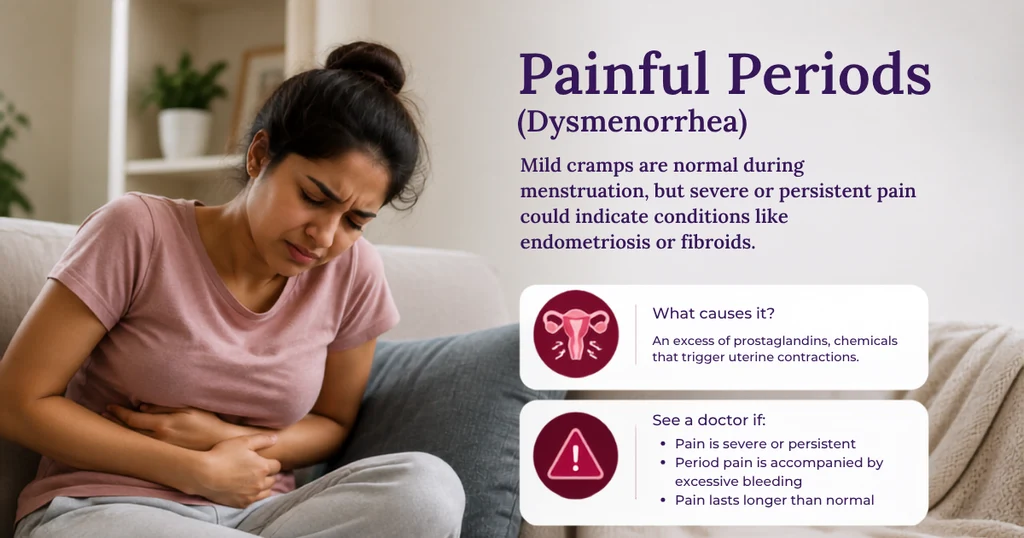
Painful Periods: When Cramps May Signal an Underlying Condition
Painful periods are common, but severe menstrual cramps that disrupt daily life, worsen over time, or occur alongside unusual bleeding and pelvic pain may signal an underlying medical condition. While many women experience temporary discomfort during menstruation, persistent or unusually intense period pain should not automatically be considered normal.
Menstrual cramps, medically known as dysmenorrhea, can occur because the uterus contracts to shed its lining. However, conditions such as endometriosis, adenomyosis, uterine fibroids, and pelvic inflammatory disease can also cause painful periods. Identifying the difference between ordinary menstrual cramps and secondary dysmenorrhea can help women seek appropriate treatment before symptoms continue to affect their quality of life.
According to the American College of Obstetricians and Gynecologists (ACOG), more than half of women and girls who menstruate experience some period pain for one or two days each month. A smaller proportion experience pain severe enough to interfere with school, work, sleep, or everyday activities. ACOG’s guidance on painful periods explains common symptoms, possible causes, and treatment options.
This guide explores why periods can be painful, which symptoms deserve medical attention, how doctors diagnose underlying conditions, and what treatments may help. It also explains when period cramps require urgent care and how to prepare for a gynecological appointment.
What Are Painful Periods?
Painful periods occur when menstruation causes cramping or discomfort in the lower abdomen, pelvis, or lower back. Some women experience a dull ache, while others report sharp cramps that come in waves. Pain may begin shortly before bleeding starts, peak during the first days of menstruation, and gradually improve.
Period pain can occur with other symptoms, including nausea, diarrhea, headaches, fatigue, and lower back discomfort. The intensity varies between individuals and from one menstrual cycle to another.
Doctors generally distinguish between two types of menstrual pain: primary dysmenorrhea and secondary dysmenorrhea.
Primary dysmenorrhea: Menstrual cramps without an identified pelvic disorder
Primary dysmenorrhea refers to painful menstruation that is not caused by an identifiable structural or gynecological condition.
During menstruation, the uterus releases chemicals called prostaglandins. These chemicals help the uterine muscles contract to shed the uterine lining. Higher prostaglandin activity can lead to stronger contractions and temporary reductions in blood flow to the uterine muscle, contributing to cramping.
Primary dysmenorrhea often begins during adolescence, particularly after ovulatory menstrual cycles become established. The pain usually starts just before or around the beginning of menstrual bleeding and improves over the following few days.
Mild or moderate cramps that follow a familiar pattern and respond to appropriate treatment are often consistent with primary dysmenorrhea. However, even period pain without an underlying disorder deserves attention if it interferes with daily life.
Secondary dysmenorrhea: Period pain caused by an underlying condition
Secondary dysmenorrhea occurs when menstrual pain is associated with a condition affecting the reproductive organs or surrounding pelvic structures.
Possible causes include endometriosis, adenomyosis, uterine fibroids, and pelvic inflammatory disease. An ovarian cyst or another pelvic condition may also contribute to pain around menstruation.
Unlike typical primary dysmenorrhea, secondary menstrual pain may worsen over time, begin several days before bleeding, continue after the period ends, or occur at other points in the menstrual cycle.
Pain during sexual intercourse, painful bowel movements, unusually heavy bleeding, or difficulty becoming pregnant may provide additional clues.
These patterns do not confirm a diagnosis, but they can help a healthcare professional decide whether further evaluation is needed.
When Are Period Cramps Considered Normal?
Menstrual discomfort is common, and some cramping does not necessarily indicate disease. Typical period pain often begins shortly before or at the start of menstruation and improves within one to three days.
The discomfort may be accompanied by mild nausea, loose stools, or lower back pain. It generally follows a predictable pattern from month to month and improves with measures such as heat therapy or appropriate pain relief.
However, the word “normal” should not be used to dismiss significant suffering. Pain that prevents someone from attending school, working, sleeping, exercising, or performing routine activities deserves medical attention, even if it occurs every month.
A useful distinction is whether the pain is familiar and manageable or represents a significant change. Cramps that become progressively worse, last longer than usual, or respond poorly to previously effective treatment may warrant an investigation for secondary dysmenorrhea.
ACOG advises that women can seek help for period pain regardless of whether they consider it mild or severe. The important issue is how the symptoms affect daily life and whether they suggest an underlying condition.
Statistics: How Common Are Painful Periods and Their Underlying Causes?
Several authoritative sources help put menstrual pain into context.
- More than half: ACOG reports that more than half of women and girls who menstruate experience some period pain for one or two days each month.
- Approximately 1 in 10: Endometriosis affects an estimated 10% of women and girls of reproductive age worldwide, according to the World Health Organization (WHO).
- 50% to 90%: An ACOG committee opinion has cited estimates in this range for dysmenorrhea among adolescent girls and young women, although prevalence varies according to the population studied and how menstrual pain is defined.
These figures describe different groups and conditions. They should not be combined into a single estimate of how many people with painful periods have an underlying disorder.
The prevalence of menstrual pain also does not mean that severe symptoms should be ignored. Persistent or worsening cramps may justify assessment even when they occur in someone who has menstruated for many years.
Sources: ACOG — Painful Periods, WHO — Endometriosis, and ACOG Committee Opinion on Dysmenorrhea and Endometriosis in Adolescents.
Medical Conditions That Can Cause Painful Periods
Several gynecological conditions can produce menstrual cramps that are more severe, persistent, or unusual than expected. Their symptoms often overlap, so medical evaluation may be necessary to distinguish between them.
1. Endometriosis
Endometriosis is a chronic condition in which tissue similar to the lining of the uterus grows outside the uterus. It may affect the ovaries, fallopian tubes, tissues around the uterus, and other pelvic structures. In some cases, it involves the bowel or bladder.
The WHO estimates that endometriosis affects approximately 10% of women and girls of reproductive age worldwide. Despite its prevalence, diagnosis can be delayed because symptoms vary and may resemble ordinary menstrual cramps or other pelvic conditions.
Common symptoms include severe period pain, chronic pelvic pain, pain during or after sexual intercourse, painful bowel movements, and pain during urination that follows a menstrual pattern. Some people also experience difficulty becoming pregnant.
One important warning sign is menstrual pain that becomes progressively worse or continues beyond the first few days of bleeding. Pain that interferes with everyday activities, especially when combined with cyclical bowel or bladder symptoms, should prompt a discussion with a healthcare professional.
Endometriosis cannot be ruled out solely because an ultrasound appears normal. The UK’s National Institute for Health and Care Excellence (NICE) recommends considering symptoms, examination findings, imaging, and specialist assessment when deciding on the next steps.
Treatment may include anti-inflammatory pain relief, hormonal medication, or surgery in selected cases. The best approach depends on symptom severity, treatment preferences, medical history, and whether pregnancy is a current priority.
For further information, read the related guide on endometriosis symptoms, causes, diagnosis, and treatment.
Sources: WHO — Endometriosis and NICE — Endometriosis: Diagnosis and Management.
2. Adenomyosis
Adenomyosis develops when tissue similar to the uterine lining grows into the muscular wall of the uterus. This can cause the uterus to become enlarged or tender and may contribute to painful menstruation.
Common symptoms include severe menstrual cramps, heavy or prolonged periods, pelvic pressure, and discomfort that may become more noticeable over time. Some women experience both adenomyosis and endometriosis, making diagnosis more complicated.
Adenomyosis should be considered when painful periods occur alongside unusually heavy bleeding or persistent pelvic discomfort, particularly when symptoms change over time.
A clinician may recommend a pelvic ultrasound or, in selected cases, MRI to investigate the uterus and assess possible causes of symptoms.
Treatment options depend on the severity of the pain, bleeding patterns, age, medical history, and reproductive plans. Options may include anti-inflammatory medication, hormonal treatments, or procedures for more severe symptoms.
3. Uterine fibroids
Uterine fibroids are noncancerous growths that develop in or around the uterus. Some cause no symptoms, while others contribute to heavy menstrual bleeding, pelvic pressure, lower back discomfort, or painful periods.
The symptoms depend partly on the size, number, and location of the fibroids. Fibroids that distort the uterine cavity or affect the uterine wall may contribute to heavier bleeding and discomfort.
Women may also experience frequent urination or a feeling of fullness in the lower abdomen if fibroids press against nearby structures.
A pelvic ultrasound is commonly used to investigate suspected fibroids. Treatment may involve monitoring, medication, procedures that target fibroids, or surgery, depending on the symptoms and the patient’s preferences.
Not every woman with fibroids requires treatment. However, worsening cramps, heavy bleeding, fatigue, or symptoms of anemia should be assessed rather than managed indefinitely with over-the-counter pain relief.
4. Pelvic inflammatory disease
Pelvic inflammatory disease (PID) is an infection of the upper female reproductive tract, which can include the uterus, fallopian tubes, and ovaries. It may develop when bacteria travel upward from the cervix or vagina. Sexually transmitted infections such as chlamydia and gonorrhea are important causes, although other bacteria can also contribute.
PID can cause lower abdominal pain, unusual vaginal discharge, bleeding between periods, pain during sex, and fever. Symptoms may be mild, and some women have few obvious signs.
Although PID is not simply a cause of ordinary menstrual cramps, it can produce pelvic pain that worsens around menstruation or is mistaken for period-related discomfort.
Prompt diagnosis and antibiotic treatment are important because untreated PID can cause scarring of the fallopian tubes, persistent pelvic pain, infertility, and an increased risk of ectopic pregnancy.
Seek medical evaluation for pelvic pain accompanied by fever, unusual discharge, unexpected bleeding, or pain during sex. Severe pain, vomiting, faintness, or a rapidly worsening condition requires urgent care.
5. Ovarian cysts
Ovarian cysts are fluid-filled sacs that develop in or on an ovary. Many are associated with the menstrual cycle and resolve without treatment.
Some cysts cause no symptoms, while others produce one-sided pelvic discomfort, pressure, bloating, or pain during intercourse. Menstrual timing may influence symptoms, but pain alone cannot establish that a cyst is present.
Complications such as cyst rupture or ovarian torsion can cause sudden, severe pain. Ovarian torsion occurs when an ovary twists around its supporting tissues, potentially reducing its blood supply.
Sudden severe pelvic pain, particularly when accompanied by nausea or vomiting, requires emergency assessment. It should not be assumed to be routine menstrual cramping.
A pelvic ultrasound can help identify ovarian cysts and guide decisions about monitoring or treatment.
6. Other possible causes of period-related pain
Not all pain that occurs around menstruation originates in the uterus or ovaries. Urinary tract infections, bladder pain conditions, constipation, irritable bowel syndrome, and pelvic floor muscle dysfunction can cause lower abdominal or pelvic discomfort.
These conditions may produce symptoms that overlap with menstrual pain. For example, bladder irritation can cause pressure and urinary urgency, while constipation may lead to cramping and bloating.
Painful bowel movements or urinary symptoms that repeatedly worsen during menstruation may also occur with endometriosis. Keeping track of when symptoms appear can help a clinician recognize patterns that need investigation.
A healthcare professional can help distinguish gynecological causes from urinary, digestive, or muscular conditions and recommend appropriate treatment.
Warning Signs That Period Cramps May Indicate an Underlying Condition
The pattern of pain is often more informative than the fact that cramps occur during menstruation.
Consider arranging a medical appointment if you experience any of the following:
- Period pain that becomes progressively worse over several months.
- Cramps that regularly prevent you from working, attending school, sleeping, or carrying out everyday activities.
- Pain that begins several days before bleeding and continues after the period ends.
- Pelvic pain between periods or during sexual intercourse.
- Painful bowel movements or urination that follow a menstrual pattern.
- Menstrual bleeding that becomes unusually heavy, prolonged, or irregular.
- Persistent pelvic discomfort accompanied by bloating, unusual discharge, or difficulty becoming pregnant.
- Pain that does not improve despite using an appropriate treatment as directed.
These symptoms do not necessarily indicate a serious condition, but they justify evaluation to identify the cause.
When to seek urgent or emergency care
Seek urgent medical advice for severe or worsening period pain that is not responding to appropriate pain relief. Emergency care is especially important for sudden severe pelvic pain, fainting, marked dizziness, fever with significant pelvic pain, or repeated vomiting.
If pregnancy is possible, pelvic pain accompanied by vaginal bleeding, shoulder-tip pain, dizziness, or faintness may indicate an ectopic pregnancy. This can be life-threatening and requires immediate assessment.
Very heavy bleeding accompanied by weakness, breathlessness, faintness, or severe pain also requires urgent evaluation.
Do not wait for the next menstrual cycle if symptoms suggest an emergency.
How Are Painful Periods Diagnosed?
Diagnosing the cause of menstrual cramps usually begins with a detailed medical history. A healthcare professional will ask about the timing, severity, duration, and location of the pain, along with the menstrual cycle and any associated symptoms.
Medical history and menstrual symptom tracking
A symptom diary can help identify patterns that may otherwise be difficult to remember. Record when the pain begins, how long it lasts, whether it occurs before or after bleeding, and how it affects everyday activities.
Include details about bleeding volume, pain during sex, bowel or bladder symptoms, medications used, and whether treatment provides relief.
A family history of endometriosis may also be relevant. NICE recommends asking about endometriosis in first-degree relatives because this can increase suspicion of the condition.
Physical and pelvic examination
Depending on symptoms and individual circumstances, a clinician may recommend an abdominal examination or pelvic examination. These assessments can help identify tenderness, masses, or other findings that guide further investigation.
The clinician should explain the purpose of any examination, answer questions, and obtain consent. An internal examination is not appropriate for every patient, and alternatives may be considered when needed.
Ultrasound and other investigations
Pelvic ultrasound is commonly used to examine the uterus and ovaries. It may help identify fibroids, ovarian cysts, adenomyosis-related changes, and certain forms of endometriosis.
A transvaginal ultrasound can provide detailed images of pelvic organs when appropriate and accepted by the patient. A transabdominal scan may be an alternative when an internal scan is not suitable or is declined.
A normal ultrasound does not exclude all cases of endometriosis. NICE advises that further assessment or referral may still be appropriate when symptoms strongly suggest the condition.
Blood tests, pregnancy testing, urine tests, or tests for sexually transmitted infections may be recommended when the symptoms indicate a need for them. Laparoscopy may be considered in selected cases when endometriosis remains suspected despite initial investigations.
The aim is to identify the likely cause and select appropriate treatment, not to perform every possible test.
Treatment Options for Painful Periods
Treatment depends on whether the pain is caused by primary dysmenorrhea or an underlying medical condition. What works for one person may not be suitable for another.
Pain-relief medication
Nonsteroidal anti-inflammatory drugs (NSAIDs), such as ibuprofen or naproxen, can reduce prostaglandin production and help relieve menstrual cramps.
For some people with predictable cycles, these medicines may work best when started shortly before the expected period or at the beginning of symptoms. However, NSAIDs are not suitable for everyone, including some people with kidney disease, stomach ulcers, bleeding disorders, certain medication interactions, or particular stages of pregnancy.
Follow the product instructions and seek advice from a clinician or pharmacist if you are unsure whether a medication is safe for you.
Paracetamol may be another option for some people, although it may not provide the same level of relief for menstrual cramps as an NSAID.
If pain remains severe despite appropriate treatment, further evaluation may be needed rather than repeatedly increasing medication without advice.
Hormonal treatment
Hormonal contraception and other hormonal therapies may help reduce menstrual pain by suppressing ovulation, reducing menstrual bleeding, or changing the growth of the uterine lining.
Depending on individual circumstances, options may include combined hormonal contraception, progestogen-only treatments, or a hormonal intrauterine device.
These treatments can be useful for some cases of primary dysmenorrhea and conditions such as endometriosis or adenomyosis. They are not suitable for everyone, and the choice depends on medical history, side effects, and reproductive goals.
A healthcare professional can discuss the likely benefits, risks, and alternatives.
Treatment for the underlying condition
When period pain is caused by endometriosis, fibroids, adenomyosis, PID, or another condition, treatment should address that diagnosis where possible.
Endometriosis may be managed with pain relief, hormonal medication, or selected surgical procedures. Fibroid treatment depends on symptoms and may include observation, medication, or procedures. PID requires appropriate antibiotics.
The choice of treatment should take account of symptom severity, response to previous therapies, overall health, and whether pregnancy is desired now or in the future.
Home remedies and lifestyle measures
For familiar menstrual cramps without warning signs, applying a warm heating pad or hot-water bottle to the lower abdomen may provide relief. Avoid excessive heat and protect the skin from burns.
Gentle physical activity, adequate sleep, relaxation exercises, and a warm bath may also help some people manage discomfort. These measures can complement medical treatment but do not replace investigation when symptoms are severe, unusual, or persistent.
Evidence for supplements and alternative treatments varies. Do not assume that a vitamin, herbal product, or restrictive diet will treat an underlying gynecological condition. Discuss supplements with a healthcare professional, particularly if you take medication or may become pregnant.
Can Painful Periods Affect Fertility?
Painful periods do not automatically mean that a woman will have difficulty becoming pregnant. Primary dysmenorrhea, by itself, does not necessarily indicate a fertility problem.
However, some underlying causes of secondary dysmenorrhea can be associated with reduced fertility. Endometriosis may affect pelvic structures and reproductive function, while PID can damage the fallopian tubes if it causes scarring.
Women who experience severe period pain alongside difficulty conceiving, persistent pelvic pain, or a history of pelvic infection should discuss their symptoms and reproductive plans with a qualified healthcare professional.
Treatment decisions may differ when pregnancy is a priority. For example, some hormonal treatments reduce symptoms but prevent pregnancy while they are being used. A clinician can help weigh symptom control against fertility goals and discuss appropriate options.
How to Prepare for a Gynecological Appointment
Preparing for a consultation can help you explain your symptoms clearly and make the most of the appointment.
Keep a record of your menstrual dates, pain severity, bleeding pattern, and symptoms that occur outside menstruation. Note which medications or home remedies you have tried and whether they helped.
Think about how the pain affects your routine. Missing work, avoiding exercise, struggling to sleep, or being unable to attend school are relevant details—not signs that you are exaggerating your symptoms.
Ask about the possible causes of your pain, whether imaging or other tests are appropriate, what treatment options are available, and when you should seek further care if symptoms continue.
If you are concerned about fertility, sexual health, or an internal examination, tell the clinician. These concerns are valid and should be addressed respectfully.
Can Painful Periods Be Prevented?
Not every cause of painful periods can be prevented. Endometriosis, adenomyosis, and uterine fibroids can develop even when someone follows healthy habits.
However, certain steps may help manage symptoms and reduce some avoidable risks.
Tracking the menstrual cycle can help identify changes early. Regular physical activity, sufficient sleep, and heat therapy may help with routine cramps. Appropriate treatment of sexually transmitted infections can reduce the risk of complications associated with PID.
Women should also seek assessment when periods become increasingly painful or bleeding patterns change. Early evaluation may help identify a condition that benefits from treatment.
The most important principle is not to assume that severe pain is an unavoidable part of menstruation. Effective treatment options exist, and the appropriate approach depends on the underlying cause.
Frequently Asked Questions
1. Why are my period cramps so painful?
Menstrual cramps occur when prostaglandins stimulate uterine contractions. Strong contractions can cause significant pain. Severe or worsening cramps may also be associated with endometriosis, adenomyosis, fibroids, or other pelvic conditions and should be evaluated when they interfere with everyday life.
2. How do I know if my period pain is abnormal?
Period pain deserves medical attention if it becomes progressively worse, prevents normal activities, lasts beyond the usual menstrual period, or occurs alongside heavy bleeding, pain during sex, painful bowel movements, or urinary symptoms. These features do not confirm a diagnosis but may indicate an underlying condition.
3. Can endometriosis cause severe menstrual cramps?
Yes. Endometriosis can cause severe period pain, chronic pelvic discomfort, pain during sex, and painful bowel movements or urination around menstruation. A normal ultrasound does not rule out every case, so persistent symptoms may require further assessment.
4. Can uterine fibroids cause painful periods?
Yes. Some uterine fibroids can cause painful periods, heavy menstrual bleeding, pelvic pressure, and lower back discomfort. Others cause no symptoms. Ultrasound can help determine whether fibroids are present and whether they may be contributing to the pain.
5. When should I see a doctor for painful periods?
Arrange a medical appointment if cramps are worsening, repeatedly disrupt daily life, do not improve with appropriate treatment, or occur with unusual bleeding or pain outside menstruation. Seek urgent or emergency care for sudden severe pain, fainting, fever with significant pelvic pain, or possible pregnancy accompanied by severe pain or bleeding.
6. What is the difference between primary and secondary dysmenorrhea?
Primary dysmenorrhea is menstrual pain without an identifiable underlying pelvic disorder and is commonly linked to prostaglandins. Secondary dysmenorrhea results from a condition such as endometriosis, adenomyosis, fibroids, or pelvic inflammatory disease. Secondary pain may worsen over time or occur beyond menstruation.
7. Can stress make period cramps worse?
Stress can affect sleep, muscle tension, and pain perception, which may make menstrual discomfort harder to manage. However, stress should not be assumed to be the cause of severe cramps. Persistent or worsening pain still deserves an appropriate medical assessment.
8. What helps relieve period cramps quickly?
Heat therapy and appropriate pain-relief medication may help with typical menstrual cramps. NSAIDs such as ibuprofen can be effective for some people, but they are not suitable for everyone. Follow product directions and consult a healthcare professional if you have medical conditions, take other medicines, or are unsure what is safe.
9. Can painful periods affect fertility?
Painful periods alone do not necessarily mean fertility will be affected. However, conditions such as endometriosis and pelvic inflammatory disease can be associated with fertility problems. Persistent symptoms, difficulty conceiving, or a history of pelvic infection should be discussed with a healthcare professional.
10. Can a normal ultrasound rule out endometriosis?
No. Ultrasound can identify some forms of endometriosis and other causes of pelvic pain, but a normal scan does not exclude every case. If symptoms strongly suggest endometriosis, a clinician may recommend specialist assessment or further investigation.
11. Are painful periods common in teenagers?
Yes. Menstrual pain is common among adolescents, and many cases are primary dysmenorrhea. However, severe pain that prevents a teenager from attending school or participating in normal activities deserves assessment. If symptoms do not improve with appropriate treatment, a healthcare professional may investigate secondary causes, including endometriosis.
12. Should I worry if my period pain suddenly becomes severe?
Yes. Sudden severe pelvic pain should not automatically be attributed to menstruation. It can have urgent causes, including ovarian torsion, a ruptured ovarian cyst, or ectopic pregnancy. Seek emergency care, particularly if the pain is accompanied by vomiting, faintness, heavy bleeding, or possible pregnancy.