
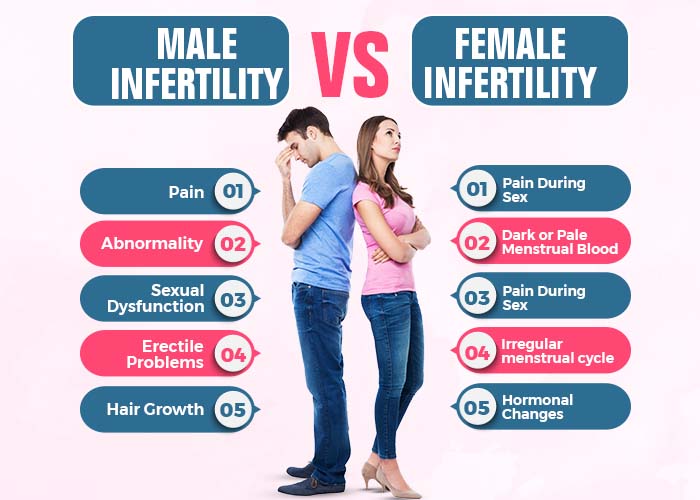
Female Infertility vs Male Infertility: Key Differences
Trying to conceive can be an emotional and sometimes confusing experience, particularly when pregnancy does not happen as expected. Couples may begin by looking for answers about female infertility, male infertility, or possible reproductive health problems affecting either partner. However, fertility is a shared biological process. Successful conception depends on several steps, including the release of an egg, the production of healthy sperm, the movement of sperm through the reproductive tract, fertilisation, embryo development, and implantation in the uterus.
A problem at any stage can make conception more difficult. In some couples, the main issue is related to the female reproductive system. In others, it is associated with sperm production or delivery. Sometimes both partners have contributing factors, while in other cases standard investigations do not identify a clear explanation.
The World Health Organization (WHO) estimates that approximately 17.5% of adults—around one in six people—experience infertility during their lifetime. Its November 2025 fact sheet describes female infertility as potentially involving the ovaries, uterus, fallopian tubes, or endocrine system, while male infertility commonly involves semen ejaculation, sperm count, sperm shape, or sperm movement. These figures demonstrate that infertility is a widespread health issue rather than an unusual or isolated problem. [Source: WHO, Infertility fact sheet, 28 November 2025.]
Understanding female infertility vs male infertility is important because the causes, warning signs, diagnostic tests, and treatment options are not identical. Nevertheless, neither partner should be blamed or investigated in isolation. The American Urological Association (AUA) and American Society for Reproductive Medicine (ASRM) recommend that both partners undergo concurrent assessment when a couple seeks an initial infertility evaluation.
This guide explains the differences between the two conditions, how fertility specialists investigate them, which treatments may be appropriate, and when couples should seek medical advice.
What Is Infertility?
Infertility is a reproductive health condition in which a person or couple cannot achieve a successful pregnancy because of factors identified through medical history, reproductive history, age, physical examination, or diagnostic testing. It can affect people who have never achieved a pregnancy as well as those who have conceived previously.
Traditionally, infertility has been described as the failure to achieve pregnancy after 12 months of regular, unprotected sexual intercourse. However, this timeframe is not a rule that everyone must follow before seeking medical advice. Current ASRM guidance recommends beginning an evaluation after 12 months when the female partner is younger than 35, and after six months when she is 35 or older. Women over 40 may benefit from more immediate assessment. An evaluation should also begin sooner when either partner has a known condition that may affect fertility.
Infertility is commonly described in two ways:
Primary infertility: This refers to a situation in which a person has never achieved a pregnancy.
Secondary infertility: This describes difficulty achieving another pregnancy after at least one previous pregnancy.
A previous pregnancy does not guarantee that fertility will remain unchanged. Age, new medical conditions, reproductive surgery, infections, changes in sperm quality, and other factors can influence the ability to conceive later.
It is also important to distinguish infertility from temporary delays in conception. Even when both partners have no known fertility problems, pregnancy is not guaranteed in every menstrual cycle. ASRM’s guidance on natural fertility reports that approximately 80% of couples conceive within the first six months of trying. This is a population estimate, not a prediction for an individual couple.
What Is Female Infertility?
Female infertility refers to difficulty becoming pregnant due to a problem involving the female reproductive system or related hormonal processes. Conception requires the ovaries to release an egg, the fallopian tubes to allow sperm and egg to meet, and the uterus to provide an environment in which an embryo can implant and develop.
A problem affecting any of these functions may reduce the likelihood of pregnancy. Some conditions interfere with ovulation, while others affect the structure of the reproductive organs or the hormonal signals that regulate the menstrual cycle.
Female infertility does not always produce obvious symptoms. Some women have regular periods and no noticeable pelvic discomfort but still have a condition affecting their fertility. Others experience irregular menstruation, painful periods, or symptoms associated with an underlying reproductive disorder.
Common Causes of Female Infertility
1. Ovulation Disorders
Ovulation is the process in which an ovary releases a mature egg. If ovulation does not occur regularly, or does not occur at all, natural conception becomes more difficult.
One common cause is polycystic ovary syndrome (PCOS), a hormonal and metabolic condition that can interfere with regular ovulation. Other possible causes include thyroid disorders, elevated prolactin levels, significant weight changes, excessive exercise, and certain hormonal conditions.
The 2026 ASRM committee opinion on female fertility evaluation reports that ovulatory dysfunction is identified in approximately 40% of women with infertility. This figure refers to women with infertility evaluated in the context discussed by the guideline; it should not be interpreted as the proportion of all women who experience infertility.
Irregular periods, very long menstrual cycles, or absent periods can be clues that ovulation is not occurring consistently. However, menstrual patterns alone do not identify the exact cause. A clinician may review menstrual history and use appropriately timed blood tests or other investigations to assess ovulation.
2. Endometriosis
Endometriosis occurs when tissue similar to the lining of the uterus grows outside the uterus. It may involve the ovaries, pelvic lining, fallopian tubes, or other pelvic structures.
The condition can contribute to infertility through inflammation, adhesions, changes in pelvic anatomy, and effects on ovarian or tubal function. However, not everyone with endometriosis experiences fertility problems, and the severity of pain does not necessarily indicate the severity of fertility impairment.
Common symptoms include painful periods, pelvic pain, pain during sexual intercourse, and sometimes pain during bowel movements or urination. Some people have few symptoms and discover the condition during an investigation for infertility.
For more information, readers can explore the existing website guide, Endometriosis: Symptoms, Causes, Diagnosis, and Treatment.
3. Blocked or Damaged Fallopian Tubes
The fallopian tubes connect the ovaries to the uterus and provide the usual location for fertilisation. If a tube is blocked or damaged, sperm may not reach the egg, or the fertilised egg may not travel normally towards the uterus.
Possible causes include pelvic inflammatory disease, previous pelvic or abdominal surgery, endometriosis, and certain infections. A history of sexually transmitted infections can be relevant because some infections may cause pelvic inflammation and tubal damage, even if symptoms were mild or absent at the time.
A hysterosalpingogram (HSG) is one test used to assess whether the fallopian tubes appear open. It involves introducing contrast material through the cervix and taking X-ray images. Other methods, such as ultrasound-based tubal assessment, may be considered depending on the clinical situation.
A test suggesting tubal blockage may sometimes need confirmation. The 2026 ASRM guidance notes that results can be affected by factors such as temporary contractions or catheter position, so a single finding should be interpreted in context.
4. Uterine Fibroids and Structural Problems
Uterine fibroids are non-cancerous growths that develop in or around the uterus. Their effect on fertility depends on their size, number, and location. Fibroids that distort the uterine cavity may be more relevant to implantation and pregnancy than fibroids that do not affect the cavity.
Other uterine conditions, including certain congenital differences, adhesions, and endometrial polyps, may also affect reproductive outcomes in selected cases.
Not every fibroid causes infertility, and surgery is not automatically required. A specialist considers the location of the fibroid, symptoms, reproductive history, age, and other fertility findings before recommending treatment.
The website’s existing article, Uterine Fibroids: Symptoms, Causes, and Treatment Options, can provide readers with additional background.
5. Diminished Ovarian Reserve and Age-Related Changes
Ovarian reserve refers to the remaining supply of eggs in the ovaries. Both the quantity and quality of eggs change with age. Female fertility generally declines as a person gets older, with a more pronounced decline during the later reproductive years.
Age is particularly important because the likelihood of chromosomal abnormalities in eggs increases as maternal age advances. This can reduce the chance of pregnancy and increase the risk of miscarriage.
Tests such as anti-Müllerian hormone (AMH), antral follicle count, and follicle-stimulating hormone (FSH) may help assess aspects of ovarian reserve. However, ovarian reserve tests do not provide a simple yes-or-no answer about whether someone can conceive naturally. They are interpreted alongside age, medical history, and other findings.
6. Hormonal and Medical Conditions
The reproductive system depends on communication between the brain, pituitary gland, thyroid, and ovaries. Conditions that disrupt these signals may affect ovulation and menstrual regularity.
Examples include thyroid disorders, hyperprolactinemia, and hypothalamic or pituitary disorders. Diabetes and other chronic health conditions may also be relevant to preconception health and reproductive care.
The appropriate investigation depends on symptoms and medical history. Ordering every available hormone test is not necessarily useful; testing should answer a specific clinical question.
What Is Male Infertility?
Male infertility refers to difficulty achieving pregnancy because of a problem affecting sperm production, sperm function, semen delivery, or the reproductive organs and hormones involved in these processes.
For natural conception, sperm must be produced in the testes, mature as they pass through the reproductive tract, and be released in semen during ejaculation. Sperm must then move effectively through the female reproductive tract and have the ability to fertilise an egg.
Problems can occur at any stage. Some men produce very few sperm, while others have sperm that do not move effectively or have an abnormal shape. In some cases, sperm production is severely impaired or sperm are absent from the ejaculate.
Male infertility may occur even when a person has normal sexual desire, erections, and ejaculation. This is why symptoms alone cannot reliably establish whether sperm quality is normal.
Common Causes of Male Infertility
1. Low Sperm Count
Low sperm count, also called oligozoospermia, means that the concentration of sperm in semen is below the relevant reference range. A lower sperm concentration can reduce the number of sperm available to reach and fertilise an egg.
Possible causes include hormonal disorders, genetic conditions, testicular injury, certain infections, previous medical treatments, and problems with testicular development. In some cases, no specific cause is identified.
A semen analysis is the primary initial test used to assess sperm concentration and other semen characteristics. The result must be interpreted as a whole rather than relying on sperm count alone.
Readers can learn more in the existing website article, Low Sperm Count: Causes, Symptoms, and Treatment Options.
2. Poor Sperm Motility
Sperm motility describes how sperm move. Progressive motility refers to sperm moving forward effectively, which is important for travelling through the reproductive tract.
When a large proportion of sperm have poor movement, natural fertilisation may become more difficult. Motility can be influenced by testicular function, infections, inflammation, genetic factors, and other medical or environmental influences.
A semen analysis measures sperm movement and helps a clinician decide whether further evaluation is needed.
3. Abnormal Sperm Morphology
Morphology refers to the size and shape of sperm. A semen analysis assesses the proportion of sperm that meet defined criteria for normal form.
Abnormal morphology may occur alongside low sperm concentration or poor motility. However, morphology should not be interpreted in isolation. A result outside the reference range does not automatically mean that natural conception is impossible.
The World Health Organization’s semen reference values are not strict boundaries separating fertile from infertile men. They are reference points that help clinicians interpret results in the wider clinical picture.
4. Varicocele
A varicocele is an enlargement of veins within the scrotum, similar in principle to varicose veins in other parts of the body. It can be associated with impaired sperm production or quality in some men.
The AUA/ASRM male infertility guideline notes that varicoceles occur in approximately 15% of adult males and 40% of males evaluated for infertility. These figures describe prevalence in the populations cited by the guideline; they do not mean that every varicocele causes infertility.
Treatment is not automatically recommended for every person with a varicocele. The guideline advises clinicians to consider surgical repair in men who are attempting conception and have a palpable varicocele, infertility, and abnormal semen parameters, with important exceptions and individual considerations.
5. Hormonal Disorders
Sperm production is controlled by hormones involving the hypothalamus, pituitary gland, and testes. Disruption in this system may reduce sperm production.
Conditions affecting testosterone, follicle-stimulating hormone, luteinising hormone, or prolactin may be relevant. Some men have an underlying pituitary or testicular condition that requires targeted investigation.
An important treatment-related issue is the use of external testosterone. Although testosterone may be prescribed for certain symptoms or medical conditions, external testosterone can suppress the hormonal signals needed for sperm production. The AUA/ASRM guideline advises clinicians not to prescribe exogenous testosterone to men interested in current or future fertility without carefully considering this effect and alternative management.
Men should not stop prescribed treatment independently. They should discuss fertility plans with the prescribing clinician or a reproductive urologist.
6. Obstruction and Problems With Ejaculation
Some men produce sperm normally but have a blockage that prevents sperm from entering the semen. This may result from congenital differences, previous surgery, infection, or injury.
Other conditions affect ejaculation or the ability to deliver semen into the vagina. Erectile dysfunction, ejaculatory disorders, and certain neurological conditions may therefore contribute to difficulty conceiving.
The investigation depends on the suspected problem. A clinician may assess semen volume, reproductive history, physical findings, and selected hormone or imaging results.
7. Genetic and Medical Factors
Genetic conditions can affect testicular development, sperm production, or the reproductive tract. Some men with very low sperm concentration or absent sperm may require genetic testing, depending on their clinical findings.
Previous chemotherapy or radiotherapy, testicular injury, undescended testes, and certain infections may also affect sperm production. A detailed medical and surgical history helps identify these possibilities.
Female Infertility vs Male Infertility: Key Differences
Female and male infertility differ in the reproductive functions affected, the symptoms that may appear, and the tests used to investigate them. However, the distinction is not always clear-cut because both partners can have contributing factors.
| Comparison | Female infertility | Male infertility |
| Main reproductive factors | Ovulation, egg quality, fallopian tubes, uterus, and reproductive hormones | Sperm production, sperm quality, semen delivery, and reproductive hormones |
| Common causes | Ovulation disorders, endometriosis, tubal damage, uterine conditions, and age-related changes | Low sperm count, poor motility, abnormal morphology, varicocele, obstruction, and hormonal or genetic conditions |
| Possible clues | Irregular or absent periods, pelvic pain, painful periods, or known reproductive conditions | Testicular problems, sexual or ejaculation difficulties, or a history of reproductive injury; often no obvious symptoms |
| Main initial investigations | Medical and menstrual history, ovulation assessment, pelvic ultrasound, and tubal assessment when indicated | Reproductive history, physical examination when indicated, and semen analysis |
| Specialist involved | Gynaecologist or reproductive endocrinologist | Urologist or reproductive urologist/andrologist |
| Treatment approach | May include ovulation treatment, surgery for selected conditions, IUI, IVF, or other assisted reproduction | May include treatment of an underlying condition, selected surgery, sperm retrieval, IUI, IVF, or ICSI |
The table provides a general comparison. The tests and treatment plan for an individual depend on age, reproductive history, examination findings, and the results of both partners’ investigations.
Can Both Partners Have Infertility at the Same Time?
Yes. Infertility does not always have a single cause or originate from only one partner. A couple may have a female reproductive factor, a male reproductive factor, a combination of both, or unexplained infertility after standard investigations.
The AUA/ASRM guideline states that male factors contribute wholly or partly to infertility in approximately half of infertile couples. This is one reason a male fertility assessment should not be postponed until after extensive testing or treatment of the female partner.
For example, a woman may have irregular ovulation while her partner has reduced sperm motility. Treating only the ovulation problem may not address the complete picture. Similarly, a normal semen analysis does not rule out a female reproductive condition.
A coordinated assessment helps clinicians identify the factors that matter most and select a treatment plan based on the couple’s combined circumstances.
Symptoms and Warning Signs: What Should Couples Look For?
Infertility itself does not always cause symptoms. Some people discover a fertility problem only after trying to conceive. Nevertheless, certain symptoms or medical histories can indicate that an earlier assessment may be appropriate.
Possible Signs Associated With Female Fertility Problems
Irregular menstrual cycles, periods that stop for several months, or unusually long cycles may indicate an ovulation disorder. Severe menstrual pain, persistent pelvic pain, pain during intercourse, or a history of pelvic infection may suggest a condition that deserves investigation.
A history of endometriosis, pelvic surgery, ectopic pregnancy, or treatment for certain cancers may also influence fertility planning. These factors do not prove infertility, but they can justify an earlier conversation with a clinician.
Possible Signs Associated With Male Fertility Problems
Male infertility often has no obvious external signs. However, a history of undescended testes, testicular injury, testicular surgery, genital infection, chemotherapy, or a known hormonal disorder may be relevant.
Testicular pain, swelling, a lump, or changes in testicular size should be assessed medically rather than assumed to be fertility symptoms. A testicular lump in particular requires prompt clinical evaluation because it can have several causes, some of which need urgent attention.
Erectile or ejaculation difficulties may also make conception difficult, even if sperm production is normal.
How Is Female Infertility Diagnosed?
Female infertility evaluation aims to understand whether ovulation is occurring, whether the reproductive organs have a relevant structural problem, and whether any medical condition may be affecting conception.
The clinician usually begins with a detailed history. This may include menstrual cycle length and regularity, previous pregnancies, pelvic infections, operations, medications, family history, and symptoms such as pelvic pain.
Depending on the findings, investigations may include:
Ovulation assessment: Menstrual history may provide useful information. A blood progesterone test, timed in relation to the expected next period, can help confirm recent ovulation when the history is uncertain.
Hormone testing: Selected tests may assess thyroid function, prolactin, FSH, or other hormones when symptoms or medical history indicate a need.
Pelvic ultrasound: Ultrasound can assess the uterus, ovaries, and some structural abnormalities. It may help identify fibroids, ovarian cysts, or features associated with PCOS, although ultrasound alone does not diagnose every fertility condition.
Ovarian reserve assessment: AMH, antral follicle count, and selected hormone tests may help estimate ovarian response to fertility medication. They do not independently determine whether natural conception is possible.
Tubal assessment: HSG or an ultrasound-based procedure may be used to investigate whether the fallopian tubes appear open.
Not every woman needs every test. The 2026 ASRM guidance recommends a systematic evaluation that prioritises appropriate, cost-effective methods and avoids unnecessary invasive procedures.
How Is Male Infertility Diagnosed?
Male infertility evaluation starts with a reproductive and medical history. The clinician may ask about previous pregnancies, testicular development, infections, surgery, medications, sexual function, occupational exposures, and the use of testosterone or anabolic steroids.
Semen Analysis
Semen analysis is the main initial laboratory test for male fertility. It evaluates several characteristics, including semen volume, sperm concentration, total sperm number, motility, and morphology.
The 2026 NICE fertility guideline lists the following WHO-based reference values for initial semen analysis:
| Semen parameter | Reference value |
| Semen volume | 1.4 ml or more |
| Sperm concentration | 16 million per ml or more |
| Total sperm number | 39 million per ejaculate or more |
| Total motility | 42% or more |
| Progressive motility | 30% or more |
| Vitality | 54% or more |
| Normal sperm morphology | 4% or more |
These are reference values, not absolute fertility cut-offs. A man with one result below a reference value may still be able to father a child, while a result within the reference range does not guarantee pregnancy.
Semen results can vary. NICE recommends a repeat confirmatory test when the initial result is abnormal, ideally after approximately three months to allow a sperm-production cycle to be completed. Where sperm are absent or severely reduced, repeat testing may be performed sooner.
Additional Male Fertility Tests
If semen analysis is abnormal, the clinician may recommend a physical examination and selected blood tests. Hormonal testing can include FSH and testosterone in men with specific findings, such as low sperm concentration, absent sperm, reduced libido, or signs of hormonal abnormality.
Genetic testing may be recommended in selected cases of severe sperm-production problems. Imaging is not routinely necessary for every man and should be guided by the clinical findings.
The AUA/ASRM guideline specifically advises against treating every abnormal semen result as a diagnosis that can be understood without further assessment. The overall pattern, medical history, and examination are important.
Treatment Options for Female Infertility
Treatment depends on the cause, the woman’s age, the duration of infertility, other health conditions, and whether the partner has a fertility issue as well.
For women who do not ovulate regularly, treatment may involve medication to induce ovulation. The choice of medicine and monitoring approach depends on the underlying diagnosis. For example, treatment for PCOS-related ovulatory infertility may differ from treatment for a pituitary or thyroid-related problem.
If a uterine condition is affecting the cavity, a specialist may consider a procedure to address it. Selected women with endometriosis or tubal disease may benefit from surgery, but surgery is not appropriate for every case and can sometimes affect ovarian reserve or delay fertility treatment.
Assisted reproductive technologies may be considered when simpler approaches are unsuitable or unsuccessful. These include intrauterine insemination (IUI), in which prepared sperm are placed into the uterus, and in vitro fertilisation (IVF), in which eggs are fertilised outside the body and an embryo is transferred into the uterus.
The best treatment is not necessarily the most technologically advanced option. It is the approach that addresses the diagnosed problem while considering the likely benefits, risks, cost, time, and personal circumstances.
Treatment Options for Male Infertility
Male infertility treatment also depends on the underlying cause. Some conditions can be treated directly, while others require assisted reproductive techniques.
Hormonal treatment may help selected men whose infertility is caused by a specific hormonal disorder. It is not suitable for every person with low sperm count, and treatment should be directed by a clinician familiar with male reproductive medicine.
For men with a clinically significant varicocele, surgery may be considered when the relevant guideline criteria are met. If an obstruction prevents sperm from entering semen, selected surgical procedures may sometimes restore sperm passage. In other situations, sperm may be retrieved directly from the reproductive tract for use in assisted reproduction.
When sperm concentration or movement is severely impaired, IVF with intracytoplasmic sperm injection (ICSI) may be considered. ICSI involves injecting a single sperm into an egg in the laboratory. It can help in selected cases of male-factor infertility, but it does not correct every underlying reproductive or genetic problem.
An important point is that external testosterone is not a fertility treatment. It can suppress sperm production and may worsen fertility in men who are trying to conceive. Men using testosterone should discuss their reproductive plans with a qualified clinician before making any medication changes.
Lifestyle Factors That May Influence Fertility
Lifestyle cannot explain every case of infertility, and changing habits cannot reverse all reproductive conditions. However, general health can influence reproductive function and may be relevant to preconception care.
For both partners, clinicians may discuss smoking, excessive alcohol use, recreational drug use, body weight, physical activity, sleep, and management of chronic medical conditions. Certain medications and workplace or environmental exposures may also deserve review.
For women, very low or high body weight, significant weight changes, and excessive exercise can disrupt ovulation in some circumstances. For men, smoking, anabolic steroid use, and external testosterone can be relevant to reproductive health. Heat exposure and occupational factors may also be discussed when history suggests a possible connection.
Couples should be cautious about supplements marketed as fertility cures. Evidence varies considerably, and supplements may interact with medications or be unsuitable for particular medical conditions. A balanced diet and appropriate preconception care are more reliable starting points than unverified products.
When Should Couples See a Fertility Specialist?
Couples should not wait for a full year if there is already a known reason to suspect impaired fertility.
For couples having regular, unprotected intercourse, current ASRM guidance recommends evaluation after 12 months if the female partner is younger than 35, and after six months if she is 35 or older. Women over 40 may need a more immediate evaluation.
An earlier appointment is also appropriate when there are irregular or absent periods, known endometriosis, previous pelvic inflammatory disease, a history of ectopic pregnancy, suspected tubal disease, previous cancer treatment, known testicular problems, or a history of abnormal semen analysis.
Both partners should be included in the assessment. The AUA/ASRM guideline recommends concurrent evaluation because male, female, and combined factors can all contribute to infertility.
A fertility specialist can explain which tests are appropriate, what the results mean, and whether treatment should begin immediately or after addressing a specific medical condition.
Emotional and Relationship Impact of Infertility
Infertility can affect emotional wellbeing, relationships, finances, and social life. Couples may experience anxiety, frustration, sadness, or pressure from family expectations. In some communities, the emotional burden may be intensified by stigma or the assumption that the woman is automatically responsible when pregnancy does not occur.
These assumptions are not medically justified. Male factors contribute to a substantial proportion of infertility cases, and both partners deserve respectful, confidential assessment.
It can help to approach fertility as a shared health concern rather than an individual failure. Couples may benefit from discussing treatment decisions together, asking clinicians to explain results in plain language, and seeking psychological support when stress becomes difficult to manage.
Conclusion
Female infertility and male infertility affect different parts of the reproductive process, but both can prevent or delay pregnancy. Female infertility commonly involves ovulation, egg quality, the fallopian tubes, uterus, or reproductive hormones. Male infertility more often involves sperm production, sperm movement, sperm shape, semen delivery, or hormonal and genetic conditions.
The most important practical difference is how each condition is investigated. Female fertility assessment may include ovulation testing, pelvic ultrasound, hormone evaluation, and tubal assessment. Male fertility assessment generally begins with a reproductive history and semen analysis, followed by targeted tests when needed.
However, the most effective starting point is not to investigate one partner while ignoring the other. Current professional guidance supports evaluating both partners together. With an accurate diagnosis, couples and their clinicians can choose a treatment plan based on the underlying cause rather than assumptions.
Infertility can be challenging, but it is a recognised medical condition, not a personal failure. Seeking timely, evidence-based advice gives couples a clearer understanding of their options and the next steps available to them.
Frequently Asked Questions
1. What is the main difference between female infertility and male infertility?
Female infertility generally involves problems with ovulation, egg quality, the fallopian tubes, uterus, or reproductive hormones. Male infertility usually involves sperm production, sperm quality, semen delivery, or reproductive hormones. Both can occur together in the same couple.
2. Is infertility more common in females or males?
Infertility can involve either partner, and male factors contribute wholly or partly in approximately half of infertile couples, according to the AUA/ASRM male infertility guideline. It is not accurate to assume that infertility is mainly a female condition. A full assessment should include both partners.
3. Can a man be infertile if he has normal sexual function?
Yes. Erectile function, sexual desire, and ejaculation do not confirm that sperm concentration, movement, or morphology are normal. A semen analysis is needed to assess important sperm parameters.
4. What are the early signs of female infertility?
There may be no obvious symptoms. Irregular or absent periods, severe menstrual pain, persistent pelvic pain, and a history of endometriosis or pelvic infection can indicate a need for earlier assessment. These signs do not prove infertility, but they should be discussed with a healthcare professional.
5. What are the common signs of male infertility?
Male infertility often has no noticeable symptoms. Some men have a history of testicular injury, undescended testes, reproductive infections, sexual difficulties, or hormonal problems. A semen analysis is generally needed to investigate sperm-related factors.
6. Can low sperm count be treated?
Treatment depends on the cause. Some men may benefit from treating a hormonal condition, addressing an obstruction, or undergoing selected surgery. Assisted reproductive techniques may be considered when sperm numbers are very low. Not every case has a reversible cause, so specialist assessment is important.
7. Can a woman with PCOS get pregnant?
Yes. Many women with PCOS can become pregnant, naturally or with medical support. PCOS can interfere with regular ovulation, but treatment options are available. The appropriate approach depends on the individual’s health, age, and other fertility findings.
8. Does age affect female and male fertility equally?
No. Fertility can change with age in both sexes, but the effect is generally more pronounced in women. Female age is an important predictor of reproductive potential because egg quantity and quality decline over time. Male reproductive ageing can also affect semen parameters and reproductive outcomes.
9. Which test is used first to diagnose male infertility?
Semen analysis is usually the first laboratory test. It measures semen volume, sperm concentration, total sperm number, motility, and morphology. If the result is abnormal, repeat testing and further assessment may be recommended.
10. Which tests are used to diagnose female infertility?
Depending on the medical history, tests may include ovulation assessment, selected hormone tests, pelvic ultrasound, ovarian reserve assessment, and an HSG or another test to assess fallopian tube patency. Not every woman needs every investigation.
11. Can both partners have fertility problems at the same time?
Yes. A couple may have a female factor, a male factor, or contributing factors in both partners. This is why professional guidance recommends evaluating both partners rather than assuming the problem is limited to one person.
12. When should a couple seek medical help for infertility?
ASRM recommends evaluation after 12 months of trying when the female partner is younger than 35, and after six months when she is 35 or older. Women over 40 and people with known fertility-related medical conditions may need earlier assessment.
13. Does a normal semen analysis guarantee pregnancy?
No. A semen analysis provides important information about sperm, but it cannot guarantee conception. Fertility also depends on factors affecting the female partner, timing, reproductive health, and processes that are not fully measured by a semen test.
14. Can lifestyle changes cure infertility?
Lifestyle changes may support general and reproductive health, but they cannot cure every cause of infertility. Conditions such as blocked fallopian tubes, severe sperm-production disorders, or certain genetic conditions may require specific medical treatment or assisted reproduction.
15. Is IVF used for both female and male infertility?
Yes. IVF may be used for several causes of infertility. In some cases of male-factor infertility, IVF may be combined with ICSI, a procedure in which one sperm is injected into an egg. The choice depends on the diagnosis and the couple’s clinical circumstances.