
What Causes High Cholesterol and How Can You Lower It?
High cholesterol is one of the most common cardiovascular risk factors, but it is often misunderstood. Many people associate high cholesterol only with eating fatty foods, while others assume that having no symptoms means their cholesterol is healthy. In reality, cholesterol levels are influenced by diet, physical activity, body weight, genetics, age, medical conditions, medications, and other aspects of metabolic health.
The most important number is often LDL cholesterol, because elevated LDL can contribute to atherosclerosis, the buildup of plaque inside arteries. Over time, this process can increase the risk of coronary heart disease, heart attack, stroke, and peripheral artery disease.
The scale of the problem is substantial. The World Health Organization reported in September 2026 that approximately 39% of adults worldwide have raised total cholesterol. WHO also estimated that elevated LDL cholesterol was responsible for about 3.6 million deaths and 90.7 million disability-adjusted life years globally in 2023, primarily through ischemic heart disease and ischemic stroke.
The good news is that cholesterol is measurable and, for many people, modifiable. Heart-healthy eating, regular physical activity, weight management, tobacco avoidance, appropriate medical treatment, and management of underlying conditions can all play a role.
This guide explains what causes high cholesterol, which cholesterol numbers matter, how cholesterol is tested, how to lower LDL cholesterol naturally, when medication may be appropriate, and what questions to discuss with a healthcare professional.
What Is Cholesterol?
Cholesterol is a waxy, fat-like substance that your body needs. It helps support cell membranes and is involved in producing certain hormones and other essential substances.
Your liver makes the cholesterol your body needs, while dietary cholesterol mainly comes from animal-based foods. Because cholesterol does not dissolve in blood, it travels through the bloodstream in particles called lipoproteins.
The two terms people hear most often are LDL and HDL.
LDL stands for low-density lipoprotein. It is commonly called “bad” cholesterol because higher levels can contribute to plaque accumulation in artery walls.
HDL stands for high-density lipoprotein and is commonly called “good” cholesterol. HDL participates in transporting cholesterol toward the liver. However, modern cholesterol management does not simply involve trying to raise HDL. The American Heart Association notes that HDL is not itself a treatment target and should be interpreted as part of a person’s overall cardiovascular risk.
Triglycerides are another important blood lipid. They are the body’s main form of stored fat and can become elevated with excess weight, inactivity, high alcohol intake, and diets high in refined carbohydrates. High triglycerides can be particularly concerning when combined with high LDL or low HDL.
What Causes High Cholesterol?
High cholesterol usually results from a combination of factors rather than one single cause. Some causes can be changed, while others, such as genetics and age, cannot.
Understanding the underlying cause matters because someone whose LDL is elevated because of familial hypercholesterolemia may require a very different approach from someone whose cholesterol increased after years of dietary and lifestyle changes.
1. Diet High in Saturated Fat
Diet is one of the most important modifiable influences on LDL cholesterol.
Foods high in saturated fat can increase LDL levels. Common sources include fatty cuts of meat, processed meats, butter, full-fat dairy products, cheese, cream, pastries, desserts, and some tropical oils such as coconut and palm oil.
This does not mean that every food containing fat needs to be eliminated. Dietary fat is part of a balanced diet. The emphasis is generally on replacing foods high in saturated fat with healthier unsaturated-fat sources.
For example, replacing some butter or fatty meat with foods such as nuts, seeds, fish, and plant-based oils can improve the overall dietary fat profile.
Trans fats are another concern because they can adversely affect blood lipids. Foods containing industrial trans fats have been restricted or removed from many food supplies, but checking ingredient labels remains useful in regions where they may still occur.
2. Too Little Physical Activity
Regular physical activity supports cardiovascular health and can contribute to a healthier lipid profile.
A sedentary lifestyle is associated with a greater likelihood of unhealthy cholesterol levels. Physical activity can help lower LDL and triglycerides while supporting healthier HDL levels.
Exercise does not have to mean intense gym workouts. Walking, cycling, swimming, recreational sports, resistance training, and other forms of movement can contribute to an active lifestyle.
For people who have been inactive for a long time or have cardiovascular disease or other medical conditions, the appropriate level of exercise should be discussed with a healthcare professional before starting a major program.
3. Overweight and Obesity
Excess body weight can affect several components of the lipid profile.
The CDC notes that overweight and obesity can raise LDL cholesterol. Excess weight can also be associated with elevated triglycerides and metabolic abnormalities such as insulin resistance.
Weight management should not be approached simply as a cosmetic goal. For people with overweight or obesity, even relatively modest weight loss may improve metabolic health.
NHLBI notes that adults with overweight or obesity may lower LDL and raise HDL with a loss of approximately 3% to 5% of body weight.
However, cholesterol can be high in people of any body size. A person should not assume that a healthy-looking body automatically means healthy cholesterol.
4. Genetics and Family History
Genes can have a major influence on cholesterol.
Some people inherit changes that make it difficult for the body to remove LDL from the bloodstream efficiently. One important example is familial hypercholesterolemia, or FH.
WHO estimates that familial hypercholesterolemia affects approximately 1 in 250 to 1 in 300 people worldwide. Many people with FH remain undiagnosed until they experience a cardiovascular event.
A strong family history of high cholesterol or premature heart disease should therefore not be ignored, particularly when LDL cholesterol is substantially elevated.
Genetic causes are especially important when a person develops high cholesterol despite maintaining a generally healthy lifestyle.
5. Diabetes and Insulin Resistance
Diabetes can produce an unfavorable lipid pattern often characterized by higher triglycerides, lower HDL, and changes in LDL particles.
The American Heart Association notes that diabetes tends to lower HDL, raise LDL, and raise triglycerides. This combination can increase the risk of atherosclerosis and coronary heart disease.
Insulin resistance can also be associated with unhealthy cholesterol and triglyceride levels.
For this reason, cholesterol management should not always be considered separately from blood glucose, blood pressure, body weight, and other metabolic risk factors.
6. Hypothyroidism
An underactive thyroid can contribute to high cholesterol.
If cholesterol is unexpectedly elevated, particularly when lifestyle factors do not fully explain the result, a clinician may consider whether an underlying condition such as hypothyroidism is contributing.
Treating the underlying medical condition may improve the lipid profile.
7. Kidney Disease
Chronic kidney disease can be associated with abnormal lipid levels and increased cardiovascular risk.
Because kidney disease and cardiovascular disease are closely connected, people with kidney problems may require a more individualized approach to cholesterol management.
8. Certain Medications
Some medications can influence cholesterol levels.
NHLBI lists several medication categories that may affect blood lipids, including certain beta-blockers, amiodarone, retinoids, and corticosteroids such as prednisone.
This does not mean someone should stop a prescribed medication because of cholesterol concerns. Medication changes should be discussed with the prescribing clinician.
9. Smoking and Tobacco Exposure
Smoking can negatively affect the lipid profile and cardiovascular system. NHLBI notes that smoking can lower HDL and raise LDL.
More importantly, tobacco exposure contributes to cardiovascular disease through several pathways, including damage to blood vessels and increased risk of atherosclerosis.
Stopping tobacco use is therefore an important part of cardiovascular risk reduction, regardless of the starting cholesterol level.
10. Alcohol Intake
Excessive alcohol intake can contribute to abnormal triglyceride levels and may affect total cholesterol and broader cardiovascular health.
If triglycerides are elevated, alcohol consumption is one of several lifestyle factors worth reviewing with a healthcare professional.
Can You Have High Cholesterol Without Symptoms?
Yes.
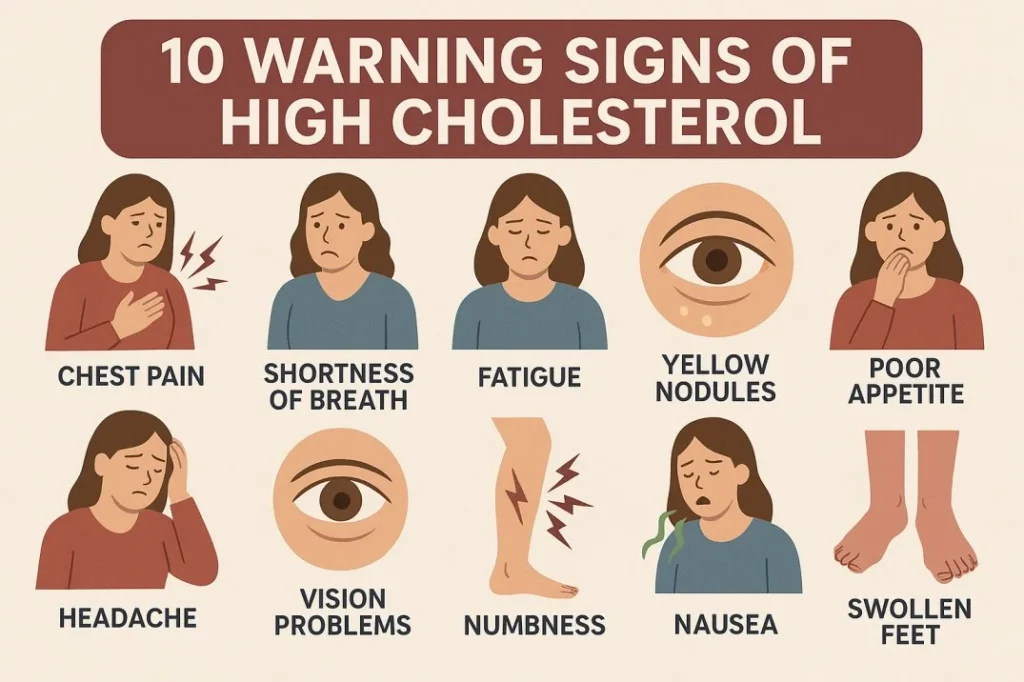
High cholesterol usually does not cause noticeable symptoms. A person may feel completely healthy while LDL cholesterol is elevated.
This is why a lipid panel is important. Waiting for symptoms is not a reliable way to detect high cholesterol.
Atherosclerosis can develop gradually over many years before producing a heart attack, stroke, or other cardiovascular event.
Rarely, very high inherited cholesterol can produce physical findings such as cholesterol deposits in tendons or around the eyes, but most people with high cholesterol will not have obvious external signs.
Which Cholesterol Numbers Matter?
A standard lipid panel commonly includes:
| Test | What it tells you |
| LDL cholesterol | A major atherogenic cholesterol measure associated with plaque formation |
| HDL cholesterol | A lipoprotein measure considered within overall cardiovascular risk |
| Triglycerides | Blood fats that store excess energy |
| Total cholesterol | A combined measure used as part of overall risk assessment |
There is no single LDL number that is appropriate for every person.
The American Heart Association explains that an LDL goal depends on factors such as age, overall health, diabetes, family history, and previous heart attack or stroke. Some people may have a goal below 100 mg/dL, while people at particularly high cardiovascular risk may have goals below 70 or even 55 mg/dL.
The 2026 ACC/AHA dyslipidemia guideline also places greater emphasis on overall atherosclerotic cardiovascular disease risk and includes LDL-C, triglycerides, lipoprotein(a), apolipoprotein B, and other risk-enhancing information when appropriate.
That means two people with exactly the same LDL number may not have the same treatment plan.
How Is High Cholesterol Diagnosed?
High cholesterol is usually identified through a blood test called a lipid panel.
Depending on the situation, testing may be fasting or non-fasting. A clinician may also consider additional measurements based on the person’s risk profile.
The 2026 ACC/AHA guideline recommends universal lipid screening in adults beginning at age 19, with repeat assessment generally every five years when appropriate, while testing frequency can be adjusted according to individual risk. It also recommends measuring lipoprotein(a), or Lp(a), at least once in all adults.
The same guideline recommends lipid screening in children around ages 9–11, with earlier assessment in some families with premature cardiovascular disease or familial hypercholesterolemia.
People with diabetes, hypertension, kidney disease, a strong family history, previous cardiovascular disease, or known lipid disorders may need testing more frequently.
How Can You Lower Cholesterol Naturally?
Lifestyle changes are an important part of cholesterol management, whether or not medication is also prescribed.
The goal should not be a temporary “cholesterol diet.” Instead, aim for sustainable changes that improve cardiovascular health over the long term.
Build a Heart-Healthy Diet
A heart-healthy eating pattern emphasizes vegetables, fruits, whole grains, legumes, nuts, seeds, fish, and other nutrient-dense foods while reducing foods high in saturated fat, trans fat, added sugars, and highly refined carbohydrates.
The NHLBI Therapeutic Lifestyle Changes program emphasizes reducing saturated fat, increasing soluble fiber, and incorporating plant stanols and sterols as part of a cholesterol-lowering dietary strategy.
Soluble fiber is particularly useful because it can interfere with cholesterol absorption in the digestive tract.
NHLBI materials report that increasing soluble fiber by 5–10 grams per day can lower LDL cholesterol by about 5% in the context of the TLC approach.
Practical sources include oats, barley, beans, lentils, peas, apples, berries, and other fruits and vegetables.
Rather than focusing exclusively on what to remove, think about what to add. Replacing refined carbohydrates with whole grains, adding legumes to meals, choosing nuts instead of highly processed snacks, and eating more vegetables can make the dietary pattern easier to sustain.
Reduce Saturated Fat
One of the most direct dietary strategies for lowering LDL is reducing saturated fat.
Common substitutions include choosing leaner cuts of meat, lower-fat dairy where appropriate, and unsaturated plant oils instead of butter or other sources rich in saturated fat.
The CDC recommends choosing foods lower in saturated and trans fats while emphasizing vegetables, fruits, whole grains, lean meats, seafood, and lower-fat dairy products.
Increase Physical Activity
Regular exercise can support healthier LDL, triglyceride, HDL, blood pressure, glucose, and body-weight measures.
The most sustainable exercise is often the activity a person can consistently perform.
For someone currently inactive, starting with regular walking and gradually increasing duration and intensity may be more realistic than attempting an aggressive workout program immediately.
Work Toward a Healthy Weight if Needed
If excess weight is contributing to an unfavorable lipid profile, gradual weight reduction can help.
There is no requirement to achieve a dramatic transformation before health benefits begin. NHLBI reports that losing around 3% to 5% of body weight in adults with overweight or obesity may improve LDL and HDL levels.
A registered dietitian or healthcare professional can help create a calorie and nutrition plan appropriate for the individual’s age, medical history, culture, and dietary preferences.
Stop Smoking
Smoking cessation benefits cardiovascular health beyond cholesterol.
If you smoke, quitting can be one of the most important steps in reducing cardiovascular risk. Support can include behavioral counseling, nicotine replacement therapy, prescription medications, and structured cessation programs depending on individual circumstances.
Improve Sleep
Poor sleep is associated with poorer cardiovascular health and can interact with other metabolic risk factors.
NHLBI recommends aiming for approximately 7–9 hours of quality sleep for adults as part of a healthy lifestyle.
Sleep should therefore be considered alongside diet and physical activity rather than treated as unrelated to cholesterol management.
Manage Stress
Chronic stress can influence health behaviors, sleep, eating patterns, blood pressure, and potentially lipid levels.
Stress management can include physical activity, adequate sleep, social support, mindfulness practices, relaxation techniques, counseling, or other strategies that fit the individual.
Stress management alone should not be presented as a substitute for medical treatment when LDL is significantly elevated.
When Are Cholesterol-Lowering Medicines Needed?
Lifestyle changes are important, but they are not always sufficient.
Some people have genetic forms of high cholesterol, established cardiovascular disease, very high LDL levels, diabetes, or a combination of risk factors that makes medication appropriate.
Statins are among the most commonly used cholesterol-lowering medicines. They reduce cholesterol production in the liver and have strong evidence for reducing cardiovascular events in appropriate patients.
Other medications can also be used when clinically appropriate, including ezetimibe, bempedoic acid, and injectable therapies such as PCSK9-targeting medicines.
The 2026 ACC/AHA guideline emphasizes earlier identification and management of atherogenic lipid exposure, with treatment decisions based on individual cardiovascular risk rather than a single laboratory number.
For primary prevention, the USPSTF previously recommended statin therapy for certain adults aged 40–75 with cardiovascular risk factors and sufficiently elevated estimated 10-year cardiovascular risk, while noting that evidence was insufficient to recommend initiating statins for primary prevention in adults aged 76 or older.
Because cholesterol guidance has evolved, patients should use current clinical guidance and individualized assessment rather than relying on older internet advice.
What If Lifestyle Changes Don’t Lower LDL Enough?
This is an important question because cholesterol is not entirely under behavioral control.
A person may eat well, exercise regularly, maintain a healthy weight, and still have high LDL because of genetics or another underlying condition.
That does not mean the lifestyle changes have failed. Healthy habits continue to provide cardiovascular and metabolic benefits even when medication is necessary.
For example, familial hypercholesterolemia can produce very high LDL from an early age. Lifestyle measures remain important, but medication may be required to reduce prolonged exposure to high LDL.
The appropriate response to persistently high cholesterol is usually to investigate why it remains elevated rather than simply adding more restrictive dietary rules.
What Is Lipoprotein(a), and Why Is It Important?
Lipoprotein(a), usually written as Lp(a), is a genetically influenced lipoprotein associated with cardiovascular risk.
It is not included in every standard lipid panel.
The 2026 ACC/AHA dyslipidemia guideline recommends measuring Lp(a) at least once in all adults because an elevated level can provide additional information about inherited cardiovascular risk.
This is particularly relevant for people with a family history of premature cardiovascular disease.
Lp(a) cannot generally be meaningfully lowered through ordinary lifestyle changes in the same way LDL can, so discovering an elevated level may influence how aggressively other modifiable cardiovascular risk factors are addressed.
What About HDL Cholesterol?
For years, cholesterol advice often focused on increasing HDL as much as possible.
Current guidance is more nuanced.
HDL participates in cholesterol transport and higher HDL levels are associated with lower cardiovascular risk in many populations. However, simply increasing HDL with supplements or medication does not automatically produce the cardiovascular benefit people may assume.
The American Heart Association states that HDL is not a treatment target for lowering cardiovascular risk. Instead, LDL, other atherogenic lipoproteins, and the person’s overall cardiovascular risk should guide management.
This is one reason why a cholesterol report should be interpreted as a complete lipid and risk profile rather than by focusing on one number.
Can High Cholesterol Be Prevented?
Not every case can be prevented.
Genetic conditions, age, certain medical conditions, and some medications can affect cholesterol independently of lifestyle.
However, many people can reduce their risk through long-term heart-healthy habits.
A practical prevention strategy includes maintaining regular physical activity, eating a diet rich in vegetables and whole foods, limiting saturated and trans fats, avoiding tobacco, managing weight when appropriate, sleeping adequately, and getting cholesterol checked according to individual risk.
WHO identifies unhealthy diet, physical inactivity, tobacco use, harmful alcohol use, and obesity among important modifiable cardiovascular risk factors.
A Practical 30-Day Approach to Better Cholesterol Habits
People often struggle because “eat healthier” is too vague. A more practical approach is to make several measurable changes.
During the first week, review your current diet. Identify the major sources of saturated fat, refined carbohydrates, sugary foods, and highly processed meals.
During the second week, begin replacing rather than simply eliminating foods. Add oats or another high-fiber whole grain at breakfast, legumes to meals, vegetables to lunch and dinner, and nuts or fruit as appropriate snacks.
During the third week, establish a consistent physical-activity routine. If you currently exercise very little, begin at a manageable level and gradually increase activity.
During the fourth week, review the bigger cardiovascular picture. Consider blood pressure, blood glucose, smoking status, sleep, body weight, family history, and your latest lipid results.
If cholesterol remains elevated, discuss the results with a healthcare professional rather than assuming additional dietary restriction is the only answer.
When Should You Talk to a Doctor About High Cholesterol?
You should discuss cholesterol with a healthcare professional if:
- A lipid test shows elevated LDL, triglycerides, or other abnormal results.
- You have a parent, sibling, or child with very high cholesterol.
- There is a family history of heart attack or stroke at a young age.
- You have diabetes, high blood pressure, kidney disease, or thyroid disease.
- You have already had a heart attack, stroke, or other atherosclerotic cardiovascular disease.
- LDL remains high despite sustained lifestyle changes.
- You are taking medication that may affect lipid levels.
- You are concerned about familial hypercholesterolemia.
- You want to know whether Lp(a), apoB, or coronary artery calcium testing may be useful.
The 2026 ACC/AHA guideline specifically expands the role of risk-enhancing information and selective coronary artery calcium testing when treatment decisions remain uncertain.
Key Takeaway
High cholesterol is usually the result of multiple interacting factors. Diet high in saturated fat, physical inactivity, excess weight, smoking, diabetes, certain medical conditions, medications, age, and genetics can all influence cholesterol levels.
LDL cholesterol deserves particular attention because persistently elevated LDL contributes to atherosclerotic plaque formation and cardiovascular risk. At the same time, cholesterol should never be interpreted in isolation. Triglycerides, HDL, non-HDL cholesterol, Lp(a), blood pressure, diabetes status, family history, smoking, age, and previous cardiovascular disease can all affect the overall picture.
The most useful approach is therefore not simply to ask, “How can I get my cholesterol number down?” Instead, ask, “What is causing my lipid abnormality, what is my overall cardiovascular risk, and which combination of lifestyle and medical treatment is appropriate for me?”
For many people, improving the quality of the diet, increasing physical activity, maintaining a healthy weight, avoiding tobacco, sleeping adequately, and managing other health conditions can improve the lipid profile. For others, particularly those with inherited high cholesterol or elevated cardiovascular risk, medication may be an important part of treatment.
The 2026 ACC/AHA guidance reinforces the importance of earlier assessment and long-term management of atherogenic lipids rather than waiting until cardiovascular disease develops.
Frequently Asked Questions
What is the main cause of high cholesterol?
There is usually no single cause. Diet high in saturated fat, inactivity, excess weight, genetics, age, diabetes, hypothyroidism, kidney disease, certain medications, smoking, and other factors can contribute. Inherited conditions such as familial hypercholesterolemia can cause very high LDL even when lifestyle habits are healthy.
Can you lower cholesterol without medication?
Some people can significantly improve their cholesterol through dietary changes, physical activity, weight management, and other lifestyle measures. However, lifestyle changes are not always sufficient, particularly for people with familial hypercholesterolemia, very high LDL, established cardiovascular disease, or other substantial risk factors.
What foods help lower LDL cholesterol?
Foods rich in soluble fiber, including oats, barley, beans, lentils, fruits, and vegetables, can support LDL reduction. Nuts, seeds, fish, and unsaturated plant oils can also fit into a heart-healthy eating pattern. The overall dietary pattern matters more than one “cholesterol-lowering” food.
What foods should I avoid with high cholesterol?
Rather than completely banning individual foods, focus on reducing foods high in saturated and trans fats. Examples include fatty meats, processed meats, butter, some full-fat dairy products, and many highly processed desserts. Replacing these foods with sources of unsaturated fat and high-fiber foods can be more useful than simply restricting total dietary fat.
Does exercise lower LDL cholesterol?
Regular physical activity can support healthier LDL and triglyceride levels while helping maintain or improve HDL. Exercise also benefits blood pressure, glucose regulation, cardiovascular fitness, and body-weight management.
Can thin people have high cholesterol?
Yes. High cholesterol is not limited to people who are overweight or obese. Genetics, age, medical conditions, medications, and dietary factors can cause elevated cholesterol in people of any body size.
Does high cholesterol cause symptoms?
Usually not. Most people with high cholesterol do not feel different, which is why blood testing is important. Cardiovascular symptoms generally occur because of complications such as atherosclerosis rather than because cholesterol itself produces a noticeable sensation.
What LDL level is considered high?
The appropriate LDL goal depends on overall cardiovascular risk. There is not one LDL target that applies equally to every person. Some people may have a goal below 100 mg/dL, while people at very high cardiovascular risk may have lower goals such as below 70 or 55 mg/dL.
How often should cholesterol be checked?
The appropriate testing interval depends on age and cardiovascular risk. The 2026 ACC/AHA guideline supports universal adult lipid screening beginning at age 19 and generally repeating assessment every five years when appropriate, with more frequent testing for people with elevated risk or abnormal results.
What is familial hypercholesterolemia?
Familial hypercholesterolemia is an inherited condition that can cause very high LDL cholesterol from an early age. It increases long-term cardiovascular risk and may require medication in addition to lifestyle measures. WHO estimates that FH affects approximately 1 in 250 to 1 in 300 people globally.
Should I take a cholesterol supplement?
Do not assume that an over-the-counter cholesterol supplement is a substitute for evidence-based treatment. Supplements can interact with medications and may not produce the cardiovascular benefits associated with proven therapies. Discuss supplements with a qualified healthcare professional, particularly if you already take prescription medicines.
Are statins safe?
Statins are widely used cholesterol-lowering medicines and have strong evidence for reducing cardiovascular events in appropriate patients. Like all medicines, they can have adverse effects, and treatment decisions should consider individual benefits, risks, medical history, and preferences. NHLBI notes that serious liver damage and severe muscle complications are rare.
Can high cholesterol be completely cured?
Some causes can be substantially improved, but there is not one universal “cure.” Cholesterol can rise again if contributing factors return, and inherited conditions may require lifelong management. The goal is generally to maintain an appropriate lipid profile and reduce long-term cardiovascular risk.
When should high cholesterol be taken seriously?
Any persistently abnormal cholesterol result deserves appropriate interpretation, but particularly high LDL, a family history of premature cardiovascular disease, known familial hypercholesterolemia, diabetes, kidney disease, or previous heart attack or stroke warrants medical evaluation and individualized risk assessment.