
Pelvic Pain in Women: Common Causes and When to Seek Care
Pelvic pain in women is a common health concern that can range from mild menstrual cramps to severe pain caused by a gynecological emergency. It may occur in the lower abdomen, around the uterus and ovaries, near the bladder, or throughout the pelvic region. Some women experience pain for only a few hours, while others develop recurring discomfort that interferes with work, sleep, physical activity, sexual health, or everyday life.
The challenge is that pelvic pain can have many different causes. Menstrual cramps, ovarian cysts, endometriosis, urinary tract infections, constipation, and pelvic floor muscle problems may produce similar symptoms. However, sudden severe pain can also indicate ovarian torsion, a ruptured ectopic pregnancy, appendicitis, or another condition requiring immediate medical attention.
Understanding the location, timing, severity, and associated symptoms of pelvic pain can help women recognize when home care may be reasonable and when medical evaluation is necessary. This guide explains the common causes of pelvic pain in women, how doctors investigate the symptoms, available treatment options, and warning signs that should never be ignored.
What Is Pelvic Pain in Women?
Pelvic pain refers to discomfort felt in the lower part of the abdomen, below the belly button and around the pelvic bones. It may originate in the reproductive organs, urinary system, digestive tract, pelvic muscles, nerves, or surrounding tissues.
The pain does not always come directly from the uterus or ovaries. For example, constipation can create pressure in the lower abdomen, a urinary tract infection can cause discomfort near the bladder, and pelvic floor muscle tension can produce pain during sitting, movement, or sexual intercourse.
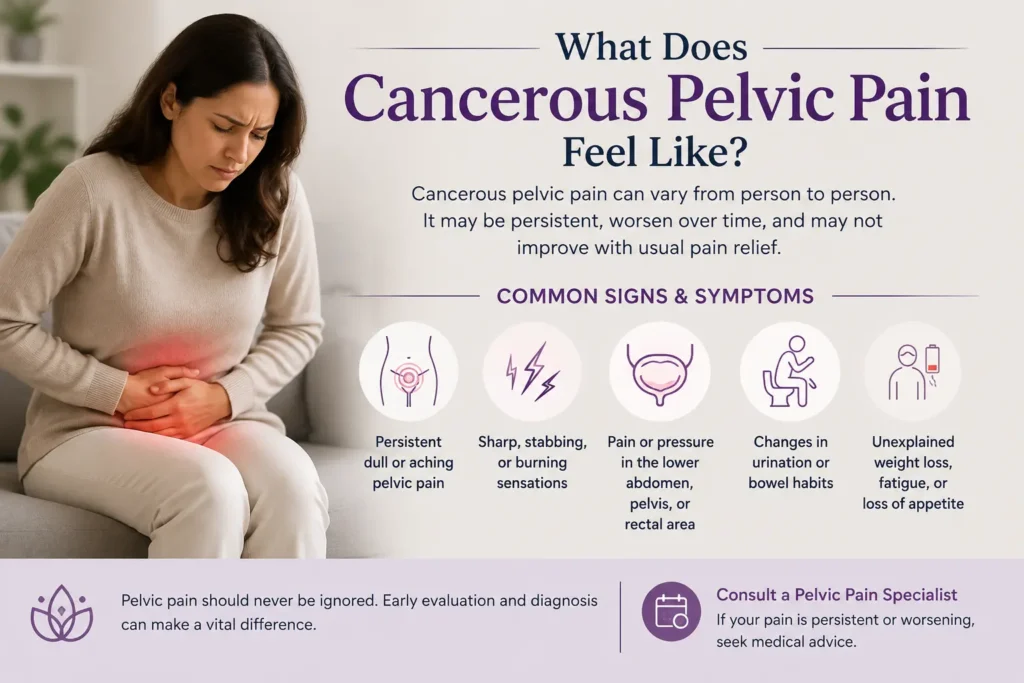
Pelvic pain can be described in several ways. Some women experience a dull ache or a feeling of heaviness, while others report sharp, stabbing, burning, cramping, or throbbing sensations. The discomfort may remain in one location or spread into the lower back, hips, groin, or thighs.
Doctors generally distinguish between acute pelvic pain and chronic pelvic pain.
Acute pelvic pain
Acute pelvic pain develops suddenly or over a relatively short period. It may last minutes, hours, or days. Possible causes include menstrual cramps, ovarian cyst complications, urinary infections, appendicitis, and ectopic pregnancy.
The urgency depends on the symptoms and underlying cause. Sudden, intense pain—particularly when accompanied by vomiting, faintness, heavy vaginal bleeding, or possible pregnancy—requires immediate assessment.
Chronic pelvic pain
Chronic pelvic pain is generally defined as pain in the pelvic region lasting six months or longer. It may be constant, intermittent, or linked to specific activities, such as menstruation, sexual intercourse, urination, bowel movements, or exercise.
The American College of Obstetricians and Gynecologists (ACOG) explains that chronic pelvic pain can have multiple contributing causes and may require coordinated care from gynecologists, pelvic floor physical therapists, gastrointestinal specialists, urologists, or pain specialists. Even when investigations do not identify one clear cause, the pain is real and may still respond to treatment.
Source: ACOG — Chronic Pelvic Pain.
How Common Is Pelvic Pain in Women?
Pelvic pain is a symptom rather than a single disease, so its prevalence varies depending on the cause, the age group studied, and whether researchers measure occasional menstrual cramps or persistent pelvic pain.
Several authoritative statistics illustrate why the symptom deserves attention:
- More than half of women and girls who menstruate experience some menstrual pain for one or two days each month, according to ACOG.
- ACOG reports that pelvic inflammatory disease (PID) is diagnosed in more than one million women each year in the United States.
- The US Centers for Disease Control and Prevention (CDC) states that approximately one in eight women with a history of PID experiences difficulty getting pregnant.
- ACOG reports that nearly three out of four women experience pain during sexual intercourse at some point in their lives, although the duration and underlying causes vary.
These figures refer to different conditions and populations; they should not be interpreted as the percentage of women who experience all types of pelvic pain. They demonstrate that menstrual discomfort, reproductive infections, and pain associated with intercourse are significant health concerns that may require evaluation.
Sources: ACOG — Painful Periods, ACOG — Pelvic Inflammatory Disease, CDC — About PID, and ACOG — When Sex Is Painful.
Common Causes of Pelvic Pain in Women
The most appropriate treatment depends on identifying the underlying cause. Symptoms can overlap, so the pattern of pain alone cannot confirm a diagnosis.
1. Menstrual cramps and painful periods
Menstrual cramps, medically called dysmenorrhea, are among the most familiar causes of pelvic pain. They typically begin shortly before menstruation or around the start of bleeding and may continue for one to three days.
During menstruation, the uterus contracts to shed its lining. Chemicals called prostaglandins contribute to these contractions. Higher prostaglandin activity can cause stronger cramps and may also contribute to nausea, diarrhea, headaches, and lower back discomfort.
Mild cramps that follow a familiar monthly pattern may be managed with heat, rest, gentle movement, and appropriate pain relief. However, menstrual pain should not automatically be considered normal simply because it occurs every month.
Severe cramps, pain that becomes progressively worse, periods that disrupt daily activities, or pain that does not respond to usual treatment may indicate an underlying condition such as endometriosis, adenomyosis, fibroids, or pelvic inflammatory disease.
A healthcare professional can assess whether the symptoms are consistent with primary menstrual cramps or require further investigation.
2. Endometriosis
Endometriosis is a condition in which tissue similar to the lining of the uterus grows outside the uterus. It can affect the ovaries, fallopian tubes, and other pelvic structures. In some cases, it contributes to inflammation, scar tissue, and adhesions.
Common symptoms include:
- Severe menstrual cramps that may worsen over time.
- Pelvic pain before, during, or after menstruation.
- Pain during or after sexual intercourse.
- Painful bowel movements or urination, particularly around menstruation.
- Difficulty becoming pregnant in some women.
Not everyone with endometriosis experiences severe pain, and the intensity of symptoms does not necessarily indicate the extent of disease.
Endometriosis may be suspected when menstrual pain interferes with everyday activities, pain occurs outside the menstrual period, or bowel and bladder symptoms follow a cyclical pattern. Assessment may involve a symptom history, examination, ultrasound, and sometimes additional imaging or laparoscopy.
Treatment may include anti-inflammatory medication, hormonal therapies, or surgery in selected cases. The right approach depends on symptom severity, treatment response, reproductive goals, and individual medical circumstances.
Women with persistent menstrual or pelvic pain should discuss endometriosis with a qualified gynecologist rather than repeatedly treating the symptoms without investigating the cause.
3. Ovarian cysts
Ovarian cysts are fluid-filled sacs that develop in or on an ovary. Many are functional cysts associated with the menstrual cycle and resolve without treatment.
Small ovarian cysts often cause no symptoms. Larger cysts, however, may create pelvic pressure, a dull ache, bloating, or discomfort during intercourse. Pain may occur on one side if a cyst develops on a particular ovary.
Two complications deserve special attention:
Cyst rupture: A cyst can break open, sometimes causing sudden pelvic pain. The severity varies. Significant internal bleeding or severe symptoms require urgent assessment.
Ovarian torsion: An ovary can twist around its supporting tissues, potentially reducing its blood supply. This is a medical emergency that may cause sudden, severe pain, often on one side, sometimes accompanied by nausea or vomiting.
A pelvic ultrasound is commonly used to evaluate suspected ovarian cysts. Management may involve observation, repeat imaging, medication for symptom relief, or surgery, depending on the cyst’s appearance, size, symptoms, and risk factors.
Sudden severe pain should never be assumed to be a harmless cyst without medical evaluation.
For related website content, consider linking this section to an existing article about ovarian cyst types, symptoms, diagnosis, and treatment.
4. Pelvic inflammatory disease (PID)
Pelvic inflammatory disease is an infection involving the upper female reproductive tract, including the uterus, fallopian tubes, and ovaries. It can develop when bacteria move upward from the vagina or cervix. Sexually transmitted infections such as chlamydia and gonorrhea are important causes, although other bacteria can also contribute.
Symptoms may include lower abdominal pain, unusual vaginal discharge, bleeding between periods, pain during sex, fever, or painful urination. Some women experience mild symptoms or no obvious symptoms, which can delay diagnosis.
PID matters because untreated infection can cause scarring of the fallopian tubes, persistent pelvic pain, infertility, or an increased risk of ectopic pregnancy.
The CDC states that approximately one in eight women with a history of PID experiences difficulty getting pregnant. This is a risk estimate for women with PID, not for all women who experience pelvic pain.
Diagnosis may involve a medical history, pelvic examination, testing for sexually transmitted infections, pregnancy testing, and other investigations as needed. Treatment generally requires prescription antibiotics. When PID is suspected, prompt medical assessment is important because treatment cannot reverse all damage that may already have occurred.
Women should not use leftover antibiotics or assume that the absence of fever rules out PID. If an STI is diagnosed, a healthcare professional can also advise on partner testing and treatment and when sexual activity can safely resume.
Sources: CDC — About PID and CDC — PID Treatment Guidelines.
5. Uterine fibroids
Uterine fibroids are noncancerous growths that develop in or around the uterus. Their symptoms depend on their size, number, and location.
Some women have fibroids without knowing it. Others experience heavy or prolonged menstrual bleeding, pressure in the pelvis, lower back discomfort, frequent urination, or difficulty with certain physical activities.
Fibroids may cause a sense of fullness or heaviness rather than sharp pain. Acute pain is less typical but can occur with certain complications.
A clinician may recommend a pelvic ultrasound to identify fibroids and evaluate the uterus. Treatment is individualized. Depending on the symptoms and reproductive plans, options may include monitoring, medication, procedures that target fibroids, or surgery.
Fibroids are not the same as ovarian cysts or endometriosis, even though these conditions can produce similar symptoms. Correct diagnosis helps avoid inappropriate treatment.
6. Adenomyosis
Adenomyosis occurs when tissue similar to the uterine lining grows into the muscular wall of the uterus. It can cause painful periods, heavy menstrual bleeding, pelvic tenderness, and a feeling of pressure in the lower abdomen.
Pain may become more troublesome over time, although the severity varies. Some women experience both adenomyosis and other conditions, including endometriosis or fibroids.
Evaluation usually begins with a review of menstrual symptoms and a physical examination. Ultrasound or MRI may help clarify the diagnosis when appropriate.
Treatment depends on symptom severity, age, medical history, and whether pregnancy is desired. Options may include anti-inflammatory medication, hormonal treatments, and selected procedures or surgery.
Women with increasingly painful periods or heavy bleeding should seek assessment instead of assuming that worsening symptoms are simply part of getting older.
7. Urinary tract infections and bladder conditions
The urinary tract includes the bladder, urethra, ureters, and kidneys. Problems affecting these structures can cause discomfort that feels like pelvic pain.
A lower urinary tract infection may cause pressure or pain above the pubic bone, burning during urination, frequent urination, or an urgent need to use the bathroom. Urine may appear cloudy or contain blood.
A kidney infection can cause additional symptoms, such as fever, chills, flank or back pain, nausea, and vomiting. Suspected kidney infection requires prompt medical attention.
Another condition, interstitial cystitis or bladder pain syndrome, can cause persistent bladder-associated pain, urinary urgency, and frequent urination. Symptoms may worsen as the bladder fills and improve temporarily after urination, although patterns differ.
A clinician may recommend urine testing, a urine culture, or additional investigations depending on the symptoms. Treatment varies by diagnosis; antibiotics are appropriate for certain bacterial infections but do not treat every bladder pain condition.
Fever, severe pain, vomiting, or feeling very unwell alongside urinary symptoms warrants urgent evaluation.
8. Constipation, irritable bowel syndrome, and other digestive problems
The bowel sits close to the reproductive organs, and digestive problems can cause discomfort in the same region.
Constipation may produce lower abdominal pressure, bloating, cramping, and difficulty passing stool. Irritable bowel syndrome (IBS) can cause recurrent abdominal pain associated with changes in bowel movements, including diarrhea, constipation, or alternating patterns.
Other possible digestive causes include inflammatory bowel disease, diverticulitis, and appendicitis. These conditions differ in severity and treatment.
Pain that improves after a bowel movement or changes alongside constipation may suggest a digestive contribution, but this pattern cannot rule out a gynecological problem.
Seek urgent care for severe or worsening abdominal pain, repeated vomiting, a swollen abdomen with inability to pass stool or gas, blood in the stool, or pain accompanied by fever or faintness. Sudden pain that moves toward the lower right abdomen may be associated with appendicitis and requires prompt assessment.
A healthcare professional may recommend changes in diet, hydration, or bowel habits for uncomplicated constipation or IBS. Persistent or unexplained symptoms may require blood tests, stool tests, imaging, or referral to a gastrointestinal specialist.
9. Pelvic floor muscle dysfunction
The pelvic floor is a group of muscles and connective tissues that supports the bladder, bowel, and reproductive organs. These muscles help control urination, bowel movements, and aspects of sexual function.
Pelvic floor dysfunction can develop when the muscles are excessively tense, fail to relax properly, become weak, or coordinate poorly. Symptoms may include pelvic aching, pain during intercourse, discomfort while sitting, difficulty emptying the bladder or bowel, and pain that spreads into the hips or lower back.
Pregnancy, childbirth, previous pelvic surgery, chronic constipation, injury, and ongoing muscle tension may contribute to pelvic floor problems.
Treatment depends on the specific dysfunction. Pelvic floor physical therapy may include muscle relaxation, breathing techniques, movement retraining, manual therapy, and carefully selected exercises.
Kegel exercises are not appropriate for every pelvic floor problem. If the muscles are already overactive or tight, repeatedly contracting them without assessment may worsen symptoms. A clinician or qualified pelvic floor therapist can help determine which approach is suitable.
10. Pain associated with sexual intercourse
Pain during or after sex is sometimes called dyspareunia. It may occur near the vaginal opening, deeper in the pelvis, or in the lower abdomen.
Possible causes include vaginal dryness, vulvovaginal infections, pelvic floor muscle tension, endometriosis, ovarian cysts, pelvic inflammatory disease, and changes associated with menopause. Some women experience more than one contributing factor.
Pain should not be dismissed as something a woman must tolerate. Recurrent or severe discomfort deserves a medical assessment, especially if it is accompanied by unusual discharge, bleeding, fever, urinary symptoms, or menstrual changes.
Treatment depends on the cause and may include lubricants, treatment for an infection, hormonal therapies when appropriate, pelvic floor physical therapy, or management of an underlying gynecological condition.
If intercourse causes pain, stop or modify the activity rather than pushing through significant discomfort. A healthcare professional can help identify the cause and discuss options in a confidential, respectful setting.
11. Ectopic pregnancy
An ectopic pregnancy occurs when a fertilized egg implants outside the uterus, most commonly in a fallopian tube. It cannot develop into a normal pregnancy and can become life-threatening if the affected tube ruptures and causes internal bleeding.
Symptoms may include pelvic or lower abdominal pain, vaginal bleeding, and a missed period or other signs of pregnancy. Pain may be concentrated on one side, but symptoms vary.
Shoulder-tip pain, dizziness, fainting, weakness, or sudden severe abdominal pain can indicate internal bleeding and require emergency care.
An ectopic pregnancy can occur even when a woman has used contraception or does not yet know she is pregnant. If pregnancy is possible and pelvic pain develops, urgent medical assessment is important. A pregnancy test, blood tests, and transvaginal ultrasound may be used to investigate the cause.
Do not wait for a home pregnancy test to become positive if severe pain, faintness, or other emergency symptoms are present.
12. Ovarian torsion and other surgical emergencies
Ovarian torsion occurs when an ovary twists around its supporting tissues. The twisting can compromise blood flow and damage the ovary if treatment is delayed.
The classic presentation is sudden, severe pelvic pain, often on one side, sometimes with nausea and vomiting. Pain can occasionally come and go, so temporary improvement does not reliably exclude torsion.
Appendicitis, internal bleeding from a ruptured cyst, and other abdominal emergencies may also cause acute pelvic pain.
These conditions cannot be safely distinguished from less serious causes based on symptoms alone. Sudden or intense pain should be assessed urgently, especially when accompanied by vomiting, fever, faintness, heavy bleeding, or marked tenderness.
Pelvic Pain During Pregnancy and After Childbirth
Pelvic discomfort can occur during pregnancy because the body undergoes hormonal, muscular, and structural changes. Some discomfort may be related to stretching ligaments or pressure on the pelvic region. However, pain during pregnancy should not automatically be considered normal.
Severe or persistent pain, vaginal bleeding, fluid leakage, fever, faintness, or symptoms that make a woman feel seriously unwell require immediate medical advice. Ectopic pregnancy is a critical consideration early in pregnancy, while later pregnancy introduces other potential complications that require assessment by a maternity professional.
After childbirth, pelvic pain may relate to healing tissues, pelvic floor injury, infection, or other complications. Severe or increasing pain, fever, foul-smelling discharge, heavy bleeding, or difficulty passing urine should prompt urgent evaluation.
Women who are pregnant, recently gave birth, or may be pregnant should contact their maternity team or seek urgent medical care when symptoms arise. The appropriate service depends on the severity of the symptoms and local healthcare arrangements.
When Should You Seek Medical Care for Pelvic Pain?
The urgency of pelvic pain depends on its severity, onset, associated symptoms, and the possibility of pregnancy. A useful approach is to separate emergency warning signs from symptoms that need prompt or routine assessment.
Seek emergency medical care immediately if you have:
- Sudden, severe, or rapidly worsening pelvic or lower abdominal pain.
- Pelvic pain with fainting, severe dizziness, confusion, or marked weakness.
- Severe pain when pregnancy is possible, especially with vaginal bleeding or shoulder-tip pain.
- Heavy vaginal bleeding accompanied by weakness, dizziness, or severe pain.
- Severe pain with repeated vomiting, a rigid or very tender abdomen, or difficulty breathing.
- Severe pelvic pain with fever and a rapidly worsening general condition.
These symptoms may indicate internal bleeding, ectopic pregnancy, ovarian torsion, appendicitis, severe infection, or another emergency. Do not wait for symptoms to pass or rely on home remedies. Contact local emergency services or go to the nearest emergency department.
Arrange prompt medical assessment if you have:
- Pelvic pain with fever or chills.
- Unusual vaginal discharge, unexpected bleeding, or pain during sex.
- Burning urination, blood in the urine, or difficulty passing urine.
- Persistent nausea, vomiting, or worsening urinary or bowel symptoms.
- New pelvic pain when you are pregnant or may be pregnant, even if the pain is not severe.
- Menstrual pain that becomes significantly worse than usual.
Book a routine appointment for persistent or recurring symptoms
Even without emergency warning signs, arrange an appointment if pelvic pain keeps returning, does not go away, interferes with daily activities, or is associated with ongoing bloating, changes in bowel habits, unexplained weight loss, or changes in menstrual bleeding.
Repeated pain should not be dismissed simply because it is manageable or occurs around menstruation. Early evaluation can help identify conditions that may benefit from treatment before they cause additional complications.
For practical guidance on urgency, see the NHS pelvic pain guidance. Emergency pathways differ by country, so follow local emergency-care instructions.
How Is Pelvic Pain Diagnosed?
There is no single test that identifies every cause of pelvic pain. Diagnosis typically involves combining the patient’s symptoms and medical history with a physical examination and targeted investigations.
Medical history and symptom assessment
A clinician may ask when the pain began, where it is located, whether it is sharp or dull, and whether it is constant or intermittent. They may also ask whether the pain changes with menstruation, urination, bowel movements, exercise, or sexual intercourse.
Other important details include the last menstrual period, possibility of pregnancy, vaginal bleeding or discharge, fever, previous pelvic infections, surgeries, medications, and relevant reproductive history.
Keeping a symptom diary can help reveal patterns. Record the timing, duration, severity, menstrual-cycle day, associated symptoms, and factors that improve or worsen the pain.
Physical examination
Depending on the symptoms and the patient’s consent, the clinician may examine the abdomen and assess for tenderness or other signs that help guide further testing.
A pelvic examination may be recommended when evaluating suspected gynecological conditions, infection, or unexplained pelvic pain. The clinician should explain the purpose of the examination, discuss any concerns, and obtain consent.
Pregnancy and laboratory tests
A pregnancy test is particularly important when pregnancy is possible because ectopic pregnancy can initially resemble other causes of pelvic pain.
Urine tests may help identify a urinary tract infection. Blood tests may be used to investigate anemia, inflammation, infection, or pregnancy-related concerns. Vaginal or cervical samples may be collected when an STI or another infection is suspected.
Not every patient needs every test. The choice depends on the history, examination findings, and level of urgency.
Pelvic ultrasound and additional imaging
Pelvic ultrasound is commonly used to examine the uterus, ovaries, and surrounding structures. A transabdominal ultrasound is performed over the abdomen, while a transvaginal ultrasound uses a probe inserted into the vagina to obtain more detailed images of pelvic organs when appropriate and accepted by the patient.
Ultrasound may help identify ovarian cysts, fibroids, some signs of endometriosis, or findings associated with pregnancy complications. However, a normal ultrasound does not exclude every cause of pelvic pain, including all cases of endometriosis or pelvic floor dysfunction.
CT or MRI may be appropriate for selected situations. Laparoscopy, cystoscopy, or gastrointestinal investigations may be considered when symptoms and initial findings indicate a need for further evaluation.
The goal is not to order every possible test. It is to identify dangerous conditions promptly and choose investigations that are most likely to clarify the cause.
Treatment Options for Pelvic Pain in Women
Treatment depends on the underlying condition. A medication that helps menstrual cramps may not treat an infection, and antibiotics will not resolve endometriosis, ovarian torsion, or pelvic floor muscle dysfunction.
Medication and condition-specific treatment
Nonsteroidal anti-inflammatory drugs (NSAIDs), such as ibuprofen, may relieve menstrual cramps in suitable patients. They are not safe for everyone, including some people with kidney disease, stomach ulcers, bleeding risks, or particular stages of pregnancy. A pharmacist or clinician can advise on appropriate use.
Hormonal contraception or other hormonal treatments may help some women with menstrual pain, endometriosis, or selected gynecological conditions. The choice should take account of medical history, potential adverse effects, and whether pregnancy is desired.
Bacterial infections such as PID require appropriate prescription antibiotics. A suspected ectopic pregnancy, ovarian torsion, or significant internal bleeding may require emergency procedures or surgery.
Home care for mild, familiar discomfort
When symptoms are mild, familiar, and not associated with warning signs, supportive measures may provide relief. These can include applying a warm—not excessively hot—heating pad, taking a warm bath, gentle movement, adequate hydration, and rest.
For constipation-related discomfort, suitable dietary changes, fluids, and gradual physical activity may help. However, severe abdominal pain, vomiting, or inability to pass stool or gas should not be treated as routine constipation without assessment.
Home care should not delay medical evaluation for new, severe, persistent, or unexplained pain.
Pelvic floor physical therapy
When muscle tension or pelvic floor dysfunction contributes to symptoms, specialized physical therapy may improve muscle coordination, relaxation, movement, and pain. Treatment is tailored to the individual’s examination findings and goals.
Long-term management of chronic pelvic pain
Chronic pelvic pain may require a coordinated plan because more than one condition can contribute to symptoms. Treatment may combine gynecological care, physical therapy, pain management, bladder or bowel treatment, and support for the emotional effects of living with persistent pain.
Stress, anxiety, and previous trauma can influence how the nervous system processes pain, but this does not mean that the pain is imaginary or purely psychological. Appropriate care should investigate physical causes while also addressing the broader effects of persistent pain.
Can Pelvic Pain Affect Fertility?
Pelvic pain does not automatically mean a woman will have difficulty becoming pregnant. Many causes, including uncomplicated menstrual cramps and some functional ovarian cysts, do not necessarily affect fertility.
However, certain underlying conditions can influence reproductive health. Endometriosis may be associated with difficulty conceiving, while untreated pelvic inflammatory disease can damage the fallopian tubes. Fibroids may affect fertility or pregnancy in some cases, depending on their size and location.
The CDC’s estimate that about one in eight women with a history of PID experiences difficulty getting pregnant highlights the importance of recognizing and treating reproductive tract infections promptly.
Women who are planning a pregnancy and experience persistent pelvic pain, a history of PID, or known endometriosis should discuss their reproductive goals with a healthcare professional. Evaluation can help determine whether additional testing or treatment is appropriate.
How to Prepare for a Doctor’s Appointment
Preparing a few details before an appointment can make it easier to explain pelvic pain and identify the most useful next steps.
Record when the pain started, whether it is on one side or across the pelvis, how long each episode lasts, and how severe it feels. Note whether it occurs before or during menstruation, during intercourse, while urinating, or when having a bowel movement.
Also record any fever, unusual discharge, bleeding, nausea, urinary symptoms, bowel changes, or possibility of pregnancy. Bring a list of medications and supplements, along with relevant medical history and previous test results if available.
Be honest about symptoms and concerns. Questions about menstrual patterns, sexual health, pregnancy, and previous infections help clinicians narrow down possible causes. These details should be discussed respectfully and confidentially.
If pain is severe or accompanied by emergency warning signs, do not delay care to complete a symptom diary or wait for a scheduled appointment.
Can Pelvic Pain Be Prevented?
Not every cause of pelvic pain can be prevented. Conditions such as endometriosis, ovarian cysts, fibroids, and some pelvic floor disorders may occur even when a person follows healthy habits.
However, certain measures can reduce some risks or support earlier treatment.
Using condoms correctly can reduce the risk of many sexually transmitted infections. STI testing and timely treatment are important when indicated, as is evaluation of possible exposure. Avoid vaginal douching, which can disrupt the normal vaginal environment and is associated with increased PID risk.
Routine reproductive healthcare can help address persistent menstrual symptoms, unusual bleeding, and other changes before they become more disruptive. Women should also seek advice about recurring urinary infections, constipation, and pelvic floor symptoms rather than repeatedly self-treating unexplained pain.
Healthy habits such as regular physical activity, adequate hydration, balanced nutrition, and appropriate management of bowel symptoms may support general well-being. They cannot, however, guarantee that pelvic pain will not develop.
The most important step is to recognize new or worsening symptoms and seek appropriate care rather than assuming that pelvic pain is always a normal part of menstruation.
Frequently Asked Questions
1. What is the most common cause of pelvic pain in women?
Menstrual cramps are a common cause of pelvic pain among women who menstruate. Other frequent causes include ovarian cysts, endometriosis, urinary tract infections, constipation, and pelvic floor problems. The most likely cause depends on age, symptoms, menstrual timing, pregnancy possibility, and medical history.
2. When is pelvic pain an emergency?
Seek emergency care for sudden or severe pelvic pain, fainting, marked dizziness, heavy bleeding with weakness, severe pain when pregnancy is possible, or pain accompanied by repeated vomiting or a rapidly worsening condition. These symptoms can indicate ectopic pregnancy, ovarian torsion, internal bleeding, appendicitis, or severe infection.
3. Can pelvic pain occur without a period?
Yes. Pelvic pain can occur between periods because of ovarian cysts, endometriosis, pelvic inflammatory disease, urinary infections, bowel disorders, or pelvic floor dysfunction. Pain outside menstruation that is persistent, recurring, or worsening should be evaluated.
4. Can stress cause pelvic pain?
Stress can increase muscle tension and affect how the nervous system processes pain. It may worsen symptoms in some people with chronic pelvic pain. However, stress should not be assumed to be the only cause. Medical conditions affecting reproductive, urinary, digestive, and musculoskeletal systems should be considered.
5. How can I tell whether pelvic pain is caused by an ovarian cyst?
An ovarian cyst may cause one-sided discomfort, pelvic pressure, bloating, or pain during intercourse, but many cysts cause no symptoms. These symptoms overlap with other conditions. A healthcare professional may recommend a pelvic ultrasound to investigate a suspected cyst.
Sudden severe pain, especially with nausea or vomiting, requires emergency evaluation because ovarian torsion or cyst complications may be responsible.
6. Can a urinary tract infection cause pelvic pain?
Yes. A bladder infection can cause pressure or discomfort in the lower abdomen, often with burning urination, frequency, or urgency. Fever, chills, back or flank pain, or vomiting may suggest a more serious urinary infection and warrant prompt medical assessment.
7. Is pelvic pain during sex normal?
Pain during sex is common, but recurrent or severe pain should not be ignored. Potential causes include vaginal dryness, infection, pelvic floor dysfunction, endometriosis, ovarian cysts, and other gynecological conditions. A healthcare professional can help identify the cause and recommend suitable treatment.
8. Can pelvic pain be a sign of pregnancy?
Pelvic discomfort can occur during pregnancy, but pain may also indicate a complication. Ectopic pregnancy is particularly important to rule out when pregnancy is possible. Severe pain, vaginal bleeding, shoulder-tip pain, faintness, or dizziness requires emergency assessment.
9. What tests are used to diagnose pelvic pain?
Depending on symptoms, tests may include a pregnancy test, urine testing, STI testing, blood tests, pelvic examination, and pelvic ultrasound. MRI, CT, laparoscopy, or other investigations may be needed in selected cases. Not every patient requires every test.
10. Can endometriosis cause pelvic pain every day?
Yes. Endometriosis may cause pain before, during, or after menstruation, and some women experience pain throughout the month. Other symptoms can include pain during sex, painful bowel movements, and difficulty becoming pregnant. Symptom severity varies, and a clinician can discuss appropriate evaluation and management.
11. How long should pelvic pain last before I see a doctor?
There is no single safe waiting period for every situation. Sudden severe pain or pain with emergency warning signs requires immediate care. New, persistent, worsening, or recurring pain should be assessed rather than waiting for a particular number of days. Pain that interferes with daily activities also deserves medical attention.
12. Which doctor should I see for pelvic pain?
A gynecologist is often appropriate when pain appears related to menstruation, the uterus, ovaries, vaginal symptoms, or sexual intercourse. A primary care clinician can also begin an assessment and refer you to the right specialist. Depending on the cause, care may involve a urologist, gastroenterologist, pelvic floor physical therapist, or emergency team.
13. Can pelvic pain affect fertility?
Some causes, including untreated PID and endometriosis, may affect fertility, while many other causes do not necessarily do so. Persistent symptoms, a history of pelvic infection, or difficulty conceiving are good reasons to discuss reproductive health with a qualified clinician.
14. What can I do at home to relieve mild pelvic pain?
For mild, familiar menstrual cramps without warning signs, a warm compress, gentle movement, rest, and an appropriate over-the-counter pain reliever may help. Treatment should match the suspected cause, and medicines are not suitable for everyone. Seek medical advice for unexplained or recurring pain, and do not use home treatment to delay emergency evaluation.