
Tonsillitis in Children: Causes, Symptoms, and Treatment
Tonsillitis in children is a common condition that causes inflammation of the tonsils, the two soft tissue pads located at the back of the throat. It can make swallowing painful, cause fever, reduce appetite, and leave children feeling tired or irritable. Although most cases improve within several days, parents need to recognize symptoms that may indicate a bacterial infection or a more serious complication.
The most appropriate treatment depends on what causes the infection. Viruses are responsible for most cases of tonsillitis, while bacteria such as group A Streptococcus can cause bacterial tonsillitis and strep throat. Viral infections generally improve with rest, fluids, and symptom relief, whereas confirmed streptococcal infections may require antibiotics prescribed by a healthcare professional.
According to the US Centers for Disease Control and Prevention (CDC), group A Streptococcus causes approximately 20%–30% of pharyngitis episodes in children. This means that not every child with a sore throat, fever, or swollen tonsils needs antibiotics. Proper assessment and testing, when indicated, help prevent unnecessary antibiotic use and identify children who need treatment.
This guide explains the causes, symptoms, diagnosis, treatment options, home-care strategies, possible complications, and prevention of tonsillitis in children. It also explains when parents should seek medical attention and answers common questions about childhood tonsil infections.
What Is Tonsillitis in Children?
Tonsillitis is inflammation of the palatine tonsils, which are located on either side of the back of the throat. The tonsils contain immune tissue that helps the body recognize and respond to germs entering through the mouth and nose.
During an infection, the tonsils may become red, enlarged, and painful. Some children develop white or yellow patches on their tonsils, fever, swollen lymph nodes in the neck, and difficulty swallowing.
Tonsillitis can affect children of different ages, but school-age children experience many of the infections that cause sore throats. Group A streptococcal infections, in particular, are most common among children aged 5–15 years, according to the CDC.
The condition may occur as a single episode or recur several times over a period of months or years. A single episode often resolves without complications, but frequent or severe infections may require further assessment by a pediatrician or an ear, nose, and throat (ENT) specialist.
It is important to understand that tonsillitis and a sore throat are related but not identical terms. A sore throat describes a symptom, whereas tonsillitis specifically refers to inflammation of the tonsils. Pharyngitis, meanwhile, refers to inflammation of the throat or pharynx. These conditions can occur together.
What Causes Tonsillitis in Children?
The most common causes of tonsillitis in children are viral infections. Bacterial infections account for a smaller proportion of cases, although identifying them is important because certain bacterial infections benefit from antibiotic treatment.
1. Viral Tonsillitis
Viruses cause most childhood throat infections. Several viruses can inflame the tonsils, including those responsible for the common cold, influenza, and other respiratory illnesses.
Viruses associated with tonsillitis and sore throat include:
- Rhinoviruses, which commonly cause colds.
- Influenza viruses.
- Adenoviruses.
- Respiratory syncytial virus (RSV).
- Epstein-Barr virus (EBV), which can cause infectious mononucleosis.
- Other respiratory viruses that spread through close contact.
Viral tonsillitis may develop alongside a runny nose, cough, sneezing, hoarseness, or red eyes. Some children also experience fever, headache, fatigue, and reduced appetite.
Most viral infections improve with supportive care rather than antibiotics. Antibiotics do not treat viruses, and using them when they are not needed can cause side effects and contribute to antimicrobial resistance.
2. Bacterial Tonsillitis
Bacterial tonsillitis occurs when bacteria infect the tonsils. One of the most important causes is group A Streptococcus, also known as Streptococcus pyogenes.
This bacterium causes strep throat and can produce symptoms such as sudden throat pain, fever, swollen tonsils, painful neck glands, and sometimes white patches on the tonsils. Children may also experience abdominal pain, nausea, vomiting, headache, or a rough-textured rash associated with scarlet fever.
According to CDC guidance, group A Streptococcus causes approximately 20%–30% of pharyngitis episodes in children. The remaining cases are caused by other organisms, particularly viruses.
A bacterial infection cannot always be distinguished from a viral infection by looking at the tonsils alone. White patches, for example, may occur in different conditions and do not automatically mean that antibiotics are required.
When strep throat is suspected and obvious viral symptoms are absent, a healthcare professional may recommend a rapid antigen detection test or throat culture. Treatment decisions should be based on clinical assessment and appropriate testing rather than appearance alone.
3. Infectious Mononucleosis
Infectious mononucleosis is commonly associated with Epstein-Barr virus. It can cause marked tonsil swelling, severe throat pain, fever, swollen lymph nodes, and significant fatigue.
Children with this infection may feel unusually tired for an extended period, even after their throat symptoms begin to improve. Some may develop enlarged tonsils with white patches, making the illness resemble bacterial tonsillitis.
A clinician may consider mononucleosis when symptoms are prolonged, fatigue is prominent, or lymph node swelling is widespread. Testing may be appropriate in selected cases.
If mononucleosis is suspected, parents should discuss sports and strenuous activities with the child’s clinician because the illness can sometimes enlarge the spleen, increasing the risk of injury during contact sports.
4. Repeated Exposure to Respiratory Infections
Children in daycare, preschool, and school settings regularly encounter other children with respiratory infections. Close contact, shared indoor spaces, and exposure to respiratory droplets can increase the opportunity for infection to spread.
Repeated episodes do not necessarily mean that a child’s immune system is weak. Many children experience several respiratory infections as they grow and encounter new germs.
However, unusually frequent, severe, persistent, or complicated infections should be discussed with a healthcare professional. The clinician can determine whether the episodes represent separate infections, recurrent tonsillitis, another underlying condition, or a problem that requires additional investigation.
Symptoms of Tonsillitis in Children
The symptoms of tonsillitis vary according to the cause, the child’s age, and the severity of inflammation. Older children can usually describe a sore throat, whereas infants and toddlers may show less specific signs.
Common symptoms include:
- Sore throat or pain when swallowing.
- Red, swollen tonsils.
- Fever or chills.
- White or yellow patches on the tonsils.
- Swollen, tender glands in the neck.
- Headache or body aches.
- Bad breath.
- Reduced appetite or refusal to eat.
- Ear pain associated with throat inflammation.
- Tiredness, irritability, or reduced activity.
Some children experience nausea, vomiting, or stomach pain, particularly with streptococcal infections. Younger children may become clingy, cry more than usual, or refuse their usual food and drinks.
Red and Swollen Tonsils
Redness and enlargement of the tonsils are common signs of inflammation. The tonsils may appear larger than usual, and the surrounding throat may also look red.
Mild swelling can occur with viral infections, while more significant swelling may cause discomfort when swallowing. Very enlarged tonsils can sometimes interfere with breathing or swallowing, which requires urgent assessment.
White Spots or Patches on the Tonsils
White or yellow patches may develop when the tonsils are inflamed. These patches can occur with streptococcal infection, but they may also appear in viral illnesses such as infectious mononucleosis.
Parents should not rely on white spots alone to diagnose bacterial tonsillitis. A clinician may need to assess the child and perform a throat test if strep throat is suspected.
Fever and Swollen Neck Glands
Fever can occur in both viral and bacterial tonsillitis. Swollen lymph nodes in the front of the neck may indicate that the immune system is responding to an infection.
A sudden sore throat accompanied by fever and tender neck glands, particularly without cough or a runny nose, can raise suspicion of strep throat. However, no single symptom confirms the diagnosis.
Difficulty Eating or Drinking
Painful swallowing may cause children to eat less than usual. Some children prefer soft foods, cool drinks, or liquids because these are easier to swallow.
Reduced fluid intake is more concerning than a temporary loss of appetite. Parents should monitor urination, alertness, mouth moisture, and the child’s ability to drink.
Seek prompt medical advice if throat pain prevents the child from drinking enough or if there are signs of dehydration.
Viral Tonsillitis vs. Bacterial Tonsillitis: What’s the Difference?
Although viral and bacterial tonsillitis can look similar, certain symptoms may help a clinician decide whether testing is necessary.
| Feature | Viral tonsillitis | Bacterial tonsillitis, including strep |
| Common cause | Respiratory viruses | Group A Streptococcus and other bacteria |
| Cough and runny nose | More common | Less typical with strep throat |
| Fever | May occur | Common with strep throat |
| Throat pain | Mild to severe | May begin suddenly and be severe |
| White patches | Possible | Possible |
| Testing | Often unnecessary when clear viral symptoms are present | Rapid strep test or throat culture may be recommended |
| Antibiotics | Do not help viral infections | Used for confirmed group A strep infection and selected other bacterial infections |
| Usual management | Rest, fluids, and symptom relief | Appropriate antibiotics when indicated, plus symptom relief |
This comparison is a guide, not a diagnostic tool. Some children with viral infections have high fever or white patches, and some children with bacterial infections have less typical symptoms.
The CDC advises that children with clear viral symptoms generally do not need testing for group A Streptococcus. When a child has a sore throat without clear viral features, clinical assessment and testing can help establish whether strep is responsible.
How Is Tonsillitis Diagnosed in Children?
A healthcare professional usually diagnoses tonsillitis by reviewing the child’s symptoms, medical history, and physical examination. The clinician will inspect the tonsils, check for redness and swelling, assess hydration, and examine the neck for enlarged lymph nodes.
The clinician may also ask when the symptoms began, whether the child has a cough or runny nose, whether anyone nearby has had strep throat, and whether similar episodes have occurred before.
Rapid Strep Test
A rapid antigen detection test checks a throat swab for evidence of group A Streptococcus. Results are generally available much faster than those from a traditional throat culture.
A positive rapid test can confirm strep throat in a child with compatible symptoms. A negative result, however, may not exclude the infection because rapid tests can miss some cases.
Under CDC guidance, symptomatic children aged 3 years and older with a negative rapid antigen test should generally have a follow-up throat culture. A clinician can use the culture result to decide whether antibiotics are needed.
Testing practices may vary according to local clinical guidelines, the child’s age, and the circumstances of the illness.
Throat Culture
A throat culture involves collecting a swab from the back of the throat and tonsils and sending it for laboratory testing. The laboratory checks whether group A Streptococcus grows from the sample.
A culture usually takes longer than a rapid test but can identify infections that a rapid test misses. It is particularly important as a follow-up test in children when a rapid test is negative and strep throat remains a concern.
Other Tests
Additional tests are not necessary for every child with tonsillitis. A clinician may consider blood tests or other investigations when symptoms are unusually severe, persistent, recurrent, or suggest another condition.
For example, testing for infectious mononucleosis may be considered when a child has prolonged fatigue, widespread lymph node swelling, or a clinical presentation suggestive of Epstein-Barr virus.
Imaging is generally reserved for selected cases in which a deep neck infection or another complication is suspected.
Treatment for Tonsillitis in Children
Treatment depends on the cause of the infection and the severity of symptoms. Most children with viral tonsillitis recover with supportive care, while children with confirmed group A streptococcal infection generally need an appropriate antibiotic.
Parents should avoid giving leftover antibiotics or medication prescribed to another person. The wrong drug, dose, or duration can cause harm and may delay appropriate care.
1. Home Care for Viral Tonsillitis
Viral tonsillitis usually improves as the immune system clears the infection. The main goals of home care are to reduce discomfort, maintain hydration, and help the child rest.
Offer frequent drinks in small amounts if swallowing is painful. Cool water, oral rehydration solution when appropriate, and other age-appropriate fluids may help. Some children find ice pops soothing, provided they can safely swallow them.
Soft foods such as soup that has cooled to a comfortable temperature, yogurt, mashed vegetables, and other easy-to-swallow foods may be more appealing than dry or spicy meals. Do not force food if the child is temporarily eating less, but pay close attention to fluid intake.
Allow the child to rest and return to normal activity gradually as fever, pain, and fatigue improve. Most uncomplicated episodes settle within several days, although a sore throat can sometimes last longer.
2. Pain and Fever Relief
Children’s paracetamol (acetaminophen) or ibuprofen may help reduce throat pain and fever when used appropriately.
Choose the product and dose according to the child’s age, weight, product instructions, and advice from a healthcare professional or pharmacist. Do not exceed the recommended dose or give multiple products containing the same active ingredient.
Ibuprofen may not be suitable for every child, particularly some children who are dehydrated or have specific kidney, stomach, or other medical conditions. Ask a clinician or pharmacist if you are uncertain.
Never give aspirin to children unless a specialist has specifically prescribed it. Aspirin use in children with viral illnesses is associated with the rare but serious risk of Reye syndrome.
Do not use numbing throat products, lozenges, or sprays without checking age restrictions and safety advice. Lozenges can present a choking risk in young children, and some products are unsuitable for certain ages.
3. Antibiotics for Bacterial Tonsillitis
Antibiotics may be prescribed when a child has confirmed group A streptococcal pharyngitis or another bacterial infection for which treatment is indicated.
Penicillin or amoxicillin is commonly recommended as first-line treatment for confirmed group A strep infection when there is no relevant allergy or other contraindication. The clinician selects the appropriate medicine, dose, and duration according to the child’s weight, age, medical history, and local guidelines.
Antibiotics can shorten symptoms, reduce transmission, and lower the risk of complications associated with strep throat, including acute rheumatic fever.
Parents should follow the prescribed instructions carefully. Do not stop, extend, or change the treatment course without medical advice. If a dose is missed or the child vomits after taking medicine, ask a pharmacist or clinician what to do rather than automatically repeating the dose.
Antibiotics do not help viral tonsillitis. Unnecessary use can cause diarrhea, nausea, rash, allergic reactions, and contribute to antibiotic resistance.
If a child with confirmed strep throat is not improving after approximately 48 hours of antibiotic treatment, contact the prescribing healthcare professional for reassessment.
4. What If the Child Has Recurrent Tonsillitis?
Some children experience repeated episodes of tonsillitis. A clinician may recommend keeping a record of episodes, including dates, symptoms, fever, test results, treatments, missed school days, and any complications.
This information helps distinguish recurrent acute tonsillitis from repeated viral sore throats or other conditions. It also helps determine whether specialist assessment may be appropriate.
Tonsillectomy, or surgical removal of the tonsils, may be considered for selected children with frequent, documented, clinically significant infections or certain obstructive symptoms. It is not usually necessary after one or two ordinary infections.
The decision depends on the frequency and severity of episodes, their impact on daily life, other medical conditions, and the risks and benefits of surgery. An ENT specialist can discuss whether surgery is likely to help the individual child.
How Long Does Tonsillitis Last in Children?
Many children begin to feel better within 3–4 days, although symptoms can last around a week or occasionally longer. Recovery time varies according to the cause, severity, and the child’s general health.
Viral tonsillitis typically improves gradually with supportive care. Confirmed bacterial tonsillitis may also improve with appropriate treatment, but antibiotics should not be expected to relieve all symptoms immediately.
A child should be medically reassessed if symptoms worsen, fever persists, drinking becomes difficult, or there is no clear improvement within the expected period. Severe or rapidly worsening symptoms require urgent care rather than waiting for a routine follow-up.
Parents should also seek advice when throat infections repeatedly return or when symptoms interfere with sleep, breathing, eating, drinking, or school attendance.
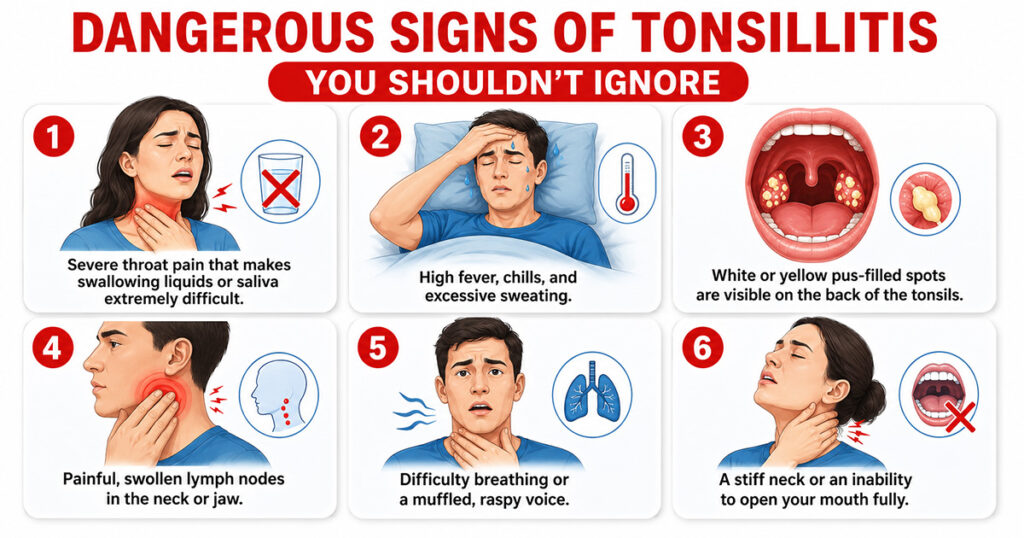
When Is Tonsillitis in Children an Emergency?
Most cases are uncomplicated, but swelling or infection can occasionally cause serious problems. Parents should know which warning signs require immediate medical attention.
Seek Emergency Care Immediately If Your Child:
- Has difficulty breathing, noisy breathing, or signs of severe respiratory distress.
- Cannot swallow fluids or saliva.
- Is drooling because swallowing has become difficult.
- Has severe throat pain that worsens quickly.
- Cannot open the mouth normally.
- Develops marked swelling on one side of the throat or neck.
- Becomes unusually drowsy, confused, difficult to wake, or seriously unwell.
- Shows signs of severe dehydration or rapidly deteriorating condition.
These symptoms may indicate severe swelling, a peritonsillar abscess, a deep neck infection, or another urgent condition. Do not try to examine deep inside the throat or force food, drink, or medicine into a child who cannot swallow safely.
A baby younger than 3 months with a temperature of 38°C (100.4°F) or higher needs urgent medical assessment, even if other symptoms appear mild.
Contact a Healthcare Professional Promptly If:
- The child has a high or persistent fever.
- Throat pain prevents adequate drinking.
- Urination becomes noticeably less frequent or urine is unusually dark.
- There are white patches on the tonsils with significant symptoms.
- A rash develops with fever or sore throat.
- Symptoms are not improving or continue beyond about a week.
- Tonsillitis occurs repeatedly.
- The child has a weakened immune system or another condition that increases the risk of complications.
These situations do not all require an emergency department visit, but they warrant timely clinical advice based on the child’s age and condition.
Possible Complications of Tonsillitis in Children
Most children recover without serious problems. Complications are uncommon, but recognizing them early can prevent more serious illness.
Peritonsillar Abscess
A peritonsillar abscess, sometimes called quinsy, is a collection of pus in the tissue near a tonsil. It can develop as a complication of tonsillitis.
Warning signs include severe throat pain that is often worse on one side, difficulty opening the mouth, drooling, a muffled voice, and swelling around the tonsil. The child may struggle to swallow or may have visible asymmetry at the back of the throat.
This condition needs urgent medical assessment. Treatment may involve antibiotics and drainage of the abscess by a qualified clinician.
Dehydration
Children may drink too little when swallowing is painful. Dehydration can develop if fluid intake remains inadequate, especially when fever or vomiting is also present.
Signs include reduced urination, a dry mouth, fewer tears, unusual tiredness, and dark urine. Severe dehydration may cause marked lethargy or other serious symptoms.
Offering small, frequent sips can help when a child can swallow safely. If the child cannot drink enough, seek medical advice promptly.
Acute Rheumatic Fever
Acute rheumatic fever is a rare but serious inflammatory complication that can follow an untreated or inadequately treated group A streptococcal infection. It can affect the heart, joints, brain, and skin.
Appropriate treatment of confirmed strep throat reduces the risk of this complication. The risk and burden of rheumatic fever vary between populations, and it remains an important public health concern in some regions.
Parents should seek medical assessment for suspected strep throat rather than relying on home remedies alone.
Kidney Complications
Post-streptococcal glomerulonephritis is an uncommon kidney complication that may occur after certain streptococcal infections. Symptoms can include dark or reddish-brown urine, swelling around the eyes or legs, and reduced urination.
These symptoms need prompt medical assessment. They should not be assumed to be a normal part of recovery from a sore throat.
Is Tonsillitis Contagious?
Tonsillitis itself describes inflammation and is not a specific germ. However, the viruses and bacteria that cause it can spread from one person to another.
Transmission may occur through respiratory droplets, close contact, contaminated hands, or shared items that come into contact with saliva or respiratory secretions.
Children can reduce the spread of infection by washing their hands regularly, covering coughs and sneezes, avoiding the sharing of cups and utensils, and cleaning frequently touched surfaces when someone is ill.
Children who feel unwell or have a fever should stay home from school or daycare until they are well enough to participate. For confirmed group A strep infection, CDC guidance advises that children should be fever-free and have received appropriate antibiotics for at least 12–24 hours before returning to school or childcare. Follow local public health advice and the treating clinician’s instructions.
How Can Parents Help Prevent Tonsillitis?
Not every episode of tonsillitis can be prevented, but practical hygiene measures can reduce the spread of infections.
Encourage children to wash their hands with soap and water, particularly before eating and after coughing, sneezing, or using the toilet. Teach them to cough or sneeze into a tissue or their elbow and to dispose of used tissues promptly.
Avoid sharing drinking bottles, cups, utensils, and toothbrushes. Keep children home when they have fever or feel too unwell to participate in normal activities, and encourage them to avoid close contact with others while they are infectious.
Routine vaccination helps protect against certain illnesses that can cause respiratory symptoms, although there is no vaccine that prevents all causes of tonsillitis. Keep your child’s vaccinations up to date according to the local immunization schedule.
Adequate sleep, a varied diet, hydration, and a smoke-free home support general health. However, no particular food, supplement, or home remedy can guarantee that a child will not develop tonsillitis.
If a child has repeated infections, focus on accurate diagnosis and appropriate treatment rather than giving preventive antibiotics without medical advice.
Can Tonsillitis Affect a Child’s Sleep or Breathing?
Inflamed tonsils can temporarily make swallowing uncomfortable and may contribute to snoring during an acute illness. In some children, persistently enlarged tonsils and adenoids can narrow the upper airway and contribute to sleep-disordered breathing.
Parents should discuss frequent loud snoring, pauses in breathing during sleep, gasping, restless sleep, persistent mouth breathing, or daytime sleepiness with a pediatrician. Some children with obstructive sleep apnea also have difficulties with attention, behavior, or school performance.
Not every child who snores needs surgery. A clinician will assess symptoms, examine the airway, and determine whether further evaluation is necessary. Tonsillectomy or other treatment may be considered when enlarged tonsils cause significant obstruction or other qualifying problems.
Difficulty breathing while the child is awake, blue lips, or severe respiratory distress is an emergency and should not be treated as routine snoring.
When Should Tonsillectomy Be Considered?
Tonsillectomy is an operation to remove the tonsils. Doctors may consider it when a child has frequent, well-documented episodes of throat infection that significantly affect health or daily life, or when enlarged tonsils contribute to obstructive sleep-disordered breathing.
The decision is not based solely on whether a child’s tonsils look large. The clinician considers how often infections occur, how severe they are, whether they have been properly documented, and whether other conditions could explain the symptoms.
Surgery has potential benefits but also carries risks, including pain, dehydration, complications related to anesthesia, and bleeding during recovery. Children commonly experience throat pain after the operation and may need time away from school while healing.
Parents should discuss expected benefits, recovery, warning signs, and alternatives with an ENT specialist. Surgery is not a guaranteed solution for every episode of sore throat, and the risks must be weighed against the likely improvement for the individual child.
What Should Parents Do During a Tonsillitis Episode?
When a child develops a sore throat, parents can take a practical approach while watching for signs that require medical attention.
First, assess the child’s breathing, ability to swallow, fluid intake, alertness, and general appearance. If breathing is difficult or the child cannot swallow saliva, seek emergency care immediately.
If symptoms are mild and the child can drink and breathe normally, offer fluids, allow rest, and use age-appropriate pain relief according to professional advice and product instructions. Monitor temperature, urination, and whether symptoms are improving.
Contact a healthcare professional when strep throat is suspected, symptoms are severe or persistent, a rash develops, or the child has a history of repeated tonsil infections. A throat examination and testing may be needed to decide whether antibiotics are appropriate.
If antibiotics are prescribed, follow the instructions exactly and arrange reassessment if the child is not improving after approximately 48 hours or becomes worse at any time.
This approach helps parents manage uncomplicated symptoms while avoiding delays in care when complications or bacterial infections are possible.
Frequently Asked Questions
1. What is the most common cause of tonsillitis in children?
Viruses are the most common cause of tonsillitis and other childhood throat infections. Group A Streptococcus is an important bacterial cause, particularly among school-age children, but it accounts for only a proportion of sore-throat episodes.
2. How can I tell if my child’s tonsillitis is viral or bacterial?
Symptoms such as cough, runny nose, hoarseness, and red eyes often suggest a viral infection. Sudden throat pain, fever, tender neck glands, and the absence of cough may raise suspicion of strep throat. However, symptoms overlap, so testing may be needed to confirm a bacterial infection.
3. Do white spots on my child’s tonsils mean antibiotics are needed?
No. White or yellow patches can occur in both viral and bacterial infections. A healthcare professional should assess the symptoms and determine whether a rapid strep test, throat culture, or other evaluation is appropriate.
4. How long does tonsillitis last in children?
Many children improve within 3–4 days, although symptoms can last about a week or longer. Seek medical advice if symptoms worsen, drinking becomes difficult, fever persists, or recovery is not progressing as expected.
5. Can tonsillitis go away without antibiotics?
Yes. Viral tonsillitis usually resolves without antibiotics, with rest, fluids, and appropriate symptom relief. Confirmed group A streptococcal infection generally requires antibiotics to reduce symptoms, transmission, and the risk of certain complications.
6. What can I give my child to relieve tonsillitis pain?
Age- and weight-appropriate paracetamol or ibuprofen may help, provided the medicine is suitable for the child. Follow product instructions and professional advice. Never give aspirin to children unless specifically directed by a specialist, and avoid lozenges or throat products that are unsuitable for the child’s age.
7. Is tonsillitis contagious?
The viruses and bacteria that cause tonsillitis can be contagious. Good hand hygiene, avoiding shared cups and utensils, and staying home while feverish or unwell can help reduce transmission.
8. When can my child return to school after tonsillitis?
A child can generally return when well enough to participate and fever-free, subject to school and local health guidance. For confirmed group A strep infection, CDC guidance recommends waiting until the child is fever-free and has received appropriate antibiotics for at least 12–24 hours.
9. When should I take my child to the hospital for tonsillitis?
Seek emergency care if your child has difficulty breathing, cannot swallow saliva, is drooling because they cannot swallow, cannot open their mouth normally, or has severe, rapidly worsening symptoms. Prompt medical advice is also important for dehydration, persistent fever, or significant difficulty drinking.
10. Can tonsillitis cause bad breath?
Yes. Inflammation, material on the tonsils, and changes in the mouth during an infection can cause bad breath. It usually improves as the illness resolves. Persistent bad breath after recovery may have another cause and can be discussed with a dentist or healthcare professional.
11. Can my child get tonsillitis more than once?
Yes. Tonsillitis can recur because children encounter different viruses and bacteria over time. Repeated episodes should be documented and discussed with a clinician, particularly if they are severe, frequent, or interfere with sleep, eating, school, or everyday activities.
12. Does every child with recurrent tonsillitis need surgery?
No. Tonsillectomy is considered only for selected children, including some with frequent, documented infections or significant obstruction during sleep. An ENT specialist can explain the potential benefits, risks, and alternatives based on the child’s medical history.
13. Can tonsillitis cause dehydration?
Yes. Pain during swallowing can reduce fluid intake, and fever or vomiting may increase fluid loss. Reduced urination, dry mouth, fewer tears, and unusual tiredness can be warning signs. Seek medical advice if your child cannot drink enough or shows signs of dehydration.
14. Can enlarged tonsils affect a child’s breathing during sleep?
Yes. Persistently enlarged tonsils, sometimes alongside enlarged adenoids, can contribute to snoring and obstructive sleep apnea. Frequent loud snoring, pauses in breathing, gasping, or daytime sleepiness should be discussed with a pediatrician. Severe breathing difficulty while awake requires emergency care.
15. Can home remedies cure bacterial tonsillitis?
Home care can relieve discomfort and help maintain hydration, but it does not replace antibiotics when a clinician determines that treatment for confirmed group A strep infection is needed. Avoid unproven remedies, leftover antibiotics, and products that may be unsafe for children.