Childhood Asthma: Symptoms, Triggers, and Treatment
Childhood Asthma: Symptoms, Triggers, and Treatment
Childhood asthma is a chronic condition that can make breathing difficult when the airways become inflamed, swollen, and narrowed. Children with asthma may cough at night, wheeze during exercise, become short of breath during a cold, or complain that their chest feels tight. Symptoms can be occasional or frequent, and the pattern can change as a child grows.
Asthma is also highly manageable. With an appropriate diagnosis, an individualized treatment plan, correct inhaler technique, and attention to relevant triggers, most children with asthma can participate in normal daily activities, including school and physical activity.
The condition is common. The CDC’s latest national data for 2023 estimated that about 4.8 million U.S. children under 18 had current asthma, representing 6.7% of children. Prevalence was 7.4% among children aged 5–14 and 9.5% among those aged 15–19. Globally, the World Health Organization describes asthma as the most common chronic disease among children and estimated that asthma affected about 363 million people worldwide in 2023.
Understanding the difference between occasional wheezing and asthma, recognizing warning signs, identifying genuine triggers, and following evidence-based treatment can make a major difference in a child’s quality of life.
What Is Childhood Asthma?
Childhood asthma is a chronic inflammatory disease of the airways. The airways are the tubes that carry air into and out of the lungs. In a child with asthma, these airways can become unusually sensitive.
When exposed to a trigger, several processes may occur at the same time:
- the airway lining becomes inflamed and swollen;
- muscles around the airways tighten;
- mucus production may increase; and
- the passage available for airflow becomes narrower.
This narrowing can make it harder for a child to breathe, particularly when breathing out.
The resulting symptoms can include wheezing, coughing, shortness of breath, and chest tightness. WHO identifies these as the principal symptoms of asthma, while noting that their severity and frequency can vary substantially between individuals.
Asthma is not simply a condition in which a child has “weak lungs.” It involves complex interactions between airway inflammation, genetics, immune responses, environmental exposures, respiratory infections, and other factors.
It is also important to understand that not every episode of wheezing means a child has asthma. Viral infections can cause wheezing in young children, and several other respiratory conditions can produce symptoms that resemble asthma. A healthcare professional should therefore evaluate persistent or recurrent breathing symptoms rather than relying on symptoms alone.
How Common Is Asthma in Children?
Asthma is one of the most common chronic diseases affecting children.
In the United States, CDC 2023 surveillance estimated current asthma in 4,804,000 children under 18, equivalent to 6.7% of the pediatric population. The rate varied considerably by age, with 3.0% among children aged 0–4, 7.4% among those aged 5–14, and 9.5% among adolescents aged 15–19.
CDC data from 2022 similarly estimated approximately 4.7 million U.S. children with current asthma, representing about 6.5% of children.
The condition also has an important impact beyond medical symptoms. CDC describes asthma as a leading chronic illness among U.S. children and adolescents and one of the leading causes of school absenteeism.
Globally, the burden is much larger. WHO’s 2026 asthma fact sheet estimates 363 million people were living with asthma in 2023 and reports 442,000 deaths attributable to asthma that year. WHO also notes that underdiagnosis and undertreatment remain significant problems, particularly in low- and lower-middle-income countries.
These statistics explain why early recognition and appropriate long-term management matter, particularly for children who experience recurrent symptoms.
Common Symptoms of Childhood Asthma
Asthma symptoms can look different from one child to another. Some children have obvious wheezing, while others primarily have persistent coughing.
The most recognized symptoms include:
Wheezing
Wheezing is a high-pitched or whistling sound produced when air moves through narrowed airways. It is often more noticeable when a child exhales.
However, the absence of wheezing does not automatically rule out asthma. During a severe exacerbation, airflow can become so limited that very little air moves through the lungs, sometimes producing a surprisingly quiet chest.
Persistent or Recurrent Cough
A cough can be one of the earliest signs of childhood asthma.
Asthma-related coughing may be:
- worse at night;
- more noticeable in the early morning;
- triggered by running or playing;
- associated with cold air;
- triggered or worsened by respiratory infections; or
- recurrent without another obvious explanation.
For some children, cough may be the predominant symptom. MedlinePlus notes that nighttime coughing can sometimes be the only noticeable symptom.
A persistent cough should not automatically be labeled “asthma,” however. Allergies, infections, reflux, postnasal drainage, and other conditions can also cause chronic cough.
Shortness of Breath
A child may say:
- “I can’t catch my breath.”
- “I can’t breathe properly.”
- “My chest feels weird.”
- “I need to stop.”
Younger children may not have the vocabulary to describe breathing difficulty. Instead, parents may notice that the child stops playing earlier than expected, becomes unusually tired, breathes rapidly, or avoids physical activity.
Chest Tightness
Older children and adolescents may describe asthma as pressure, tightness, heaviness, or discomfort in the chest.
Younger children may simply become irritable or anxious during an episode because breathing feels difficult.
Reduced Exercise Tolerance
Some children with poorly controlled asthma do not wheeze frequently at home but consistently develop coughing or breathing difficulty while running, playing sports, or climbing stairs.
This can sometimes be mistaken for poor fitness.
A child who repeatedly stops physical activity because of coughing, wheezing, or shortness of breath deserves medical evaluation.
Symptoms That May Be More Noticeable at Night
Nighttime asthma symptoms deserve attention because they can interfere with sleep.
A child may:
- cough repeatedly after going to bed;
- wake up coughing;
- wheeze at night;
- have difficulty sleeping because of breathing symptoms; or
- I feel tired during the day.
WHO notes that asthma symptoms can be worse at night or during exercise.
Repeated nighttime symptoms can be a sign that asthma is not adequately controlled, although other conditions can also cause nighttime cough. Parents should discuss recurrent symptoms with the child’s healthcare provider.
What Causes Childhood Asthma?
There is no single cause of asthma.
Current evidence indicates that asthma develops through an interaction between genetic susceptibility and environmental exposures. WHO identifies family history, allergic conditions, early-life factors, tobacco smoke, air pollution, respiratory infections, allergens, and obesity among factors associated with increased asthma risk.
A child may therefore have several overlapping risk factors rather than one identifiable cause.
Family History and Genetics
Children with a close family member who has asthma are more likely to develop asthma.
This does not mean asthma is inevitable if a parent has it. Genetics influence susceptibility, while environmental exposures and immune responses also contribute.
Allergic Conditions
Asthma frequently occurs alongside allergic conditions such as:
- eczema;
- allergic rhinitis;
- seasonal allergies; and
- sensitivity to indoor allergens.
This relationship is particularly relevant when a child’s coughing or wheezing follows exposure to pollen, dust mites, mold, or animal allergens.
Tobacco Smoke Exposure
Secondhand smoke is an important modifiable asthma trigger and risk factor.
Children should not be exposed to tobacco smoke in the home, car, or other enclosed spaces. CDC specifically identifies secondhand smoke as a trigger capable of provoking asthma attacks.
Simply smoking in another room does not provide reliable protection because smoke particles and residues can remain in indoor environments.
Air Pollution
Outdoor air pollution can worsen asthma symptoms. Sources can include vehicle emissions, industrial pollution, wildfire smoke, and other airborne pollutants.
WHO also identifies air pollution as an important risk factor for asthma and notes that it can both contribute to new cases and worsen existing disease.
Respiratory Infections
Colds and other viral respiratory infections are common asthma triggers, especially in young children.
A child who repeatedly develops prolonged coughing or wheezing whenever they catch a cold may require evaluation for asthma or another underlying respiratory condition.
Prematurity and Early-Life Factors
WHO notes that early-life events affecting developing lungs can influence asthma risk. These include prematurity, low birth weight, tobacco smoke exposure, air pollution, and respiratory viral infections.
These are risk factors, not guarantees that a child will develop asthma.
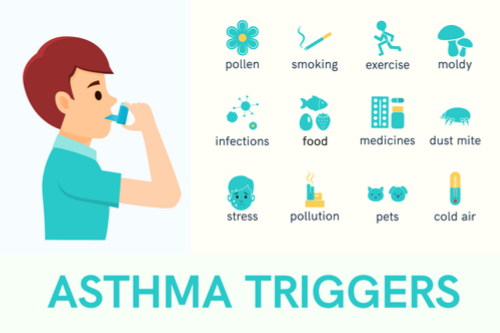
Common Childhood Asthma Triggers
A trigger is something that causes or worsens symptoms in a child who is susceptible to asthma.
Triggers differ considerably between children.
Common examples include:
Allergens
Potential allergic triggers include:
- dust mites;
- mold;
- pollen;
- pet dander;
- cockroach allergens; and
- other environmental allergens.
Not every child with asthma is allergic to these substances, so unnecessarily eliminating every possible allergen is not always useful.
Trigger reduction should be targeted toward exposures that are relevant to the individual child.
Smoke
Tobacco smoke is one of the most important avoidable environmental triggers.
Smoke from cigarettes, cigars, pipes, and other tobacco products can irritate the airways and provoke asthma symptoms. Children with asthma should be protected from secondhand smoke exposure.
Dust Mites
Dust mites are microscopic organisms commonly found in household environments, particularly bedding, carpets, and upholstered furniture.
CDC recommends measures such as allergen-proof mattress and pillow covers, weekly washing of bedding, regular vacuuming, and maintaining indoor relative humidity around 30–50% when dust mites are a relevant trigger.
Mold and Dampness
Mold and damp indoor environments can aggravate respiratory symptoms in susceptible children.
If visible mold or persistent dampness is present, addressing the moisture source is more useful than simply cleaning the visible surface repeatedly.
Exercise
Exercise is not something children with asthma should automatically avoid.
Physical activity can trigger symptoms in some children, especially when asthma is poorly controlled or when exercising in cold, dry air.
With appropriate management, most children with asthma should be able to participate in physical activity.
Cold Air and Weather Changes
Cold or dry air can irritate sensitive airways.
Some children may also notice symptoms during abrupt weather changes or seasonal transitions.
Viral Infections
Common respiratory infections can cause asthma flare-ups.
Parents should therefore learn the child’s early warning signs and understand what the child’s asthma action plan recommends during respiratory illnesses.
Strong Smells and Irritants
Perfumes, cleaning chemicals, fumes, aerosols, and other airborne irritants may trigger symptoms in some children.
This is different from an allergic reaction. An irritant can provoke airway symptoms without the child being allergic to the substance.
How Is Childhood Asthma Diagnosed?
There is no single test that diagnoses every case of childhood asthma.
Healthcare professionals usually combine:
- symptom history;
- physical examination;
- pattern of symptoms over time;
- response to treatment when appropriate;
- family and allergy history; and
- lung-function testing when the child’s age and ability make testing practical.
The diagnosis can be more challenging in preschool children because they may be unable to perform reliable breathing tests.
Asthma symptoms can also overlap with viral wheezing, allergic conditions, airway abnormalities, foreign-body aspiration, and other respiratory disorders.
That is why recurrent wheezing should not automatically be treated as asthma without appropriate evaluation.
Lung Function Testing in Children
Spirometry is commonly used when children are old enough to perform the test reliably.
The child breathes into a device that measures airflow and lung volumes. The test can help clinicians determine whether airflow is obstructed and whether it changes after a bronchodilator.
Other investigations may be used in selected situations.
NHLBI’s asthma guidance also recognizes fractional exhaled nitric oxide, or FeNO, as a test that can sometimes help with asthma management or help confirm the diagnosis when it remains uncertain.
Testing should be interpreted within the clinical context rather than used as an isolated yes-or-no answer.
Childhood Asthma Treatment: An Overview
Asthma treatment has two major goals:
- control current symptoms; and
- reduce the risk of future exacerbations.
Treatment depends on the child’s age, symptom frequency, asthma severity, risk of exacerbations, response to treatment, inhaler technique, and other individual factors.
The World Health Organization’s 2026 consolidated childhood illness guidelines include recommendations for asthma in children and adolescents aged 0–19 years, including acute exacerbation management and long-term treatment with inhaled corticosteroids and, in appropriate circumstances, combination maintenance-and-reliever therapy.
Treatment should therefore be individualized rather than based on a generic medication list.
Inhaled Corticosteroids for Asthma Control
Inhaled corticosteroids, commonly abbreviated ICS, reduce inflammation inside the airways.
They are an important component of long-term asthma treatment for many children with persistent asthma.
GINA’s 2026 strategy emphasizes that children with asthma should have access to inhaled corticosteroid-containing treatment because ICS reduces the risk of exacerbations and asthma-related harm.
NHLBI also identifies inhaled corticosteroids as a central controller therapy and provides age-specific recommendations for children with asthma and recurrent wheezing.
Parents should not stop a prescribed controller medicine simply because the child feels better unless the child’s clinician recommends a change.
Asthma can become quiet while underlying airway inflammation remains present.
Quick-Relief or Reliever Medicines
Some children are prescribed quick-relief medicines to relieve acute asthma symptoms.
These medicines work by relaxing airway muscles and improving airflow.
The exact medicine and treatment strategy depend on the child’s age and asthma pattern.
The traditional example is a short-acting bronchodilator such as albuterol/salbutamol, although current asthma strategies increasingly emphasize anti-inflammatory reliever approaches for appropriate age groups and clinical situations.
The key principle for families is to follow the child’s individualized asthma action plan rather than improvising doses during an attack.
Combination Inhalers and MART/SMART Approaches
For certain children with persistent asthma, guidelines support treatment approaches involving an inhaled corticosteroid combined with formoterol.
The terminology varies:
- SMART: single maintenance and reliever therapy
- MART: maintenance and reliever therapy
NHLBI recommends ICS-formoterol as the preferred therapy in specific Step 3 and Step 4 situations for individuals aged 4 years and older, including children with moderate to severe persistent asthma in the relevant treatment categories.
WHO’s 2026 childhood asthma guidance also includes combination maintenance-and-reliever therapy among long-term management strategies.
Because age approvals, inhaler devices, formulations, and treatment recommendations vary by country, parents should use only the medication strategy prescribed for their child.
Spacers and Inhaler Technique Matter
A medication can be appropriate but still work poorly if the inhaler is used incorrectly.
A spacer, also called a holding chamber, can make it easier for children to deliver medication from a pressurized metered-dose inhaler to their lungs.
The American Academy of Pediatrics explains that younger children may use a spacer with a mask, while older children who can coordinate breathing may use a mouthpiece.
Parents should ask a healthcare professional to observe their child’s inhaler technique periodically.
Common problems include:
- poor coordination between pressing the inhaler and breathing in;
- breathing too quickly;
- failing to hold the breath when appropriate;
- not using the spacer correctly; and
- failing to maintain the device properly.
Correct technique can be just as important as having the correct medication.
Nebulizers vs Inhalers for Children
Nebulizers convert liquid medication into a mist that the child breathes through a mask or mouthpiece.
They can be useful in particular circumstances, especially when a child cannot use an inhaler effectively.
However, a nebulizer is not automatically more effective than an inhaler with an appropriate spacer.
For many children, a properly used inhaler and spacer can deliver medication efficiently and is more portable and practical.
The best device depends on age, ability, medication, clinical circumstances, and clinician guidance.
What Is an Asthma Action Plan?
An asthma action plan is a written, personalized plan explaining what to do when asthma is controlled, worsening, or severe.
The American Academy of Pediatrics describes action plans as a way to identify medications, early warning signs, steps to take during worsening symptoms, and circumstances requiring medical attention.
A useful plan generally identifies three stages:
Green Zone
The child is doing well.
The plan specifies regular medicines and routine management.
Yellow Zone
Symptoms are increasing.
The child may have more coughing, wheezing, chest tightness, nighttime symptoms, or reduced activity.
The action plan explains what medication changes or additional steps the clinician has prescribed.
Red Zone
The child’s asthma is severe or not responding adequately to the prescribed rescue strategy.
The plan explains when emergency medical help is required.
Every child’s plan should be individualized.
How Parents Can Reduce Asthma Triggers at Home
Trigger avoidance is most effective when it is targeted.
If a child has no evidence of a particular allergy, completely eliminating an entire category of household items may not provide meaningful benefit.
For children with relevant triggers, practical measures can include reducing tobacco smoke exposure, controlling mold and dampness, managing dust mites when indicated, keeping indoor air clean, and monitoring outdoor air quality during pollution events.
CDC specifically recommends avoiding secondhand smoke and provides environmental-control strategies for dust mites and air pollution.
Families should also avoid assuming that “natural” or heavily scented products are automatically safe. Fragrances, essential oils, incense, cleaning chemicals, and aerosol sprays can irritate sensitive airways in some children.
Asthma and Physical Activity
Children with asthma should generally be encouraged to remain physically active.
Asthma should not automatically prevent a child from playing sports, running, swimming, cycling, or participating in physical education.
If exercise repeatedly causes coughing, wheezing, chest tightness, or shortness of breath, the child’s asthma control should be reviewed.
The treatment plan may need adjustment, and the clinician may recommend a specific pre-exercise strategy.
A child who consistently cannot participate in age-appropriate activities because of breathing symptoms may have inadequately controlled asthma.
Asthma and School
Schools play an important role in asthma management.
CDC notes that asthma is a leading chronic illness among children and adolescents and a major contributor to school absenteeism.
Parents should make sure relevant school staff know:
- that the child has asthma;
- the child’s known triggers;
- what symptoms indicate worsening asthma;
- where prescribed medication is kept;
- how to follow the child’s asthma action plan; and
- when emergency help should be called.
A copy of the asthma action plan should be shared with the school according to local policy.
This is especially important for younger children who cannot reliably explain their symptoms or administer medication independently.
When Is Childhood Asthma an Emergency?
A severe asthma attack can become life-threatening.
Parents should seek emergency medical help if a child is struggling to breathe, cannot speak or walk normally because of breathlessness, becomes confused or unusually drowsy, or develops blue or gray lips or fingernails.
MedlinePlus identifies difficulty speaking or walking because of breathing difficulty, blue or gray lips/fingernails, confusion, and reduced responsiveness as emergency warning signs.
Other concerning signs can include:
- severe chest retractions;
- rapidly worsening breathing;
- extreme fatigue;
- poor response to prescribed quick-relief treatment; or
- a child appearing significantly more distressed than usual.
GINA’s 2026 guidance considers severe features in children 5 years and younger an indication for urgent treatment and immediate hospital transfer; it also notes that oxygen saturation below 92% at presentation is associated with higher morbidity and likely hospitalization in this context.
Parents should not wait for a particular oxygen saturation number if the child is visibly struggling to breathe. Emergency symptoms require urgent medical evaluation.
Can Childhood Asthma Go Away?
Some children experience fewer asthma symptoms as they grow older.
However, it is not possible to predict with certainty which child will outgrow asthma.
Symptoms may change during childhood, adolescence, and adulthood. Some children may have long periods without symptoms and later experience asthma again.
A child appearing symptom-free does not necessarily mean asthma has permanently disappeared.
Any decision to reduce or discontinue controller medication should be made with the child’s healthcare professional.
Childhood Asthma and Allergies
Asthma and allergies frequently overlap.
A child with eczema, allergic rhinitis, food allergy, or environmental allergies may have a higher likelihood of asthma, although having allergies does not mean the child will necessarily develop asthma.
For children with allergic asthma, identifying clinically relevant allergens can help inform environmental management.
NHLBI’s 2020 focused updates also address allergen mitigation and allergy immunotherapy in selected patients.
Allergy testing should therefore be used selectively rather than as a universal requirement for every child with asthma.
Childhood Asthma and Obesity
Body weight can also be relevant to asthma.
WHO identifies overweight and obesity as factors associated with increased asthma risk.
However, asthma should not be reduced to a weight issue.
Children need balanced nutrition, adequate physical activity, sufficient sleep, and age-appropriate growth monitoring regardless of asthma status.
Weight management in children should focus on healthy growth and overall health rather than restrictive dieting.
Internal linking opportunity: this section can naturally link to a website article such as “Healthy Weight for Kids: Nutrition Tips for Every Age” if available.
Can Childhood Asthma Be Prevented?
There is no guaranteed way to prevent every case of asthma.
Genetics and early-life development play roles that families cannot control.
However, parents can reduce certain environmental risks and improve asthma management after diagnosis.
Important measures include avoiding tobacco smoke exposure, reducing relevant indoor allergens, addressing dampness and mold, following prescribed treatment, maintaining appropriate vaccinations, and ensuring that children with asthma have an action plan.
The goal is not to create a completely trigger-free environment. Instead, families should identify meaningful triggers and reduce exposure where practical.
Childhood Asthma Treatment Should Be Reviewed Over Time
Asthma is not a static condition.
A treatment plan that works well during one period may need adjustment later.
A clinician may reassess:
- symptom frequency;
- nighttime symptoms;
- exercise limitation;
- exacerbations;
- medication use;
- inhaler technique;
- adherence;
- environmental triggers;
- lung function; and
- other possible diagnoses.
NHLBI emphasizes that asthma care involves monitoring and adjusting treatment as needed rather than relying on a one-time treatment decision.
This is particularly important if a child needs frequent quick-relief medication, repeatedly visits an emergency department, misses school because of asthma, or continues to experience symptoms despite prescribed treatment.
Final Takeaway
Childhood asthma is a common chronic respiratory condition characterized by variable airway inflammation and narrowing. It can appear as wheezing, nighttime cough, chest tightness, shortness of breath, or exercise-related breathing difficulty, but symptoms differ considerably between children.
Current CDC data show that approximately 4.8 million U.S. children had current asthma in 2023, while WHO estimates that asthma affected 363 million people globally in 2023.
The most effective approach is not simply to avoid every possible trigger. It is to obtain an accurate diagnosis, identify relevant triggers, use prescribed medication correctly, review inhaler technique, maintain an individualized asthma action plan, and monitor symptoms over time.
Modern asthma care includes inhaled corticosteroid-based treatment for many children and increasingly uses age- and severity-specific approaches to reliever and combination therapy. WHO’s 2026 childhood guidelines and GINA’s 2026 strategy both reinforce the importance of appropriate anti-inflammatory treatment and structured management.
Most importantly, asthma should not prevent a child from living an active childhood. With appropriate medical care and family support, children with asthma can attend school, exercise, play sports, sleep well, and participate in everyday activities.
Frequently Asked Questions
What are the first signs of asthma in a child?
Early signs can include recurrent coughing, nighttime cough, wheezing, shortness of breath, chest tightness, or repeated breathing symptoms during exercise or respiratory infections. Symptoms can vary considerably between children.
What triggers asthma in children?
Common triggers include viral respiratory infections, tobacco smoke, dust mites, mold, pollen, pet allergens, air pollution, cold air, exercise, and chemical or fragrance irritants. Not every child reacts to every trigger.
Can a child have asthma without wheezing?
Yes. Some children primarily experience coughing or exercise-related breathing symptoms. Wheezing is common but is not required for every asthma presentation.
Is nighttime coughing a sign of childhood asthma?
It can be. Asthma-related coughing may become worse at night or in the early morning. However, nighttime cough can have many causes, so recurrent symptoms should be assessed by a healthcare professional.
What is the best treatment for childhood asthma?
There is no single best treatment for every child. Treatment depends on age, symptom pattern, severity, exacerbation risk, and response to therapy. Inhaled corticosteroid-containing treatment is an important part of asthma management for many children, while reliever and combination therapies are selected according to the child’s clinical situation and applicable guidelines.
Can children with asthma play sports?
Yes. Properly controlled asthma should not normally prevent children from participating in physical activity. If exercise repeatedly causes coughing, wheezing, or shortness of breath, the child’s asthma management should be reviewed.
Do children need an asthma action plan?
An individualized asthma action plan is strongly useful. It tells parents, children, schools, and caregivers what to do when asthma is controlled, worsening, or severe.
Is a nebulizer better than an inhaler for children?
Not necessarily. A properly used inhaler with a spacer can deliver asthma medicine effectively for many children. The appropriate device depends on the child’s age, ability, medication, and clinical circumstances.
Can childhood asthma disappear as a child grows?
Some children experience fewer symptoms as they get older, but it is not possible to predict reliably which children will outgrow asthma. Asthma symptoms can also return later.
Should parents avoid all pets if their child has asthma?
Not automatically. Pet exposure is relevant primarily when the child is sensitive to a particular animal or when symptoms clearly worsen around it. Unnecessary environmental restrictions can be avoided by identifying the child’s actual triggers.
Can secondhand smoke worsen childhood asthma?
Yes. Secondhand smoke can trigger asthma attacks and should be avoided around children with asthma.
When should a child with asthma go to the emergency room?
Emergency care is needed when a child has severe difficulty breathing, cannot speak or walk normally because of breathlessness, becomes confused or unusually drowsy, develops blue or gray lips or fingernails, or is rapidly deteriorating.
Can asthma be cured?
There is currently no guaranteed cure for asthma. However, appropriate treatment can control symptoms, reduce exacerbations, and allow children to lead active lives. WHO states that asthma can be managed with appropriate treatment and that inhaled medicines can help people with asthma maintain normal activity.