
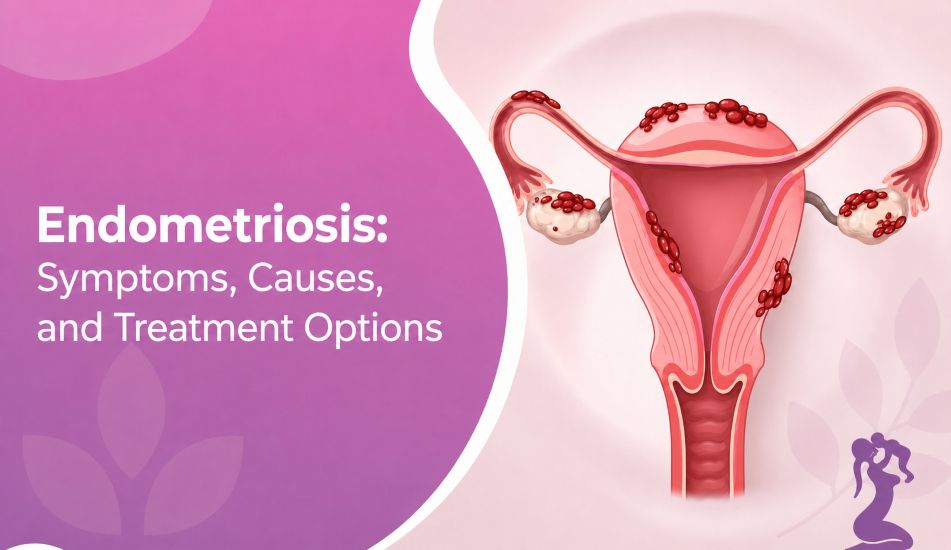
Endometriosis: Symptoms, Causes, Diagnosis, and Treatment
Endometriosis is a chronic gynecological condition in which tissue similar to the lining of the uterus grows outside the uterus. It can cause pelvic pain, painful periods, pain during sex or bowel movements, digestive or urinary symptoms, and difficulty becoming pregnant. The condition can affect quality of life for years, particularly when symptoms are mistaken for “normal” period pain.
The World Health Organization (WHO) estimates that endometriosis affects about 10% of women of reproductive age worldwide, equivalent to approximately 190 million people. It can occur from adolescence through menopause and may affect the pelvis as well as, less commonly, areas outside the reproductive organs.
Diagnosis and management have also evolved. Updated guidance from the American College of Obstetricians and Gynecologists (ACOG) in 2026 emphasizes that clinicians can make a presumptive or clinical diagnosis based on symptoms, history, examination, and imaging rather than always waiting for surgery before beginning appropriate treatment. NICE guidance, updated in 2024 and with subsequent updates through 2026, similarly recommends imaging and referral alongside initial treatment rather than relying on a single diagnostic test.
This guide explains endometriosis symptoms, possible causes and risk factors, how endometriosis is diagnosed, available treatment options, its relationship with fertility, and when to seek medical care.
What Is Endometriosis?
Endometriosis occurs when tissue similar to the endometrium, the lining of the uterus, develops outside the uterine cavity. These areas are often called lesions or implants.
Endometriosis most commonly affects structures within the pelvis, including the ovaries, fallopian tubes, pelvic lining, bladder, bowel, and tissues around the uterus. In less common cases, endometriosis can occur outside the pelvis, including areas such as the diaphragm or chest.
The tissue associated with endometriosis responds to hormonal changes during the menstrual cycle. Inflammation, bleeding within affected tissue, irritation of surrounding structures, scar tissue, and adhesions can contribute to pain and other symptoms. Adhesions may cause pelvic organs to stick together or become less mobile.
One important point is that the amount of pain does not necessarily correspond to the amount or stage of endometriosis. Some people have extensive disease with relatively few symptoms, while others experience severe pain despite lesions that may appear less extensive. This is one reason symptom assessment is so important.
How Common Is Endometriosis?
WHO estimates that approximately 10% of women of reproductive age worldwide have endometriosis, representing about 190 million people.
U.S. data also demonstrate that diagnosis is relatively common. According to the CDC’s National Center for Health Statistics, 6.2% of women aged 20–49 in the United States reported ever having been diagnosed with endometriosis in 2022–2023. Among those diagnosed with endometriosis, 33.0% had current fertility problems, compared with 18.6% among women without a diagnosis.
These figures are not interchangeable: the WHO estimate describes global prevalence, while the CDC figure describes diagnosed endometriosis in a specific U.S. age group and period. Differences in diagnostic access and case identification can affect reported prevalence.
Common Symptoms of Endometriosis
Endometriosis symptoms vary considerably. Some people experience severe pain that interferes with work, school, relationships, exercise, or sleep, while others have mild symptoms or no obvious symptoms at all.
The most commonly recognized symptoms include:
Painful Periods
Painful menstruation, known medically as dysmenorrhea, is one of the most recognizable symptoms.
Endometriosis-related menstrual pain may become progressively more disruptive and may not respond adequately to ordinary over-the-counter pain relief. The pain can occur before menstruation begins, during the period, or continue afterward.
Pain that repeatedly prevents normal activities should not automatically be dismissed as typical menstrual discomfort.
Chronic Pelvic Pain
Endometriosis can cause pelvic pain that occurs outside menstruation. Some people experience persistent lower abdominal, pelvic, hip, or lower-back discomfort.
NICE recommends considering endometriosis when a person has chronic pelvic pain or period-related pain that affects daily activities and quality of life.
Pain During or After Sex
Deep pain during or after sexual intercourse can be associated with endometriosis. The location and severity of lesions, inflammation, adhesions, and involvement of tissues near the vagina or pelvic organs can influence symptoms.
Persistent pain during sex deserves medical assessment because endometriosis is only one possible cause.
Painful Bowel Movements
Some people experience bowel-related symptoms that become worse around menstruation. Pain during bowel movements, constipation, diarrhea, bloating, nausea, or abdominal discomfort may occur, particularly when endometriosis affects tissues near the bowel.
Cyclical gastrointestinal symptoms are specifically recognized by NICE as a reason to consider endometriosis.
Urinary Symptoms
Endometriosis involving or surrounding the urinary tract can cause pelvic discomfort, painful urination, urinary symptoms that fluctuate with the menstrual cycle, and, in some cases, blood in the urine.
Blood in the urine or significant urinary pain requires appropriate medical evaluation because urinary tract infections, stones, and other conditions can cause similar symptoms.
Heavy or Abnormal Menstrual Bleeding
Some people with endometriosis experience heavy menstrual bleeding or spotting between periods. However, heavy bleeding can have many causes, including fibroids, adenomyosis, hormonal disorders, and bleeding disorders.
Fatigue and Digestive Symptoms
Fatigue is frequently reported by people with endometriosis and may be related to chronic pain, inflammation, sleep disruption, heavy bleeding, stress, or other coexisting conditions.
Bloating, nausea, constipation, diarrhea, and abdominal pain can also occur. The FDA lists digestive symptoms such as bloating, nausea, diarrhea, and constipation among symptoms that may occur with endometriosis.
Difficulty Becoming Pregnant
Endometriosis is associated with infertility and reduced fertility in some people.
The condition may affect fertility through inflammation, adhesions, distortion of pelvic anatomy, ovarian involvement, changes around the fallopian tubes, or other mechanisms. The exact biological pathways are not completely understood.
What Causes Endometriosis?
The exact cause of endometriosis remains uncertain. Researchers believe that multiple biological mechanisms may contribute rather than there being one universal cause.
Several theories have been studied.
Retrograde Menstruation
One longstanding theory is retrograde menstruation. This occurs when menstrual blood and cells flow backward through the fallopian tubes into the pelvic cavity rather than leaving the body entirely through the vagina.
However, retrograde menstruation alone cannot explain every case of endometriosis because backward menstrual flow is relatively common, whereas endometriosis develops in only a proportion of people.
Cellular Changes
Another theory involves changes in cells within the pelvic lining that allow them to develop characteristics resembling endometrial tissue. This is sometimes described as coelomic metaplasia.
Other mechanisms under investigation include immune-system responses, hormonal signaling, inflammation, genetics, and cellular changes.
Genetics and Family History
Family history appears to influence risk.
NICE recommends asking about first-degree relatives with endometriosis because having an affected close relative increases the likelihood of the condition.
NICHD also identifies having a mother, sister, or daughter with endometriosis as a recognized risk factor.
This does not mean that someone with a family history will definitely develop endometriosis. It indicates an increased susceptibility.
Endometriosis Risk Factors
Risk factors are different from direct causes. A risk factor can increase the likelihood of developing a disease without proving that it directly causes it.
Factors associated with a higher likelihood of endometriosis include a first-degree family history, early onset of menstruation, short menstrual cycles, and heavy periods lasting more than seven days. Infertility is also associated with endometriosis, although the relationship can work in both directions because endometriosis itself can contribute to fertility problems.
Researchers are continuing to investigate genetic, hormonal, inflammatory, immune, and environmental factors.
There is currently no established lifestyle strategy that can reliably prevent endometriosis.
Endometriosis and Infertility
The relationship between endometriosis and fertility is clinically important.
NICHD reports that studies have found endometriosis in approximately 25% to 50% of women with infertility, while approximately 30% to 40% of women with endometriosis may experience infertility. These figures come from research estimates and should not be interpreted as a prediction for an individual patient.
Endometriosis may affect fertility through several mechanisms. Adhesions can alter the normal relationship between the ovaries and fallopian tubes. Endometriomas, which are ovarian cysts associated with endometriosis, can affect ovarian tissue. Inflammation may also influence reproductive processes.
Importantly, having endometriosis does not mean pregnancy is impossible. Many people with endometriosis conceive naturally, while others may benefit from fertility treatment.
Treatment decisions should take fertility goals into account from the beginning rather than treating pain and fertility as completely separate issues.
Internal Linking Opportunity
This section is a natural place to link to an existing website article about fertility, female infertility, ovarian health, or reproductive health.
Suggested anchor text:
- endometriosis and fertility
- causes of female infertility
- fertility treatment options
- when to see a fertility specialist
If the website offers fertility assessment or assisted reproductive services, this section can also naturally link to the relevant fertility services page.
How Is Endometriosis Diagnosed?
There is no single blood test that can reliably diagnose endometriosis.
Diagnosis generally involves a combination of medical history, symptom assessment, physical examination, imaging, and, when appropriate, laparoscopy.
Importantly, diagnostic practice has evolved. ACOG released a new clinical practice guideline on endometriosis diagnosis in 2026, emphasizing clinical assessment and imaging as important components of evaluation and allowing presumptive diagnosis and treatment while the diagnostic process continues.
Medical History
A healthcare professional may ask about:
- When pelvic pain started
- Whether pain follows the menstrual cycle
- How severe the pain is
- Whether pain interferes with school, work, exercise, sleep, or relationships
- Pain during sex
- Bowel or urinary symptoms
- Menstrual bleeding patterns
- Previous pelvic surgery
- Fertility history
- Family history of endometriosis
Keeping a menstrual and symptom diary can be useful. NICE specifically recommends symptom diaries as an aid to discussions between patients and healthcare professionals.
Pelvic Examination
A pelvic examination may identify tenderness, masses, reduced mobility of pelvic organs, or other findings suggestive of endometriosis.
A normal examination does not necessarily rule out endometriosis.
Ultrasound
Ultrasound is an important part of contemporary endometriosis assessment.
The updated NICE guideline recommends offering transvaginal ultrasound to people with suspected endometriosis, even when the abdominal or pelvic examination is normal. Ultrasound can help identify ovarian endometriomas, some forms of deep endometriosis, and alternative causes of pelvic symptoms.
However, a normal ultrasound does not completely exclude endometriosis.
This distinction is important for patients searching online for answers: “normal ultrasound” does not automatically mean “no endometriosis.”
MRI
Pelvic MRI may be considered when deep endometriosis is suspected or when clinicians need to assess the extent and location of disease.
NICE recommends specialist ultrasound or pelvic MRI for suspected deep endometriosis and emphasizes the importance of specialist expertise in performing and interpreting these studies.
Laparoscopy
Laparoscopy is a minimally invasive surgical procedure in which a camera is inserted through a small abdominal incision to examine the pelvic organs.
It can be used to diagnose and sometimes treat endometriosis during the same procedure.
Historically, laparoscopy was regarded as the definitive method for confirming endometriosis. Current guidance places greater emphasis on clinical assessment and imaging and does not require every patient to undergo immediate diagnostic surgery before treatment begins. ACOG’s 2026 guidance specifically supports clinical diagnosis and empiric treatment in appropriate circumstances.
NICE still recommends considering laparoscopy when appropriate, including when imaging is normal but clinical suspicion remains.
Blood Tests and CA-125
There is no routine blood test that can establish a diagnosis of endometriosis.
NICE specifically recommends not using serum CA-125 to diagnose endometriosis.
This is useful information for patients because internet searches can sometimes promote unvalidated blood tests or biomarkers as definitive diagnostic tools.
Endometriosis Treatment Options
There is currently no treatment that guarantees permanent elimination of endometriosis. Treatment focuses on controlling pain and other symptoms, improving quality of life, addressing fertility goals, and managing complications.
WHO states that there is currently no cure and that treatment aims to control symptoms and limit the long-term effects of the disease.
The most appropriate treatment depends on symptoms, age, disease location, previous treatments, side effects, fertility plans, and personal preferences.
Pain Relief
Pain medicines may be used for symptom control.
NICE recommends discussing the benefits and risks of analgesics and considering a short trial of paracetamol or a non-steroidal anti-inflammatory drug (NSAID), alone or in combination, as an initial approach to endometriosis-related pain.
NSAIDs are not appropriate for everyone, particularly people with certain stomach, kidney, cardiovascular, bleeding, or medication-related risks. A healthcare professional or pharmacist can help determine whether they are appropriate.
Hormonal Treatment
Because endometriosis is influenced by ovarian hormones, hormonal treatments can reduce menstrual cycling and associated pain in many patients.
Depending on the individual situation, treatment may include:
- Combined hormonal contraceptives
- Progestin-only medications
- Gonadotropin-releasing hormone (GnRH) agonists
- GnRH antagonists
- Other hormone-based therapies
ACOG lists birth-control pills, progestin-only medicines, and GnRH agonists among medications used to manage endometriosis.
Some newer hormonal therapies are also incorporated into current clinical guidance. NICE’s updated recommendations include technology appraisals for GnRH antagonist treatments, including options with hormonal add-back therapy.
Hormonal treatment is generally intended to control symptoms rather than remove existing endometriosis lesions.
Surgery
Surgery may be considered when symptoms remain significant despite medical treatment, when there is an endometrioma or deep endometriosis, when anatomy is affected, or when fertility considerations make surgery appropriate.
Laparoscopic surgery can involve excision or ablation of endometriosis lesions and treatment of adhesions, depending on the circumstances.
Surgery has potential benefits but also risks. In particular, ovarian surgery can potentially affect ovarian reserve, so decisions involving endometriomas should consider fertility goals and ovarian function.
NICE recommends individualized surgical discussions that consider symptoms, fertility priorities, benefits, risks, recurrence, and the possibility of future surgery.
Can Endometriosis Come Back After Surgery?
Yes. Surgery can improve symptoms, but recurrence is possible.
ACOG notes that pain can recur after surgery and reports that as many as 8 in 10 women may have pain again within two years after surgery. Recurrence does not necessarily mean that surgery was unsuccessful; endometriosis can be persistent or recurrent, and some lesions may not have been visible or removable during the original procedure.
For this reason, long-term management may include medication, follow-up, symptom monitoring, or additional treatment.
Hysterectomy and Endometriosis
A hysterectomy removes the uterus, but it should not automatically be considered a cure for endometriosis.
Endometriosis exists outside the uterus, so removing the uterus does not necessarily remove all endometriosis lesions.
Hysterectomy may be considered in selected patients with severe symptoms who have completed childbearing and when other treatments have not provided adequate relief. Decisions about whether to remove the ovaries involve additional considerations, including age, menopausal effects, bone health, cardiovascular health, and the potential for residual endometriosis.
This is a major surgical decision and requires individualized specialist counseling.
Endometriosis Treatment When Pregnancy Is a Priority
Treatment changes when the primary goal is becoming pregnant.
Hormonal suppression is useful for pain control but does not increase spontaneous pregnancy rates while someone is actively trying to conceive. NICE specifically recommends against using hormonal treatment alone or alongside surgery for the purpose of improving spontaneous pregnancy rates.
Depending on disease severity, age, ovarian reserve, tubal status, semen factors, previous pregnancy history, and duration of infertility, options may include surgical treatment, expectant management, intrauterine insemination, or assisted reproductive technology such as in vitro fertilization.
A fertility specialist may be appropriate when pregnancy has not occurred, particularly when endometriosis is known or strongly suspected.
Internal Linking Opportunity
A fertility-focused website can connect this section with:
- female infertility causes
- IVF treatment
- IUI treatment
- fertility testing
- ovarian reserve testing
- fertility consultation
- reproductive endocrinology services
These links help users move naturally from informational content toward relevant clinical services without making the article feel promotional.
Endometriosis in Teenagers and Young Adults
Endometriosis can begin during adolescence. Severe or disruptive period pain should not automatically be dismissed as something a teenager simply has to tolerate.
ACOG’s 2026 diagnostic guideline covers reproductive-aged adults and adolescents with symptoms suggestive of endometriosis. NICE also recommends specialist referral for young people aged 17 and under with suspected or confirmed endometriosis.
Early recognition matters because persistent pain can interfere with education, physical activity, sleep, social relationships, and mental well-being.
Parents and teenagers should consider medical assessment when menstrual pain repeatedly causes missed school, inability to participate in normal activities, severe gastrointestinal or urinary symptoms, or inadequate relief from ordinary pain management.
Endometriosis and Mental Health
Living with chronic pelvic pain can affect emotional well-being, sleep, relationships, work, education, and daily functioning.
WHO notes that endometriosis can affect mental health, including through depression and anxiety.
Mental-health symptoms should not be used to dismiss physical symptoms. Instead, psychological support can be part of comprehensive chronic-pain care while the underlying gynecological condition is appropriately evaluated and treated.
Lifestyle Measures and Self-Care
Lifestyle measures cannot remove endometriosis lesions, but they may help some people manage symptoms and maintain overall health.
Regular physical activity, adequate sleep, heat therapy, stress-management strategies, and a balanced diet may support general well-being. A symptom diary can also help identify patterns between menstruation, pain, food-related symptoms, bowel changes, sleep, and daily activities.
However, be cautious about claims that a particular diet, supplement, detox program, or herbal product can “cure” endometriosis.
NICE states that available evidence does not support traditional Chinese medicine or Chinese herbal medicines and supplements as treatments for endometriosis.
Dietary changes may be helpful for individual gastrointestinal symptoms, but evidence does not establish one universal endometriosis diet.
When Should You See a Doctor?
Consider medical evaluation if period pain is severe, worsening, or interfering with normal life.
You should also discuss symptoms with a healthcare professional if you experience chronic pelvic pain, deep pain during sex, cyclical bowel pain, cyclical urinary symptoms, difficulty becoming pregnant, unexplained pelvic masses, or persistent symptoms despite initial treatment.
NICE recommends referral to gynecology when initial treatment is ineffective, poorly tolerated, contraindicated, or when symptoms substantially affect daily activities or persist or recur. Specialist endometriosis services are recommended for suspected or confirmed endometriomas, deep endometriosis involving the bowel, bladder, or ureter, or disease outside the pelvic cavity.
Seek urgent medical care for sudden severe pelvic pain, fainting, heavy uncontrolled bleeding, fever with significant pelvic pain, pregnancy-related pain or bleeding, or other symptoms that could indicate an emergency.
Endometriosis vs. Other Causes of Pelvic Pain
Endometriosis is not the only possible explanation for pelvic pain or painful periods.
Conditions with overlapping symptoms include adenomyosis, uterine fibroids, pelvic inflammatory disease, ovarian cysts, irritable bowel syndrome, urinary tract disorders, and other gynecological or gastrointestinal conditions. The NHS specifically notes that symptoms of endometriosis can resemble conditions such as adenomyosis, fibroids, pelvic inflammatory disease, and irritable bowel syndrome.
This overlap is one reason why a complete clinical assessment is more useful than trying to diagnose endometriosis from a single symptom.
Key Takeaways
Endometriosis is a chronic condition affecting an estimated 190 million women of reproductive age worldwide. It can cause severe menstrual pain, chronic pelvic pain, painful sex, bowel or urinary symptoms, fatigue, and fertility problems.
The exact cause remains uncertain, although genetic, hormonal, inflammatory, immune, and cellular mechanisms are being investigated.
Diagnosis is based on a combination of symptoms, medical history, examination, imaging, and, when appropriate, laparoscopy. Importantly, modern guidance increasingly supports clinical diagnosis and treatment without requiring every patient to undergo surgery before receiving care.
Treatment depends on the person’s symptoms and priorities. Pain medicines, hormonal treatments, surgery, fertility treatment, and supportive care may all have a role.
Most importantly, severe or persistent period pain should not simply be accepted as normal. Appropriate evaluation can help identify endometriosis or another condition causing the symptoms.
Frequently Asked Questions
What is the main cause of endometriosis?
The exact cause of endometriosis is not known. Researchers have proposed several mechanisms, including retrograde menstruation, cellular changes, genetic susceptibility, hormonal influences, inflammation, and immune-system factors. No single theory explains every case.
What are the most common symptoms of endometriosis?
Common symptoms include severe or worsening period pain, chronic pelvic pain, pain during or after sex, painful bowel movements, urinary pain, heavy menstrual bleeding, fatigue, bloating, nausea, and difficulty becoming pregnant. Some people have no obvious symptoms.
Can endometriosis cause infertility?
Yes. Endometriosis can be associated with infertility. It may affect fertility through inflammation, adhesions, altered pelvic anatomy, ovarian involvement, or effects on the reproductive environment. However, many people with endometriosis can become pregnant naturally or with fertility treatment.
Can endometriosis be seen on an ultrasound?
Some forms of endometriosis, including ovarian endometriomas and some deep endometriosis, can be detected with ultrasound. However, a normal ultrasound does not completely rule out endometriosis. NICE recommends transvaginal ultrasound for suspected endometriosis and states that referral may still be necessary when the ultrasound is normal.
Is laparoscopy still needed to diagnose endometriosis?
Not necessarily in every case. Current guidance increasingly supports a clinical diagnosis based on symptoms, examination, and imaging, with treatment potentially starting while evaluation continues. Laparoscopy remains an important option in selected patients, particularly when diagnosis remains uncertain or surgical treatment is appropriate.
Does endometriosis go away after menopause?
Endometriosis symptoms often decrease after menopause as ovarian hormone levels decline, but symptoms do not necessarily disappear in every person. Hormone therapy after menopause can also influence symptoms, so people with a history of endometriosis should discuss appropriate management with their healthcare professional.
Can endometriosis be cured?
There is currently no guaranteed cure for endometriosis. Treatments can reduce pain, control symptoms, improve quality of life, and address fertility concerns, but symptoms or disease can recur.
Does a hysterectomy cure endometriosis?
A hysterectomy removes the uterus but does not automatically remove endometriosis located elsewhere in the pelvis or body. It may be considered for selected patients with severe symptoms who have completed childbearing, but it is not a universal cure.
What is an endometrioma?
An endometrioma is an ovarian cyst associated with endometriosis. It contains old blood and is sometimes referred to as a “chocolate cyst.” Endometriomas can affect pelvic pain and fertility and may require specialist evaluation.
What should I do if period pain stops me from doing normal activities?
Speak with a healthcare professional, particularly if the pain is recurrent, worsening, or not adequately controlled by usual measures. NICE specifically recommends considering endometriosis when period-related pain affects daily activities and quality of life.
Can lifestyle changes cure endometriosis?
There is no strong evidence that a particular diet, supplement, exercise program, or lifestyle routine can cure endometriosis. Healthy lifestyle measures can support overall health and may help some people manage symptoms, but they should complement rather than replace appropriate medical evaluation and treatment.
Can endometriosis come back after surgery?
Yes. Endometriosis symptoms can recur after surgery. ACOG notes that pain may return in some patients, and long-term management may be necessary.