
Uterine Fibroids: Symptoms, Causes, and Treatment Options
Uterine fibroids are among the most common noncancerous growths affecting the uterus. They can be completely symptom-free or cause heavy menstrual bleeding, pelvic pressure, pain, urinary problems, anemia, and, in some cases, fertility or pregnancy complications. Because symptoms vary significantly depending on the size, number, and location of the fibroids, two people with the same diagnosis may have very different experiences.
Fibroids are also called uterine leiomyomas or myomas. They develop from the smooth muscle and connective tissue of the uterus and may grow within the uterine wall, toward the uterine cavity, or outward from the uterus. Some women have a single fibroid, while others have multiple growths of different sizes.
The National Institutes of Health’s Eunice Kennedy Shriver National Institute of Child Health and Human Development (NICHD) identifies uterine fibroids as the most common noncancerous tumors in women of childbearing age. NIH Women’s Health Research estimates that fibroids occur in approximately 20% to 80% of women by age 50, depending on the population studied and how fibroids are detected.
This guide explains uterine fibroid symptoms, causes, risk factors, types, diagnosis, treatment options, fertility considerations, and when medical evaluation is important.
What Are Uterine Fibroids?
Uterine fibroids are abnormal growths made primarily from smooth muscle cells and other tissue that develop in or around the uterus. They are usually benign, meaning they are not cancerous. Fibroids can range from very small growths that are difficult to detect to large masses that significantly change the shape or size of the uterus.
Importantly, having a fibroid does not automatically mean that treatment is necessary. Many women have fibroids without experiencing symptoms, and some never require medical intervention. Treatment is generally considered when fibroids cause significant symptoms, affect quality of life, contribute to anemia or reproductive problems, or create other clinical concerns.
Fibroids can grow, remain stable, or shrink over time. They are influenced by reproductive hormones, which helps explain why they commonly develop during the reproductive years and often become smaller after menopause.
How Common Are Uterine Fibroids?
Uterine fibroids are extremely common, although the exact prevalence varies according to age, ethnicity, symptoms, imaging methods, and the population being studied.
NIH Women’s Health Research reports that uterine fibroids occur in approximately 20% to 80% of women by age 50. Older NIH research has also reported that fibroids may affect more than 70% of women during their reproductive years, illustrating how common these growths can be when women are followed over time or examined with sensitive diagnostic methods.
However, prevalence should not be confused with symptomatic disease. A substantial proportion of fibroids never cause noticeable symptoms. This is why some women discover fibroids incidentally during a routine pelvic examination, ultrasound, or pregnancy scan.
There are also documented disparities in fibroid burden. NIH sources report that Black women tend to develop fibroids at younger ages and may experience larger or more symptomatic fibroids than White women. The reasons for these differences are still being investigated and likely involve a combination of genetic, hormonal, environmental, and social factors.
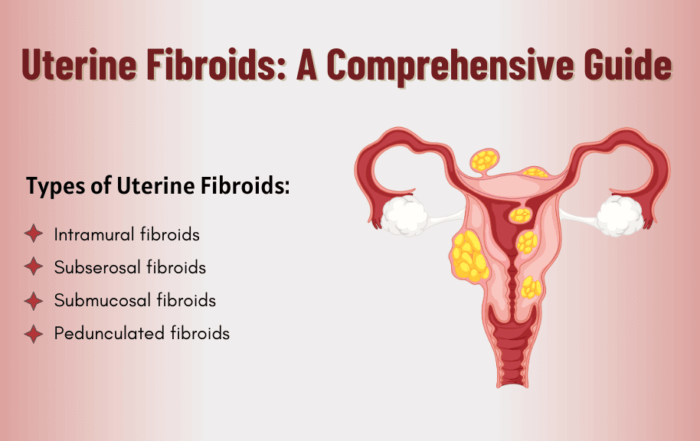
Types of Uterine Fibroids
Doctors commonly classify fibroids according to where they grow in relation to the uterus. Their location can influence symptoms and may affect which treatment options are appropriate.
Intramural Fibroids
Intramural fibroids develop within the muscular wall of the uterus. They are among the most frequently identified types.
Depending on their size and location, intramural fibroids may contribute to heavy menstrual bleeding, pelvic pressure, cramping, an enlarged uterus, or discomfort. Some remain asymptomatic and are discovered incidentally.
Submucosal Fibroids
Submucosal fibroids grow beneath the inner uterine lining and may protrude into the uterine cavity.
Although they may be smaller than some other fibroids, their position can make them particularly relevant to abnormal uterine bleeding. In some cases, fibroids that distort the uterine cavity can also affect fertility or pregnancy outcomes.
Subserosal Fibroids
Subserosal fibroids develop on the outside surface of the uterus. They may grow outward toward nearby organs.
Large subserosal fibroids can create pressure symptoms. For example, a fibroid pressing against the bladder may contribute to frequent urination, while pressure on the bowel may contribute to constipation or pelvic discomfort.
Pedunculated Fibroids
Some fibroids grow from a stalk-like structure. These are called pedunculated fibroids and can occur on the outer surface of the uterus or toward the uterine cavity.
Their symptoms depend on their location and size. Rarely, twisting of the stalk can interfere with blood supply and cause sudden severe pain.
Uterine Fibroids Symptoms
Many women with fibroids have no symptoms. When symptoms occur, they can vary substantially based on fibroid size, number, location, and individual sensitivity.
The most common uterine fibroid symptoms include heavy menstrual bleeding, prolonged periods, painful menstruation, pelvic pressure, pelvic or lower-back pain, frequent urination, constipation, and pain during sexual intercourse.
Heavy or Prolonged Menstrual Bleeding
Heavy menstrual bleeding is one of the most recognized symptoms of symptomatic fibroids.
A person may notice that periods are much heavier than previously, last longer than usual, or interfere with work, school, exercise, travel, or sleep. Some women may also experience bleeding between periods.
Persistent heavy menstrual bleeding can lead to iron-deficiency anemia. Symptoms of anemia may include tiredness, weakness, dizziness, headaches, shortness of breath, or reduced exercise tolerance.
The FDA notes that healthcare providers may use a complete blood count and iron testing when evaluating women with fibroids and heavy bleeding.
Pelvic Pressure and Pain
Larger fibroids can produce a feeling of fullness, heaviness, pressure, or discomfort in the lower abdomen.
Pain may occur during menstruation, between periods, during sexual intercourse, or in the lower back. Some women describe persistent pelvic discomfort rather than sharp pain.
Frequent Urination
A fibroid positioned near the bladder can place pressure on it. This may lead to frequent urination or difficulty emptying the bladder.
Urinary symptoms should not automatically be attributed to fibroids because urinary tract infections, bladder disorders, pregnancy, and other conditions can cause similar symptoms.
Constipation and Bowel Pressure
Fibroids located near the bowel or rectum may cause pressure that contributes to constipation, difficulty passing stool, or a feeling of pelvic fullness.
Enlarged Abdomen
A very large fibroid or multiple fibroids can enlarge the uterus and, in some cases, cause the abdomen to appear larger.
However, abdominal enlargement has many possible causes, so it should not be assumed to be caused by fibroids without medical evaluation.
Fertility and Pregnancy Problems
Most women with fibroids can become pregnant, and many pregnancies occur without major fibroid-related complications. However, certain fibroids, particularly those that distort the uterine cavity, may be associated with infertility or pregnancy loss.
Fibroids may also be associated with pregnancy complications such as preterm birth, fetal growth restriction, or placental complications. The significance depends on the size and location of the fibroid and the individual pregnancy.
What Causes Uterine Fibroids?
The exact cause of uterine fibroids is not fully understood.
Current evidence suggests that fibroid development is multifactorial, involving genetics, reproductive hormones, cellular changes, and other biological factors. NICHD notes that researchers are investigating genetic mutations, estrogen and progesterone, growth factors, and other mechanisms involved in fibroid development.
Genetic Factors
Many fibroids contain genetic changes that differ from those found in normal uterine muscle cells. Research has identified mutations involving genes such as MED12 and other pathways associated with cell growth and tissue development.
This does not mean that fibroids are inherited in a simple one-gene, one-disease pattern. Instead, family history appears to influence susceptibility.
Estrogen and Progesterone
Fibroids are hormonally responsive. Estrogen and progesterone appear to contribute to their growth.
This helps explain why fibroids commonly occur during reproductive years and often become smaller after menopause, when levels of ovarian reproductive hormones decline.
Other Growth Factors and Cellular Processes
Research also suggests that growth factors and the extracellular matrix surrounding fibroid cells may contribute to their development and growth.
Scientists continue to investigate how these pathways interact rather than assuming that a single cause explains every case.
Risk Factors for Uterine Fibroids
Several factors are associated with a greater likelihood of developing fibroids.
Age is an important factor because fibroids are primarily associated with the reproductive years. Family history is another recognized factor; having a close relative with fibroids may increase individual risk.
Obesity has also been associated with fibroid risk. Hormonal and metabolic mechanisms may contribute, although having obesity does not mean that fibroids are inevitable.
Race and ethnicity are also associated with differences in fibroid prevalence, age at diagnosis, and symptom burden. NIH sources specifically document a higher burden among Black women, although the reasons for the disparity remain an area of ongoing research.
Other proposed associations include early age at first menstruation, vitamin D status, blood pressure, reproductive history, and environmental factors. These associations should not be interpreted as proof that a particular food, supplement, or lifestyle behavior directly causes fibroids.
Can Stress Cause Fibroids?
Stress is sometimes discussed online as a direct cause of uterine fibroids, but the evidence does not establish stress as a single proven cause.
Fibroid development appears to involve multiple biological mechanisms, including genetic and hormonal pathways. Stress can affect sleep, pain perception, menstrual experiences, and overall health, but that is different from demonstrating that stress directly creates a fibroid.
People with fibroids should therefore avoid blaming themselves for the condition or assuming that eliminating stress alone will make fibroids disappear.
How Are Uterine Fibroids Diagnosed?
Diagnosis generally begins with a medical history and pelvic examination followed by imaging when appropriate.
An ultrasound is commonly used because it can provide information about the uterus, fibroid size, number, and location. ACOG notes that ultrasound can be used to create images of the uterus and other pelvic organs.
Depending on the clinical situation, a healthcare professional may recommend additional testing such as:
- Transvaginal or abdominal ultrasound
- Sonohysterography
- Hysteroscopy
- MRI
- Blood tests such as a complete blood count and iron studies when heavy bleeding is present
MRI can provide more detailed information about fibroid location and uterine anatomy, although it is not required for every patient. Hysteroscopy may be particularly useful when a fibroid is suspected inside the uterine cavity.
A diagnosis should also consider other potential causes of abnormal uterine bleeding or pelvic pain.
When Do Uterine Fibroids Need Treatment?
Not every fibroid requires treatment.
If fibroids are small and asymptomatic, or if symptoms are mild and manageable, a healthcare professional may recommend observation and periodic assessment rather than immediate intervention.
Treatment becomes more relevant when symptoms significantly affect daily life or health. ACOG lists heavy or painful periods causing anemia or disruption of normal activities, bleeding between periods, pelvic pain, infertility, uncertainty about the nature of a growth, and rapid growth as circumstances that may prompt treatment.
The appropriate approach depends on several factors, including:
- Symptoms and their severity
- Fibroid size and location
- Number of fibroids
- Age and reproductive stage
- Overall health
- Whether pregnancy is desired
- Previous treatments
- Personal preferences regarding uterus-preserving treatment
Uterine Fibroids Treatment Options
There is no single treatment that is appropriate for everyone with fibroids. Treatment can range from observation and medication to minimally invasive procedures and surgery.
Watchful Waiting
For women without significant symptoms, watchful waiting may be appropriate.
This does not mean ignoring the condition. A healthcare professional may monitor symptoms, perform examinations, or repeat imaging when clinically appropriate.
Fibroids often become smaller after menopause, so age and proximity to menopause can also influence management decisions.
Medications for Fibroid Symptoms
Medication is often used to manage symptoms rather than permanently eliminate fibroids.
Nonsteroidal anti-inflammatory drugs, commonly called NSAIDs, may help relieve menstrual or pelvic pain. They do not directly shrink fibroids.
Tranexamic acid can reduce menstrual blood loss and is a nonhormonal option used on heavy bleeding days.
Hormonal contraceptives may help manage heavy menstrual bleeding. A progestin-releasing intrauterine device can also reduce bleeding in selected women, although it does not remove fibroids and may not be appropriate if the fibroid significantly distorts the uterine cavity.
GnRH-Based Medications
Gonadotropin-releasing hormone medications can influence the hormonal environment that supports fibroid growth.
GnRH agonists can temporarily suppress ovarian hormone production and may shrink fibroids while improving heavy bleeding and anemia. They are sometimes used before surgery to make a procedure easier or reduce blood loss.
GnRH antagonists are another medication category used for heavy menstrual bleeding associated with fibroids. Depending on the specific medication and formulation, add-back hormones may be used to reduce side effects such as hot flashes and bone loss.
These medications require individualized medical assessment because they can have important side effects and are not appropriate for everyone.
Myomectomy
A myomectomy removes fibroids while preserving the uterus.
This can be particularly important for people who want to preserve reproductive potential. The procedure may be performed through different approaches depending on the fibroid’s location and size.
Hysteroscopic myomectomy may be used for selected fibroids that project into the uterine cavity. Laparoscopic or open abdominal surgery may be considered for fibroids located within or outside the uterine wall.
Myomectomy does not guarantee that new fibroids will never develop. ACOG notes that new fibroids can appear after surgery.
Uterine Artery Embolization
Uterine artery embolization, or UAE, is a minimally invasive procedure that reduces blood flow to fibroids.
During the procedure, an interventional radiologist guides a catheter into the uterine arteries and releases small particles that block blood flow to the fibroids. The fibroids then shrink over time.
ACOG reports that UAE provides symptom relief for many women; in one cited study, approximately three out of four women experienced relief, while about one in five later required another fibroid-related procedure.
UAE can be an alternative to hysterectomy or myomectomy for some women. However, its implications for future pregnancy need careful discussion with a gynecologist, particularly when fertility is a priority.
Radiofrequency Ablation
Radiofrequency ablation uses heat energy to destroy fibroid tissue, allowing the fibroid to shrink.
It can be performed through different approaches, including laparoscopic, vaginal, or transcervical techniques depending on the device and clinical situation.
ACOG notes that more research is needed regarding the effects of radiofrequency ablation on future pregnancies.
Hysterectomy
A hysterectomy removes the uterus and is the definitive surgical treatment for uterine fibroids because the uterus containing the fibroids is removed.
Depending on the procedure, the ovaries may or may not be removed. A hysterectomy eliminates the possibility of carrying a pregnancy and permanently ends menstrual periods.
It may be considered when fibroids are very large, symptoms are severe, other treatments have failed or are unsuitable, or the patient does not want future pregnancy.
Uterine Fibroids and Fertility
The relationship between fibroids and fertility is complex.
Many women with fibroids conceive naturally. However, some fibroids may interfere with fertility, particularly when they distort the uterine cavity. Research continues to examine the mechanisms through which fibroids may influence implantation, uterine anatomy, sperm transport, or pregnancy maintenance.
A 2024 review in Fertility and Sterility noted that the relationship between fibroids and infertility remains an area of ongoing discussion and that management should consider the individual reproductive context.
If pregnancy is a goal, treatment decisions should therefore be based not only on fibroid size but also on location, uterine cavity distortion, symptoms, age, ovarian reserve, previous pregnancy history, and other fertility factors.
This is an important reason why someone trying to conceive should discuss fibroid treatment with an obstetrician-gynecologist or fertility specialist before choosing a procedure.
Uterine Fibroids During Pregnancy
Fibroids do not automatically prevent a healthy pregnancy.
However, pregnancy can change the way fibroids behave because of hormonal and uterine changes. Some fibroids may grow during pregnancy, while others may remain stable or decrease in size.
Depending on their location and size, fibroids have been associated with pregnancy complications such as fetal growth restriction, preterm delivery, placental abruption, and cesarean delivery. These associations do not mean that every pregnant person with fibroids will experience complications.
Pregnant patients with known fibroids should follow their obstetric provider’s recommendations for monitoring and care.
Can Uterine Fibroids Turn Into Cancer?
Uterine fibroids are overwhelmingly benign.
Mayo Clinic states that fibroids are not cancer and almost never become cancerous. A rare malignant tumor called leiomyosarcoma is a separate condition rather than the typical progression of an ordinary fibroid.
Rapid growth or unusual symptoms should still be medically evaluated because clinicians may need to consider other diagnoses. A person should not assume that a new or rapidly changing uterine mass is simply a fibroid.
Can Diet or Lifestyle Shrink Fibroids?
There is currently no diet proven to reliably eliminate uterine fibroids.
Maintaining a healthy weight, exercising regularly, eating a balanced diet, and managing other health conditions are reasonable components of overall health. However, lifestyle measures should not be presented as a replacement for medical treatment when fibroids are causing significant bleeding, anemia, pain, pressure, or reproductive problems.
Similarly, supplements marketed online as “natural fibroid cures” should be approached cautiously. Evidence for many such products is limited, and supplements can interact with medications or create other risks.
A healthy lifestyle may support general well-being, but it should not be confused with a proven fibroid treatment.
When Should You See a Doctor About Fibroid Symptoms?
Medical evaluation is appropriate if menstrual bleeding becomes unusually heavy, periods become significantly more painful, bleeding occurs between periods, pelvic pressure persists, urination becomes difficult or unusually frequent, or ongoing fatigue suggests possible anemia.
Mayo Clinic recommends medical evaluation for persistent pelvic pain, heavy or painful periods that interfere with daily activities, bleeding between periods, difficulty emptying the bladder, and persistent tiredness or weakness. Severe vaginal bleeding or sudden sharp pelvic pain warrants urgent medical attention.
Do not assume that every episode of heavy bleeding is caused by fibroids. Pregnancy-related problems, adenomyosis, endometriosis, polyps, hormonal disorders, bleeding disorders, and other conditions can produce overlapping symptoms.
For related information, consider internally linking this article to your existing content on “Endometriosis: Symptoms, Causes & Treatment” and “Common Vaginal Infections: Symptoms & Prevention” using descriptive anchor text where the context naturally overlaps.
Uterine Fibroids and Anemia
Heavy menstrual bleeding from fibroids can result in iron deficiency and anemia.
This is particularly important because people sometimes adapt to gradually increasing blood loss and may consider persistent fatigue or weakness normal. Iron deficiency can affect energy levels and daily functioning even before severe anemia develops.
If heavy menstrual bleeding is present, clinicians may evaluate hemoglobin and iron status. The FDA specifically identifies complete blood count and iron testing as part of fibroid evaluation when anemia is suspected.
If your website has an existing article about iron deficiency, anemia, heavy menstrual bleeding, or nutritional deficiencies, these are strong internal-linking opportunities.
How to Choose a Uterine Fibroid Treatment
Choosing treatment is not simply a question of asking which procedure removes a fibroid most effectively. The decision should account for the entire clinical situation.
Someone with mild symptoms may reasonably discuss monitoring or medication. Someone with severe bleeding and anemia may need a more active approach. A person hoping to become pregnant may prioritize uterus-preserving strategies. Another person who has completed childbearing and has severe recurrent symptoms may consider definitive treatment.
The location of the fibroid matters just as much as its size. A relatively small submucosal fibroid can produce significant bleeding, while a larger fibroid in another location may produce fewer symptoms.
A useful consultation should cover expected symptom improvement, recurrence risk, recovery time, effects on fertility, possible complications, and whether future procedures could be required.
Final Takeaway
Uterine fibroids are common, usually benign growths that can affect the uterus in very different ways. Some women never experience symptoms, while others develop heavy menstrual bleeding, anemia, pelvic pressure, pain, urinary or bowel symptoms, or fertility concerns.
The exact cause of fibroids remains uncertain, but genetics, reproductive hormones, and other cellular and biological factors appear to contribute. Diagnosis commonly involves a pelvic assessment and ultrasound, with additional testing used when necessary.
Treatment should be individualized. Observation may be appropriate for asymptomatic fibroids, while medications can help control bleeding or pain. Procedures such as myomectomy, uterine artery embolization, and radiofrequency ablation can provide alternatives to hysterectomy for selected patients. When definitive treatment is needed, hysterectomy removes the uterus and eliminates the possibility of future pregnancy.
The most important point is that fibroid size alone does not determine how serious the condition is. Location, symptoms, bleeding, anemia, reproductive goals, and overall health all matter. Anyone experiencing persistent heavy bleeding, pelvic pain, pressure, fertility difficulties, or symptoms of anemia should discuss them with a qualified healthcare professional.
Frequently Asked Questions
What are the first signs of uterine fibroids?
Early fibroids may cause no symptoms at all. When symptoms develop, common signs include heavier or longer menstrual periods, painful periods, pelvic pressure, pelvic pain, frequent urination, constipation, or fatigue associated with anemia.
What causes uterine fibroids?
The exact cause is not known. Evidence suggests that genetic changes, reproductive hormones such as estrogen and progesterone, growth factors, and other biological processes can contribute to fibroid development.
Can uterine fibroids go away on their own?
Fibroids can sometimes shrink, particularly after menopause when reproductive hormone levels decline. Some fibroids may also change in size over time. However, symptomatic fibroids should be evaluated rather than relying on spontaneous shrinkage.
Can fibroids cause heavy periods?
Yes. Heavy menstrual bleeding is one of the most common symptoms associated with uterine fibroids. Persistent heavy bleeding can contribute to iron deficiency and anemia.
Can uterine fibroids cause infertility?
Some fibroids can contribute to fertility problems, particularly when they distort the uterine cavity. However, many women with fibroids become pregnant without treatment. The effect on fertility depends on factors such as fibroid location, size, number, and the individual’s overall reproductive health.
Are fibroids cancerous?
Most uterine fibroids are benign and are not cancerous. Leiomyosarcoma is a rare malignant tumor and is considered a separate condition.
What is the best treatment for uterine fibroids?
There is no single treatment that is best for every person. Options can include observation, medications, myomectomy, uterine artery embolization, radiofrequency ablation, and hysterectomy. The appropriate choice depends on symptoms, fibroid location and size, age, overall health, and whether future pregnancy is desired.
Can fibroids be treated without removing the uterus?
Yes. Depending on the situation, uterus-preserving options can include medication, myomectomy, uterine artery embolization, and radiofrequency ablation. Suitability varies according to fibroid characteristics and reproductive goals.
Does uterine artery embolization shrink fibroids?
Yes. UAE reduces blood flow to fibroids, causing them to shrink over time. ACOG reports that the procedure provides symptom relief for many women, although some patients may require additional treatment later.
Can fibroids grow during pregnancy?
Fibroid behavior during pregnancy varies. Some may grow, remain stable, or change in size. Certain fibroids are associated with pregnancy complications, so women with known fibroids should discuss appropriate monitoring with their obstetric provider.
Can diet shrink uterine fibroids?
There is no established diet proven to reliably shrink or eliminate fibroids. A balanced diet, regular physical activity, and healthy weight can support general health, but they should not replace medical treatment for significant fibroid symptoms.
When should I seek urgent care for fibroids?
Seek urgent medical attention for severe vaginal bleeding, sudden severe pelvic or abdominal pain, fainting, severe weakness, or other symptoms suggesting significant blood loss or an acute complication. Mayo Clinic specifically recommends immediate medical care for severe vaginal bleeding or sudden sharp pelvic pain.