
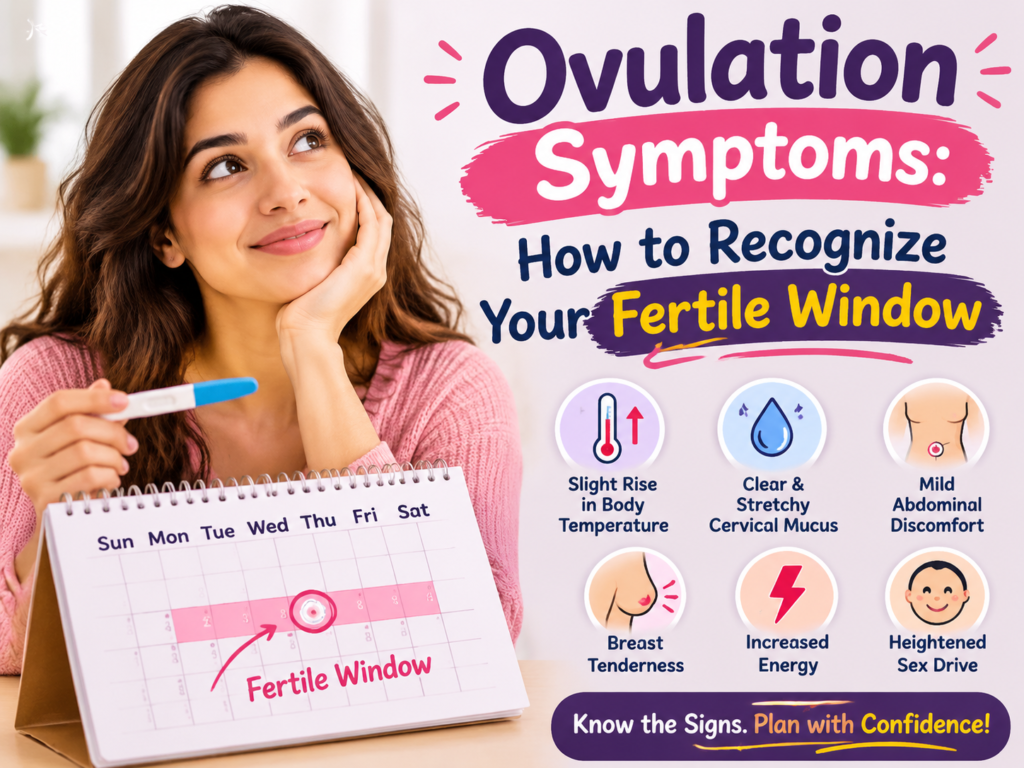
Ovulation Symptoms: How to Recognize Your Fertile Window
Ovulation is a key part of the menstrual cycle and an important factor in reproductive health. It is the process in which an ovary releases a mature egg, making pregnancy possible if sperm are present in the reproductive tract. Recognising the signs of ovulation can help people understand their menstrual cycles, identify their most fertile days, and make more informed decisions about pregnancy planning or contraception.
Some people notice clear physical changes around ovulation, such as slippery cervical mucus, mild one-sided pelvic pain, or a change in their basal body temperature. Others experience few noticeable symptoms. This is why relying on one sign alone can be misleading. A combination of cycle tracking, cervical mucus observation, and ovulation predictor tests can provide a more useful picture of the fertile window.
The fertile window is especially important because it does not last throughout the entire menstrual cycle. According to the American Society for Reproductive Medicine (ASRM), it is generally defined as the six-day period ending on the day of ovulation. However, its timing can vary between cycles, including in people whose periods are usually regular.
ASRM+1
This guide explains the most common ovulation symptoms, how to estimate your fertile window, which tracking methods are useful, and when changes in your cycle may warrant medical advice.
Medical note: This article provides general educational information, not an individual diagnosis or fertility assessment. Ovulation symptoms cannot confirm pregnancy, rule out a reproductive condition, or reliably establish that a person is infertile.
What Is Ovulation?
Ovulation is the release of an egg from one of the ovaries during the menstrual cycle. The egg enters the fallopian tube, where it may meet sperm and become fertilised. If fertilisation and subsequent implantation occur, pregnancy may develop. If pregnancy does not occur, hormone levels eventually change and menstruation begins.
Ovulation is controlled by hormonal signals involving the brain, pituitary gland, and ovaries. During the first part of the cycle, follicle-stimulating hormone (FSH) helps ovarian follicles develop. Usually, one follicle becomes dominant and the developing egg matures. As the follicle produces more oestrogen, the body prepares for the release of the egg.
A rise in luteinising hormone (LH), known as the LH surge, triggers the final stages leading to ovulation. This is why urine ovulation predictor kits measure LH: detecting the surge can indicate that ovulation is approaching.
After the egg is released, the remaining follicle develops into the corpus luteum, which produces progesterone. Progesterone helps prepare the uterine lining for a possible pregnancy and contributes to the rise in basal body temperature after ovulation.
Ovulation does not necessarily happen on the same calendar day every month. Although a 28-day cycle is often used as an example, individual cycle lengths and the timing of ovulation vary. A more useful general estimate is that ovulation often occurs about 14 days before the next menstrual period, rather than automatically on day 14 of every cycle.
Mayo Clinic+1
What Is the Fertile Window?
The fertile window is the period during which sexual intercourse can result in pregnancy. It includes the five days before ovulation and the day of ovulation itself.
This timing reflects the different survival periods of sperm and the egg. Sperm can remain capable of fertilisation for several days in favourable conditions within the female reproductive tract, whereas the egg generally remains fertilisable for approximately 12 to 24 hours after release.
A landmark prospective study published in the New England Journal of Medicine in 1995 followed 221 healthy women who were planning pregnancy. Researchers assessed 625 menstrual cycles and found that conceptions were attributable to intercourse during a six-day interval ending on the estimated day of ovulation. The study estimated conception probabilities ranging from 10% when intercourse occurred five days before ovulation to 33% on the estimated day of ovulation in the analysed single-intercourse-day cycles. These figures describe that study population and should not be interpreted as an individual’s personal chance of pregnancy.
nejm.org+1
The days immediately before ovulation are particularly important. ASRM notes that the likelihood of conception is generally highest when intercourse takes place within the two days before ovulation. This is why waiting until an ovulation test becomes positive or until ovulation pain appears may mean missing some of the fertile window.
ASRM+1
For people trying to conceive, identifying the fertile window can help with timing intercourse. For people avoiding pregnancy, however, recognising symptoms is not a sufficiently reliable stand-alone contraceptive method. Fertility-awareness methods require specific training and consistent application, and casual symptom tracking or a phone calendar should not be treated as dependable contraception.
10 Common Ovulation Symptoms to Recognise
Ovulation symptoms are caused mainly by hormonal changes and the physical events surrounding the release of an egg. Not everyone experiences the same signs, and some people do not notice any obvious difference during the middle of their cycle.
The most useful approach is to look for a pattern across several cycles rather than treating one symptom as proof that ovulation has occurred.
1. Clear, Slippery, Stretchy Cervical Mucus
One of the most useful natural signs of approaching ovulation is a change in cervical mucus.
During much of the menstrual cycle, vaginal discharge may be relatively thick, sticky, creamy, or less noticeable. As ovulation approaches, rising oestrogen levels usually increase the amount of cervical mucus and change its consistency. It may become:
- Clear or translucent.
- Wet and slippery.
- Stretchy between the fingers.
- Similar in appearance to raw egg white.
This type of cervical mucus supports sperm movement and survival, making it a useful sign of the fertile phase. The mucus may become less abundant, thicker, or cloudier after ovulation as progesterone becomes more influential.
ASRM describes cervical mucus monitoring as an inexpensive way to identify the approach of ovulation. Its guidance notes that mucus volume rises over the five to six days before ovulation and often reaches its peak within the two to three days beforehand.
ASRM+1
It is important not to confuse normal fertile cervical mucus with discharge caused by an infection. Discharge accompanied by a strong unpleasant smell, itching, burning, pain during urination, or unusual colour should not automatically be attributed to ovulation.
2. Mild One-Sided Pelvic Pain (Mittelschmerz)
Some people experience a short period of discomfort on one side of the lower abdomen around ovulation. This is known as mittelschmerz, a German term meaning middle pain.
The discomfort may feel like a mild cramp, dull ache, or sudden sharp twinge. It can occur on the left or right side, depending on which ovary releases the egg. It may last a few minutes, several hours, or occasionally one to two days.
The NHS explains that ovulation pain often occurs about 14 days before a period and may be accompanied by a small amount of vaginal bleeding or discharge.
NHS+1
Mild, familiar mid-cycle discomfort can be a normal ovulation symptom. However, not every episode of one-sided pelvic pain is caused by ovulation. Ovarian cysts, endometriosis, pelvic infection, and ectopic pregnancy can cause similar symptoms.
Severe, persistent, worsening, or recurrent pain deserves medical assessment, particularly if it occurs with fever, vomiting, heavy bleeding, dizziness, or possible pregnancy. Sudden severe abdominal or pelvic pain with fainting or significant weakness needs urgent medical attention.
3. A Slight Rise in Basal Body Temperature
Basal body temperature (BBT) is the body’s temperature at complete rest. It is usually measured immediately after waking, before getting out of bed, eating, drinking, or undertaking physical activity.
After ovulation, progesterone causes a small increase in resting body temperature. The change is usually subtle, so it is more useful to look for a sustained pattern than to focus on an individual reading.
To track BBT, use a digital basal thermometer and measure your temperature under similar conditions each morning. Record the result alongside the date of your menstrual cycle. After tracking for several cycles, you may notice a lower-temperature phase followed by a slightly higher-temperature phase.
There is an important limitation: BBT generally helps identify ovulation after it has happened rather than predict it in advance. If you are trying to conceive, a temperature rise may therefore arrive too late to identify the beginning of your most fertile days.
ACOG explains that basal body temperature can help show a pattern consistent with ovulation, but it is not a reliable stand-alone method for predicting the upcoming fertile window. Illness, fever, disrupted sleep, alcohol, and changes in measurement time can also affect readings.
ACOG+1
4. Increased Vaginal Discharge
Some people notice that vaginal discharge becomes more noticeable as ovulation approaches. This is closely related to the increase in cervical mucus caused by changing oestrogen levels.
The discharge may feel wetter than usual, and some people notice a slippery sensation when wiping or during normal daily activities. This change can occur before the most obvious egg-white-like mucus appears.
After ovulation, progesterone usually makes cervical mucus thicker and less abundant. However, discharge patterns differ between individuals, and not everyone experiences a clearly defined change.
The distinction between cervical mucus and vaginal infection is important. Normal cycle-related discharge should not usually cause persistent itching, burning, or a strong unpleasant odour. New or concerning symptoms should be evaluated rather than assumed to be hormonal.
5. Breast Tenderness or Sensitivity
Some people report breast tenderness around ovulation or during the days that follow. Hormonal fluctuations, including changes in oestrogen and progesterone, can affect breast tissue and contribute to a feeling of fullness, sensitivity, or mild discomfort.
However, breast tenderness is not a specific ovulation indicator. It can also occur before menstruation, during pregnancy, or in response to hormonal medication.
For this reason, breast sensitivity is best treated as a possible accompanying symptom rather than a reliable way to calculate the fertile window. If breast pain is persistent, occurs with a new lump, nipple discharge, skin changes, or other concerning signs, seek medical advice.
6. Mild Bloating
Temporary abdominal bloating can occur at different stages of the menstrual cycle. Hormonal changes may affect fluid balance and digestive sensations, so some people notice fullness or mild abdominal discomfort around mid-cycle.
Bloating alone cannot confirm ovulation. It may also be associated with food intolerance, constipation, digestive conditions, premenstrual symptoms, or other causes.
If bloating is severe, persistent, progressively worsening, or accompanied by significant pelvic pain, unexplained weight changes, or abnormal bleeding, it should be assessed rather than automatically attributed to normal hormonal changes.
7. Light Spotting
A small amount of spotting may occur around ovulation in some people. It can appear as a few pink, red, or brown marks rather than a normal menstrual flow.
The NHS includes light vaginal bleeding among the possible features of ovulation pain.
NHS+1
However, spotting is not a dependable way to identify the fertile window. Bleeding between periods can have several causes, including hormonal contraception, cervical changes, infections, polyps, fibroids, and pregnancy-related conditions.
Repeated bleeding between periods, bleeding after sex, heavy bleeding, or bleeding accompanied by pain should be discussed with a healthcare professional.
8. Changes in Sexual Desire
Some people notice changes in sexual desire during the menstrual cycle. Hormonal fluctuations may influence libido, mood, and physical comfort, but the pattern is not consistent for everyone.
An increase in sexual desire may coincide with the fertile phase for some individuals, but it cannot establish that ovulation is occurring. Stress, sleep, relationship factors, medication, and general health can also affect sexual desire.
It is therefore better to consider this a possible personal observation rather than a clinical ovulation test.
9. Changes in Mood or Energy
Changes in mood, motivation, or energy can occur across the menstrual cycle. Some people report feeling different around mid-cycle, while others notice no meaningful change.
These experiences are not sufficiently specific to identify ovulation. Mood changes can be influenced by sleep, stress, mental health, physical illness, and many other factors.
If mood symptoms are intense, persistent, or interfere with daily life, they deserve attention in their own right rather than being dismissed as a normal part of ovulation.
10. Changes in Cervical Position
The cervix can change in position and texture throughout the menstrual cycle. Around the fertile phase, it may feel higher, softer, and slightly more open than at other times.
Some people monitor these changes as part of fertility-awareness tracking. However, checking cervical position is subjective and may be difficult to interpret without experience. It should not be used alone to confirm ovulation or prevent pregnancy.
Taken together, cervical mucus, cycle records, LH testing, and temperature patterns can provide more information than any single physical symptom.
How to Calculate Your Fertile Window
Calculating the fertile window begins with understanding the menstrual cycle. Cycle day 1 is the first day of menstrual bleeding. The cycle continues until the day before the next period begins.
A common estimate places ovulation about 14 days before the next menstrual period. This is a general guide, not a rule that applies to every person or every cycle.
For example, consider someone whose cycle is usually 28 days long. Ovulation might occur around day 14, making the estimated fertile window approximately days 9 to 14. For a 30-day cycle, ovulation might occur around day 16, with an estimated fertile window around days 11 to 16.
| Typical cycle length | Estimated ovulation day | Approximate six-day fertile window |
| 26 days | Day 12 | Days 7–12 |
| 28 days | Day 14 | Days 9–14 |
| 30 days | Day 16 | Days 11–16 |
| 32 days | Day 18 | Days 13–18 |
These examples use the assumption that ovulation occurs approximately 14 days before the next period. Actual ovulation can occur earlier or later, so the table should not be treated as an exact prediction.
Research has shown why calendar calculations have limitations. A prospective study of 696 menstrual cycles found that the fertile window occurred across a broad range of cycle days. On each day from cycle day 6 through day 21, at least 10% of women in the study were within their fertile window. The researchers concluded that the timing varied considerably, even among women who believed their cycles were regular.
PubMed Central (PMC)+1
For a more informed estimate, combine menstrual dates with cervical mucus observations or LH testing rather than relying entirely on an average cycle length.
How to Track Ovulation More Accurately
There is no single home method that can identify the exact moment of ovulation in every cycle. Different tracking methods provide different kinds of information: some help predict that ovulation is approaching, while others help establish that it probably already occurred.
1. Use an Ovulation Predictor Kit
An ovulation predictor kit (OPK) is a home test that detects the rise in luteinising hormone in urine.
The LH surge usually occurs before ovulation. A positive result suggests that ovulation may take place within approximately the next 24 to 48 hours, although the timing varies. This makes an OPK useful for identifying days when pregnancy may be more likely.
Follow the manufacturer’s instructions carefully because testing schedules and interpretation differ between products. Some tests use a line-based result, while digital tests display a symbol or fertility status.
A positive LH test does not guarantee that an egg has been released. False-positive results can occur, and people with certain hormonal conditions, including polycystic ovary syndrome (PCOS), may find results more difficult to interpret.
ASRM reports that false-positive urinary LH results occur in approximately 7% of cycles in the evidence it reviewed. It also notes that ovulation may occur within two days after detecting the LH surge.
ASRM+1
2. Monitor Cervical Mucus Daily
Cervical mucus monitoring is a low-cost way to observe changes during the cycle.
Notice whether discharge is absent, sticky, creamy, watery, or clear and slippery. Record the pattern over several cycles. A transition towards wetter, clearer, more stretchy mucus can suggest that the fertile phase is approaching.
Try to compare changes with your own usual pattern rather than someone else’s description. Vaginal discharge naturally varies, and medicines, sexual activity, infections, lubricants, and vaginal products can affect what you observe.
3. Record Basal Body Temperature
BBT tracking is most useful when you want to understand whether a temperature pattern consistent with ovulation has occurred.
Measure your temperature at a consistent time immediately after waking and record the result every day. Look for a sustained shift rather than a single high reading.
A temperature chart can become more informative after two or three cycles because it helps reveal your personal pattern. It is less useful for predicting the start of the fertile window in the current cycle.
4. Use a Menstrual Cycle Tracking App Carefully
A period-tracking app can help record menstrual dates, symptoms, cervical mucus observations, LH results, and temperature readings.
However, an app’s predicted ovulation date is an estimate, not a medical confirmation. Many basic apps calculate predictions from previous cycle lengths. If ovulation shifts from one month to another, the app may predict the fertile window incorrectly.
ASRM has specifically cautioned that calendar-based smartphone apps may not accurately identify an individual’s ovulation day. In one study discussed in its committee opinion, the best-performing calendar apps had a maximum accuracy of 21% for predicting the day of ovulation.
ASRM+1
An app is therefore best used as a record-keeping tool, especially when its predictions are considered alongside physical signs and ovulation tests.
5. Discuss Clinical Ovulation Testing With a Doctor
If cycles are irregular, ovulation is difficult to identify, or pregnancy is not occurring despite regular attempts, a healthcare professional may recommend further assessment.
Depending on the circumstances, evaluation can include blood tests, ultrasound monitoring, or other investigations. A progesterone blood test may be used to assess whether ovulation has occurred. ACOG notes that progesterone testing is generally timed about one week before the expected next period, rather than automatically on cycle day 21 for everyone.
ACOG+1
The appropriate test and timing depend on cycle length, symptoms, medical history, and the clinical question.
What Happens During Ovulation in a 28-Day Menstrual Cycle?
A 28-day cycle is often used to explain the menstrual cycle, but it is an example rather than a universal pattern. Understanding its phases can help explain why ovulation symptoms appear when they do.
Days 1–5: Menstruation. The cycle begins with menstrual bleeding. The uterine lining sheds because pregnancy did not occur in the previous cycle. Hormonal levels are relatively low at the beginning of this phase.
Days 6–13: Follicular phase. FSH supports the development of ovarian follicles. As a dominant follicle develops, oestrogen levels rise. Cervical mucus may become more abundant, watery, and slippery as the body approaches ovulation.
Around day 14: Ovulation. An LH surge triggers the release of a mature egg. Some people notice fertile cervical mucus or mild one-sided pelvic discomfort, while others experience no obvious symptoms.
Days 15–28: Luteal phase. The corpus luteum produces progesterone, which supports the uterine lining. Basal body temperature generally remains slightly higher than it was during the earlier part of the cycle. If pregnancy does not occur, hormone levels decline and menstruation begins.
This timeline is useful for understanding the process, but it should not be used to assume that every person ovulates on day 14. Someone with a 32-day cycle may ovulate later, and even a person with a typically regular cycle may experience occasional variation.
What Can Affect Ovulation Timing?
Ovulation depends on coordinated hormonal activity. Factors that affect the reproductive hormone system can change when ovulation occurs or whether it happens in a particular cycle.
Polycystic Ovary Syndrome (PCOS)
PCOS is a common hormonal condition that can affect ovulation. Some people with PCOS have irregular periods, infrequent ovulation, or cycles in which ovulation does not occur.
Because the timing of ovulation may be unpredictable, calendar-based predictions can be particularly unreliable. Some people with PCOS also have elevated baseline LH levels, which can make certain ovulation predictor kits harder to interpret.
If periods are consistently irregular, absent for extended periods, or accompanied by other symptoms such as increased facial hair or persistent acne, a clinician can assess whether PCOS or another hormonal condition may be involved.
Thyroid and Prolactin Disorders
Thyroid hormones help regulate many body functions, including reproductive processes. Both an underactive and overactive thyroid can be associated with menstrual irregularities.
Prolactin is a hormone involved in breast milk production. When prolactin levels are abnormally high outside expected circumstances, it can interfere with the hormonal signals involved in ovulation.
These conditions are not diagnosed through ovulation symptoms alone. A healthcare professional may recommend blood tests when menstrual changes or other symptoms suggest a hormonal problem. ACOG includes thyroid function and prolactin among the factors that may be investigated during an infertility evaluation.
ACOG
Stress, Significant Weight Changes, and Intense Exercise
Physical or psychological stress can affect the hormonal signals that regulate the menstrual cycle. Significant weight loss, inadequate nutrition, substantial weight gain, and very intense exercise can also contribute to irregular or absent periods in some people.
The effect varies. A stressful week does not automatically stop ovulation, and a single delayed period does not establish a hormonal disorder. However, repeated changes in cycle length or missed periods deserve attention, particularly when they occur alongside major lifestyle changes.
Breastfeeding and the Postpartum Period
Ovulation may be delayed after childbirth, particularly during frequent breastfeeding. However, breastfeeding does not guarantee that ovulation cannot occur.
The first ovulation after childbirth may happen before the first postpartum period. This means pregnancy can be possible before menstruation has returned.
People who wish to avoid pregnancy after childbirth should discuss an appropriate contraceptive method with a healthcare professional rather than relying on the absence of periods or perceived ovulation symptoms.
Age and Reproductive Changes
Age can affect reproductive function and the likelihood of conception. Ovarian function changes over time, and cycle patterns may become less predictable during the years leading up to menopause.
ASRM notes that female fertility declines with age and that the decline becomes more pronounced as people approach their late 30s and 40s. Its committee opinion reports that relative fertility is approximately half at age 40 compared with women in their late 20s and early 30s. This is a population-level comparison, not a prediction of an individual’s fertility.
ASRM+1
Can You Ovulate Without Experiencing Symptoms?
Yes. Ovulation can occur without noticeable pain, spotting, breast tenderness, or obvious changes in discharge.
Some people experience clear cervical mucus changes but no other symptoms. Others may not notice any physical signs at all. The absence of ovulation symptoms does not necessarily mean that ovulation is not happening.
Similarly, experiencing several symptoms does not prove that an egg has been released. For example, pelvic discomfort may have a digestive or gynaecological cause unrelated to ovulation.
If confirmation is clinically important, a healthcare professional can recommend appropriate testing. Urine LH tests indicate a hormonal surge associated with approaching ovulation, while a correctly timed progesterone test or ultrasound assessment may provide additional information.
Can You Get Pregnant Outside Your Fertile Window?
Pregnancy is most likely when sperm are present in the reproductive tract during the fertile window. The six-day interval ending on ovulation is the standard clinical definition used by ASRM.
However, predicting the window from calendar dates or symptoms is imperfect. If ovulation occurs earlier or later than expected, intercourse that someone assumed was outside the fertile window may actually have taken place during it.
This is especially relevant for people with irregular cycles, changing cycle lengths, or recently discontinued hormonal contraception. The calendar alone cannot reliably identify every fertile day.
If avoiding pregnancy is the goal, do not assume that a day is safe simply because an app labels it as low fertility or because ovulation symptoms are absent. Discuss reliable contraception with a healthcare professional.
When Should You See a Doctor About Ovulation Problems?
Occasional variation in menstrual cycle timing is not necessarily a sign of disease. However, persistent irregularity, missed periods, or symptoms that interfere with everyday life may require medical evaluation.
Consider arranging a medical appointment if:
- Your periods are repeatedly irregular or you frequently miss periods.
- You have no menstrual period for around three months and are not pregnant.
- You experience recurring or severe pelvic pain.
- You have repeated bleeding between periods or after sex.
- You notice unusual vaginal discharge with itching, burning, or an unpleasant smell.
- You suspect you are not ovulating or have difficulty interpreting repeated ovulation tests.
- You have been trying to conceive without success.
For people trying to become pregnant, ASRM generally recommends an infertility evaluation after 12 months of regular unprotected intercourse when the woman is younger than 35, and after six months when she is 35 or older. Earlier assessment may be appropriate when there are irregular or absent periods, known reproductive conditions, or other reasons to suspect a fertility problem.
integration.asrm.org+1
Seek urgent medical attention for sudden severe pelvic or abdominal pain, especially if it is accompanied by fainting, dizziness, heavy bleeding, fever, vomiting, or possible pregnancy. Do not assume severe pain is simply mittelschmerz.
How to Identify Your Fertile Window: A Practical Example
Consider someone with a menstrual cycle that usually lasts 30 days. They want to understand when ovulation may occur and are recording their symptoms to identify their personal pattern.
They begin by marking the first day of menstrual bleeding as cycle day 1. Based on the approximate 14-day interval between ovulation and the next period, they estimate ovulation around day 16. This gives an estimated fertile window of days 11–16.
During the cycle, they notice that cervical mucus becomes increasingly wet and slippery around days 12–15. They use an ovulation predictor kit according to its instructions and receive a positive result on day 14. This suggests that ovulation may be approaching, often within the next 24–48 hours.
They continue recording their basal body temperature. A sustained temperature rise appears after the suspected ovulation date, providing a retrospective pattern consistent with ovulation.
This combination of observations is more informative than relying on the calendar alone. It still does not provide absolute confirmation, but it helps the person understand their cycle more accurately.
The example is illustrative. Actual timing differs, and a positive LH test does not guarantee ovulation. People with irregular cycles or suspected ovulatory disorders may need clinical assessment.
Conclusion
Recognising ovulation symptoms can help people understand their reproductive health and estimate when pregnancy is most likely. Common signs include clear, slippery cervical mucus, mild one-sided pelvic discomfort, light spotting, and a small rise in basal body temperature after ovulation. However, not everyone experiences these changes, and no single symptom can reliably confirm the release of an egg.
The fertile window is generally the six-day period ending on ovulation day. Because cycle timing varies, calendar estimates should be treated as approximate. Combining menstrual tracking with cervical mucus observations and LH testing can provide a more useful estimate, while basal body temperature is mainly helpful for recognising ovulation retrospectively.
If periods are consistently irregular, ovulation is difficult to identify, or pelvic symptoms are severe or persistent, medical advice can help determine whether further assessment is needed. Understanding your own cycle is valuable, but accurate information and appropriate clinical support are more reliable than assumptions based on symptoms alone.
Frequently Asked Questions About Ovulation Symptoms
1. What are the most common signs of ovulation?
Common signs include clear and stretchy cervical mucus, increased vaginal wetness, mild one-sided pelvic pain, and a slight rise in basal body temperature after ovulation. Some people also notice light spotting or breast tenderness, while others have no noticeable symptoms.
2. How many days does the fertile window last?
The fertile window is generally defined as six days: the five days before ovulation and the day of ovulation. Its exact timing can change from one menstrual cycle to another.
3. How do I know when I am ovulating?
You can estimate ovulation by tracking menstrual cycles, monitoring cervical mucus, and using urine LH predictor kits. Basal body temperature can help identify a pattern after ovulation has occurred. No home method guarantees exact confirmation in every cycle.
4. Does clear, stretchy discharge mean I am ovulating?
Clear, slippery, stretchy cervical mucus is a common sign that the fertile phase is approaching. It is associated with rising oestrogen, but it does not prove that ovulation has occurred.
5. Can ovulation cause lower abdominal pain?
Yes. Some people experience mittelschmerz, a mild ache or sharp twinge on one side of the lower abdomen around ovulation. It usually lasts a short time, but severe or persistent pain should be medically assessed.
6. Can I ovulate without having any symptoms?
Yes. Many people do not experience obvious ovulation symptoms. The absence of pain, spotting, or noticeable cervical mucus changes does not establish that ovulation is absent.
7. Does ovulation always happen on day 14?
No. Day 14 is an estimate for a typical 28-day cycle. Ovulation usually occurs about 14 days before the next period, so its calendar date changes with cycle length and individual variation.
8. When is the best time to have intercourse to get pregnant?
The fertile window is the six-day period ending on ovulation day. ASRM reports that conception chances are generally highest when intercourse occurs during the two days before ovulation. Having intercourse every one to two days during the fertile window is a practical approach for many couples trying to conceive.
9. Can an ovulation test confirm that I have ovulated?
A standard urine ovulation test detects an LH surge, which suggests that ovulation may be approaching. It does not directly confirm that an egg was released. A clinician may recommend progesterone testing or ultrasound monitoring when confirmation is needed.
10. How long after a positive ovulation test does ovulation occur?
Ovulation often occurs within approximately 24–48 hours after a positive urine LH test, although timing varies. Follow the specific test instructions and consider the result alongside other cycle signs.
11. Does basal body temperature rise before or after ovulation?
The sustained rise in basal body temperature generally occurs after ovulation because of progesterone. This makes temperature tracking more useful for recognising a past ovulation pattern than predicting the beginning of the fertile window.
12. Can I get pregnant if I have sex after ovulation?
Pregnancy may be possible if intercourse occurs close enough to ovulation for viable sperm to meet the egg. However, the egg generally remains fertilized for only around 12–24 hours after release, so the opportunity declines quickly after ovulation.
13. Can irregular periods affect ovulation?
Yes. Irregular periods may indicate that ovulation is occurring unpredictably or not occurring in some cycles. PCOS, thyroid disorders, elevated prolactin, significant weight changes, and other factors can contribute to irregular ovulation.
14. Is ovulation pain a reliable sign of fertility?
No. Ovulation pain may occur around the time an egg is released, but many people do not experience it. Similar pain can also have other causes, so it should not be used alone to determine fertile days.
15. When should I seek help if I am not getting pregnant?
ASRM generally recommends fertility assessment after 12 months of regular unprotected intercourse for women younger than 35, or after six months for women aged 35 or older. Earlier assessment may be appropriate if periods are irregular or absent, or if there is a known reproductive health concern.