
Low Testosterone Symptoms: Causes, Diagnosis, and Treatment
Low testosterone is often discussed as though it is a simple explanation for tiredness, reduced libido, weight gain, or changes in mood. In reality, diagnosing testosterone deficiency is more complex. Many of its possible symptoms are nonspecific and can also be caused by poor sleep, depression, chronic illness, medication use, obesity, thyroid disorders, anemia, or other medical conditions.
A clinically meaningful diagnosis generally requires both symptoms or signs consistent with testosterone deficiency and repeatedly low testosterone levels measured appropriately. The Endocrine Society recommends diagnosing hypogonadism only when men have relevant symptoms and signs together with unequivocally and consistently low testosterone concentrations, confirmed with repeat morning testing. The American Urological Association similarly recommends at least two early-morning total testosterone measurements on separate occasions and emphasizes that a low laboratory result alone does not establish testosterone deficiency.
This distinction is important because testosterone treatment is not a general anti-aging therapy, a guaranteed energy booster, or an appropriate response to every case of fatigue or erectile dysfunction. A careful evaluation should identify whether testosterone is actually low, why it is low, and whether treatment is likely to provide more benefit than risk.
This guide explains the symptoms of low testosterone, common and less obvious causes, how doctors diagnose hypogonadism, available treatment options, fertility considerations, safety monitoring, and when symptoms should prompt medical attention.
What Is Low Testosterone?
Testosterone is a hormone produced primarily in the testicles. It contributes to sexual development and reproductive function and also plays a role in maintaining libido, erectile function, muscle and bone health, red blood cell production, and other physiological processes.
The medical term hypogonadism refers to inadequate gonadal hormone production. In men, testosterone deficiency can result from a problem in the testicles themselves or from disruption of the hormonal signals from the hypothalamus and pituitary gland that regulate testosterone production.
These two broad categories are commonly described as:
Primary hypogonadism, where the testicles do not produce sufficient testosterone.
Secondary hypogonadism, where the brain’s hormonal signaling system does not adequately stimulate testosterone production.
The Endocrine Society recommends distinguishing between these forms by measuring hormones including luteinizing hormone and follicle-stimulating hormone when hypogonadism is diagnosed.
Testosterone levels also vary naturally. They can change during the day, fluctuate between measurements, and be temporarily affected by illness and other factors. The American Urological Association notes that testosterone testing is affected by circadian rhythms, individual biological variation, assay differences, and health status at the time of testing. In one cited study, acute respiratory illness was associated with average testosterone declines of about 10%, with some groups experiencing decreases of up to 30%.
That is why one blood test should not automatically determine whether someone has low testosterone.
The Most Common Low Testosterone Symptoms
Symptoms can vary substantially between individuals. Some men have clearly low hormone levels with few noticeable symptoms, while others report symptoms that may have multiple possible causes.
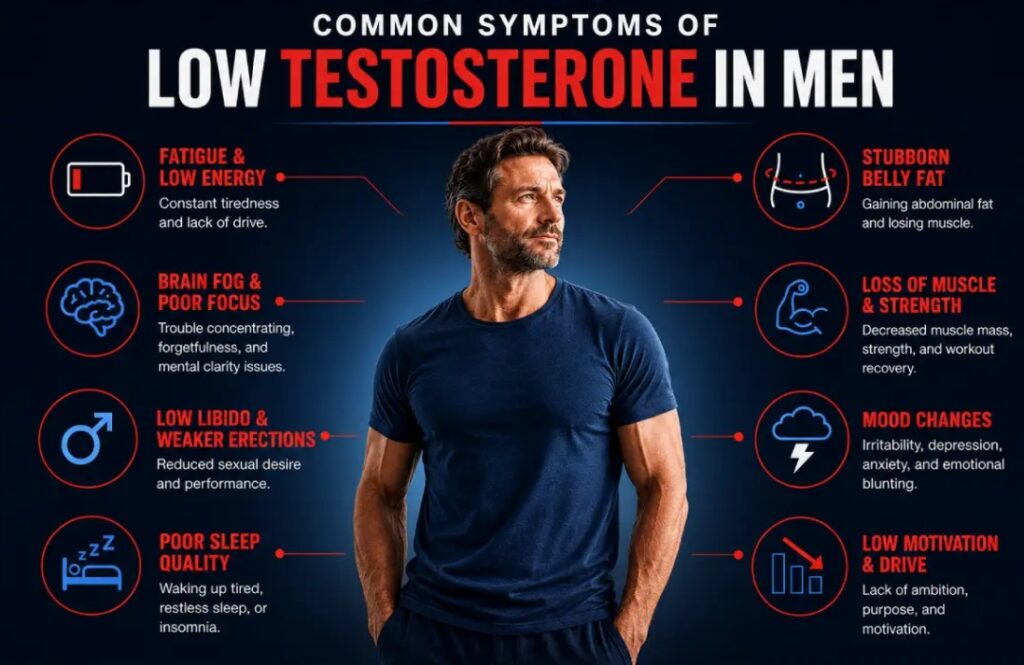
Reduced sexual desire is among the more clinically relevant symptoms. A persistent decrease in libido may warrant evaluation, particularly when it occurs alongside other signs of hormone deficiency.
Erectile difficulties can also occur in men with low testosterone, although erectile dysfunction is not automatically caused by testosterone deficiency. Blood-vessel disease, diabetes, high blood pressure, certain medications, neurological disorders, psychological factors and other conditions can contribute to erectile dysfunction. The AUA’s guidance on erectile dysfunction also emphasizes the importance of proper testosterone testing, including morning measurements, rather than assuming symptoms alone establish a diagnosis.
Other possible symptoms and signs include reduced spontaneous or morning erections, lower energy, reduced physical strength, loss of muscle mass, increased body fat, reduced bone density, infertility, depressed mood, difficulty concentrating and unexplained anemia.
However, symptoms such as fatigue and low mood are particularly nonspecific.
A man who feels exhausted should not assume testosterone is the cause without considering sleep deprivation, obstructive sleep apnea, depression, anemia, thyroid disease, diabetes, nutritional problems, medication effects or other health issues.
The most reliable approach is to look at the complete clinical picture.
Sexual Symptoms That May Suggest Testosterone Deficiency
Sexual symptoms are often what lead men to seek testing.
Low libido may be more strongly associated with testosterone deficiency than general tiredness, although sexual desire is also influenced by mental health, relationships, stress, sleep and medications.
Men may notice fewer spontaneous erections or changes in sexual interest. Erectile dysfunction may coexist with low testosterone but should not be treated as proof of low testosterone.
A man can have erectile dysfunction despite normal testosterone, while another can have low testosterone without severe erectile dysfunction.
This is why a proper sexual-health assessment should consider cardiovascular risk factors, diabetes, medication history, mental health and other potential causes rather than focusing on testosterone alone.
For internal linking, this section is an excellent opportunity to connect readers to related articles such as Erectile Dysfunction: Causes and Treatment Options, How Diabetes Affects Men’s Sexual Health, and Signs of Heart Disease Men Should Not Ignore. A relevant men’s health or sexual health consultation service page could also be linked naturally after discussing professional evaluation.
Physical Signs of Low Testosterone
Low testosterone can affect body composition and physical health over time.
Possible physical changes include reduced muscle mass, reduced muscle strength, increased body fat and lower bone density. Some men may experience reduced body hair or changes in other androgen-dependent physical characteristics.
Severe or prolonged testosterone deficiency can contribute to bone loss, which is clinically important because osteoporosis and fractures can occur in men as well as women.
The Endocrine Society recommends testosterone therapy for appropriately diagnosed hypogonadal men to induce and maintain secondary sex characteristics and correct symptoms of testosterone deficiency. However, treatment decisions require an individualized assessment of the cause of deficiency, expected benefits, contraindications and monitoring needs.
Physical changes should therefore not be self-diagnosed through appearance alone. Weight gain or reduced muscle definition, for example, can result from changes in physical activity, calorie intake, aging, chronic disease or medication use.
Mental and Cognitive Symptoms
Some men with testosterone deficiency report depressed mood, reduced motivation, difficulty concentrating or a general sense of reduced well-being.
These symptoms deserve attention, but they should not automatically be attributed to testosterone.
Depression, anxiety, chronic stress and sleep disorders can independently cause fatigue, poor concentration, reduced libido and changes in motivation. Treating testosterone without identifying the underlying cause could delay appropriate care.
For this reason, a high-quality evaluation includes questions about mental health and sleep as well as sexual and physical symptoms.
A useful internal-linking cluster here could include articles on How Poor Sleep Affects Your Brain, Heart, and Immune System, Signs of Sleep Apnea, Chronic Stress and Men’s Health, and When Fatigue May Signal an Underlying Health Problem.
What Causes Low Testosterone?
Low testosterone can have many causes. Identifying the cause matters because some forms are treatable without lifelong testosterone replacement.
Primary hypogonadism results from a problem affecting the testicles. Potential causes include genetic conditions, testicular injury, certain cancer treatments, infections and other forms of testicular damage.
Secondary hypogonadism involves the hypothalamus or pituitary system. Potential causes can include pituitary disorders, certain medications and systemic illnesses.
The Endocrine Society recommends additional diagnostic evaluation after testosterone deficiency has been identified to determine the cause of androgen deficiency.
Obesity and chronic illness can also be associated with lower testosterone concentrations. This does not mean every man with obesity requires testosterone therapy. Addressing underlying health factors may be an important part of management.
Medication use is another consideration. The AUA notes that chronic illness and certain medicines, including opioids, may affect testosterone concentrations.
Acute illness can temporarily lower a testosterone measurement, which is one reason testing during a significant illness may produce misleading results.
Can Aging Cause Low Testosterone?
Testosterone concentrations can change with age, but age alone should not automatically be treated as a disease.
The Endocrine Society’s 2026 statement emphasizes that the same core diagnostic approach applies regardless of age: symptoms plus consistently low, accurately measured testosterone levels are required. It also states that symptoms alone are not diagnostic and that there is insufficient evidence to support population-wide testosterone screening in asymptomatic men.
The FDA updated testosterone product information in 2026 following review of newer evidence. Its current information states that approved testosterone products are used for men with low testosterone associated with a medical condition and notes the importance of appropriate clinical assessment. The FDA’s June 2026 updates removed an earlier limitation stating that safety and effectiveness for age-related hypogonadism had not been established, while also revising safety information related to prostate cancer and benign prostatic hyperplasia.
The practical takeaway is not that every age-related decline should be treated, nor that age should be ignored. Men with relevant symptoms should receive a proper clinical assessment rather than self-prescribing testosterone based on age or a single test result.
How Is Low Testosterone Diagnosed?
Diagnosis begins with symptoms, medical history and physical examination.
The next step is laboratory testing performed under appropriate conditions.
The Endocrine Society recommends confirming the diagnosis by repeating morning fasting total testosterone measurements. The AUA recommends at least two total testosterone tests on separate occasions, with both performed in the early morning.
This approach matters because testosterone levels fluctuate.
The AUA guideline uses a total testosterone level below 300 ng/dL as a reasonable diagnostic threshold but makes clear that the clinical diagnosis requires low levels combined with relevant symptoms or signs. A numerical result below 300 ng/dL by itself is not enough to establish testosterone deficiency.
The Endocrine Society also emphasizes accurate assays and appropriate reference ranges. In some situations, free testosterone may be measured when clinically indicated.
If testing confirms low testosterone, additional blood tests may help determine whether the problem is primary or secondary hypogonadism. The Endocrine Society specifically recommends measuring luteinizing hormone and follicle-stimulating hormone for this purpose.
Depending on the clinical situation, further evaluation may investigate pituitary function, medication effects, chronic disease, fertility concerns or other underlying causes.
Why One Testosterone Test Is Not Enough
A single result can be misleading for several reasons.
Testosterone follows a daily pattern, with levels generally higher in the morning. The AUA notes that late-afternoon levels may be substantially lower than morning levels, with the size of the difference varying by age.
Laboratory methodology can also affect results.
The Endocrine Society’s 2026 statement notes that non-standardized assays can sometimes produce different classifications from the same blood sample, contributing to both overdiagnosis and underdiagnosis.
Temporary illness, inadequate sleep and other health changes may also influence testing.
For these reasons, an online testosterone test, a direct-to-consumer supplement quiz, or one isolated blood result should not replace a clinician-led diagnosis.
Tests That May Be Considered During an Evaluation
The exact tests depend on the individual.
After repeated testosterone testing, clinicians may measure luteinizing hormone and follicle-stimulating hormone to help distinguish primary from secondary hypogonadism. Additional tests may be considered based on symptoms and findings.
These can include tests relevant to pituitary function, anemia, thyroid function, blood sugar or other conditions that could explain similar symptoms.
The objective is not to order every possible laboratory test. It is to answer two questions:
Is testosterone deficiency actually present?
If so, what is causing it?
This diagnostic approach improves both medical accuracy and content quality because it avoids presenting a simplistic “low testosterone checklist” as a substitute for healthcare.
Treatment for Low Testosterone
Treatment depends on the confirmed diagnosis and its cause.
If an underlying condition or reversible factor is contributing to low testosterone, addressing that factor may be part of treatment.
For men with confirmed hypogonadism, testosterone therapy may be considered.
The Endocrine Society recommends testosterone therapy in hypogonadal men to correct symptoms and maintain appropriate secondary sexual characteristics.
Testosterone can be delivered through several FDA-approved formulations, including topical gels, transdermal patches, buccal systems and injections.
The best option depends on the patient’s diagnosis, preferences, treatment goals, cost, response and medical circumstances.
Treatment should be individualized rather than selected because one formulation is marketed as more convenient or “natural.”
What Benefits Can Testosterone Treatment Provide?
In men with appropriately diagnosed testosterone deficiency, therapy may improve some symptoms and correct consequences of hormone deficiency.
Potential benefits can include improvement in sexual symptoms, correction of certain physical effects of hypogonadism and improvement in other clinically relevant outcomes depending on the individual.
However, treatment is not guaranteed to solve every symptom.
If fatigue is caused primarily by sleep apnea, for example, testosterone therapy may not address the underlying problem.
Similarly, if erectile dysfunction is mainly related to vascular disease or diabetes, testosterone may not be a complete solution.
The Endocrine Society specifically recommends against using testosterone therapy in men with type 2 diabetes simply as a way to improve blood sugar control.
Clear treatment goals are therefore important. A clinician should establish which symptoms or health outcomes are being monitored and reassess whether treatment is actually helping.
Testosterone Therapy and Fertility
This is one of the most important issues for younger men.
External testosterone can suppress the hormonal signaling needed for sperm production.
The Endocrine Society recommends against starting testosterone therapy in men planning fertility in the near term.
Current FDA prescribing information for testosterone cypionate also warns that exogenous androgens can suppress spermatogenesis and adversely affect semen parameters, including sperm count.
Therefore, a man who wants to father children should discuss fertility goals before starting treatment.
This should not be treated as a minor side effect. It can fundamentally change which treatment approach is appropriate.
An internal link here could lead to Fertility and Testosterone: What Men Need to Know, Male Infertility Testing, or a reproductive health service page.
Risks and Monitoring During Testosterone Therapy
Testosterone therapy requires follow-up.
The Endocrine Society recommends evaluating men after treatment begins to assess response, adverse effects and adherence. It also recommends specific prostate monitoring discussions and follow-up in appropriate patients.
FDA labeling has also evolved as new evidence has emerged.
The TRAVERSE trial followed more than 5,200 men receiving at least one dose of testosterone gel or placebo. According to the FDA, major adverse cardiovascular events occurred in 7.0% of men in the testosterone group and 7.3% in the placebo group, and the FDA concluded that the trial did not demonstrate a new cardiovascular safety signal.
However, this does not mean testosterone therapy has no risks or monitoring requirements.
In 2025, the FDA required labeling changes adding or emphasizing warnings about increased blood pressure for testosterone products. FDA-approved labeling for testosterone cypionate notes that testosterone products can increase blood pressure and recommends periodic monitoring, particularly in men with hypertension.
The Endocrine Society also lists several situations in which testosterone therapy should generally not be started, including near-term fertility plans, certain prostate or breast cancer concerns without appropriate evaluation, elevated hematocrit, untreated severe obstructive sleep apnea, uncontrolled heart failure, recent heart attack or stroke within six months, and thrombophilia.
Monitoring plans can therefore include testosterone levels, blood counts, blood pressure, symptom response and prostate-related assessment where clinically appropriate.
Can Lifestyle Changes Raise Testosterone Naturally?
Lifestyle changes can improve overall health and may address factors associated with lower testosterone, particularly when obesity, poor sleep or inactivity are involved.
However, it would be misleading to promise that any particular food, supplement, workout or cold shower can reliably normalize clinically significant hypogonadism.
The appropriate strategy depends on the cause.
Healthy sleep is important because chronic sleep problems can affect overall hormonal and metabolic health. Maintaining a healthy weight, regular physical activity and management of chronic disease may also be beneficial to overall health.
But lifestyle should not be presented as a replacement for medical evaluation when someone has significant symptoms or consistently low laboratory values.
Likewise, supplements marketed as “testosterone boosters” should be approached cautiously.
The FDA has repeatedly warned about products marketed for sexual enhancement or bodybuilding that contain undeclared pharmaceutical ingredients or unapproved drug substances. Recent 2025 and 2026 FDA alerts identified products containing undisclosed sildenafil, tadalafil, testosterone-related ingredients or other potentially dangerous substances.
Products containing SARMs also carry significant risks, and the FDA warns that these unapproved substances have been associated with serious adverse effects, including liver injury and potential cardiovascular risks.
“Natural” on a product label should not be treated as proof of safety or effectiveness.
When Should You See a Doctor About Possible Low Testosterone?
Consider medical evaluation when symptoms are persistent and affecting quality of life.
Reduced libido, persistent erectile changes, unexplained loss of muscle mass, infertility, unexplained anemia or multiple symptoms occurring together may warrant discussion with a qualified healthcare professional.
A medical assessment is particularly important when symptoms appear suddenly, are severe, or occur with headaches, visual changes, testicular changes or other signs that could indicate an underlying endocrine or neurological condition.
Do not start prescription testosterone, anabolic steroids, SARMs or unregulated hormone products without appropriate medical supervision.
Common Myths About Low Testosterone
One common myth is that tiredness automatically means low testosterone. Fatigue has many possible causes.
Another is that erectile dysfunction automatically proves testosterone deficiency. It does not.
A third is that a single blood test can diagnose hypogonadism. Major clinical guidance recommends repeat early-morning testing together with symptoms and signs.
Another misconception is that testosterone therapy is simply a male version of a daily vitamin.
It is a prescription hormone treatment that can affect blood pressure, red blood cell production, fertility and other aspects of health and therefore requires appropriate patient selection and monitoring.
Finally, low testosterone should not automatically be dismissed as “normal aging,” nor should every age-related change be treated with hormones. The correct approach is individualized diagnosis based on symptoms, repeat measurements and the underlying cause.
Related Semantic Keywords and Search Intent
This article naturally addresses search queries and semantic topics including low T symptoms, signs of low testosterone, testosterone deficiency, male hypogonadism, low libido in men, low energy and testosterone, testosterone blood test, morning testosterone test, total testosterone, free testosterone, testosterone levels, testosterone replacement therapy, TRT benefits and risks, causes of low testosterone, primary hypogonadism, secondary hypogonadism, low testosterone and fertility, testosterone and erectile dysfunction, testosterone injections, testosterone gel and natural ways to support healthy testosterone.
These concepts should appear naturally in relevant sections rather than being repeated excessively.
For search engines, this creates topical depth. For LLMs and generative search systems, it provides direct answers to distinct questions while preserving important medical context.
Final Takeaway
Low testosterone is a real medical condition, but it cannot be accurately diagnosed from symptoms alone or from one isolated laboratory result.
The strongest evidence-based approach requires relevant symptoms or signs together with consistently low testosterone measurements obtained appropriately. Major clinical guidance recommends repeat early-morning testing, and further evaluation may be needed to identify whether the cause involves the testicles, pituitary-hypothalamic system, medication use, illness or another factor.
Testosterone therapy may help appropriately selected men with confirmed hypogonadism, but it is not suitable for everyone. Fertility goals, prostate-related evaluation, hematocrit, sleep apnea, cardiovascular health and blood pressure are among the issues that may affect treatment decisions and monitoring.
The safest next step for persistent symptoms is a proper medical assessment—not self-diagnosis, unregulated supplements or unsupervised hormone use.
Frequently Asked Questions
What are the first signs of low testosterone?
Possible symptoms include reduced libido, fewer spontaneous erections, low energy, reduced muscle mass or strength, increased body fat, mood changes and difficulty concentrating. However, these symptoms can have many causes, so symptoms alone cannot diagnose testosterone deficiency.
What testosterone level is considered low?
The American Urological Association uses a total testosterone level below 300 ng/dL as a reasonable cutoff to support the diagnosis, but low testosterone must also be accompanied by relevant symptoms or signs and confirmed with repeat early-morning testing.
Can one blood test diagnose low testosterone?
No. Major guidance recommends at least two appropriately timed testosterone measurements because levels can vary between tests and throughout the day.
What is the best time to test testosterone?
Clinical guidance generally recommends early-morning testing. The Endocrine Society recommends confirming low testosterone with repeat morning fasting measurements, while the AUA recommends two early-morning tests on separate occasions.
Can low testosterone cause erectile dysfunction?
It can contribute to erectile difficulties, but erectile dysfunction has many other possible causes, including cardiovascular disease, diabetes, medication effects and psychological factors. Erectile dysfunction alone does not prove that testosterone is low.
Can low testosterone affect fertility?
Yes. Testosterone deficiency can be associated with reproductive problems, and external testosterone therapy can suppress sperm production. Men planning future fertility should discuss this with a healthcare professional before starting treatment.
Can testosterone therapy increase blood pressure?
FDA labeling changes and current prescribing information warn that testosterone products can increase blood pressure and recommend appropriate monitoring, especially in men with hypertension.
Is testosterone therapy safe for the heart?
The FDA reports that the TRAVERSE trial found similar rates of major adverse cardiovascular events in the testosterone and placebo groups—7.0% versus 7.3%—and did not demonstrate a new cardiovascular safety signal. However, this does not eliminate all treatment risks, and therapy should still be prescribed and monitored individually.
Can low testosterone be treated naturally?
Addressing obesity, poor sleep, inactivity and underlying health conditions may improve overall health and may be relevant when these factors contribute to lower testosterone. However, lifestyle changes should not be presented as a guaranteed cure for clinically confirmed hypogonadism.
Are testosterone boosters safe?
Safety and effectiveness vary widely, and some products marketed for sexual enhancement or bodybuilding have been found by the FDA to contain undeclared drug ingredients or unapproved substances. Consumers should be cautious with products marketed as natural testosterone or sexual-performance boosters.
Does low testosterone always happen with age?
Testosterone levels can change with age, but age alone does not establish a diagnosis. The Endocrine Society states that diagnosis requires symptoms together with consistently low, accurately measured testosterone levels regardless of age.
Who should consider seeing a doctor for low testosterone symptoms?
Men with persistent symptoms such as reduced libido, ongoing sexual changes, unexplained loss of muscle mass, infertility, unexplained anemia or multiple symptoms consistent with testosterone deficiency should discuss evaluation with a qualified healthcare professional.