
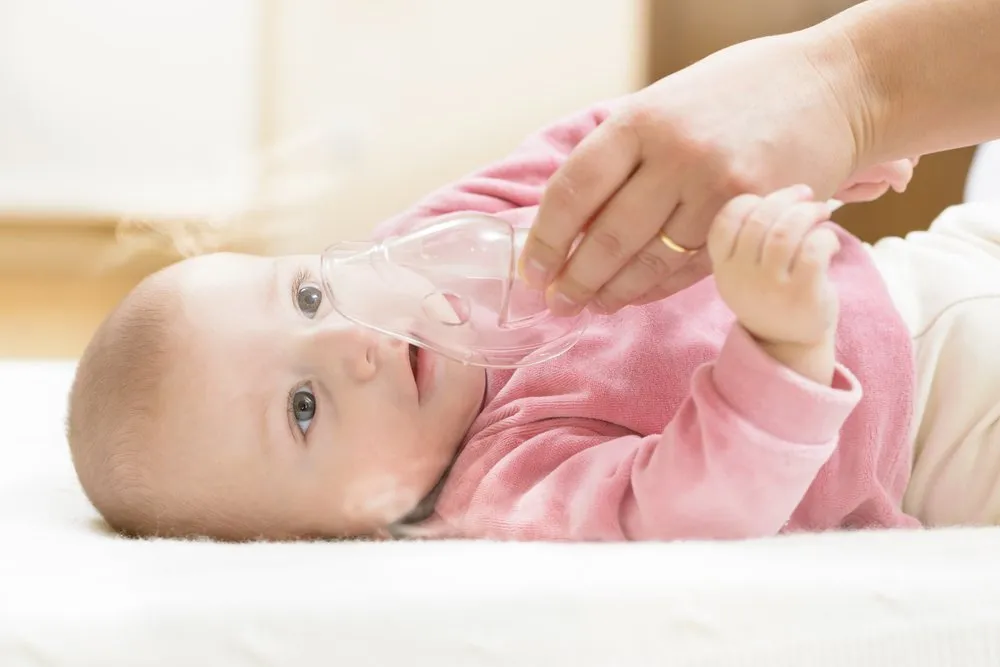
Bronchiolitis in Babies: Symptoms and When to Seek Care
Bronchiolitis in Babies: Symptoms and When to Seek Care
Bronchiolitis is one of the most common respiratory illnesses affecting babies and young children. It usually begins like an ordinary cold, with a runny or blocked nose, cough, and sometimes fever. Over the next few days, however, the infection can move into the smallest airways of the lungs, causing swelling, mucus buildup, wheezing, faster breathing, and difficulty feeding.
For most babies, bronchiolitis is a mild illness that improves with supportive care. But infants have very small airways, so even relatively modest swelling and mucus can make breathing and feeding considerably harder. Very young infants, premature babies, and children with certain heart, lung, neurological, or immune conditions have a higher risk of severe disease.
Respiratory syncytial virus (RSV) is the most common cause of bronchiolitis, although several other respiratory viruses can cause it. Globally, RSV remains a major cause of lower respiratory tract illness in young children. The World Health Organization estimates that RSV causes more than 3.6 million hospitalizations and approximately 100,000 deaths each year among children younger than 5 years, with infants under 6 months accounting for about half of RSV-related deaths.
The good news is that prevention has improved. In the United States, maternal RSV vaccination and long-acting infant antibodies have substantially reduced RSV-associated hospitalization rates in the first season in which these products became widely available. CDC surveillance estimated reductions of approximately 28% to 43% among infants aged 0–7 months during the 2024–2025 season compared with pre-pandemic seasons.
This guide explains what bronchiolitis looks like in babies, how symptoms progress, which signs can be monitored at home, when a baby needs same-day medical assessment, and which symptoms require emergency care.
What Is Bronchiolitis in Babies?
Bronchiolitis is an infection and inflammation of the smallest airways in the lungs, called bronchioles.
These tiny air passages become swollen and can fill with mucus. Because babies have narrower airways than older children and adults, this inflammation can significantly interfere with airflow.
Bronchiolitis is different from bronchitis. Bronchitis generally involves larger airways and is more commonly discussed in older children and adults, whereas bronchiolitis primarily affects infants and very young children.
The American Academy of Pediatrics describes bronchiolitis as an infection of the smallest airways and notes that it is particularly common during the first two years of life.
Bronchiolitis is usually caused by a virus rather than bacteria. RSV is the leading cause, but influenza, parainfluenza, adenovirus, human metapneumovirus, rhinovirus and other respiratory viruses can also cause the illness.
That distinction is important because antibiotics do not treat the viruses that cause uncomplicated bronchiolitis.
Why Can Bronchiolitis Be More Serious in Babies?
A baby’s respiratory system is still developing. The diameter of the smallest airways is much narrower than in an older child.
When inflammation causes even a small amount of swelling, the available space for airflow can decrease substantially. Mucus can further obstruct the airway.
This can create a chain of problems:
A viral infection causes inflammation → the bronchioles swell → mucus accumulates → airflow becomes more difficult → breathing becomes faster and harder → feeding may become difficult → dehydration can develop.
This is why parents should pay attention to more than just the sound of a cough.
A baby who has a cough but is breathing comfortably, feeding reasonably well, staying alert, and producing wet diapers may have a very different level of illness from a baby who is pulling in around the ribs, struggling to breathe, or taking less than half of normal feeds.
The 2026 WHO consolidated childhood illness guideline specifically emphasizes assessment of severity and risk factors, together with supportive management such as oxygen and appropriate respiratory support when required.
What Causes Bronchiolitis?
Respiratory viruses are responsible for bronchiolitis.
RSV is the most important cause in infants, but it is not the only one. Other respiratory viruses can produce a similar clinical picture.
RSV spreads through respiratory secretions and contaminated hands or surfaces. An infected person may spread the virus through coughing, sneezing, close contact, or touching objects after respiratory secretions have contaminated them.
The CDC notes that most children will have been infected with RSV by the time they are 2 years old. Very young infants can develop more serious illness even when their first symptoms appear relatively mild.
Bronchiolitis tends to follow seasonal patterns, although the exact timing differs by location and year. In the United States, RSV activity generally increases during the colder respiratory-virus season, although regional variation occurs.
Early Symptoms of Bronchiolitis
Bronchiolitis often starts with symptoms that look like a common cold.
A baby may initially have:
- A runny nose
- Nasal congestion
- Sneezing
- Mild cough
- Reduced appetite
- Irritability
- Low-grade fever or no fever
At this stage, it may be difficult for parents to know whether the illness will remain mild or progress to lower-airway symptoms.
The CDC explains that RSV symptoms commonly appear in stages, rather than all at once. Early symptoms can include runny nose, decreased appetite and cough, followed by wheezing or breathing difficulty.
In very young infants, especially those younger than 6 months, RSV may present differently. Some babies may have irritability, reduced activity, poor feeding, or pauses in breathing rather than an obvious fever.
This is one reason parents should not use the absence of fever as proof that an infant is not seriously ill.
Bronchiolitis Symptoms to Watch For
As bronchiolitis progresses, parents may notice that the baby is breathing faster or working harder to breathe.
Common symptoms can include:
Faster breathing
The baby may breathe noticeably faster than usual, especially when resting.
Parents should focus on a change from the child’s normal breathing rather than relying on one number alone. A healthcare professional can assess respiratory rate in context with oxygen level, work of breathing, feeding, age and overall appearance.
Wheezing
Wheezing is a high-pitched or musical sound that is often more noticeable when the baby breathes out.
However, not every infant with bronchiolitis will have obvious wheezing. Some babies mainly develop rapid or labored breathing.
Persistent cough
The cough can become more frequent as inflammation develops in the small airways.
Difficulty feeding
Feeding can become surprisingly difficult because babies need to coordinate sucking, swallowing and breathing.
A congested or breathless baby may repeatedly stop during a feed, take much less milk, or become exhausted before finishing.
Nasal flaring
The nostrils may widen during breathing as the baby attempts to move more air.
Chest retractions
The skin between or below the ribs may pull inward with each breath.
This is one of the most important signs of increased work of breathing.
Grunting
A baby may make a repetitive grunting sound while breathing. This can indicate that the baby is working harder to maintain effective breathing.
Reduced urine output
If the baby is taking less fluid, fewer wet diapers can indicate dehydration.
The AAP and NICE both emphasize breathing difficulty and reduced fluid intake as important reasons for prompt medical assessment.
What Does Severe Bronchiolitis Look Like?
The severity of bronchiolitis is not determined simply by how loud the cough sounds.
A baby with a harsh cough but normal breathing may be less concerning than a baby with a relatively quiet cough who is struggling to breathe.
Signs of significant respiratory distress include visible pulling in around the ribs or neck, nasal flaring, grunting, markedly increased breathing effort, exhaustion, pauses in breathing, and bluish or gray discoloration.
NICE identifies worsening work of breathing, including grunting, nasal flaring and marked chest recession, as red flags. It also identifies apnea, cyanosis, exhaustion and substantially reduced fluid intake as warning signs requiring urgent attention.
The CDC similarly advises immediate medical attention when a child has difficulty breathing, is not drinking enough fluids, or has worsening symptoms.
When Should You Take a Baby With Bronchiolitis to the Emergency Room?
Parents should seek emergency medical care immediately if a baby appears to be struggling significantly to breathe.
Emergency warning signs include:
Severe difficulty breathing
If the baby is struggling for every breath, breathing extremely hard, or appears unable to maintain normal breathing, seek emergency care.
Blue or gray lips or face
A blue, gray, or markedly pale appearance can indicate inadequate oxygenation or serious illness and requires immediate assessment.
Pauses in breathing
Apnea is particularly concerning in young infants. The CDC notes that very young infants with RSV may develop pauses in breathing lasting more than 10 seconds.
Severe chest retractions
If the skin is visibly sucking inward between the ribs, below the ribs, or around the neck with each breath, the baby may be using substantial effort to breathe.
Extreme sleepiness or difficulty waking
A baby who is unusually difficult to wake, minimally responsive, or markedly less interactive needs urgent evaluation.
Severe dehydration
Signs can include very few wet diapers, a dry mouth, absence of tears when crying, and inability to maintain normal feeds.
CDC respiratory-virus guidance lists difficulty breathing, blue lips or face, ribs pulling in with each breath, dehydration, and lack of alertness as emergency warning signs in children.
If a baby appears seriously unwell, parents should not wait for symptoms to become more obvious.
When Should You Call the Pediatrician?
Not every case of bronchiolitis requires emergency care, but babies with concerning symptoms should be assessed by a healthcare professional.
Contact a pediatrician or urgent medical service when:
- Breathing is faster or harder than usual.
- Feeding has clearly decreased.
- The baby is producing fewer wet diapers.
- Wheezing is worsening.
- The baby is unusually irritable or sleepy.
- Symptoms are worsening rather than stabilizing.
- The baby is very young, particularly under 3 months.
- The child was born prematurely.
- The baby has chronic lung disease.
- The baby has congenital heart disease.
- The baby has an immune-system disorder.
- There is concern about repeated pauses in breathing.
NICE specifically highlights young age, prematurity, underlying cardiopulmonary disease, neuromuscular disorders and immune problems as factors that can increase the risk of severe bronchiolitis.
Why Age Matters in Bronchiolitis
Age is an important factor when assessing an infant with respiratory symptoms.
CDC data indicate that the risk of severe RSV disease is greatest among the youngest infants. Before widespread RSV prevention products were introduced in the United States, approximately 2%–3% of infants younger than 3 months were hospitalized with RSV each year.
During 2024–2025, CDC surveillance estimated an RSV hospitalization rate of 8.5 per 1,000 infants aged 0–7 months in one surveillance network, compared with 15.0 per 1,000 during pooled 2018–2020 seasons. The reduction was estimated at 43%. A second surveillance network found a 28% reduction.
The figures demonstrate two important points: RSV can cause serious disease in infants, and prevention measures can meaningfully reduce hospitalization.
Which Babies Are at Higher Risk of Severe Bronchiolitis?
Most babies with bronchiolitis recover without major complications, but some groups require closer monitoring.
Higher-risk infants include those who are very young, particularly infants in the first few months of life; babies born prematurely; infants with chronic lung disease; babies with congenital heart disease; children with weakened immune systems; and infants with neuromuscular conditions that affect swallowing or the ability to clear respiratory secretions.
The CDC also identifies severe cystic fibrosis and certain other chronic conditions as risk factors for severe RSV illness.
Importantly, severe RSV does not occur only in babies with known medical problems. CDC guidance notes that most infants hospitalized with RSV have no known risk factor for severe disease.
Therefore, a previously healthy infant should still be monitored carefully.
How Is Bronchiolitis Diagnosed?
Bronchiolitis is generally diagnosed clinically.
A healthcare professional will usually ask about the baby’s symptoms and progression, assess breathing effort, listen to the chest, check hydration and consider oxygen saturation.
Routine blood tests and chest X-rays are generally not necessary for typical bronchiolitis.
The American Academy of Family Physicians’ summary of current pediatric guidance states that diagnosis and severity assessment should be based primarily on history and physical examination, without routinely ordering laboratory or radiologic investigations.
RSV testing may be performed in selected circumstances, particularly when the result would affect infection-control decisions, cohorting, hospital management, or evaluation of a vulnerable child. But identifying the specific virus is not always necessary to diagnose or manage uncomplicated bronchiolitis.
This is important for parents because a negative RSV test does not necessarily mean the baby does not have bronchiolitis. Other respiratory viruses can produce the same clinical syndrome.
Does Every Baby With Bronchiolitis Need Oxygen?
No.
Oxygen is used when a baby’s oxygen level is persistently below the clinically appropriate threshold or when there are other signs of significant respiratory compromise.
WHO’s 2026 guideline specifically includes oxygen therapy, including standard and high-flow oxygen, among supportive treatments for children with bronchiolitis who require escalation of care.
Clinical decisions should be based on the baby’s overall condition rather than one isolated measurement.
Pulse oximetry can be useful, but readings need to be interpreted appropriately and with awareness that measurement accuracy can vary with device, probe placement and other factors. NICE has specifically highlighted issues around pulse-oximeter use and reliability.
Parents should not attempt to manage a seriously breathless infant based only on a home pulse oximeter reading.
Bronchiolitis Treatment: What Actually Helps?
There is usually no medicine that directly eliminates the virus causing uncomplicated bronchiolitis.
Treatment is primarily supportive.
The focus is on helping the baby breathe comfortably, maintain hydration and receive oxygen or respiratory support if needed.
For babies being managed at home, parents can generally focus on clearing nasal secretions and supporting feeding.
Saline and gentle nasal suctioning
A baby’s blocked nose can make feeding and breathing more difficult.
Saline drops followed by gentle nasal suctioning may help clear mucus, particularly before feeding and sleeping.
The goal is not to repeatedly or aggressively suction the nose, which can irritate the nasal lining. Instead, use gentle techniques recommended by the child’s healthcare professional.
Smaller, more frequent feeds
A breathless baby may not be able to complete a normal-sized feed.
Smaller feeds offered more frequently can sometimes make it easier for the infant to maintain fluid intake.
If the baby is taking significantly less than usual, repeatedly vomiting, becoming exhausted during feeds, or producing fewer wet diapers, medical assessment is warranted.
Keeping the baby away from tobacco smoke
Secondhand smoke can worsen respiratory symptoms and is associated with more severe bronchiolitis.
NICE specifically advises that nobody should smoke inside the home of a baby or child with bronchiolitis.
Which Bronchiolitis Treatments Are Not Routinely Recommended?
One of the most important aspects of evidence-based bronchiolitis care is avoiding unnecessary treatments.
Antibiotics do not treat viruses and should not be routinely used for uncomplicated bronchiolitis. They may be appropriate only when a separate bacterial infection has been diagnosed or is strongly suspected.
Similarly, routine bronchodilators such as albuterol or salbutamol, epinephrine and corticosteroids are not recommended for typical bronchiolitis.
The current AAFP clinical summary states that bronchodilators, epinephrine and corticosteroids should not be routinely administered to infants and children with bronchiolitis.
This does not mean these medicines are never used in pediatric respiratory disease. Asthma and bronchiolitis are different conditions, and treatment decisions depend on the diagnosis.
Parents should therefore avoid assuming that wheezing automatically means a baby needs an asthma inhaler.
Internal linking opportunity: This is a natural place to link to the existing “Childhood Asthma: Symptoms, Triggers & Treatment” article with anchor text such as “childhood asthma symptoms and treatment.” This helps readers understand why wheezing in an infant does not automatically mean asthma.
Bronchiolitis vs Asthma: Are They the Same?
No.
Bronchiolitis and asthma can both involve wheezing and breathing difficulty, but they are different conditions.
Bronchiolitis usually refers to an acute viral infection affecting the small airways, particularly in infants and young children.
Asthma is a chronic inflammatory airway condition characterized by variable respiratory symptoms and airway narrowing.
A first episode of wheezing in a young infant during a viral illness is often evaluated differently from recurrent wheezing in an older child.
This distinction matters because treatment that is appropriate for asthma is not automatically appropriate for bronchiolitis.
Internal linking opportunity: Link to the existing “Childhood Asthma: Symptoms, Triggers, and Treatment” article and the site’s Pediatric Pulmonology service page.
How Long Does Bronchiolitis Last?
Bronchiolitis usually develops over several days.
A baby’s cold symptoms may appear first, followed by increasing cough, wheezing or breathing difficulty.
Symptoms can become more noticeable after the initial cold phase. Parents should not assume that a baby is improving simply because the first day was mild.
The illness generally resolves gradually with supportive care, although the cough can last longer than the period of significant breathing difficulty.
The exact duration varies by child, virus, age and severity.
A baby who is steadily improving, feeding adequately, staying alert and breathing comfortably can often continue recovering at home with appropriate monitoring.
A baby whose breathing or feeding is getting progressively worse needs reassessment.
Can Bronchiolitis Cause Dehydration?
Yes.
Feeding can become difficult because a congested or breathless infant may struggle to coordinate sucking, swallowing and breathing.
As intake falls, dehydration can develop.
Watch for:
- Noticeably fewer wet diapers
- Dry mouth
- Reduced tears
- Poor feeding
- Darker urine
- Increasing sleepiness or weakness
NICE identifies fluid intake of only 50%–75% of normal or no wet nappy for 12 hours as red-flag information for parents caring for a child with bronchiolitis.
The exact number of wet diapers varies with age and normal feeding patterns, so the overall trend matters.
If a baby is taking much less fluid than normal or has significantly reduced urine output, contact a healthcare professional promptly.
When Is Hospital Treatment Needed?
Hospital care may be needed when a baby cannot maintain adequate oxygenation, has significant respiratory distress, develops apnea, or cannot maintain enough fluid intake.
Hospital treatment may include oxygen, respiratory support and fluids.
The CDC reports that infants hospitalized with RSV may require oxygen, intravenous fluids when they cannot drink adequately, and in severe cases mechanical ventilation. Most hospitalized infants improve with supportive care and are discharged after several days.
WHO’s 2026 bronchiolitis guidance similarly emphasizes supportive care, oxygen therapy and escalation based on disease severity.
Hospital admission does not necessarily mean that a baby will develop long-term respiratory problems. It means the infant needs closer monitoring or support than can safely be provided at home.
How Can Parents Help Prevent Bronchiolitis?
Because many viruses can cause bronchiolitis, prevention focuses on reducing respiratory-virus exposure.
Handwashing is one of the simplest measures. Family members should wash their hands before touching a baby, especially after coughing, sneezing, blowing their nose, using the bathroom, or returning from public places.
Avoid close contact between the baby and people who are sick when possible.
Do not allow smoking inside the home.
Frequently touched surfaces should be cleaned when someone in the household has a respiratory infection.
Families with newborns may also need to be particularly cautious during periods of high respiratory-virus circulation.
RSV Prevention for Babies
Prevention of severe RSV disease has changed substantially in recent years.
The CDC currently recommends protecting infants against severe RSV disease through maternal RSV vaccination during pregnancy or administration of a long-acting RSV antibody to eligible infants. Most infants do not need both.
In 2025, CDC guidance added clesrovimab as another long-acting monoclonal antibody option for eligible infants who were not protected through maternal vaccination.
Real-world surveillance provides evidence that these prevention strategies can make a meaningful difference. During the 2024–2025 U.S. RSV season, RSV-associated hospitalization rates among infants aged 0–7 months were estimated to be 28% to 43% lower than during the comparison pre-pandemic seasons.
Parents should discuss the appropriate RSV prevention option with their obstetrician or pediatrician because recommendations can vary by country, season, infant age, pregnancy history and eligibility.
Bronchiolitis During the First Three Months of Life
Extra caution is appropriate when a newborn or very young infant develops respiratory symptoms.
Babies younger than 3 months have a higher risk of serious RSV disease. CDC data before widespread RSV immunization estimated that 2%–3% of infants younger than 3 months were hospitalized for RSV each year.
In very young infants, RSV may not present with a high fever. Instead, parents might notice poor feeding, irritability, reduced activity, breathing difficulty, or apnea.
Any young infant with significant breathing difficulty, poor feeding, unusual sleepiness, apnea, or other concerning symptoms should receive prompt medical evaluation.
A fever in an infant younger than 12 weeks also warrants urgent medical assessment. CDC respiratory-virus guidance identifies a temperature of 100.4°F (38°C) or higher in children younger than 12 weeks as an emergency warning sign.
Bronchiolitis in Premature Babies
Premature infants may have less respiratory reserve and can be more vulnerable to severe respiratory infections.
The CDC identifies prematurity as a risk factor for severe RSV disease, alongside chronic lung disease and congenital heart disease.
Parents of premature infants should therefore have a lower threshold for contacting their healthcare provider if respiratory symptoms appear.
The same applies to babies with known heart or lung disease.
Internal linking opportunity: This section can link naturally to the website’s Pediatric Care, Pediatric Consultation, Pediatric Pulmonology, and Child Health Checkup service pages.
Bronchiolitis and Sleep
Congestion and coughing can make sleep difficult.
Parents should focus on safe sleep practices rather than attempting to create a sleep position specifically for easier breathing.
For infants, sleep should continue to follow established safe-sleep recommendations. Parents should not place a baby to sleep on an inclined surface, sofa, armchair, or other unsafe location simply because the baby seems more comfortable there.
If breathing becomes difficult while the baby is asleep, the issue should be treated as a medical concern rather than solved by changing the sleeping position to an unsafe one.
Can Bronchiolitis Be Prevented Completely?
No.
Because many different respiratory viruses can cause bronchiolitis, it is not possible to prevent every case.
However, the risk of severe RSV disease can be reduced through recommended prevention strategies.
The WHO reports that nearly all children experience at least one RSV infection by age 2, highlighting how widespread exposure is.
The goal of prevention is therefore not to guarantee that a child never encounters a respiratory virus. Instead, it is to reduce exposure where practical and, particularly for RSV, reduce the risk of severe disease through recommended immunization or antibody strategies.
When Should Parents Stop Watching and Seek Care?
A useful way to think about bronchiolitis is to monitor four areas:
Breathing, feeding, hydration and behavior.
If breathing becomes harder, the baby is taking substantially less milk, wet diapers decrease, or the child becomes unusually sleepy or difficult to wake, the situation needs medical assessment.
If the baby has severe breathing difficulty, blue or gray lips or face, apnea, severe chest retractions, or is difficult to wake, emergency care is appropriate.
Parents should not wait for every warning sign to appear.
One significant red flag can be enough to seek urgent help.
Final Takeaway
Bronchiolitis is common in babies, but common does not mean parents should ignore changes in breathing.
The illness often begins like a simple cold before progressing to cough, wheezing, faster breathing and feeding difficulty. RSV is the leading cause, and infants—especially those in the first few months of life—are among the groups most vulnerable to severe disease.
The most useful things for parents to monitor are breathing effort, feeding, hydration and alertness.
A baby who is breathing comfortably and feeding adequately may be monitored according to their healthcare professional’s advice. A baby who develops chest retractions, nasal flaring, grunting, significantly reduced feeding, fewer wet diapers or increasing sleepiness needs prompt medical attention.
Severe breathing difficulty, apnea, blue or gray discoloration, or inability to stay awake requires emergency care.
Current prevention options also mean that families have more tools than in the past to reduce severe RSV disease. CDC surveillance found substantial reductions in RSV-associated infant hospitalization rates after maternal vaccination and infant antibody prevention became widely available in the United States.
The safest approach is not to diagnose severity from the cough alone. Watch the whole baby—and when breathing or hydration becomes concerning, seek professional care promptly.
Frequently Asked Questions
What are the first signs of bronchiolitis in a baby?
Bronchiolitis often begins with cold-like symptoms such as a runny or blocked nose, mild cough, sneezing, reduced appetite and sometimes fever. Over the following days, coughing, wheezing, faster breathing and difficulty feeding may develop.
How do I know if my baby’s breathing is too fast?
A baby’s normal respiratory rate varies with age and activity. More important warning signs include a clear increase from the baby’s usual breathing rate, persistent rapid breathing, chest retractions, nasal flaring, grunting, or difficulty feeding because of breathlessness. A healthcare professional can assess the respiratory rate alongside the baby’s overall condition.
When should I take my baby to the ER for bronchiolitis?
Seek emergency care for severe difficulty breathing, blue or gray lips or face, pauses in breathing, severe chest retractions, marked exhaustion, inability to stay awake, or other signs of serious respiratory distress.
Can bronchiolitis cause wheezing?
Yes. Wheezing is common because inflammation and mucus narrow the small airways. However, some babies with bronchiolitis may primarily have rapid or labored breathing rather than obvious wheezing.
Is bronchiolitis the same as RSV?
No. RSV is a virus, while bronchiolitis describes inflammation of the small airways. RSV is the most common cause of bronchiolitis, but other viruses can also cause it.
Can a baby have bronchiolitis without a fever?
Yes. Particularly in very young infants, RSV can cause reduced feeding, irritability, decreased activity or breathing problems without fever.
How long does bronchiolitis last?
The most noticeable breathing symptoms generally improve as the viral illness resolves, but coughing can persist longer. The course varies between babies. A child who is worsening rather than gradually improving should be reassessed.
Do antibiotics treat bronchiolitis?
Not when bronchiolitis is caused by a virus. Antibiotics do not treat RSV or other viral causes of bronchiolitis and are not routinely recommended unless there is a separate bacterial infection.
Do babies with bronchiolitis need inhalers?
Not routinely. Bronchodilators such as albuterol or salbutamol are generally not recommended for typical bronchiolitis. The correct treatment depends on the diagnosis, severity and the individual child.
Can bronchiolitis turn into pneumonia?
Bronchiolitis and pneumonia are different lower-respiratory conditions, although respiratory viruses can cause both. A baby with worsening breathing, persistent fever, poor feeding or marked lethargy should be evaluated rather than assuming the illness is simply routine bronchiolitis.
Is bronchiolitis dangerous for newborns?
It can be. The youngest infants have a higher risk of severe RSV disease. Very young babies may also show apnea, poor feeding or reduced activity rather than classic cold symptoms.
How can I protect my baby from RSV?
Hand hygiene, reducing contact with people who are ill, avoiding tobacco smoke and following local RSV prevention recommendations can reduce risk. Depending on the country and circumstances, protection may include maternal RSV vaccination during pregnancy or a long-acting RSV antibody for the infant.
Can bronchiolitis be treated at home?
Many mild cases can be managed at home with supportive care and careful monitoring. However, parents should seek medical advice when breathing, feeding, hydration or alertness worsens. Severe breathing difficulty, apnea, cyanosis or marked lethargy requires emergency evaluation.