
Belly Fat in Men: Health Risks and Proven Ways to Lose It
Belly fat is often discussed as a cosmetic concern, but for men, the location of body fat can matter as much as the total amount. Excess fat around the abdomen may include subcutaneous fat, which sits beneath the skin, and visceral fat, which is stored deeper in the abdomen around internal organs. Visceral fat is particularly important because excess abdominal fat is associated with a higher risk of metabolic and cardiovascular disease.
The scale of the broader weight problem is substantial. The World Health Organization reports that 2.5 billion adults were overweight in 2022, including more than 890 million living with obesity. Globally, 43% of adults were overweight and 16% were living with obesity. WHO also identifies higher-than-optimal BMI as a contributor to millions of deaths from noncommunicable diseases.
For men who want to lose belly fat, the most important point is this: there is no reliable way to choose where the body loses fat first. Exercises that target the abdominal muscles can strengthen the core, but sustainable reductions in abdominal fat generally come from reducing overall body fat through an appropriate calorie deficit, regular physical activity, resistance training, healthy eating patterns, sleep, and other lifestyle changes.
This guide explains why belly fat can be a health concern, how men can assess abdominal fat more sensibly, and which evidence-based strategies are most useful for reducing it.
What Is Belly Fat?
“Belly fat” is a broad term covering more than one type of fat tissue.
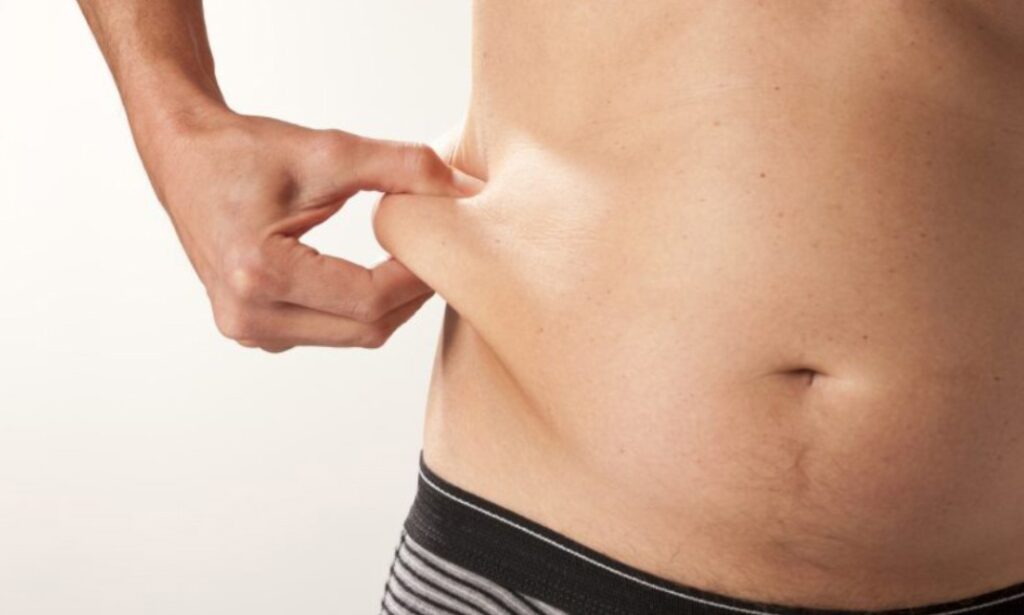
Subcutaneous fat is the layer located directly under the skin. Fat people can often pinch around the waist or abdomen. Visceral fat is stored deeper inside the abdominal cavity around organs. A person cannot accurately determine the exact amount of visceral fat simply by looking in the mirror.
That distinction matters because excess abdominal fat is linked with metabolic health risks. WHO notes that overweight and obesity increase the risk of conditions including cardiovascular disease, type 2 diabetes, musculoskeletal disorders, and some cancers. The health impact of excess body fat is therefore not limited to appearance or clothing size.
For an individual man, body composition, waist circumference, medical history, blood pressure, blood glucose, blood lipids, and other health measures can provide a more useful picture than body weight alone.
Why Belly Fat Can Be More Concerning for Men
Men commonly store a greater proportion of excess fat in the abdominal area than women, although fat distribution varies significantly between individuals. Genetics, age, hormones, diet, physical activity, sleep, alcohol use, medications, and total body weight can all influence where fat accumulates.
As men get older, changes in body composition can also make abdominal fat more noticeable. Muscle mass may decline without regular resistance training, while energy expenditure and activity patterns can change. The result is that a man’s weight may remain relatively stable while his proportion of body fat increases.
This is one reason relying only on a bathroom scale can be misleading. Two men with the same body weight can have very different amounts of muscle, subcutaneous fat, and visceral fat.
The Major Health Risks Associated With Excess Belly Fat
1. Higher risk of cardiovascular disease
Excess body fat is a recognized risk factor for cardiovascular disease. WHO identifies overweight and obesity as major contributors to heart disease and stroke risk, among other chronic conditions.
Abdominal obesity can also occur alongside other risk factors, including elevated blood pressure, abnormal blood lipids, and impaired blood glucose regulation. This is why a large waist should not be viewed in isolation. A healthcare professional may consider multiple measurements when evaluating overall cardiometabolic risk.
2. Increased risk of type 2 diabetes
Excess body fat is strongly associated with type 2 diabetes risk. Physical activity and healthy weight management can improve insulin sensitivity and support blood glucose management, according to the CDC.
This does not mean that every man with abdominal fat will develop diabetes, or that every lean person is protected from it. Risk depends on multiple factors, including family history, age, physical activity, diet, and overall health. However, reducing excess weight can be an important part of risk reduction for people who are overweight or obese.
3. Greater risk of other chronic diseases
WHO states that the health consequences of overweight and obesity include cardiovascular disease, type 2 diabetes, osteoarthritis, and some cancers. The risk generally rises as excess body fat increases.
For this reason, successful belly-fat reduction should not be framed only as a way to improve appearance. The more meaningful objective is improving long-term health markers and reducing excess body fat where medically appropriate.
4. Possible links with poor sleep and other lifestyle factors
Sleep and abdominal fat appear to be connected, although observational research cannot prove that one factor alone causes the other. A study using data from 5,151 U.S. adults found an association between shorter sleep duration and greater visceral fat mass after adjustment for multiple factors. The researchers reported that the association was also observed in men.
Sleep should therefore be treated as part of a broader weight-management strategy. Improving sleep will not automatically cause dramatic fat loss, but consistently inadequate sleep can coexist with behaviors and physiological changes that make weight management more difficult.
Alcohol intake may also be relevant. A 2026 population-based study of 5,761 adults found that alcohol consumption was associated, in a dose-dependent manner, with greater visceral fat mass after adjustment for several potential confounding factors. This was an observational finding and should not be interpreted as proof that alcohol alone caused the visceral fat differences.
How to Measure Belly Fat and Track Progress
There is no single perfect measurement for every man. A practical approach often combines several indicators.
Measure your waist consistently
Waist circumference is a simple way to track changes in abdominal size over time. Use the same measuring method, the same approximate time of day, and similar conditions each time.
A useful measurement is one you can repeat accurately. If your waist decreases gradually over several months while other health markers improve, that trend can be more informative than daily fluctuations in body weight.
Healthcare providers may use waist circumference alongside BMI and other clinical measurements when assessing health risk. WHO specifically notes that waist circumference can provide additional information beyond BMI when evaluating excess fat.
Do not rely on the scale alone
Body weight can fluctuate because of water, food intake, glycogen stores, and other short-term factors. Resistance training can also improve body composition without producing rapid changes on the scale.
Track several measures instead:
- Waist circumference
- Body weight trends over weeks rather than days
- Physical performance
- Blood pressure, when relevant
- Blood glucose and lipid results when recommended by a clinician
- How clothing fits
The goal should be a sustained trend, not perfect day-to-day numbers.
Can You Target Belly Fat With Specific Exercises?
No exercise has been proven to selectively force the body to burn fat only from the stomach area.
Crunches, planks, leg raises, and other abdominal exercises can strengthen the abdominal muscles. They may improve core stability and muscle endurance, but they do not independently guarantee the removal of fat covering those muscles.
A more effective strategy is to combine overall fat loss with resistance training and cardiovascular activity. As total body fat decreases, abdominal fat may also decrease, although the exact pattern and speed differ between individuals.
This is one of the most important myths to understand when searching for the “best exercise to lose belly fat.” The best exercise plan is usually the one that creates sufficient activity, supports muscle retention or growth, and can be maintained consistently.
Proven Ways to Lose Belly Fat for Men
Create a sustainable calorie deficit
Weight loss requires, over time, an energy deficit: the body must use more energy than it receives from food and drinks. The CDC explains that physical activity increases energy expenditure and that combining increased activity with reduced calorie intake creates the calorie deficit needed for weight loss. It also notes that most weight loss comes from reducing calorie intake.
The word sustainable is critical.
Extremely restrictive diets can produce rapid initial changes but may be difficult to maintain. A better approach is to reduce excess calorie intake while continuing to consume adequate protein, fiber, vitamins, minerals, and other nutrients.
For many men, practical changes may include reducing frequent consumption of sugary drinks, limiting highly processed snacks, controlling portions of calorie-dense foods, and building meals around minimally processed foods.
The exact calorie target should be individualized. Age, body size, activity level, medical conditions, medications, and weight-loss goals all matter. Someone with diabetes, heart disease, kidney disease, or another chronic condition should seek individualized medical or nutrition advice before making major dietary changes.
Prioritize a high-quality eating pattern
There is no single food that melts belly fat. Instead, overall dietary patterns matter.
WHO recommends increasing foods such as fruits, vegetables, legumes, whole grains, and nuts while limiting sugars and shifting fat intake away from saturated fats toward unsaturated fats.
For a man trying to reduce abdominal fat, a practical meal pattern might emphasize:
- Vegetables and fruit
- Whole grains where appropriate
- Beans, lentils, and other legumes
- Protein-rich foods suited to individual dietary preferences
- Nuts and other nutrient-dense foods in sensible portions
- Less frequent intake of sugar-sweetened beverages and heavily processed foods
Portion size still matters. Even nutritious foods can contribute to weight gain when total calorie intake consistently exceeds energy expenditure.
Aim for at least 150 minutes of moderate activity each week
The CDC recommends that adults get at least 150 minutes of moderate-intensity aerobic activity per week, or 75 minutes of vigorous activity, plus muscle-strengthening activity on at least 2 days each week.
That could mean approximately 30 minutes of brisk walking on five days each week, although activity can be divided differently to suit an individual’s schedule.
For men who are currently inactive, starting gradually is often more sustainable than beginning with an extreme exercise program. Even some physical activity is better than none, according to the CDC.
Walking is particularly useful because it is accessible and can be increased gradually. Cycling, swimming, jogging, sports, and other forms of aerobic exercise can also contribute.
Add resistance training at least twice a week
Resistance training is especially valuable during weight loss because preserving muscle mass is an important part of improving body composition.
CDC guidance recommends muscle-strengthening activities at least 2 days per week for adults. Major muscle groups should be included.
A program may include exercises such as squats, presses, rows, hip hinges, lunges, and other movements appropriate for the person’s fitness level and physical limitations.
You do not need to perform hundreds of repetitions or train every day. Progression, proper technique, and consistency are generally more important than extreme workouts.
Men with injuries, significant obesity, cardiovascular disease, or other health concerns may need professional guidance before starting vigorous exercise. The CDC specifically advises people with chronic conditions to discuss appropriate activity types and amounts with a healthcare professional.
Increase everyday movement
Structured workouts are not the only form of activity that matters.
Walking to nearby destinations, taking stairs when practical, performing physically active household tasks, and reducing long uninterrupted periods of sitting can all increase daily movement.
The CDC notes that some activity is better than none and that adults gain health benefits from moving more and sitting less.
A useful strategy is to focus on habits rather than depending entirely on motivation for intense gym sessions. For example, a consistent daily walk may be easier to sustain for a year than an unrealistic plan involving two-hour workouts every day.
Improve sleep consistency
Sleep is often overlooked in discussions about male weight loss.
The previously cited NHANES-based study found a significant association between shorter sleep duration and greater visceral fat mass, including among men. The study was observational, so it cannot establish that sleeping longer directly causes visceral-fat loss. However, the finding supports treating sleep as one factor in a comprehensive health plan.
A practical goal is to establish a consistent sleep schedule and address persistent sleep problems with a qualified healthcare professional. Snoring, repeated nighttime breathing interruptions, and excessive daytime sleepiness should not be ignored, particularly when they occur alongside obesity or other risk factors.
Reduce heavy alcohol consumption
Alcoholic drinks can add substantial calories, and recent research has also reported an association between higher alcohol consumption and greater visceral fat mass.
In the 2026 study of 5,761 participants, the highest alcohol-consumption quartile had more than 10% greater mean visceral-fat-mass percentage than the adjacent lower quartile in both men and women after the researchers’ adjustments. Because this was observational research, it does not prove direct causation.
Nevertheless, men concerned about belly fat should include alcohol intake in their overall calorie and health assessment.
Avoid relying on “belly fat burner” supplements
Products marketed as fat burners, detoxes, or rapid belly-fat solutions often make promises that exceed the available evidence.
Sustainable fat loss does not require a detox tea, waist trainer, or miracle supplement. Before taking any supplement for weight loss, review the ingredients and potential risks with a qualified healthcare professional, especially if you take prescription medication or have a medical condition.
A Practical Weekly Plan for Reducing Belly Fat
A realistic program can be surprisingly simple.
One example for a generally healthy adult might involve five or more days containing some form of aerobic activity, totaling at least 150 minutes of moderate activity across the week, plus two or more resistance-training sessions. The CDC’s example framework shows that the recommended activity can be distributed throughout the week rather than completed in one or two long sessions.
For example:
Monday: 30-minute brisk walk and resistance training
Tuesday: 30 minutes of moderate aerobic activity
Wednesday: Rest from structured exercise but maintain normal daily movement
Thursday: Resistance training and a walk
Friday: 30 minutes of aerobic activity
Saturday: Longer walk, cycling, swimming, or another enjoyable activity
Sunday: Recovery and light activity
The diet component should focus on a calorie intake appropriate for the individual, rather than copying someone else’s meal plan.
This approach is not a promise that every man will lose the same amount of weight or belly fat. Individual responses vary. The advantage is that it is based on habits supported by established physical-activity and healthy-weight guidance.
How Long Does It Take to Lose Belly Fat?
I cannot give one exact timeline that applies to every man.
The speed of fat loss depends on starting weight, calorie intake, activity level, age, genetics, medical conditions, medication use, and adherence. Early changes on the scale may partly reflect changes in water and glycogen rather than body fat.
A better approach is to assess progress over several weeks or months. If a plan is sustainable, waist circumference, weight trends, physical fitness, and relevant health markers can gradually improve.
Be cautious about programs promising dramatic stomach-fat loss in a few days or a few weeks. Rapid changes are not necessarily permanent, and aggressive approaches can be unsuitable or unsafe for some people.
Why Some Men Struggle to Lose Belly Fat
A stalled weight-loss effort does not always mean a lack of discipline.
Common reasons include underestimating calorie intake, consuming large amounts of calories through drinks, reduced daily movement outside the gym, inconsistent sleep, frequent overeating after restrictive dieting, alcohol intake, and unrealistic exercise plans that are difficult to sustain.
Medical factors can also matter. Certain medications and health conditions can influence body weight or fat distribution. If weight changes are unexplained, rapid, or accompanied by other symptoms, medical evaluation is appropriate.
The most productive response to a plateau is usually to review actual habits and measurements rather than immediately adopting a more extreme diet.
Belly Fat and Men’s Hormones
Hormones can influence body composition, but men should avoid assuming that every case of abdominal fat is caused by low testosterone.
Testosterone levels can be affected by age, obesity, illness, medications, and other factors. If a man has symptoms that raise concern about a hormonal disorder, diagnosis requires appropriate clinical assessment and testing rather than relying on online symptoms or over-the-counter “testosterone boosters.”
This is an important internal linking opportunity for a related article such as Low Testosterone Symptoms: Causes, Diagnosis, and Treatment. The link should appear naturally in a section explaining when abdominal fat may coexist with other symptoms requiring medical assessment.
When Should a Man See a Doctor About Belly Fat?
Consider professional medical advice when excess weight is accompanied by:
- Persistently high blood pressure
- Elevated blood glucose or a diagnosis of prediabetes or diabetes
- Abnormal cholesterol or triglyceride levels
- Significant fatigue or unexplained weight changes
- Symptoms of a possible sleep disorder
- Difficulty losing weight despite a consistent, documented lifestyle program
- Concerns about medication-related weight changes
A healthcare professional can assess the full picture rather than focusing only on the stomach area. This may include BMI, waist circumference, blood pressure, blood tests, medical history, and other relevant factors.
Common Myths About Losing Belly Fat
Myth: Hundreds of crunches will burn stomach fat
Abdominal exercises strengthen the muscles underneath the fat, but they do not provide reliable spot reduction.
Myth: Carbs automatically cause belly fat
Total diet quality, calorie balance, food choices, and individual health matter more than blaming one nutrient category.
Myth: Sweating more means more fat loss
Sweating mainly reflects fluid loss. A lower number on the scale immediately after heavy sweating does not necessarily represent a meaningful reduction in body fat.
Myth: You need extreme workouts
CDC guidance supports regular physical activity and muscle strengthening, and activity can be accumulated throughout the week. Consistency is more useful than repeatedly starting and abandoning extreme routines.
Myth: A supplement can replace diet and exercise
There is no credible shortcut that replaces sustained changes in calorie intake, physical activity, and other health behaviors.
Final Thoughts
Belly fat in men is not simply an appearance issue. Excess abdominal fat can occur alongside a higher risk of cardiovascular disease, type 2 diabetes, and other chronic health problems associated with overweight and obesity. Globally, 43% of adults were overweight in 2022, while 16% were living with obesity, according to WHO.
The proven approach to reducing belly fat is not a special abdominal exercise or a rapid detox. It is a sustained strategy that combines an appropriate calorie deficit, a nutrient-dense eating pattern, regular aerobic activity, muscle-strengthening exercise, adequate sleep, and attention to alcohol intake and other lifestyle factors.
For most adults, the CDC recommends at least 150 minutes of moderate-intensity activity per week and muscle-strengthening activity on at least two days per week. These recommendations provide a useful foundation, although individual weight-management needs can differ.
The most valuable measure of success is not whether belly fat disappears within a specific number of days. A better goal is sustained improvement in waist measurements, body composition, physical fitness, and relevant health markers.
FAQs
What is the fastest proven way for men to lose belly fat?
There is no proven method that selectively removes fat from the stomach. Sustainable overall fat loss through a calorie deficit, regular physical activity, and healthy eating is the evidence-based approach. The CDC notes that reducing calorie intake and increasing activity together create the calorie deficit required for weight loss.
Can men lose belly fat by walking?
Walking can contribute to weight management because it increases physical activity and energy expenditure. The CDC recommends at least 150 minutes of moderate-intensity activity per week for general health, although some individuals may need more activity for weight management.
Do crunches burn belly fat?
Crunches strengthen abdominal muscles, but they do not reliably cause the body to burn fat specifically from the stomach. Overall fat reduction is necessary to reduce abdominal fat.
Is visceral fat more dangerous than subcutaneous belly fat?
Visceral fat is located deeper in the abdomen around internal organs and is an important area of concern in metabolic health. However, an individual’s health risk should be assessed using multiple factors rather than attempting to estimate visceral fat visually.
How many days a week should men exercise to lose belly fat?
The CDC recommends at least 150 minutes of moderate-intensity aerobic activity weekly plus muscle-strengthening activity on at least 2 days. The amount needed for weight loss varies between individuals.
Does poor sleep contribute to belly fat?
Research has found an association between shorter sleep duration and greater visceral fat mass. One study involving 5,151 U.S. adults found this association after adjusting for several factors, including among men. Because the study was observational, it cannot prove that poor sleep directly causes visceral-fat gain.
Does alcohol cause belly fat in men?
Alcohol can add calories, and observational research has found an association between higher alcohol consumption and greater visceral fat mass. A 2026 study involving 5,761 adults reported a dose-dependent association after statistical adjustment, but observational research cannot establish direct causation by itself.
Can low testosterone cause belly fat?
Hormones can influence body composition, but belly fat alone cannot diagnose low testosterone. Men with concerning symptoms should seek medical assessment and appropriate testing rather than self-diagnosing or using unverified testosterone products.
How long does it take to lose belly fat?
I cannot confirm a single timeline because fat loss varies according to starting weight, calorie intake, activity, age, genetics, health conditions, and other factors. Progress is best assessed over weeks and months using consistent measurements.
When should a man seek medical help for excess belly fat?
Medical advice is appropriate when excess abdominal fat is accompanied by concerns such as high blood pressure, abnormal blood sugar or cholesterol, unexplained weight changes, significant fatigue, or possible sleep-disorder symptoms.