Best Foods for Women’s Hormonal Health
Hormones influence far more than the menstrual cycle. They affect metabolism, appetite, blood sugar regulation, bone health, reproductive function, mood, sleep, cardiovascular health, and the transition through perimenopause and menopause. Because of this, nutrition can play an important supporting role in women’s overall hormonal health.
However, “hormone-balancing foods” is an oversimplified phrase. No single food can reset estrogen, progesterone, insulin, thyroid hormones, or reproductive hormones. A more useful approach is to build a dietary pattern that supplies enough protein, fiber, healthy fats, vitamins, minerals, and minimally processed carbohydrates while supporting metabolic and cardiovascular health.
This distinction matters particularly for women with conditions such as polycystic ovary syndrome (PCOS), heavy menstrual bleeding, iron deficiency, perimenopause, menopause, or fertility concerns. Nutritional priorities can differ significantly depending on age, symptoms, medications, pregnancy status, activity level, and an individual’s medical history.
Research increasingly supports dietary patterns rather than “miracle foods.” For example, a systematic review and meta-analysis involving 722,495 women found that greater adherence to a Mediterranean-style dietary pattern was associated with lower cardiovascular disease incidence and lower total mortality.
So, what should women actually put on their plates?
What Does Hormonal Health Mean?
Hormonal health refers to the appropriate production, regulation, signaling, and metabolism of hormones throughout the body. In women, this includes reproductive hormones such as estrogen and progesterone, but also insulin, thyroid hormones, cortisol, leptin, and other signaling molecules.
Hormones naturally fluctuate throughout life. The menstrual cycle itself involves predictable changes in reproductive hormones. Pregnancy produces another major hormonal shift, while perimenopause and menopause involve substantial changes in ovarian hormone production.
Nutrition does not need to “stop” these changes. Instead, a well-designed diet can provide the nutrients required for normal physiological processes and help support areas that are influenced by hormonal changes.
For example, insulin sensitivity is particularly relevant in PCOS, while adequate calcium and vitamin D become increasingly important for bone health as estrogen levels decline around menopause. Iron becomes especially important for women who experience heavy menstrual bleeding because blood loss can contribute to iron deficiency.
The goal, therefore, is not to chase a perfect hormone number through individual foods. The goal is to create a nutritional environment that supports metabolic, reproductive, bone, cardiovascular, and overall health.
Why Diet Matters for Women’s Hormonal Health
The connection between food and hormones is more complex than simply eating one food to increase or decrease a particular hormone.
Diet influences blood glucose, insulin secretion, body composition, inflammation, nutrient availability, gut function, and cardiovascular risk. These factors can interact with reproductive and metabolic hormones.
This is especially evident in PCOS. The 2023 International Evidence-Based Guideline for PCOS does not recommend one specific diet composition as universally superior. Instead, it emphasizes an overall healthy dietary pattern personalized to individual preferences, cultural needs, nutritional requirements, and health goals.
That is an important SEO and health-information distinction: evidence supports sustainable healthy eating patterns rather than an internet-style “one food fixes hormones” approach.
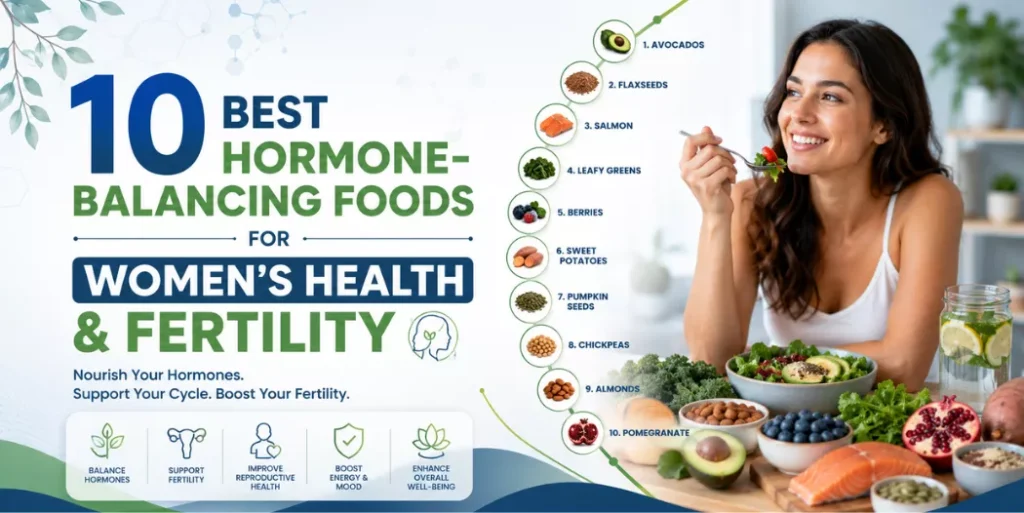
Best Foods for Women’s Hormonal Health
1. Fatty Fish for Omega-3 Fatty Acids
Salmon, sardines, mackerel, trout, herring, and other oily fish are among the most useful foods to include in a hormone-supportive eating pattern.
Their main advantage is their combination of high-quality protein and long-chain omega-3 fatty acids. Omega-3 fats are involved in cell membranes and multiple physiological processes, while regular fish consumption is associated with cardiovascular benefits.
The American Heart Association recommends eating fish at least twice a week, particularly fatty fish. A standard serving is approximately 3 ounces of cooked fish.
For women, this can be particularly relevant because cardiovascular health remains important across the reproductive years and after menopause.
A practical meal could be grilled salmon with lentils, leafy greens, tomatoes, and olive oil. This provides protein, omega-3 fats, fiber, folate, magnesium, and other micronutrients in one meal.
For pregnant or breastfeeding women, fish selection matters because some fish contain higher mercury levels. Current pregnancy-specific dietary advice should be followed rather than simply increasing seafood intake without considering fish type.
2. Leafy Green Vegetables
Spinach, kale, broccoli, Swiss chard, collard greens, and other leafy vegetables provide a combination of folate, magnesium, vitamin K, carotenoids, fiber, and other micronutrients.
Magnesium deserves particular attention because it participates in hundreds of biochemical reactions involving energy metabolism, muscle and nerve function, blood glucose regulation, blood pressure, protein production, bone, and DNA. Women generally need around 310–320 mg of magnesium daily depending on age.
Leafy greens can contribute to this intake alongside nuts, seeds, legumes, whole grains, and other magnesium-rich foods.
Rather than thinking about spinach as a “hormone-balancing food,” it is more accurate to view leafy greens as nutrient-dense foods that help women meet nutritional requirements within an overall healthy dietary pattern.
3. Cruciferous Vegetables
Broccoli, cauliflower, cabbage, Brussels sprouts, bok choy, and similar vegetables are rich in fiber and plant compounds.
They are sometimes promoted online as foods that “flush excess estrogen” or dramatically improve estrogen metabolism. Those claims are generally much stronger than the human evidence supports.
The more defensible reason to include them is that they provide fiber, micronutrients, and a variety of phytochemicals while contributing to an overall plant-rich diet.
A useful target is variety: rather than eating one “hormone detox” vegetable every day, rotate broccoli, cabbage, cauliflower, leafy greens, peppers, carrots, tomatoes, beans, and other vegetables throughout the week.
4. Berries and Other Whole Fruits
Blueberries, strawberries, raspberries, blackberries, oranges, apples, kiwi, guava, pomegranate, and other whole fruits provide fiber, vitamins, minerals, and polyphenols.
Whole fruit is also different from fruit juice. The intact structure of fruit contributes to satiety and fiber intake, whereas juice can deliver a larger amount of sugar with substantially less fiber.
For women concerned about insulin resistance or PCOS, whole fruit can generally fit into a balanced diet. The evidence does not support eliminating all fruit simply because it contains naturally occurring sugars.
Combining fruit with protein or healthy fats can also create a more substantial snack. Examples include berries with plain yogurt, an apple with nuts, or guava with cottage cheese.
5. Legumes for Fiber and Plant Protein
Lentils, chickpeas, kidney beans, black beans, peas, and other legumes are particularly valuable because they provide both protein and fiber.
This combination can support satiety and more stable post-meal glucose responses compared with many refined carbohydrate foods.
Legumes are also useful sources of magnesium and non-heme iron. Iron is particularly relevant to menstruating women. According to the NIH Office of Dietary Supplements, women aged 19–50 generally require 18 mg of iron per day, compared with 8 mg for adults aged 51 and older. Pregnant women require 27 mg daily.
Women with heavy periods may have increased difficulty maintaining adequate iron stores. The NIH specifically identifies women with heavy menstrual periods as a group more likely to have trouble getting enough iron.
Combining plant-based iron sources with vitamin-C-rich foods can improve absorption of non-heme iron. For example, lentils with tomatoes, chickpeas with bell peppers, or beans with citrus-based salad dressing can be useful combinations.
6. Eggs for Protein and Micronutrients
Eggs can be a convenient source of high-quality protein and provide nutrients including choline, vitamin B12, selenium, and iodine.
Protein is important because women need adequate dietary protein to maintain muscle mass, particularly with aging and during periods of changing body composition.
Instead of viewing protein only through the lens of weight loss, it is useful to consider its role in maintaining lean tissue, supporting satiety, and creating balanced meals.
An egg-based breakfast can become more nutritionally complete when paired with vegetables, whole-grain toast, avocado, or beans rather than relying on eggs alone.
7. Greek Yogurt and Other Calcium-Rich Foods
Calcium becomes particularly important for women because bone remodeling changes as estrogen declines during menopause.
The NIH notes that reduced estrogen production around menopause is associated with increased bone remodeling and accelerated loss of bone mass.
Calcium-rich foods include yogurt, milk, kefir, cheese, calcium-fortified plant beverages, calcium-set tofu, and some canned fish with edible bones.
Vitamin D is also important because it helps the body absorb calcium. Adults aged 19–70 generally require 600 IU (15 mcg) of vitamin D daily, while adults over 70 require 800 IU (20 mcg).
For women approaching or going through menopause, a dietary pattern that provides adequate calcium, vitamin D, protein, and other nutrients is more meaningful than focusing on a single “menopause food.”
8. Nuts and Seeds
Almonds, walnuts, pistachios, pumpkin seeds, chia seeds, flaxseeds, and sunflower seeds can provide healthy fats, fiber, magnesium, protein, and other micronutrients.
Seeds are especially easy to add to yogurt, oatmeal, salads, soups, and smoothies.
Flaxseeds are frequently promoted as a food that can “balance estrogen.” While flax contains lignans, a type of phytoestrogen, that does not mean eating flaxseed produces a predictable hormonal effect in every woman.
A better evidence-based message is that flaxseed can be a nutritious source of fiber and plant compounds and can fit well into a balanced diet.
9. Soy Foods
Tofu, tempeh, edamame, soy milk, and other minimally processed soy foods contain isoflavones, which are classified as phytoestrogens because they can interact with estrogen receptors.
Soy has received considerable attention in relation to menopause, but the evidence is more nuanced than social media claims suggest.
A 2025 systematic review and meta-analysis of 12 studies found that soy isoflavones had a modest overall effect on menopausal symptoms, but the researchers noted limitations including small sample sizes and the need for more trials.
Another 2025 meta-analysis involving 40 randomized trials and 3,285 postmenopausal women found that soy isoflavones did not significantly alter several measures of estrogenicity, including estradiol and endometrial thickness.
This is a useful context: soy can be a nutritious source of protein and isoflavones, but it should not be marketed as a natural replacement for medical menopause treatment.
10. Whole Grains
Oats, barley, brown rice, quinoa, whole-wheat products, bulgur, and other minimally refined grains can contribute fiber, magnesium, B vitamins, and other nutrients.
Fiber is particularly useful because it supports digestive health and helps create more balanced meals.
Whole grains can also replace refined carbohydrate sources in meals. For example, replacing highly refined breakfast cereals with oats, or using brown rice or quinoa alongside vegetables and protein, can improve the overall nutrient density of a meal.
Women with PCOS may particularly benefit from dietary patterns emphasizing high-fiber and lower-glycemic carbohydrate sources. A meta-analysis of randomized trials found that lower-glycemic-index diets improved measures including insulin resistance, fasting insulin, triglycerides, LDL cholesterol, waist circumference, and total testosterone in women with PCOS, although the evidence was not uniform across every outcome.
11. Avocado and Extra-Virgin Olive Oil
Healthy unsaturated fats are another important part of a hormone-supportive dietary pattern.
Avocados, olive oil, nuts, seeds, and some fish provide unsaturated fats that can be incorporated into a Mediterranean-style eating pattern.
This is especially relevant because women’s health is not only about reproductive hormones. Cardiovascular disease becomes increasingly important with age, particularly around and after menopause.
In a systematic review of 16 prospective cohort studies involving 722,495 women, higher adherence to a Mediterranean diet was associated with a 24% lower risk of cardiovascular disease and a 23% lower risk of total mortality compared with lower adherence.
These figures do not prove that olive oil itself prevents cardiovascular disease. Rather, they demonstrate the potential value of the dietary pattern in which olive oil is one component.
Foods That May Be Especially Important for Women With PCOS
PCOS is one area where nutrition and metabolic health have a particularly important relationship.
PCOS is associated with reproductive, metabolic, cardiovascular, and psychological considerations. The international evidence-based guideline emphasizes healthy lifestyle, emotional wellbeing, and individualized care rather than a single universally superior diet.
A 2024 systematic review and meta-analysis of eight trials involving 300 women with PCOS found that higher-protein dietary interventions reduced fasting insulin and improved HOMA-IR compared with isocaloric balanced diets, although the authors noted that the optimal dietary regimen for PCOS remains uncertain.
This suggests that women with PCOS may benefit from meals built around a combination of:
- Protein such as eggs, fish, poultry, Greek yogurt, tofu, lentils, or beans
- High-fiber carbohydrates such as legumes, oats, vegetables, and whole grains
- Unsaturated fats from nuts, seeds, olive oil, avocado, and fish
- Whole fruits and vegetables
- Minimally processed foods
The key is not to eliminate carbohydrates altogether. Instead, carbohydrate quality, portioning, fiber, protein, and overall dietary pattern can be considered together.
Best Foods During Perimenopause and Menopause
Nutrition priorities can shift during perimenopause and menopause.
Declining estrogen is associated with changes in bone remodeling, body composition, cardiovascular risk factors, and cholesterol. The NIH notes that bone loss can accelerate around menopause, making calcium and vitamin D important components of long-term bone health.
A practical menopause-focused diet should therefore include:
Calcium-rich foods for bone health, adequate protein for muscle maintenance, vegetables and fruit for fiber and micronutrients, whole grains and legumes for dietary fiber, fatty fish for omega-3 fats, and unsaturated fats such as olive oil and nuts.
Soy foods can also be included if tolerated. Current evidence does not justify claiming that soy reliably “balances estrogen,” but soy can be a nutrient-dense source of plant protein and isoflavones.
Women experiencing significant hot flashes, sleep problems, vaginal symptoms, mood changes, or other menopause symptoms should not rely solely on dietary changes. Nutrition can support health, but persistent or severe symptoms may require an individualized medical evaluation.
Foods for Menstrual Health and Iron Support
Women who menstruate regularly have an important nutritional consideration that is sometimes overlooked: iron.
The body uses iron to produce hemoglobin, which carries oxygen in the blood. Women aged 19–50 generally need 18 mg per day, while pregnancy increases the recommendation to 27 mg.
Food sources include lean red meat, poultry, seafood, lentils, beans, tofu, spinach, pumpkin seeds, and iron-fortified grains.
Women experiencing very heavy periods should not automatically assume that fatigue is simply “low hormones.” Heavy menstrual bleeding can contribute to iron deficiency and anemia, and appropriate testing may be necessary.
This creates a natural internal-link opportunity for a women’s health website: an article about hormonal health should link to existing content about irregular periods, heavy menstrual bleeding, iron deficiency, anemia, and when to see a gynecologist.
A Simple Plate Formula for Hormonal Health
Rather than creating a complicated hormone-specific meal plan, use a repeatable plate structure.
A useful starting point is to make approximately half of the plate vegetables, then include a substantial protein source and a high-fiber carbohydrate or whole-food carbohydrate, with a moderate amount of healthy fat.
For example:
Breakfast could be eggs with spinach, whole-grain toast, and berries.
Lunch could be lentil salad with cucumber, tomatoes, leafy greens, olive oil, and yogurt.
Dinner could be grilled fish with roasted vegetables, chickpeas, and brown rice.
A snack could be plain yogurt with berries and walnuts.
The exact portion sizes should be adjusted to individual energy needs, age, activity, pregnancy status, and health goals.
The objective is consistency rather than perfection.
What About Sugar and Ultra-Processed Foods?
There is a tendency in hormonal-health content to label foods as either “good” or “bad.” That can make nutrition unnecessarily restrictive.
Instead of claiming that sugar “destroys hormones,” focus on dietary patterns.
Frequent consumption of highly processed foods that are energy-dense but low in fiber, protein, and micronutrients can make it harder to achieve a nutritionally adequate diet. Replacing some of these foods with whole grains, legumes, vegetables, fruit, nuts, seeds, fish, and minimally processed protein sources is generally a more sustainable strategy.
Women with PCOS or insulin resistance may have additional reasons to pay attention to carbohydrate quality and meal composition. But restrictive diets are not automatically better. The international PCOS guideline specifically states that there is not sufficient evidence to recommend one particular diet composition over another for all women with PCOS.
What About Supplements for Hormonal Balance?
Supplements deserve caution.
The popularity of products marketed for “hormone balance” has grown rapidly, but a supplement being labeled natural does not establish that it is effective or appropriate.
Iron supplements, vitamin D, calcium, magnesium, folate, and other nutrients can be useful when dietary intake is inadequate or a deficiency has been identified. However, higher doses are not automatically better.
For example, adult women generally require 310–320 mg of magnesium per day depending on age, while vitamin D requirements are generally 600 IU daily for adults up to age 70.
Pregnancy creates different nutritional requirements. Women who are pregnant or planning pregnancy should discuss prenatal supplementation with a qualified healthcare professional. NIH guidance notes that women capable of becoming pregnant should receive 400 mcg of folic acid daily from supplements and/or fortified foods, with individualized higher-dose recommendations for certain high-risk situations.
This is another important E-E-A-T signal for a women’s health website: distinguish nutritional support from treatment and avoid recommending high-dose supplements without medical context.
Foods to Limit for Better Overall Hormonal Health
There is no universal list of foods that women must completely avoid for “hormone balance.”
Instead, consider limiting the frequency of foods that provide substantial calories with relatively little nutritional value, particularly when they displace nutrient-dense foods.
These may include heavily processed snack foods, sugar-sweetened beverages, highly refined grains, processed meats, and excessive alcohol.
The goal should not be fear-based restriction. A sustainable dietary pattern can include enjoyable foods while maintaining a strong foundation of vegetables, fruit, legumes, whole grains, protein sources, healthy fats, and adequate hydration.
Can Food Actually Balance Hormones?
Not in the simplistic way the phrase is commonly used online.
Food provides the raw materials and nutrients required for normal physiology and can influence metabolic processes connected with hormonal health. It can also support cardiovascular health, bone health, body composition, blood glucose regulation, and nutrient status.
But diet cannot independently diagnose or treat conditions such as PCOS, thyroid disease, premature ovarian insufficiency, endometriosis, diabetes, hyperprolactinemia, or significant menstrual disorders.
If someone has persistent irregular periods, infertility, very heavy bleeding, unexplained weight changes, severe acne or excess facial hair, persistent fatigue, or significant menopause symptoms, nutrition should be considered alongside appropriate medical evaluation.
How to Build an Evidence-Based Hormonal Health Diet
A practical approach is to stop looking for individual “superfoods” and build meals around complementary food groups.
Start with a protein source. Add vegetables or fruit. Choose a high-fiber carbohydrate when appropriate. Include a source of unsaturated fat. Then consider whether the meal contributes important micronutrients such as iron, calcium, magnesium, folate, vitamin D, iodine, vitamin B12, or omega-3 fatty acids.
Over a week, variety matters more than eating the same supposedly hormonal food every day.
This approach is also more culturally adaptable. A woman does not need to eat an expensive imported “superfood” to support hormonal health. Lentils, chickpeas, beans, eggs, leafy greens, yogurt, seasonal fruit, fish, nuts, seeds, oats, and whole grains can form a highly nutritious dietary foundation.
A Practical One-Day Meal Pattern
A hormonal-health-focused day does not need to be complicated.
Breakfast could include eggs, sautéed spinach, whole-grain toast, and berries.
Lunch could be a chickpea and vegetable salad with olive oil, yogurt, and whole-grain bread.
An afternoon snack could be an apple with walnuts or plain yogurt with chia seeds.
Dinner could include grilled sardines or salmon, roasted vegetables, lentils, and a small serving of brown rice.
For a vegetarian option, tofu or tempeh can replace fish while beans, lentils, eggs, yogurt, nuts, and seeds provide additional protein sources.
The exact menu should change according to dietary preferences, allergies, cultural food patterns, budget, medical conditions, and nutritional requirements.
When Nutrition Is Not Enough
Food is an important part of women’s health, but symptoms should not automatically be attributed to diet.
Medical assessment may be appropriate for persistent or newly irregular menstrual cycles, periods that are unusually heavy or prolonged, bleeding between periods, severe pelvic pain, unexplained infertility, symptoms suggestive of PCOS, significant menopausal symptoms, unexplained fatigue, or suspected nutritional deficiencies.
Women with heavy menstrual bleeding may require iron testing. Women with suspected PCOS may need assessment of reproductive, metabolic, and other health factors. Women experiencing menopause symptoms may benefit from discussing evidence-based treatment options rather than relying exclusively on supplements or dietary changes.
Nutrition should support healthcare, not replace it.
Conclusion
The best foods for women’s hormonal health are not necessarily exotic foods marketed as hormone-balancing superfoods.
A stronger evidence-based strategy is to consistently eat a diverse diet built around vegetables, fruits, legumes, whole grains, quality protein, nuts and seeds, healthy fats, calcium-rich foods, and omega-3-rich fish where appropriate.
Different life stages create different priorities. Menstruating women may need to pay particular attention to iron. Women with PCOS may benefit from high-fiber, minimally processed meals and attention to overall metabolic health. During perimenopause and menopause, calcium, vitamin D, protein, cardiovascular health, and bone health become increasingly important.
The evidence also supports avoiding overly restrictive thinking. The international PCOS guideline does not identify one universally superior diet, while research on Mediterranean-style eating patterns, omega-3-rich foods, lower-glycemic dietary patterns, and nutrient-dense plant foods provides a stronger foundation than the simplistic idea of eating specific foods to “reset” hormones.
Ultimately, hormonal health is influenced by the whole picture: nutrition, physical activity, sleep, stress, genetics, age, medical conditions, medications, reproductive stage, and access to appropriate healthcare.
Frequently Asked Questions
What are the best foods for women’s hormonal health?
The most useful foods include vegetables, leafy greens, berries and other whole fruits, legumes, whole grains, fatty fish, eggs, yogurt and other calcium-rich foods, nuts, seeds, soy foods, avocado, and olive oil. The overall dietary pattern matters more than any individual food.
Which foods help balance female hormones naturally?
There is no single food proven to “balance” all female hormones. A nutrient-dense diet can support normal hormonal physiology by providing adequate protein, fiber, healthy fats, vitamins, and minerals while supporting metabolic and cardiovascular health.
What foods are best for PCOS?
Women with PCOS may benefit from a balanced diet emphasizing vegetables, legumes, whole grains, lean proteins, fish, nuts, seeds, and other minimally processed foods. Lower-glycemic dietary patterns have shown improvements in several metabolic and androgen-related outcomes, but current guidelines do not recommend one universal diet for every woman with PCOS.
Is soy good for women’s hormonal health?
Soy foods can be a nutritious source of protein and isoflavones. Research on soy isoflavones and menopause symptoms is mixed, and current evidence does not support describing soy as a simple estrogen-balancing food. A 2025 meta-analysis found no significant effects on several estrogenicity measures in postmenopausal women.
What foods are good during menopause?
Menopause nutrition should emphasize protein, vegetables, fruit, whole grains, legumes, calcium-rich foods, vitamin-D sources, nuts, seeds, healthy fats, and omega-3-rich fish. These foods support broader concerns such as bone, cardiovascular, and metabolic health.
What foods are high in iron for women?
Good sources include lean meat, seafood, poultry, lentils, beans, tofu, spinach, pumpkin seeds, and fortified cereals. Women aged 19–50 generally need 18 mg of iron daily, while pregnancy increases the recommended amount to 27 mg.
Can diet improve irregular periods?
Diet can support overall metabolic and nutritional health, but irregular periods can have many causes, including PCOS, thyroid disorders, pregnancy, stress, significant weight changes, excessive exercise, and perimenopause. Persistent or new menstrual irregularity should be evaluated rather than treated solely with dietary changes.
Are eggs good for hormonal health?
Eggs can be part of a healthy diet because they provide high-quality protein and several micronutrients. Their value is best considered as part of an overall balanced dietary pattern rather than as a specific hormone-regulating food.
Are omega-3 foods good for women?
Omega-3-rich foods such as salmon, sardines, mackerel, and other fatty fish can contribute to a heart-healthy eating pattern. The American Heart Association recommends eating fish at least twice a week.
Should women take supplements for hormone balance?
Not automatically. Supplements should address an identified nutritional need or a specific medical recommendation rather than being used indiscriminately for “hormone balance.” High doses of certain nutrients can be harmful or interact with medications.
What is the best diet for hormonal health?
There is no single universally correct diet. A Mediterranean-style or similarly balanced dietary pattern rich in vegetables, fruits, legumes, whole grains, healthy fats, and quality protein provides a strong evidence-based foundation, with modifications according to age, reproductive stage, medical conditions, dietary preferences, and nutritional requirements.