
Constipation in Children: Causes, Symptoms, and Treatment
Constipation in children is a common digestive problem that can cause hard stools, painful bowel movements, abdominal discomfort, and difficulty passing stool. It can affect babies, toddlers, school-aged children, and teenagers, although the causes and appropriate treatments may differ by age.
For parents, one of the most confusing aspects of childhood constipation is that a child may pass stool occasionally and still be constipated. Stool consistency, pain, withholding behavior, and the child’s usual bowel pattern are often just as important as how frequently they go to the toilet.
The condition can also become a cycle. A child experiences pain while passing a hard stool, begins avoiding the toilet, and holds the stool in for longer. As more water is absorbed from the retained stool, it becomes harder and more difficult to pass, increasing the likelihood of another painful bowel movement.
The good news is that most childhood constipation is functional, meaning it occurs without an identifiable structural or underlying medical disease. With early recognition, appropriate treatment, and supportive toilet habits, many children improve. However, persistent symptoms, constipation in very young infants, and certain warning signs require medical evaluation.
This guide explains the causes and symptoms of constipation in children, how doctors diagnose it, which home-care measures may help, when medication is necessary, and when parents should seek medical attention.
What Is Constipation in Children?
Constipation occurs when a child passes stool less frequently than usual, has hard or dry stools, experiences pain or difficulty during bowel movements, or struggles to empty the bowel completely.
There is no single bowel movement frequency that is normal for every child. A baby’s pattern may differ considerably from that of a school-aged child, and bowel habits can change with diet, toilet training, illness, and development.
The National Institute of Diabetes and Digestive and Kidney Diseases (NIDDK) identifies fewer than two bowel movements per week, hard or lumpy stools, and painful or difficult bowel movements as common features of constipation in children. However, frequency alone is not enough to establish a diagnosis.
Source: NIDDK — Symptoms and Causes of Constipation in Children.
How common is childhood constipation?
Functional constipation is common worldwide. A review cited in the 2026 joint guideline from the European Society for Paediatric Gastroenterology, Hepatology and Nutrition (ESPGHAN) and the North American Society for Pediatric Gastroenterology, Hepatology and Nutrition (NASPGHAN) reports an estimated global prevalence of approximately 9.5%.
In practical terms, that is roughly 1 in 10 children, although the actual prevalence varies by population, age, diagnostic criteria, and study methods.
The same 2026 guideline reviewed 102 randomized controlled trials evaluating treatments for functional constipation in children aged 0–18 years. The review reached evidence-based recommendations but also identified important gaps in research for several commonly used treatments.
These findings highlight two important points: constipation is not unusual in childhood, and effective management may require an individualized plan rather than relying on one universal remedy.
Sources: 2026 ESPGHAN/NASPGHAN guideline, published in the Journal of Pediatric Gastroenterology and Nutrition and NHS — Constipation in Children.
What Are the Symptoms of Constipation in Children?
Symptoms vary depending on the child’s age, diet, bowel habits, and severity of constipation. Some children mainly experience hard stools, while others develop abdominal pain, appetite changes, toilet avoidance, or stool leakage.
1. Infrequent bowel movements
A child may go several days without passing stool or may have fewer bowel movements than usual. Parents should consider this alongside stool consistency and discomfort rather than treating a particular number of days as a diagnosis by itself.
Some healthy babies have different bowel patterns, especially during early infancy. A change from the child’s normal pattern, combined with hard stools or discomfort, is more informative than frequency alone.
2. Hard, dry, or pellet-like stools
Constipated children may pass large, firm stools or small, hard pellets resembling rabbit droppings. These stools can be difficult to pass because water has been absorbed from the stool while it remains in the bowel.
Large stools may stretch the anus and cause small tears, known as anal fissures. These can make bowel movements painful and may produce a small amount of bright-red blood on the stool or toilet paper.
Blood in a child’s stool should not automatically be attributed to constipation. Repeated bleeding, blood mixed into stool, or bleeding without an obvious explanation needs medical assessment.
3. Pain and straining during bowel movements
A child may cry, grunt, strain, or complain of pain while trying to pass stool. Older children may describe a feeling of pressure, fullness, or incomplete emptying.
Pain can lead to stool withholding, which makes the problem worse. A child who previously passed stool comfortably may begin resisting toilet visits because they associate them with discomfort.
4. Abdominal pain and bloating
Constipation can cause a swollen-feeling abdomen, cramps, discomfort around the belly button, or intermittent stomach pain. Some children also experience reduced appetite or feel full sooner than usual.
Pain that improves after passing stool may be associated with constipation. However, severe or constant abdominal pain, particularly with vomiting or significant abdominal swelling, should not be managed as ordinary constipation without urgent medical advice.
5. Stool withholding behavior
Young children do not always explain that they are avoiding a bowel movement. Instead, parents may notice that the child:
- Stiffens their body or crosses their legs.
- Clenches their buttocks.
- Rocks back and forth or stands on tiptoes.
- Hides behind furniture when they feel the urge to pass stool.
- Refuses to sit on the potty or toilet.
These behaviors can look like an attempt to push stool out, but they may actually be efforts to hold it in.
Recognizing withholding early is important because the child may need help breaking the association between bowel movements and pain.
6. Stool leakage or soiling
Some children with long-standing constipation develop fecal impaction, in which a large amount of stool becomes stuck in the rectum or lower bowel. Softer stool may then leak around the retained stool and stain the child’s underwear.
This is known as overflow soiling. Parents may mistake it for diarrhea or assume the child is deliberately having accidents.
In many cases, the child has limited control over the leakage. Punishment or embarrassment can increase anxiety and make toilet avoidance worse. Recurrent soiling should be discussed with a healthcare professional because the child may need treatment for retained stool as well as a longer-term bowel routine.
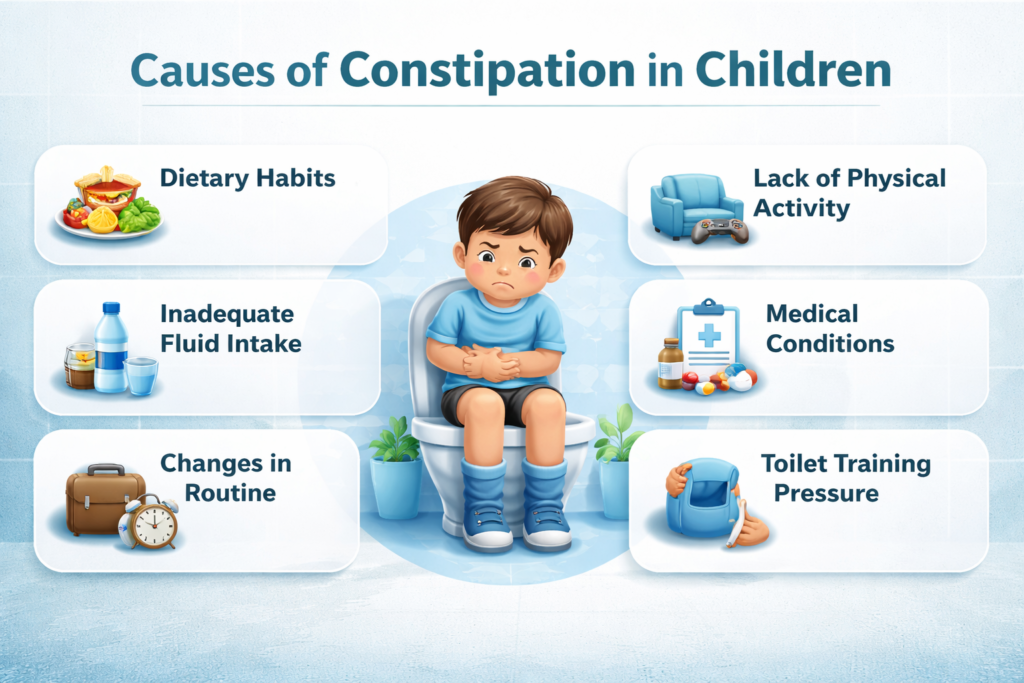
What Causes Constipation in Children?
Most childhood constipation is functional, meaning there is no identifiable structural disease causing the symptoms. Several factors can contribute, and more than one may be present at the same time.
1. Low fiber intake
Fiber helps add bulk to stool and supports regular bowel movements. A diet with few fruits, vegetables, legumes, and whole grains may contribute to constipation in some children.
Children who frequently eat highly refined foods while consuming few fiber-rich foods may not get enough fiber for their age and dietary needs.
However, fiber is not a complete treatment for every case. A child with significant stool retention may need medical treatment in addition to dietary changes.
2. Inadequate fluid intake
Not drinking enough fluid can contribute to hard stools, particularly when a child is dehydrated or has increased fluid needs during hot weather, illness, or physical activity.
Offering water regularly and providing age-appropriate fluids can support normal bowel function. Fluid needs vary by age, diet, activity, climate, and health status, so parents should follow their child’s clinician’s advice, especially for infants.
Giving excessive amounts of fluid is not a substitute for treating established constipation.
3. Toilet training and fear of painful bowel movements
Constipation frequently develops around toilet training, when children may feel pressured to use the potty before they are ready.
A child who has experienced a painful bowel movement may avoid sitting on the toilet. Some children also resist using unfamiliar bathrooms, including those at school or childcare.
This creates a cycle in which stool withholding allows more water to be absorbed from the stool, making the next bowel movement even harder.
A calm, predictable toilet routine and treatment of painful stools can help interrupt this cycle.
4. Changes in routine
Travel, starting school, moving home, changes in meal schedules, or disruptions to toilet habits can affect bowel movements.
Children may ignore the urge to pass stool because they are busy playing, uncomfortable using public bathrooms, or reluctant to interrupt an activity.
Encouraging regular bathroom opportunities and allowing enough time to use the toilet can help address this problem.
5. Changes in diet
Constipation may appear when a child’s eating habits change, including during the introduction of solid foods in infancy or when milk and other foods become a major part of the diet.
The transition to solid foods is a normal developmental stage, but a new eating pattern may temporarily affect stool consistency and frequency.
Parents should not make major dietary restrictions or change an infant’s formula without appropriate advice. If constipation starts during feeding changes and persists, a pediatrician can help determine whether adjustments are needed.
6. Medicines and supplements
Some medicines and supplements can contribute to constipation. Iron supplements and certain other medications are examples, although they may be medically necessary.
Parents should not stop a prescribed medicine on their own. If constipation begins after a medication is started or its dose changes, discuss it with the prescribing clinician, who can assess whether an adjustment or alternative is appropriate.
7. Underlying medical conditions
Less commonly, constipation may be associated with an underlying medical condition. Possible causes include hypothyroidism, celiac disease, certain neurological conditions, anatomical abnormalities, or Hirschsprung disease, which affects nerve cells in part of the bowel.
These conditions are not the cause of most childhood constipation, but clinicians may investigate them when symptoms begin unusually early, growth is poor, treatment does not work as expected, or other warning signs are present.
Constipation that begins in the first weeks of life, or a history of delayed passage of a newborn’s first stool, warrants particular attention.
Constipation in Babies vs. Older Children
The child’s age is an important part of assessing constipation because normal bowel patterns and appropriate treatments differ between infants and older children.
Constipation in newborns and young infants
Newborn bowel habits can vary considerably, especially depending on feeding method and age. Stool frequency alone does not establish constipation; the consistency of the stool, feeding, growth, and overall condition also matter.
Hard, dry stools, significant distress during bowel movements, feeding difficulties, or a swollen abdomen should be discussed with a healthcare professional.
Constipation beginning in the first month of life, delayed passage of the first stool beyond 48 hours after birth in a full-term newborn, or poor growth can be warning signs of an underlying condition.
Seek prompt medical advice if an infant has persistent constipation. Do not give a baby laxatives, enemas, herbal preparations, or extra water without guidance from a qualified clinician. Babies under six months have specific fluid and nutritional needs.
Constipation in toddlers
Toddlers may develop constipation during toilet training or after experiencing a painful bowel movement. They may hide, stiffen their bodies, or refuse to sit on the potty.
Parents can help by keeping toilet visits relaxed, offering age-appropriate fiber-rich foods and fluids, and avoiding punishment. If the child is frightened of the toilet, temporarily reducing pressure around toilet training may be helpful while the constipation is addressed.
Persistent symptoms should be evaluated because early treatment may help prevent a longer cycle of stool retention and painful bowel movements.
Constipation in school-aged children
School-aged children may avoid using school bathrooms because of privacy concerns, lack of time, or discomfort with the facilities. They may also postpone bowel movements while playing or attending classes.
A predictable bathroom routine at home, access to toilets at school, and adequate time to use the bathroom can help. Parents should ask about toilet access and privacy rather than assuming the child is simply being uncooperative.
If a child develops recurring stomach pain, hard stools, or soiling, a healthcare professional can assess whether constipation is the underlying cause.
How Is Constipation Diagnosed in Children?
Doctors usually diagnose functional constipation through the child’s medical history, bowel habits, symptoms, and physical examination when appropriate.
Parents can help by keeping a simple record of bowel movements before the appointment. Useful details include stool frequency, whether stools are hard or painful, any blood or leakage, the duration of symptoms, and changes in diet or medication.
The clinician may ask about toilet training, appetite, growth, urinary symptoms, and whether constipation began in infancy. They will also look for warning signs that could indicate a condition other than functional constipation.
Are tests always necessary?
No. In a child with a typical history and no warning signs, routine testing is often unnecessary. The clinician decides whether further tests are appropriate based on the symptoms and examination.
If symptoms suggest another medical condition, investigations may be needed. These could include selected blood tests or other assessments guided by the child’s clinical history.
Abdominal X-rays and other tests are not automatically required for every child with constipation. Their use should be determined by a clinician when there is a specific reason.
Treatment for Constipation in Children
Treatment depends on the child’s age, the severity and duration of constipation, whether stool is impacted, and whether an underlying condition is suspected.
For mild symptoms, diet and toilet habits may be part of the plan. For established or persistent constipation, medication may also be necessary. Parents should not assume that increasing fiber alone will resolve a significant stool buildup.
1. Offer age-appropriate fiber-rich foods
A varied diet can support normal bowel function. Depending on the child’s age and feeding stage, useful foods may include pears, prunes, apples, vegetables, beans, lentils, oats, and whole-grain foods.
Introduce fiber gradually rather than making a sudden, large change. A rapid increase may cause gas or bloating, and a child with significant constipation may need additional treatment.
Infants who have not started solid foods should not be given solid foods simply to treat constipation. Follow age-appropriate feeding guidance and seek medical advice when an infant’s stools are persistently hard or painful.
For older children, offering fruit with breakfast, vegetables at meals, and whole-grain options can make fiber intake part of an ordinary eating routine rather than a special intervention.
2. Encourage appropriate fluid intake
Offer water regularly to children who are old enough to drink it, especially with meals and after physical activity. Water-rich foods can also contribute to overall fluid intake.
Babies require different guidance depending on age and feeding method. Continue appropriate breast milk or formula feeding, and ask a healthcare professional before introducing additional fluids to a young infant.
More water is not necessarily better once a child is adequately hydrated. If constipation persists, discuss the treatment plan with a clinician rather than relying on fluids alone.
3. Establish a relaxed toilet routine
For a child who is toilet-trained, regular opportunities to sit on the toilet after meals may help establish a predictable bowel routine. Eating can stimulate bowel activity, making the period after a meal a useful time to try.
Keep sessions short and relaxed. A footstool can help a child’s feet rest firmly on a support, improving stability and making it easier to adopt a comfortable position.
Praise the child for cooperating with the routine rather than demanding that they produce a bowel movement. A reward system for sitting calmly may be helpful for some children.
Avoid punishment, criticism, or shaming for accidents. If the child is not ready for toilet training or is frightened of the potty, discuss a lower-pressure approach with a pediatrician.
4. Encourage daily physical activity
Movement supports general health and may help establish healthy bowel habits. Walking, playing outdoors, dancing, cycling, and other age-appropriate activities can be incorporated into the child’s daily routine.
Physical activity is supportive rather than a stand-alone treatment for significant constipation. A child who has retained stool or persistent symptoms may need medical treatment as well.
5. Use medication only with appropriate guidance
When diet and routine changes are not enough, a clinician may recommend a laxative. One commonly used option in pediatric constipation management is polyethylene glycol (PEG), an osmotic laxative that helps retain water in stool and make it easier to pass.
The choice of medicine, dose, and duration depends on the child’s age, weight, symptoms, medical history, and whether there is fecal impaction. The 2026 ESPGHAN/NASPGHAN guideline provides updated recommendations for clinicians, but individual treatment still needs to be tailored to the child.
Parents should not give a child an adult laxative dose or use enemas, suppositories, mineral oil, or herbal remedies without medical advice. Some products may be inappropriate or unsafe for certain ages and medical circumstances.
If a clinician prescribes treatment, follow the instructions carefully and ask how long it should continue. Symptoms may improve before the bowel routine is fully established, so stopping treatment too early can lead to recurrence.
Sources: NIDDK — Treatment for Constipation in Children and ESPGHAN/NASPGHAN 2026 treatment guideline.
6. Treating fecal impaction and persistent constipation
When a large amount of stool has accumulated, a clinician may recommend a disimpaction plan before beginning maintenance treatment. This may involve a prescribed oral medicine and a specific schedule.
The process should be guided by a healthcare professional because the appropriate treatment depends on the child’s age, severity of symptoms, and medical history. Overflow soiling may temporarily continue or become more noticeable while retained stool is being treated.
After the stool buildup is cleared, maintenance treatment may be needed to keep bowel movements soft and regular while the child regains confidence using the toilet.
Some children require treatment for several months, with follow-up and gradual adjustment by their clinician. Longer treatment does not necessarily mean the child is dependent on medicine; it may be needed to prevent painful stools and withholding from starting again.
When Should Parents Seek Medical Attention?
Arrange a medical appointment if constipation persists for more than two weeks, does not improve with appropriate home care, keeps returning, or interferes with the child’s appetite, sleep, school, or everyday activities.
Seek prompt medical assessment for constipation that begins in the first weeks of life, poor growth, recurrent blood in the stool, unexplained weight loss, or other unusual symptoms.
Certain warning signs require urgent evaluation, including:
- Severe or persistent abdominal pain.
- A markedly swollen abdomen, especially with vomiting.
- Green (bilious) vomiting.
- Inability to pass stool accompanied by vomiting or significant abdominal swelling.
- Significant rectal bleeding or a child who appears very unwell.
- New leg weakness or other concerning neurological symptoms.
Do not delay emergency care if a child has severe pain, repeated vomiting, or a swollen abdomen with signs of serious illness. These symptoms can indicate a problem that is more serious than routine constipation.
Can Constipation in Children Be Prevented?
Not every case can be prevented, but healthy daily habits may reduce the likelihood of recurring constipation.
Offer a balanced diet with age-appropriate fiber, provide appropriate fluids, encourage regular movement, and allow children enough time to use the toilet without pressure. Help children feel comfortable discussing bowel movements, particularly if they are avoiding school bathrooms or have experienced painful stools.
During toilet training, keep expectations realistic and respond calmly to accidents. If a child repeatedly withholds stool, address the discomfort early rather than waiting until the problem becomes established.
Children who have experienced prolonged constipation may need a continuing treatment plan even after their symptoms improve. Follow-up helps ensure stools remain soft and regular and that the child is no longer withholding bowel movements.
Conclusion
Constipation in children is common, but persistent symptoms can cause pain, anxiety, stool withholding, and soiling. Recognizing hard stools, painful bowel movements, abdominal discomfort, and toilet avoidance can help parents seek support before the problem becomes more difficult to manage.
A balanced diet, appropriate fluids, physical activity, and a calm toilet routine can support bowel health. However, established constipation may require medication and a longer-term plan guided by a pediatrician. Babies and children with warning signs need particular care, and laxatives or home remedies should not be used without appropriate advice.
The most effective approach combines early recognition, compassionate support, and treatment suited to the child’s age and symptoms. Constipation is not usually a child’s fault, and shame or punishment can make the cycle harder to break. With the right support, many children can return to comfortable, regular bowel movements.
Frequently Asked Questions
1. What are the signs of constipation in children?
Common signs include hard or pellet-like stools, fewer bowel movements than usual, painful straining, abdominal discomfort, and withholding behavior. Some children also experience reduced appetite or stool leakage into their underwear.
2. How many days can a child go without pooping?
There is no single number of days that is normal for every child. Age, feeding method, usual bowel pattern, and stool consistency all matter. Hard or painful stools, significant discomfort, or a clear change from the child’s normal pattern should prompt advice from a healthcare professional.
3. What causes constipation in toddlers?
Common causes include painful bowel movements, withholding stool, toilet-training stress, changes in diet, inadequate fiber intake, and insufficient fluid intake. If symptoms persist or recur, a pediatrician can assess whether the toddler needs medication or evaluation for another condition.
4. What foods help relieve constipation in children?
Depending on age and feeding stage, fiber-rich foods such as pears, prunes, apples, vegetables, beans, oats, and whole grains may help support regular bowel movements. Introduce fiber gradually and seek medical advice if constipation is persistent or severe.
5. Can milk cause constipation in children?
Some children experience constipation alongside dietary patterns that include substantial amounts of milk or other foods that displace fiber-rich options. However, milk does not cause constipation in every child. Do not eliminate major food groups or change infant formula without discussing persistent symptoms with a healthcare professional.
6. What is the best treatment for constipation in children?
Treatment depends on the child’s age and the severity of the problem. Dietary changes, appropriate fluid intake, physical activity, and relaxed toilet routines may help. Some children need a clinician-recommended laxative or treatment for fecal impaction.
7. Is polyethylene glycol (PEG) safe for children?
PEG is commonly used by clinicians to treat pediatric constipation. Whether it is appropriate, and the dose and duration, depend on the child’s circumstances. Follow the treating clinician’s instructions rather than choosing a dose or treatment schedule independently.
8. Why does my child have diarrhea or soiling when they are constipated?
A child with a large amount of retained stool may develop overflow soiling, in which softer stool leaks around the blockage. This can resemble diarrhea and is not necessarily intentional. Arrange a medical assessment because the child may need treatment for fecal impaction.
9. When is constipation in a baby a concern?
Persistent hard stools, feeding difficulties, a swollen abdomen, poor growth, or significant distress warrant medical advice. Constipation beginning in the first weeks of life or delayed passage of a newborn’s first stool beyond 48 hours after birth in a full-term baby are important warning signs.
10. When should I take my child to a doctor for constipation?
Arrange an appointment if symptoms last more than two weeks, keep returning, or do not improve with appropriate home care. Seek urgent medical help for severe abdominal pain, a markedly swollen abdomen with vomiting, green vomit, significant bleeding, or other signs of serious illness.
11. Can constipation affect a child’s bladder?
Yes. Retained stool can contribute to urinary symptoms in some children, including wetting or other bladder-control difficulties. If bowel and urinary symptoms occur together, discuss both with the child’s clinician.
12. How can I stop my child from withholding stool?
Keep toilet visits calm and predictable, offer opportunities after meals, provide foot support, and praise cooperation rather than insisting on a bowel movement. If stool withholding is driven by pain, the constipation itself also needs appropriate treatment.