
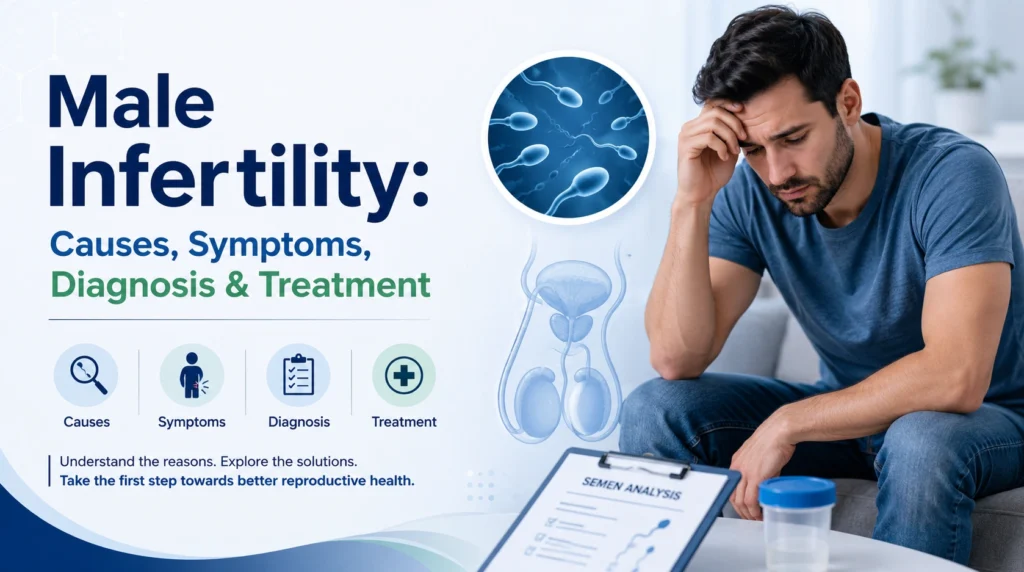
Male Infertility vs Erectile Dysfunction: What’s the Difference?
Male infertility and erectile dysfunction are two different men’s health conditions that are often confused because both can affect a couple’s ability to conceive. However, they involve different biological processes, require different diagnostic tests, and may need different treatments.
Male infertility refers to difficulty achieving a pregnancy because of problems affecting sperm production, sperm quality, sperm transport, or other aspects of male reproductive function. Erectile dysfunction (ED), on the other hand, is the persistent or recurring inability to achieve or maintain an erection firm enough for satisfactory sexual activity.
The distinction matters because a man can have normal erections but poor sperm quality, or he can have difficulty maintaining an erection while producing healthy sperm. Some men experience both conditions, particularly when an underlying health problem affects hormonal function, blood circulation, or overall reproductive health.
According to the World Health Organization (WHO), approximately one in six people of reproductive age worldwide experience infertility during their lifetime. This estimate includes infertility related to male factors, female factors, or a combination of both. The WHO defines infertility as the failure to achieve pregnancy after 12 months or more of regular, unprotected sexual intercourse. WHO infertility fact sheet.
Understanding the difference between male infertility and erectile dysfunction helps men seek appropriate testing instead of relying on assumptions, unverified supplements, or treatments designed for a different condition.
What Is Male Infertility?
Male infertility is a reproductive health condition in which problems involving sperm production, sperm function, sperm delivery, or the male reproductive system contribute to difficulty achieving pregnancy.
Healthy male fertility depends on several processes working together. The testicles must produce sperm, the reproductive tract must allow sperm to mature and travel, and ejaculation must deliver semen into the female reproductive tract. Sperm must also have the characteristics needed to reach and fertilize an egg.
A problem at any stage can affect the chances of conception. Some causes are reversible or treatable, while others require assisted reproductive techniques or specialized fertility care.
Importantly, male infertility does not necessarily cause noticeable physical symptoms. A man may have normal sexual desire, regular erections, and normal ejaculation while having a low sperm count or poor sperm motility. In many cases, difficulty achieving pregnancy is the first indication that a fertility evaluation may be needed.
Common causes of male infertility
Male infertility can develop for several reasons, and more than one factor may be present at the same time.
One common cause is impaired sperm production. The testicles may produce fewer sperm than expected, or sperm may have reduced movement or abnormal morphology, meaning their shape differs from typical forms. These findings are assessed through a semen analysis and interpreted alongside the man’s medical history and other clinical findings.
Hormonal disorders can also interfere with sperm production. The hypothalamus and pituitary gland regulate signals involved in testicular function. Problems affecting these signals, including certain forms of hypogonadism, may reduce sperm production and sometimes affect libido or erections as well.
A varicocele, which is an enlargement of veins within the scrotum, can be associated with impaired sperm production in some men. Not every varicocele causes infertility, and treatment decisions depend on clinical findings, semen results, and the couple’s reproductive goals.
Other causes include reproductive tract obstruction, previous testicular injury, undescended testicles, certain genetic conditions, infections affecting the reproductive system, and previous cancer treatments. Some medications and anabolic steroids can also suppress sperm production. Exogenous testosterone is particularly important to discuss with a clinician because it can substantially reduce or even stop sperm production while being used.
Lifestyle and environmental factors may contribute as well. Smoking, excessive alcohol intake, obesity, certain drug exposures, and some occupational or environmental exposures have been associated with reproductive problems. The strength of evidence varies by exposure, and an individual man’s fertility cannot be determined from lifestyle history alone.
Symptoms and warning signs of male infertility
Male infertility often has no obvious symptoms. A man may feel healthy and experience no difficulty during sexual activity but still have abnormalities in sperm production or function.
The main warning sign is failure to achieve pregnancy after regular, unprotected intercourse over an appropriate period. Other findings may justify earlier assessment, including a history of undescended testicles, testicular injury, previous chemotherapy, testicular surgery, or known hormonal disorders.
Some men experience reduced sexual desire, testicular discomfort, a lump or swelling in the scrotum, or changes in ejaculation. These symptoms are not proof of infertility, but they may point to a condition that deserves medical evaluation.
A painful or rapidly developing testicular problem should not be ignored. Sudden, severe testicular pain requires emergency assessment because testicular torsion is a time-sensitive condition.
What Is Erectile Dysfunction?
Erectile dysfunction is the recurring or persistent inability to achieve or maintain an erection sufficient for satisfactory sexual activity. It is a problem involving the erection process rather than a direct measurement of sperm quality.
An erection depends on coordinated signals from the brain and nerves, relaxation of smooth muscle in penile tissue, and adequate blood flow into the penis. Blood must then remain trapped within the erectile tissue long enough to maintain firmness.
Disruption at any stage can lead to erectile difficulties. Causes may include cardiovascular disease, diabetes, high blood pressure, hormonal problems, neurological conditions, certain medications, anxiety, depression, relationship stress, or a combination of physical and psychological factors.
The US National Institute of Diabetes and Digestive and Kidney Diseases (NIDDK) explains that ED can involve difficulty getting an erection, maintaining one, or experiencing erections consistently. It is not an inevitable part of aging and should not automatically be dismissed as a normal consequence of getting older. NIDDK: Erectile Dysfunction.
Common causes of erectile dysfunction
Physical causes are common and can involve blood vessels, nerves, hormones, or the effects of medication.
Vascular problems are particularly important. An erection requires sufficient blood flow, so conditions that damage blood vessels can interfere with erectile function. Diabetes, hypertension, high cholesterol, smoking, and cardiovascular disease can contribute to this process.
Diabetes may affect both blood vessels and nerves. Over time, these changes can make it harder to achieve or maintain an erection. High blood pressure and some treatments for it may also play a role, although medication effects differ between individuals.
Hormonal factors can contribute when testosterone is genuinely low or when other endocrine disorders affect sexual function. However, low testosterone is not the cause of every case of ED, and testing should be guided by symptoms and clinical assessment.
Psychological factors can include performance anxiety, prolonged stress, depression, fear of sexual failure, and relationship difficulties. These factors can interfere with arousal even when the underlying erection mechanisms are physically intact. Physical and psychological causes can coexist, so the presence of stress does not rule out a medical problem.
Certain medications, including some antidepressants and blood pressure medicines, may contribute to erectile difficulties. Men should not stop prescribed treatment independently; a clinician can assess whether an alternative medicine or dose adjustment is appropriate.
Symptoms of erectile dysfunction
The central symptom is difficulty getting or keeping an erection. Some men can achieve an erection initially but lose firmness before or during sexual activity. Others experience inconsistent erections or find that erections are insufficient for penetration.
A change in morning or spontaneous erections can provide useful information during a medical assessment, but it cannot establish a diagnosis on its own. Likewise, having occasional difficulty does not necessarily mean a man has a persistent erectile disorder.
Reduced sexual desire is a different symptom from ED. A man may have a normal desire for sexual activity but struggle to maintain an erection. Another man may have low libido while remaining physically capable of getting an erection. Distinguishing these symptoms helps clinicians investigate the correct cause.
Male Infertility vs Erectile Dysfunction: Key Differences
The most important difference is what each condition affects. Male infertility concerns the ability to contribute to conception through sperm and reproductive function. Erectile dysfunction concerns the ability to achieve or maintain an erection.
| Feature | Male infertility | Erectile dysfunction |
| Main problem | Difficulty achieving pregnancy due to male reproductive factors | Difficulty achieving or maintaining an erection |
| Primary biological focus | Sperm production, quality, transport, or delivery | Blood flow, nerve signaling, erectile tissue, and psychological factors |
| Typical symptom | Often no noticeable symptoms; pregnancy does not occur as expected | Inconsistent or insufficient erections |
| Main initial test | Semen analysis, alongside reproductive history and examination | Medical and sexual history, physical examination, and targeted tests |
| Sexual desire | May be normal or reduced, depending on the cause | May remain normal or be affected by an underlying condition |
| Ability to ejaculate | Often normal, although some causes affect ejaculation | Ejaculation may be normal, delayed, or affected by the underlying problem |
| Can natural conception occur? | Sometimes, depending on the cause and severity | Often possible if erections allow intercourse and sperm function is adequate |
| Treatment approach | Depends on the cause; may include medical treatment, surgery, or assisted reproduction | May include lifestyle changes, counseling, medication, devices, or other interventions |
Neither condition can be diagnosed simply by observing sexual performance. A man with normal erections may have a serious sperm-production problem, while a man with ED may have normal sperm parameters.
Can Male Infertility and Erectile Dysfunction Occur Together?
Yes. Male infertility and ED can occur independently, but they may also coexist.
One reason is that some underlying conditions affect multiple aspects of reproductive and sexual health. For example, diabetes may contribute to erectile dysfunction through vascular and nerve damage, while metabolic and associated health factors may also be relevant to reproductive function.
Hormonal disorders can produce overlapping symptoms. A man with low testosterone may experience reduced libido, erectile difficulties, and impaired sperm production in some circumstances. However, the relationship is not identical in every person, and testosterone levels alone do not determine fertility.
The medications or treatments involved also matter. External testosterone may improve symptoms in selected men with confirmed testosterone deficiency, but it can suppress the hormonal signals needed for sperm production. Therefore, a man who wants to conceive should tell his clinician about current or planned testosterone treatment before starting it.
A further overlap occurs when erectile dysfunction makes intercourse difficult or infrequent. Even when sperm production is normal, conception may become harder if the couple cannot have intercourse during the fertile window. This is a barrier to conception, but it is not the same as a sperm-production disorder.
The practical lesson is that men experiencing both erection problems and difficulty conceiving may need a combined assessment of sexual function, hormones, and fertility rather than treatment for only one symptom.
How Is Male Infertility Diagnosed?
Male infertility evaluation aims to identify potentially treatable conditions, assess reproductive function, and help the couple understand their options.
Semen analysis
A semen analysis is a central first-line test. A laboratory examines a semen sample for characteristics such as volume, sperm concentration, total sperm number, motility, and morphology.
The results help clinicians determine whether sperm parameters fall within the laboratory’s reference ranges. However, semen analysis is not a perfect pass-or-fail fertility test. Results can vary between samples, and an abnormal result does not automatically mean pregnancy is impossible. Similarly, results within reference ranges do not guarantee conception.
The American Urological Association and American Society for Reproductive Medicine recommend a reproductive history and one or more semen analyses as part of the initial evaluation of men in couples seeking fertility assessment. If results are abnormal, further evaluation is generally guided by the findings and clinical context. AUA/ASRM male infertility guideline.
Medical history and physical examination
A clinician may ask about the duration of attempts to conceive, previous pregnancies, sexual function, ejaculation, prior infections, surgery, medications, testosterone use, and medical conditions.
The physical examination may assess testicular size and consistency, the presence of a varicocele, and signs of hormonal or reproductive disorders. The clinician may also consider previous injuries, undescended testicles, or other relevant medical history.
Hormonal and additional testing
Blood tests may be appropriate when the history or semen analysis suggests a hormonal problem. Depending on the situation, testing may include follicle-stimulating hormone (FSH), testosterone, or other hormone measurements.
Genetic testing, imaging, or specialist investigations may be recommended in selected cases, such as severe sperm abnormalities, azoospermia (no sperm detected in the ejaculate), or suspected reproductive tract obstruction. These tests are not necessary for every man.
A fertility evaluation should consider both partners. Infertility can involve male factors, female factors, combined factors, or remain unexplained even after investigation.
How Is Erectile Dysfunction Diagnosed?
ED is usually assessed through a detailed medical, sexual, and mental health history, a physical examination, and targeted tests when indicated.
Medical and sexual history
A clinician may ask when the erection difficulty began, whether it occurs every time or only in certain situations, whether morning erections occur, and whether sexual desire or ejaculation has changed.
Questions about diabetes, blood pressure, cholesterol, smoking, alcohol, medications, sleep, stress, and relationship factors can help identify possible causes. These discussions are routine parts of healthcare and should be handled confidentially and without judgment.
Physical examination and blood tests
The examination may focus on blood pressure, cardiovascular health, genital anatomy, and signs of hormonal or neurological conditions. Blood tests may assess glucose or A1C, lipids, testosterone when indicated, or thyroid function based on the clinical picture.
Some men require additional investigations, such as penile blood-flow testing or specialized assessment of nighttime erections. These are not routine requirements for every patient.
The aim is to determine whether the problem is primarily vascular, hormonal, neurological, medication-related, psychological, or multifactorial. NIDDK: Diagnosis of Erectile Dysfunction.
Treatment Options for Male Infertility
Male infertility treatment depends on the underlying cause, the severity of sperm abnormalities, the reproductive goals of the couple, and other fertility factors.
Treating the underlying condition
If a treatable hormonal disorder, infection, obstruction, or other medical condition is identified, addressing it may improve reproductive function. Treatment should be based on a confirmed diagnosis rather than a general assumption that a particular supplement will improve sperm quality.
For some men with a clinically significant varicocele, surgery may be considered when infertility and abnormal semen parameters are present. The decision depends on the examination and fertility context; imaging alone is not always enough to justify surgery.
Medication may be appropriate for selected hormonal conditions. However, treatment varies by diagnosis, and testosterone should not be used casually as a fertility treatment because it can suppress sperm production.
Assisted reproductive techniques
When natural conception is difficult, assisted reproductive techniques may be considered. Intrauterine insemination (IUI) places prepared sperm into the uterus. In vitro fertilization (IVF) involves fertilizing an egg outside the body, while intracytoplasmic sperm injection (ICSI) involves injecting a single sperm into an egg.
In selected cases, sperm can be retrieved surgically from the reproductive tract or testicle. These procedures may help some men with very low sperm counts or no sperm in the ejaculate, depending on the cause.
Not every patient needs advanced fertility treatment. A specialist can explain the likelihood of success, potential risks, costs, and alternatives based on the specific diagnosis.
Treatment Options for Erectile Dysfunction
ED treatment focuses on the underlying cause and the man’s health, preferences, and treatment goals.
Lifestyle changes and management of medical conditions
Regular physical activity, a balanced diet, smoking cessation, moderation or avoidance of alcohol, and weight management can support vascular health. Managing diabetes, hypertension, and high cholesterol is also important.
Lifestyle changes may improve erectile function in some men, especially when vascular or metabolic factors contribute. They are not a guaranteed cure, and persistent symptoms still warrant assessment.
Prescription medications
Phosphodiesterase type 5 (PDE5) inhibitors, including sildenafil and tadalafil, are commonly used treatments. They improve the erectile response to sexual stimulation by supporting blood flow into penile tissue. They do not directly improve sperm count or treat every cause of infertility.
These medicines are not suitable for everyone. In particular, PDE5 inhibitors can interact dangerously with nitrate medicines used for certain heart conditions. A clinician or pharmacist should review medications and health conditions before treatment.
Counseling, devices, and specialist treatment
Counseling may help when performance anxiety, depression, stress, or relationship difficulties contribute to erectile problems. Psychological support can also be useful alongside medical treatment when causes overlap.
Vacuum erection devices and certain prescribed injectable or urethral treatments are alternatives for some men. Penile implants may be considered in selected cases when other treatments are ineffective or unsuitable.
Treatment should be individualized. Avoid unregulated sexual-performance products and online medicines from unverified sellers, as ingredients and doses may be unreliable.
The NIDDK provides further information about ED treatment options.
Can Erectile Dysfunction Cause Male Infertility?
ED does not usually cause a sperm-production problem directly. However, it can make conception more difficult when erection problems prevent intercourse or make sexual activity too infrequent for conception to occur.
For example, a man may have normal sperm concentration and motility but be unable to maintain an erection during intercourse. In that situation, the barrier to conception may be erectile function rather than sperm quality.
It is important to distinguish this from infertility caused by impaired sperm production, sperm transport problems, or other reproductive conditions. A semen analysis can help evaluate sperm parameters, while an ED assessment examines the causes of erection difficulties.
Both issues should be investigated when history suggests they coexist. Treating ED may help a couple have intercourse more reliably, but it does not automatically correct an underlying sperm abnormality.
Can Male Infertility Cause Erectile Dysfunction?
Male infertility does not ordinarily cause ED directly. A low sperm count or poor sperm motility does not, by itself, prevent an erection.
However, the two conditions may share an underlying cause, and the emotional impact of fertility difficulties can affect sexual function. Stress about conception, fear of disappointing a partner, repeated unsuccessful attempts, and pressure to have intercourse on specific days can contribute to performance anxiety.
Some medical conditions also affect both sperm production and sexual function. Hormonal disorders are one example, although symptoms and severity vary.
When a man develops erectile difficulties during fertility treatment, it is worth discussing the issue with a clinician. The problem should not be dismissed as purely psychological, and the presence of anxiety should not prevent an appropriate physical evaluation.
When Should You See a Doctor?
Seek medical advice if erection difficulties are persistent or recurring, if you have concerns about sperm health, or if you and your partner have been trying to conceive without success.
For couples without a known fertility problem, a common guideline is to seek an infertility evaluation after 12 months of regular, unprotected intercourse when the female partner is under 35, or after six months when she is 35 or older. Earlier assessment is appropriate when either partner has known risk factors or when the female partner is over 40. Local clinical guidance and individual medical history may affect the recommended timing.
Men should also seek earlier evaluation if they have a history of undescended testicles, testicular injury, chemotherapy, reproductive surgery, significant hormonal symptoms, or known conditions that can affect fertility.
Sudden testicular pain requires urgent emergency assessment. An erection lasting four hours or longer also requires emergency medical care because it may represent priapism, which can damage penile tissue if not treated promptly.
Erectile dysfunction can sometimes be an early sign of cardiovascular or metabolic disease. A clinician can assess whether additional testing is needed, particularly if ED occurs alongside chest discomfort, shortness of breath, diabetes, high blood pressure, or other cardiovascular risk factors.
Conclusion
Male infertility and erectile dysfunction are different conditions, even though they can affect the same person and sometimes share underlying causes. Male infertility involves the ability to achieve pregnancy through sperm production, sperm function, transport, or delivery. Erectile dysfunction involves difficulty achieving or maintaining an erection firm enough for sexual activity.
A man can have normal erections and still have fertility problems, while a man with ED may produce healthy sperm. Because symptoms alone cannot reliably distinguish the conditions, appropriate evaluation is essential.
Semen analysis and reproductive assessment help investigate male infertility. Medical and sexual history, physical examination, and targeted tests help identify the causes of ED. Treatment depends on the diagnosis and may include lifestyle changes, medical or surgical treatment, counseling, or assisted reproductive techniques.
The most useful first step is to seek an appropriate clinical assessment rather than assuming that one condition explains the other. With accurate diagnosis and individualized care, many men can find effective ways to manage their symptoms and make informed decisions about reproductive health.
Frequently Asked Questions
1. What is the main difference between male infertility and erectile dysfunction?
Male infertility refers to difficulty achieving pregnancy because of male reproductive factors, including sperm production or function. Erectile dysfunction is difficulty achieving or maintaining an erection. The conditions may coexist, but one does not automatically mean the other is present.
2. Can a man with erectile dysfunction still have children?
Yes. A man with ED may produce healthy sperm and may be able to father a child if intercourse or another appropriate method allows sperm to reach the egg. The effect on conception depends on the severity and cause of the erectile problem and the fertility of both partners.
3. Can a man with normal erections be infertile?
Yes. Normal erections do not confirm normal sperm production or quality. A man can have normal libido, erections, and ejaculation while having low sperm concentration, reduced motility, or another reproductive condition. Semen analysis is a key part of the evaluation.
4. Does low sperm count cause erectile dysfunction?
Low sperm count does not usually cause ED directly. However, some underlying hormonal or medical conditions may affect both sperm production and erectile function. Fertility testing and assessment of sexual symptoms can help distinguish the causes.
5. Can testosterone treatment improve both infertility and erectile dysfunction?
Testosterone treatment may be appropriate for selected men with confirmed testosterone deficiency and relevant symptoms, but it can suppress sperm production and reduce fertility. Men who want to conceive should discuss fertility-preserving options with a qualified clinician before starting testosterone.
6. What tests distinguish male infertility from erectile dysfunction?
A semen analysis is central to evaluating sperm parameters. ED assessment usually involves a medical and sexual history, physical examination, and targeted tests such as glucose, lipid, or hormone testing when indicated. Additional investigations depend on the findings.
7. Is erectile dysfunction always caused by low testosterone?
No. ED can result from vascular disease, diabetes, nerve problems, medication effects, psychological factors, or a combination of causes. Testosterone testing may be appropriate in selected patients, but low testosterone is not the explanation for every case.
8. Can stress cause both infertility and erectile dysfunction?
Stress can contribute to erection difficulties, especially through performance anxiety. It may also affect sexual frequency and the experience of trying to conceive. However, stress should not be assumed to be the sole cause of infertility; sperm and reproductive health may still need evaluation.
9. When should a couple seek fertility testing?
A couple commonly seeks evaluation after 12 months of regular, unprotected intercourse without pregnancy, or after six months if the female partner is 35 or older. Earlier assessment may be appropriate when there are known reproductive risk factors, significant sexual difficulties, or other medical concerns.
10. Which doctor should I consult for male infertility or erectile dysfunction?
A urologist can assess ED and many male reproductive conditions. A reproductive urologist or male fertility specialist may be especially helpful for complex sperm or fertility problems. Depending on the diagnosis, care may also involve an endocrinologist, fertility specialist, or mental health professional.
11. Can lifestyle changes reverse male infertility or erectile dysfunction?
Lifestyle changes can support general health and may improve ED or certain fertility-related risk factors. Quitting smoking, maintaining a healthy weight, exercising, and managing chronic conditions can be beneficial. However, lifestyle changes do not reverse every cause, so medical assessment remains important.
12. Does erectile dysfunction mean a man has low sperm quality?
No. Erectile function and sperm quality are separate aspects of reproductive health. A man may have ED with normal semen parameters, or normal erections with abnormal sperm parameters. Testing is needed to assess each problem accurately.