
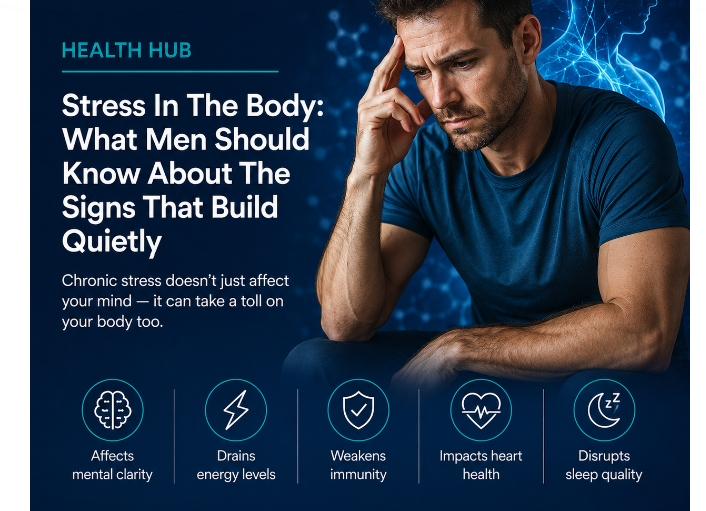
Stress and Mental Health in Men: Signs You Shouldn’t Ignore
Stress is a normal biological response to demanding situations. A difficult project, financial pressure, relationship conflict, illness, or major life change can temporarily increase alertness and help a person respond to a challenge. The problem begins when stress becomes persistent, overwhelming, or difficult to recover from.
For men, ongoing stress can sometimes be difficult to recognize because mental health problems do not always appear as obvious sadness or anxiety. Instead, they may show up as irritability, anger, emotional withdrawal, sleep problems, declining work performance, increased alcohol or drug use, physical complaints, or loss of interest in activities that once mattered.
This matters because mental health is not separate from physical health. The American Psychological Association notes that prolonged stress can affect cardiovascular, gastrointestinal, endocrine, nervous, immune, musculoskeletal, respiratory, and reproductive systems. Chronic stress has also been associated with problems including anxiety, depression, sleep disruption, high blood pressure, weight gain, and cardiovascular disease.
The scale of the issue is substantial. The World Health Organization estimates that nearly 1 in 7 people globally were living with a mental disorder in 2021, with anxiety and depressive disorders among the most common conditions. WHO also estimates that about 332 million people worldwide live with depression, including approximately 5.7% of adults; the estimated prevalence is 4.6% among men and 6.9% among women.
Men can also face particularly serious consequences when mental health difficulties go unrecognized. In the United States, the CDC reports that the 2023 suicide rate among males was 22.7 deaths per 100,000 compared with 5.9 among females, meaning the male rate was approximately four times higher. Males accounted for nearly 80% of suicides despite representing about half of the population.
These numbers do not mean that every stressed man has a mental health disorder. They do show why persistent changes in mood, behavior, sleep, relationships, or functioning deserve attention rather than being dismissed as simply “having a bad week.”
What Stress Actually Does to the Body
Stress begins as a protective response. When the brain perceives a threat or significant demand, the body activates systems that increase alertness and prepare the person to respond.
Short-term stress can therefore be useful. It can increase focus, energy, and responsiveness when facing a deadline or immediate challenge.
The concern is chronic stress.
According to the American Psychological Association, prolonged activation of the stress response can cause wear and tear throughout the body. Chronic stress can affect sleep, concentration, mood, digestion, cardiovascular health, immune function, weight, and pain.
Stress hormones such as cortisol and catecholamines play an important role in this response. When the stress response repeatedly activates without sufficient recovery, the body can remain in a prolonged state of physiological alertness.
That does not mean cortisol is inherently harmful. Cortisol is an essential hormone involved in numerous normal biological functions. The concern is sustained dysregulation of the stress-response system.
This distinction is important for health content because “high cortisol” is often presented online as an explanation for almost every symptom. A responsible medical article should not imply that ordinary symptoms automatically mean a person has abnormal cortisol levels.
Why Stress Can Look Different in Men
There is no single “male” presentation of stress or mental illness. Men can experience depression, anxiety, trauma-related disorders, sleep disorders, substance-use disorders, and other mental health conditions in many of the same ways as women.
However, some symptoms or coping behaviors may be particularly important to recognize.
The National Institute of Mental Health states that men are less likely than women to have received mental health treatment during the previous year and that some symptoms can be more common in men. NIMH also notes that men are more likely to die by suicide than women.
The WHO Regional Office for Europe similarly identifies self-reliance, difficulty expressing emotions, and expectations around emotional self-control as potential barriers to help-seeking among men.
This does not mean that men are naturally unwilling to talk about emotions. Social expectations, culture, family environment, financial circumstances, access to healthcare, previous experiences with treatment, and individual personality can all influence whether someone seeks support.
As a result, mental health education for men should look beyond the question “Are you feeling depressed?” and also ask whether there have been meaningful changes in behavior and functioning.
1. Persistent Irritability or Anger
One of the easiest signs to dismiss is becoming unusually irritable.
A man who is normally patient may suddenly become short-tempered with coworkers, family members, friends, or strangers. Small inconveniences may trigger disproportionate frustration.
Occasional irritability is normal. The concern is a persistent or noticeable change.
For example, someone might notice that he is:
- becoming angry over minor problems
- arguing more frequently
- feeling constantly “on edge”
- reacting aggressively to ordinary criticism
- having difficulty calming down after conflicts
- regretting angry reactions afterward
Stress and anxiety can contribute to irritability, while depression can also involve irritability rather than obvious sadness.
If anger is accompanied by threats, violence, loss of control, or fear that someone may be harmed, immediate professional assistance is appropriate.
2. Losing Interest in Things You Normally Enjoy
A reduction in enjoyment can be more informative than simply “feeling sad.”
A man who previously enjoyed exercise, sports, hobbies, social events, sex, travel, gaming, cooking, or spending time with friends may gradually stop participating.
This can happen because of exhaustion, work pressure, physical illness, depression, anxiety, or burnout.
The WHO describes depression as involving persistent depressed mood or loss of interest or pleasure, with symptoms occurring most of the day, nearly every day, for at least two weeks during a depressive episode. Other symptoms can include low energy, sleep disturbance, appetite or weight changes, poor concentration, low self-worth, hopelessness, and thoughts of death or suicide.
A temporary lack of motivation after a stressful week is different from a sustained loss of interest that changes daily life.
If the change persists, it is worth discussing with a healthcare professional.
3. Constant Fatigue Even After Rest
Stress can interfere with sleep and recovery, creating a cycle in which a person feels exhausted but cannot properly switch off.
A man may wake up feeling unrefreshed, struggle to concentrate during the day, or rely heavily on caffeine to function.
Fatigue is not specific to mental health. It can also result from sleep apnea, anemia, thyroid disorders, infections, medication effects, nutritional deficiencies, chronic diseases, and other medical conditions.
That is why persistent fatigue should not automatically be attributed to stress.
A medical evaluation can help distinguish psychological stress from potentially treatable physical causes.
This is an important internal-linking opportunity for a health website. A related article such as “Signs of Dehydration in Adults: When Water Isn’t Enough” can address fluid-related symptoms, while “How Poor Sleep Affects Your Brain, Heart, and Immune System” can provide deeper information about sleep and recovery.
4. Sleep Problems That Keep Returning
Sleep and stress are closely connected.
Stress may make it difficult to fall asleep, cause frequent nighttime waking, or lead to early morning awakening. Poor sleep can then reduce emotional resilience and make everyday stress harder to manage.
The APA identifies sleep problems as one of the potential consequences of chronic stress.
Watch for changes such as:
- taking much longer to fall asleep
- waking repeatedly
- waking too early
- sleeping substantially more than usual
- feeling exhausted despite adequate time in bed
- relying on alcohol or medication to fall asleep
Persistent sleep problems deserve attention because they can occur with both mental and physical health conditions.
Men who snore loudly, gasp during sleep, stop breathing during sleep, or experience excessive daytime sleepiness should also discuss possible sleep apnea with a healthcare professional.
5. Difficulty Concentrating or Making Decisions
Stress can consume mental bandwidth.
When someone is constantly thinking about bills, work deadlines, relationship problems, health concerns, or family responsibilities, it can become harder to focus on less urgent tasks.
A man might notice that he:
- forgets appointments
- struggles to complete routine work
- rereads the same information
- makes unusually frequent mistakes
- has difficulty prioritizing tasks
- feels mentally exhausted by simple decisions
The APA lists impaired concentration and memory among possible effects of prolonged stress.
However, sudden or severe cognitive changes should not automatically be blamed on stress. Sudden confusion, difficulty speaking, weakness, severe headache, or other acute neurological symptoms require urgent medical evaluation.
6. Withdrawing From Family and Friends
Social withdrawal can be subtle.
Instead of telling people that something is wrong, a man may stop answering messages, decline invitations, spend more time alone, or become emotionally distant from people close to him.
Sometimes solitude is healthy. The warning sign is a significant change from the person’s normal behavior combined with distress or loss of functioning.
Social connection can be an important protective factor for mental health. The WHO notes that mental health conditions can affect relationships with family, friends, and communities, while the WHO review on men and mental health identifies trusted family members, peers, specialists, and communities as potentially useful sources of support.
A practical first step can be remarkably simple: maintaining contact with at least one trusted person rather than completely isolating yourself.
7. Increased Alcohol or Drug Use
Some men cope with stress by increasing alcohol consumption, using recreational drugs, or misusing prescription medication.
The problem is that substances can provide temporary relief while potentially worsening sleep, mood, anxiety, relationships, finances, and physical health.
A warning sign is not necessarily that someone uses alcohol or another substance at all. The more important question is whether the pattern has changed and whether the person increasingly relies on it to relax, sleep, socialize, or escape uncomfortable emotions.
NIMH’s men-and-mental-health guidance notes that recognizing mental health symptoms early can help people access treatment sooner.
If substance use feels difficult to control, professional support is appropriate.
8. Physical Symptoms With No Clear Explanation
Mental stress can have physical effects.
The APA reports that chronic stress can contribute to headaches, muscle tension and pain, digestive problems, sleep disturbances, changes in weight, cardiovascular effects, and other physical symptoms.
A man experiencing prolonged stress might therefore report:
- headaches
- neck or shoulder tension
- stomach discomfort
- digestive changes
- rapid heartbeat during stressful situations
- muscle pain
- fatigue
- changes in appetite
But physical symptoms should never automatically be dismissed as “just stress.”
Chest pain, severe shortness of breath, fainting, new neurological symptoms, or other potentially serious symptoms require appropriate medical evaluation.
Mental and physical health can influence each other, so treating one while ignoring the other is often counterproductive.
9. Changes in Sexual Health
Stress can affect sexual wellbeing.
Some men may notice reduced sexual desire, difficulty becoming aroused, erectile difficulties, or changes in sexual satisfaction during periods of intense stress.
These symptoms can have many causes, including anxiety, depression, relationship difficulties, medication effects, vascular disease, diabetes, hormonal problems, sleep disorders, and other medical conditions.
That makes persistent sexual symptoms worth discussing with a healthcare professional rather than assuming that stress is the only explanation.
A health website covering men’s health can naturally link this section to an article such as “Erectile Dysfunction: Common Causes and Natural Ways to Improve It” or “Low Testosterone Symptoms: Causes, Diagnosis, and Treatment.”
The important editorial principle is to avoid claiming that stress automatically causes low testosterone or erectile dysfunction. These conditions can overlap, but they are not interchangeable diagnoses.
10. Feeling Constantly Overwhelmed
Another important warning sign is the sense that everything feels like too much.
A man may continue meeting responsibilities while privately feeling that he is barely keeping up.
This can happen when work demands, financial pressure, caregiving responsibilities, relationship problems, health concerns, or major life transitions accumulate.
The APA describes chronic stress as stress that persists over an extended period and notes that it can become debilitating and overwhelming.
The key issue is not whether a person has a stressful life. Most people do.
The question is whether the stress has become difficult to manage and is affecting sleep, relationships, work, physical health, or enjoyment of life.
Stress, Anxiety, and Depression Are Not the Same Thing
These terms are often used interchangeably, but they are not identical.
Stress is generally a response to a perceived demand or threat. The APA explains that stress is typically associated with an external trigger, while anxiety can continue even when the original threat is not immediately present.
Anxiety disorders involve excessive fear or worry and related behavioral disturbances that cause significant distress or impairment. WHO identifies anxiety disorders as among the most common mental disorders worldwide.
Depression involves more persistent changes such as depressed mood or loss of interest or pleasure, along with other symptoms.
A person can experience stress without having an anxiety disorder or depression. Conversely, ongoing stress can contribute to mental health difficulties in some people.
Only a qualified healthcare professional can diagnose a mental health condition.
Why Men May Delay Getting Help
The reasons men delay mental health care are complicated.
Some may believe they should handle problems alone. Others may worry about being judged at work, losing respect from friends, appearing weak, or burdening family members.
The WHO review on men and mental health identifies self-reliance, difficulty expressing emotions, and expectations around emotional control as important barriers to help-seeking.
Access also matters.
Someone may want professional help but lack affordable services, transportation, privacy, time away from work, or culturally appropriate care.
This is why telling men simply to “talk about their feelings” can be insufficient.
A better approach is to make help-seeking practical and specific.
Instead of asking, “What’s wrong with you?” a friend might say, “I’ve noticed you haven’t seemed like yourself lately. Do you want to talk or would you like help finding someone to speak with?”
When Stress Becomes a Mental Health Warning Sign
Stress deserves professional attention when it starts interfering with ordinary life.
Consider speaking with a doctor or mental health professional when symptoms persist, worsen, or affect:
- sleep
- work or school
- relationships
- appetite
- physical health
- substance use
- concentration
- daily responsibilities
- enjoyment of life
The WHO emphasizes that effective treatments exist for depression and that early recognition can help people access appropriate care.
A primary-care clinician can also help determine whether symptoms could be related to an underlying physical condition.
When to Seek Urgent Help
Thoughts about suicide, self-harm, or harming another person should always be taken seriously.
If you are in immediate danger or believe someone else is at immediate risk, contact local emergency services or go to the nearest emergency department.
In the United States, people can call or text 988 to reach the Suicide & Crisis Lifeline. Readers outside the United States should use their country’s emergency or crisis-support services.
The reason for emphasizing this is straightforward: the CDC reports that males accounted for nearly 80% of U.S. suicide deaths in 2023, and the male suicide rate was approximately four times the female rate.
This statistic should not be used to frighten people. It reinforces why warning signs and timely support matter.
Evidence-Based Ways Men Can Manage Everyday Stress
Stress management is not about eliminating every source of stress.
A more realistic goal is to improve recovery, coping capacity, social support, and problem-solving.
Improve Sleep
Consistent sleep and wake times, reducing stimulating activities before bed, and addressing persistent sleep problems can help support mental and physical health.
If sleep remains poor despite reasonable lifestyle changes, discuss it with a healthcare professional rather than repeatedly relying on sleeping pills, alcohol, or supplements without guidance.
Stay Physically Active
Regular physical activity can support both physical and mental health.
The goal does not have to be an intense gym program. Walking, cycling, swimming, resistance training, sports, or other enjoyable movement can be incorporated according to fitness level and medical circumstances.
Maintain Social Connection
Isolation can make stress harder to manage.
Regular contact with friends, family, colleagues, community groups, or trusted peers can provide emotional support and practical perspective.
Reduce Unhealthy Coping Strategies
If alcohol, nicotine, drugs, gambling, overeating, or excessive screen use has become the primary way to cope, it may be useful to identify healthier alternatives and seek professional support when necessary.
Break Large Problems Into Smaller Actions
Financial stress, work pressure, and relationship problems can feel impossible when considered as one huge problem.
Writing down the issue, identifying what can be controlled, and choosing one realistic next step can reduce the sense of helplessness.
Use Professional Support Early
Therapy is not reserved for severe mental illness.
A psychologist, psychiatrist, counselor, primary-care physician, or other qualified professional can help evaluate symptoms and identify appropriate treatment.
NIMH specifically notes that recognizing mental health problems and seeking treatment earlier can improve the likelihood of getting effective help.
Nutrition and Mental Health: Where It Fits
Nutrition cannot replace mental health treatment, but overall dietary quality is part of general health.
Regular meals, adequate hydration, sufficient protein and fiber, fruits and vegetables, whole grains, and healthy fats can support overall wellbeing.
However, readers should be cautious about online claims that a particular food, vitamin, or supplement can “cure” depression, anxiety, or chronic stress.
This creates an appropriate internal-linking opportunity to “Best Foods to Reduce Inflammation Naturally” and “Best Diet Plan for Men’s Heart Health,” while keeping the distinction between healthy nutrition and treatment of a diagnosed mental health disorder clear.
Why Men’s Mental Health Is Also a Physical Health Issue
Mental health affects more than mood.
The APA reports that chronic stress can affect multiple body systems and is associated with cardiovascular problems, high blood pressure, sleep disorders, digestive problems, weight gain, immune effects, and other health concerns.
WHO also reports strong relationships between depression and physical health conditions, including cardiovascular disease, diabetes, cancer, and respiratory diseases.
This does not mean stress directly causes every disease listed.
Rather, mental and physical health interact through biological processes, behavior, sleep, substance use, activity levels, healthcare access, and other pathways.
That is why a comprehensive men’s health strategy should include both mental and physical health screening.
A Practical Self-Check for Men
A useful self-check is to compare your current behavior with your normal baseline.
Ask:
Have I become more irritable?
Am I sleeping differently?
Have I stopped enjoying things I used to enjoy?
Am I drinking or using substances more often?
Have I withdrawn from people?
Am I struggling to concentrate?
Do I feel exhausted most days?
Have my appetite or weight changed unexpectedly?
Am I experiencing unexplained physical symptoms?
Do I feel hopeless or trapped?
Are my symptoms affecting work, relationships, or daily responsibilities?
One “yes” does not diagnose a mental health condition.
Several persistent changes, especially when they represent a clear departure from your normal behavior, are a good reason to talk with a healthcare professional.
Building an Internal Health Content Cluster
For a health-focused website, this article can function as a central men’s mental-health resource and connect to related content through contextual internal links.
A logical content cluster could include:
“Why Men Ignore Health Problems Until It’s Too Late” — useful when discussing delayed help-seeking and preventive healthcare.
“Top Health Screenings Every Man Should Have After Age 40” — relevant when discussing comprehensive physical and mental health care.
“10 Medical Tests Every Adult Should Get by Age” — useful for readers who want a broader preventive-health checklist.
“Belly Fat in Men: Health Risks and Proven Ways to Lose It” — relevant when discussing the relationship between stress, lifestyle, metabolic health, and weight.
“How Poor Sleep Affects Your Brain, Heart, and Immune System” — particularly relevant to the sleep section.
“Low Testosterone Symptoms: Causes, Diagnosis, and Treatment” — relevant to fatigue, sexual-health changes, and hormonal concerns.
“Erectile Dysfunction: Common Causes and Natural Ways to Improve It” — relevant when discussing sexual health and stress.
“Best Diet Plan for Men’s Heart Health” — relevant to lifestyle and cardiovascular risk.
“Daily Habits That Can Reduce Your Risk of Chronic Diseases” — useful for broader preventive-health strategies.
These links should appear naturally where the reader is likely to need additional information. Avoid creating a long block of unrelated internal links at the end of the article.
Final Takeaway
Stress is not automatically a mental illness, and experiencing stress does not mean something is wrong with you.
The warning sign is when stress becomes persistent, changes your behavior, interferes with everyday functioning, or begins affecting your relationships, sleep, physical health, or ability to enjoy life.
For men, mental health problems may sometimes appear through irritability, anger, withdrawal, substance use, sleep problems, fatigue, poor concentration, loss of motivation, or physical symptoms rather than an obvious statement of sadness.
The evidence supports taking these changes seriously. NIMH reports that men are less likely than women to receive mental health treatment, while CDC data show that the U.S. male suicide rate was approximately four times the female rate in 2023.
At the same time, mental health conditions are treatable. WHO reports that effective treatments exist for depression and that improving access to mental healthcare remains an important global priority.
The most useful approach is not to wait until stress becomes a crisis. Notice meaningful changes early, maintain supportive relationships, address sleep and lifestyle factors, and seek professional help when symptoms persist or interfere with daily life.
If someone is experiencing thoughts of suicide or self-harm, seek immediate crisis or emergency assistance rather than trying to manage the situation alone.
FAQs
What are the most common signs of stress in men?
Common signs include irritability, anger, sleep problems, fatigue, difficulty concentrating, social withdrawal, loss of interest, feeling overwhelmed, increased alcohol or drug use, and physical symptoms such as headaches or muscle tension. These symptoms can also have other causes, so persistent problems should be evaluated by a healthcare professional.
How does stress affect men’s mental health?
Chronic stress can contribute to anxiety, low mood, sleep problems, impaired concentration, emotional exhaustion, and unhealthy coping behaviors. The APA also reports that prolonged stress can affect multiple physical systems.
Can stress cause depression in men?
Stress and depression are different conditions, but stressful or traumatic experiences can increase the likelihood of depression in some people. WHO identifies stressful life events as among the factors associated with depression.
Why do some men hide mental health problems?
Reasons vary. Research reviewed by WHO identifies factors including self-reliance, difficulty expressing emotions, and expectations around emotional control as potential barriers to help-seeking. Access, cost, stigma, and previous healthcare experiences can also influence whether someone seeks care.
Can depression in men look like anger?
It can. Depression does not always present as obvious sadness. Irritability, anger, withdrawal, loss of interest, fatigue, sleep changes, and concentration problems can occur alongside depression. However, anger alone does not establish a diagnosis.
When should a man see a doctor about stress?
Consider professional evaluation when symptoms persist, worsen, or interfere with sleep, work, relationships, physical health, substance use, or everyday responsibilities. A doctor can also check whether physical conditions are contributing to symptoms.
Can stress cause erectile dysfunction?
Stress can contribute to sexual difficulties, but erectile dysfunction has many possible causes, including vascular, metabolic, hormonal, medication-related, psychological, and relationship factors. Persistent erectile problems should be discussed with a healthcare professional rather than automatically attributed to stress.
Does exercise help with stress?
Regular physical activity can be part of a healthy stress-management strategy. It should complement, rather than replace, professional treatment when someone has significant anxiety, depression, substance-use problems, or another mental health condition.
Is chronic stress dangerous?
Persistent stress can affect both psychological and physical health. The APA links chronic stress with problems including sleep disturbance, anxiety, depression, cardiovascular issues, digestive problems, high blood pressure, weight gain, and impaired concentration.
What is the difference between stress and anxiety?
Stress is typically associated with an identifiable external demand or trigger, whereas anxiety can persist beyond the immediate stressor and may involve excessive fear or worry. The two can occur together.
What should I do if a man says he feels hopeless?
Take the statement seriously and listen without judgment. Ask directly whether he is thinking about suicide or self-harm. If there is immediate danger or a suicide plan, contact local emergency services or an appropriate crisis service and do not leave the person alone if doing so would increase risk.
How common are mental health conditions globally?
WHO reports that nearly 1 in 7 people worldwide were living with a mental disorder in 2021, with anxiety and depressive disorders among the most common. WHO estimates that approximately 332 million people worldwide have depression.
Are men less likely to seek mental health treatment?
Yes. NIMH states that men are less likely than women to have received mental health treatment during the previous year. WHO research also identifies several barriers that can influence men’s help-seeking behavior.
Where can someone get help for a mental health problem?
Depending on the situation and location, options can include a primary-care doctor, psychologist, psychiatrist, counselor, community mental-health service, or crisis service. For urgent risk of suicide or self-harm, use local emergency or crisis services immediately. Treatment options depend on the person’s symptoms, diagnosis, preferences, and circumstances.
Is this article a substitute for professional medical advice?
No. This article is educational and cannot diagnose or treat an individual condition. Persistent or concerning symptoms should be assessed by an appropriately qualified healthcare professional.