
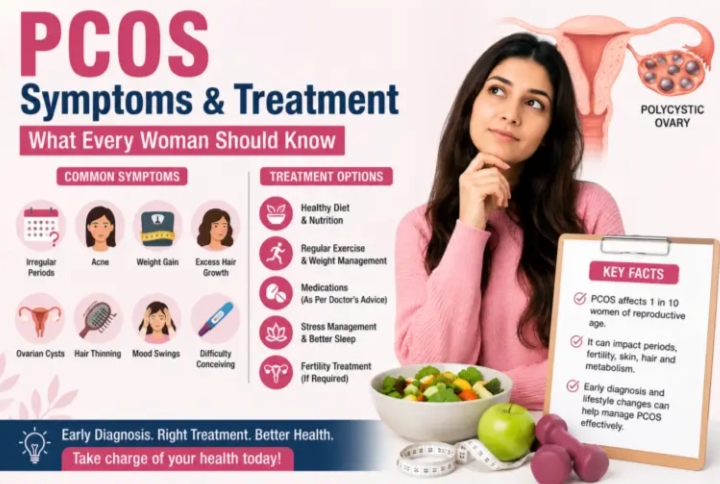
PCOS Symptoms Every Woman Should Know
Polycystic ovary syndrome, commonly called PCOS, is one of the most common hormonal and metabolic conditions affecting women during their reproductive years. It can influence menstrual cycles, ovulation, fertility, skin, hair growth, weight, blood sugar regulation, cardiovascular health, sleep, and emotional well-being.
The condition is often misunderstood because PCOS does not look the same in every woman. One person may mainly experience irregular periods, another may notice persistent acne or unwanted facial hair, while someone else may discover the condition only after experiencing difficulty becoming pregnant.
The World Health Organization estimates that PCOS affects approximately 10–13% of reproductive-aged women globally, and up to 70% of women with the condition may remain undiagnosed. WHO also identifies PCOS as a leading cause of infertility associated with abnormal ovulation.
There is also an important terminology update. In May 2026, the international PCOS guideline program announced “polyendocrine metabolic ovarian syndrome” (PMOS) as the new name for the condition formerly known as PCOS. WHO, however, continues to use PCOS in its January 2026 fact sheet. Because PCOS remains the term most people recognize and search for, this article uses PCOS while acknowledging the updated terminology.
Recognizing symptoms early matters because PCOS is not simply a reproductive or fertility problem. It can also be associated with insulin resistance, type 2 diabetes, high blood pressure, abnormal cholesterol, sleep apnea, cardiovascular disease, and psychological concerns.
What Is PCOS?
PCOS is a complex hormonal and metabolic condition involving abnormal reproductive hormone signaling and, in many people, metabolic changes such as insulin resistance.
Androgens are hormones that are present in everyone, although they are generally found at higher levels in men. Women with PCOS may have elevated androgen levels or clinical signs of androgen excess.
This can interfere with normal ovulation and contribute to irregular or absent menstrual periods. Some women may also develop acne, increased facial or body hair, scalp hair thinning, or other androgen-related changes.
Despite its name, having ovarian cysts is not required to have PCOS.
According to WHO, diagnosis is generally based on having at least two of three features after other possible causes have been excluded: signs or laboratory evidence of elevated androgens, irregular or absent menstrual periods, and polycystic ovaries identified on ultrasound.
This is important because the name can create a misleading impression. PCOS is not simply a condition in which a woman has ovarian cysts.
How Common Is PCOS?
PCOS is common worldwide.
WHO estimates that approximately 10–13% of reproductive-aged women are affected, while as many as 70% of women with PCOS may not know they have it.
The international evidence-based guideline was developed through extensive collaboration involving healthcare professionals, researchers, patients, and consumer representatives across multiple countries. The 2023 guideline incorporated evidence from approximately 6,000 pages of technical evidence and produced 77 evidence-based recommendations, 54 consensus recommendations, and 123 practice points.
These figures demonstrate why PCOS deserves attention beyond fertility clinics. It is a long-term condition that can affect multiple aspects of health.
The Most Common PCOS Symptoms
PCOS symptoms vary considerably. Some women have several symptoms, while others have only one or two.
The most recognizable symptoms involve menstrual cycles, androgen-related changes, fertility, and metabolic health.
1. Irregular Menstrual Periods
One of the most important signs of PCOS is an irregular menstrual cycle.
Periods may occur infrequently, unpredictably, or not at all. Some women may have only a small number of menstrual periods each year.
Irregular periods can happen because ovulation is not occurring regularly.
However, not every irregular period means PCOS. Menstrual irregularity can also be associated with pregnancy, thyroid disorders, significant changes in weight, excessive exercise, stress, certain medications, perimenopause, and other medical conditions.
That is why persistent menstrual changes should be assessed rather than automatically attributed to PCOS.
WHO notes that PCOS can involve intermittent, unpredictable, or absent periods and, in some women, heavy, prolonged, or painful periods.
2. Difficulty Getting Pregnant
PCOS is one of the major causes of infertility related to abnormal ovulation.
When ovulation happens irregularly, predicting the fertile window becomes more difficult and conception may take longer.
Importantly, having PCOS does not mean a woman cannot become pregnant.
Many women with PCOS do conceive, either naturally or with appropriate fertility treatment. WHO notes that lifestyle interventions, medicines, fertility treatments, and assisted reproductive technologies can all have roles depending on the individual situation.
Difficulty conceiving is therefore a reason to seek medical evaluation, not a reason to assume pregnancy is impossible.
3. Excess Facial or Body Hair
Another common symptom is increased terminal hair growth in areas such as the face, chest, abdomen, or other parts of the body.
This is known as hirsutism.
It can occur when androgen levels are elevated or when hair follicles are particularly sensitive to androgens.
The severity varies greatly. Some women may notice a few coarse hairs around the chin or upper lip, while others may experience more extensive unwanted hair growth.
Hair removal practices do not cause PCOS, and the presence of facial hair alone does not establish a diagnosis.
Doctors typically consider hair growth alongside menstrual patterns, hormone levels, other symptoms, and the possibility of alternative explanations.
4. Persistent Acne or Oily Skin
Hormonal acne can be another sign of androgen excess.
Women with PCOS may experience persistent acne, oily skin, or acne that continues beyond the teenage years.
Acne is common and has many possible causes, so it cannot independently diagnose PCOS.
However, persistent acne combined with irregular periods, excess facial hair, or scalp hair thinning can provide a stronger reason to discuss PCOS with a healthcare professional.
WHO lists acne and oily skin among the possible manifestations of PCOS.
5. Thinning Hair on the Scalp
Some women with PCOS experience female-pattern hair thinning or increased hair loss from the scalp.
The pattern may differ from ordinary temporary shedding. Hair can gradually become thinner around the crown or part line.
Because hair loss also occurs with thyroid disorders, iron deficiency, nutritional problems, stress, certain medications, and other conditions, it should not automatically be attributed to PCOS.
When scalp hair thinning occurs together with irregular periods or other signs of androgen excess, a medical assessment can help identify the underlying cause.
6. Unexplained Weight Changes
Weight gain can occur in women with PCOS, particularly around the abdomen, but it is important not to make body weight a requirement for recognizing the condition.
PCOS can affect women of different body sizes.
WHO identifies obesity and weight gain, particularly around the abdomen, among health issues associated with PCOS.
The international guideline also emphasizes avoiding weight stigma and recognizing that healthy lifestyle measures can be beneficial even when they do not result in weight loss.
This distinction matters because assuming PCOS only affects women with obesity can delay diagnosis in women who do not fit that stereotype.
7. Darkened, Thickened Skin
Some women with PCOS develop areas of darker, thicker skin, particularly around body folds such as the neck, armpits, or groin.
This appearance can be associated with acanthosis nigricans, which is often associated with insulin resistance.
Insulin resistance means the body’s cells do not respond to insulin as effectively as they should. The pancreas may compensate by producing more insulin.
Not every person with PCOS has insulin resistance, and not everyone with acanthosis nigricans has PCOS. However, this skin change can be an important clue when combined with other symptoms.
The CDC lists darkened skin in body creases among possible PCOS symptoms.
8. Metabolic Problems
PCOS is not exclusively a reproductive condition.
Metabolic abnormalities can be an important part of the condition, particularly insulin resistance and increased risk of type 2 diabetes.
The CDC reports that more than half of women with PCOS develop type 2 diabetes by age 40.
This statistic highlights why metabolic screening can be important after diagnosis.
Other metabolic concerns may include high blood pressure, abnormal cholesterol levels, and increased risk of cardiovascular disease.
WHO also identifies insulin resistance, type 2 diabetes, obesity, hypertension, high cholesterol, cardiovascular disease, and sleep apnea among health conditions associated with PCOS.
9. Sleep Problems
Sleep apnea can occur more frequently among women with PCOS.
Symptoms of obstructive sleep apnea may include loud snoring, pauses in breathing during sleep, morning headaches, excessive daytime sleepiness, and waking unrefreshed.
Sleep problems should not automatically be blamed on PCOS, but they deserve attention when they occur alongside other symptoms.
The international guideline specifically highlights sleep apnea as part of the broader health burden associated with PCOS.
10. Anxiety, Depression, and Emotional Distress
The psychological impact of PCOS can be significant.
Women dealing with infertility, acne, unwanted hair growth, weight concerns, menstrual irregularity, or social stigma may experience substantial emotional distress.
The international guideline recognizes a high prevalence of psychological features in PCOS, while WHO reports associations with anxiety, depression, eating disorders, and negative body image.
Mental-health symptoms should not be dismissed as simply “part of having hormones.”
If anxiety, depression, disordered eating, or persistent emotional distress is affecting daily life, professional support is appropriate.
Symptoms That Are Easy to Miss
Some PCOS symptoms receive less attention because they are not as obvious as irregular periods or facial hair.
Mild Cycle Changes
A woman may still get periods every month but have subtle evidence of abnormal ovulation.
For this reason, regular bleeding does not necessarily guarantee normal ovulation in every situation.
Gradual Hair Thinning
Hair loss can develop slowly and may initially be attributed to stress, aging, or styling practices.
When it occurs with other androgen-related symptoms, it may warrant further evaluation.
Insulin Resistance Without Obvious Symptoms
Insulin resistance often does not produce a distinctive symptom that a person can recognize at home.
A woman may feel generally well while metabolic abnormalities are developing.
This is one reason healthcare professionals may recommend metabolic assessment after PCOS is diagnosed.
Fertility Problems as the First Major Clue
Some women do not realize they have PCOS until they try to conceive.
Because irregular ovulation can interfere with conception, fertility evaluation may eventually uncover the condition.
WHO notes that PCOS is commonly detected when women experience difficulty becoming pregnant.
PCOS Symptoms During the Teenage Years
PCOS can become apparent during adolescence.
However, diagnosing PCOS in teenagers requires particular care because some menstrual irregularity, acne, and other hormonal changes can be normal during the early years after the first period.
The CDC notes that PCOS can develop as early as around age 11 or 12, around the time of first menstruation.
This means persistent or particularly concerning symptoms should be evaluated by an appropriate healthcare professional rather than automatically labeled as normal puberty.
PCOS Symptoms After Age 30 or 40
PCOS does not necessarily disappear as women get older.
Some reproductive symptoms can change over time, but metabolic risks can remain relevant beyond the reproductive years.
Women with a previous PCOS diagnosis may continue to require attention to blood glucose, cardiovascular risk factors, blood pressure, sleep, and mental health.
WHO describes PCOS as a chronic condition that persists beyond the reproductive years.
The symptoms a woman notices at 40 may therefore be different from the symptoms she experienced at 20.
What Causes PCOS?
The exact cause of PCOS is not fully understood.
Genetic factors appear to contribute because PCOS can run in families.
WHO identifies family history of PCOS or type 2 diabetes as risk factors.
Hormonal signaling, androgen activity, insulin resistance, and metabolic factors can interact in complex ways.
PCOS should not be reduced to a single cause such as eating too much sugar, being overweight, or having poor lifestyle habits.
These oversimplifications can contribute to stigma and may cause women to blame themselves for a complex medical condition.
How Is PCOS Diagnosed?
There is no single test that independently confirms PCOS in every adult.
Diagnosis involves medical history, physical assessment, laboratory testing when appropriate, and sometimes imaging.
WHO describes three major diagnostic features:
- Clinical or biochemical evidence of elevated androgens.
- Irregular or absent menstrual periods.
- Polycystic ovaries identified through ultrasound.
At least two of these features are generally required after other causes have been excluded.
The 2023 international guideline also refined the diagnostic approach and incorporated anti-Müllerian hormone (AMH) as an alternative to ultrasound for identifying polycystic ovarian morphology in adults, within the appropriate diagnostic framework.
Blood Tests
Depending on the symptoms, a clinician may order blood tests to evaluate androgen levels and investigate other conditions that can cause similar symptoms.
Testing may also assess metabolic health.
The precise tests depend on the individual rather than a universal “PCOS blood test.”
Ultrasound
Pelvic ultrasound can be used to assess ovarian morphology in appropriate patients.
However, the presence of ovarian cysts is not required for PCOS.
This is one of the most important facts for anyone researching the condition.
A woman can meet diagnostic criteria without having polycystic ovaries visible on an ultrasound.
Conditions That Can Mimic PCOS
A careful diagnosis matters because several conditions can cause symptoms that resemble PCOS.
Depending on the presentation, healthcare professionals may consider thyroid disorders, elevated prolactin, certain adrenal conditions, medication effects, pregnancy, hypothalamic or other reproductive disorders, and less common causes of androgen excess.
This is why self-diagnosing PCOS based on acne, weight gain, or irregular periods alone can be misleading.
A proper assessment looks at the complete clinical picture.
When Should You See a Doctor?
Consider speaking with a healthcare professional if you experience persistent irregular or absent periods, unexplained excess facial or body hair, persistent acne accompanied by menstrual changes, scalp hair thinning, difficulty becoming pregnant, or signs of metabolic problems.
Medical evaluation is particularly important when symptoms are new, severe, rapidly progressing, or significantly affecting quality of life.
Sudden or rapidly increasing facial hair, severe acne with other hormonal changes, or rapidly developing scalp hair loss should not simply be assumed to be PCOS.
These patterns can sometimes indicate another hormonal problem requiring prompt assessment.
Can PCOS Be Prevented?
There is no established way to completely prevent PCOS because its development involves factors that cannot simply be controlled through lifestyle.
However, healthy lifestyle habits can support metabolic and overall health.
The international guideline recommends healthy lifestyle behaviors as a core component of PCOS care and emphasizes that benefits can occur even without weight loss.
A sustainable approach may include regular physical activity, balanced nutrition, adequate sleep, stress management, and avoiding extreme diets.
The goal should be long-term health rather than chasing a particular body size.
How Is PCOS Managed?
There is currently no single cure for PCOS, but symptoms and associated health risks can be managed.
Treatment depends on the individual’s symptoms and goals.
For someone who is not trying to become pregnant, treatment may focus on menstrual regulation, acne, unwanted hair growth, and metabolic risk.
For someone trying to conceive, treatment may focus on restoring or supporting ovulation and addressing fertility.
WHO notes that treatment can include lifestyle interventions, medications, and fertility treatments depending on the patient’s circumstances.
Lifestyle Management
Physical activity and healthy eating can support metabolic health.
Importantly, lifestyle management should not be framed as punishment for body weight.
The international guideline emphasizes healthy behaviors and shared decision-making while recognizing weight stigma as an important concern.
Menstrual Management
Hormonal contraceptives can be used for appropriate patients to regulate menstrual bleeding and address some androgen-related symptoms.
They are not suitable for everyone, so medical advice is important.
Acne and Excess Hair
Treatment can include topical acne therapies, hormonal treatments, and other options depending on the severity and individual circumstances.
Hair-removal methods such as laser treatment, electrolysis, shaving, threading, or waxing can address the cosmetic effects, while medical treatment may address the hormonal component.
Fertility Treatment
For women trying to become pregnant, treatment may involve lifestyle measures and medicines that stimulate ovulation.
Depending on the individual situation, assisted reproductive technologies such as IVF may also be considered.
PCOS-associated infertility is treatable, and a diagnosis does not mean pregnancy is impossible.
PCOS and Type 2 Diabetes Risk
One of the strongest reasons to take PCOS seriously is its relationship with metabolic health.
The CDC reports that more than half of women with PCOS develop type 2 diabetes by age 40.
This does not mean every woman with PCOS will develop diabetes by age 40. Individual risk varies based on factors such as metabolic health, family history, body composition, lifestyle, and other clinical characteristics.
The figure does, however, demonstrate why PCOS management should extend beyond menstrual symptoms.
Women diagnosed with PCOS should discuss appropriate blood-glucose and metabolic screening with their healthcare professional.
PCOS and Heart Health
PCOS has also been associated with cardiovascular risk factors.
Women with PCOS may have higher rates of high blood pressure, abnormal cholesterol, obesity, and other metabolic risk factors.
WHO lists cardiovascular disease among the longer-term health concerns associated with PCOS.
The presence of PCOS does not mean cardiovascular disease is inevitable.
Instead, it provides a reason to pay attention to modifiable risk factors such as blood pressure, cholesterol, blood glucose, physical activity, smoking, sleep, and nutrition.
PCOS and Pregnancy
Women with PCOS can become pregnant, but pregnancy may involve additional risks.
WHO notes that women with PCOS generally have higher risks of certain pregnancy complications and may require additional monitoring.
If you have PCOS and are planning pregnancy, discussing your health with a qualified clinician before conception can help identify appropriate steps for fertility, metabolic health, medications, and pregnancy monitoring.
PCOS and Mental Health
The psychological side of PCOS deserves the same attention as physical symptoms.
Unwanted hair growth, acne, fertility problems, weight stigma, and unpredictable periods can affect confidence and quality of life.
The international guideline specifically highlights the high prevalence of psychological features and the importance of emotional well-being and quality of life in PCOS care.
If you are experiencing persistent sadness, anxiety, social withdrawal, disordered eating, or difficulty coping, talk with a healthcare professional.
Mental-health treatment is not separate from PCOS care. It can be an important part of comprehensive management.
Common Myths About PCOS
Myth: You Must Have Ovarian Cysts to Have PCOS
False.
Polycystic ovaries are one possible diagnostic feature, but they are not required in every diagnosis.
Myth: PCOS Only Affects Women With Obesity
False.
PCOS can affect women across different body sizes.
Weight should not be used as a screening test for the condition.
Myth: PCOS Means You Cannot Have Children
False.
PCOS can interfere with ovulation and fertility, but many women with PCOS become pregnant.
Myth: Irregular Periods Always Mean PCOS
False.
Many other conditions can cause irregular periods.
A proper diagnosis requires consideration of other possible causes.
Myth: PCOS Is Only a Fertility Problem
False.
PCOS can affect metabolic health, cardiovascular risk factors, sleep, mental health, and quality of life in addition to reproductive health.
When to Seek Professional Help
PCOS is manageable, but persistent symptoms should not be ignored.
Talk to a healthcare professional if your periods are consistently irregular, you have unexplained excess facial or body hair, persistent acne combined with menstrual changes, scalp hair thinning, difficulty becoming pregnant, or signs of metabolic problems.
You should also seek assessment if symptoms change suddenly or become significantly more severe.
A healthcare professional can determine whether PCOS is a likely explanation and investigate other conditions that may produce similar symptoms.
Final Takeaway
PCOS can affect far more than the menstrual cycle.
The most recognizable symptoms include irregular or absent periods, difficulty conceiving, excess facial or body hair, acne, oily skin, and scalp hair thinning. Some women may also experience weight changes, darkened skin in body folds, metabolic abnormalities, sleep problems, anxiety, depression, or other quality-of-life concerns.
WHO estimates that PCOS affects approximately 10–13% of reproductive-aged women worldwide and that up to 70% of affected women may remain undiagnosed.
The condition is also associated with important long-term health considerations, including insulin resistance, type 2 diabetes, hypertension, abnormal cholesterol, cardiovascular disease, and sleep apnea.
At the same time, symptoms alone cannot confirm PCOS.
Diagnosis requires a healthcare professional to consider the overall clinical picture and exclude other potential causes. Ovarian cysts are not mandatory for diagnosis, and women of different body sizes can have the condition.
Early recognition can help women receive appropriate care for menstrual symptoms, fertility concerns, metabolic health, and emotional well-being.
If you recognize several of these symptoms, don’t assume that PCOS is the answer—but don’t ignore them either. A professional evaluation can provide clarity and help identify the right next step.
FAQs About PCOS Symptoms
What is the most common symptom of PCOS?
Irregular or absent menstrual periods are among the most recognizable symptoms because PCOS can interfere with normal ovulation. Other common features include androgen-related symptoms such as excess facial or body hair, acne, and scalp hair thinning.
Can you have PCOS with regular periods?
Yes. Menstrual regularity alone does not necessarily rule out PCOS. Diagnosis considers the combination of reproductive, hormonal, and ovarian findings and requires other possible causes to be excluded.
Do you need ovarian cysts to have PCOS?
No. Ovarian cysts are not required for a PCOS diagnosis. The condition can be diagnosed when other appropriate criteria are present.
What are the early signs of PCOS?
Early signs can include irregular periods, persistent acne, increased facial or body hair, scalp hair thinning, or difficulty conceiving. The symptoms vary considerably between individuals.
Can PCOS cause weight gain?
Weight gain and obesity are associated with PCOS, but not every woman with PCOS gains weight. PCOS can affect women across different body sizes.
Can PCOS cause infertility?
PCOS can cause difficulty becoming pregnant because abnormal ovulation can reduce the frequency with which an egg is released. However, PCOS does not mean that pregnancy is impossible. Fertility treatments can help many women conceive.
Can acne be a sign of PCOS?
Yes. Acne and oily skin can occur with PCOS, particularly when associated with androgen excess. However, acne alone cannot diagnose PCOS because it has many possible causes.
Does PCOS cause facial hair?
Excess facial or body hair is a common manifestation of androgen excess associated with PCOS. It is commonly called hirsutism.
Can PCOS cause hair loss?
PCOS can be associated with female-pattern scalp hair thinning or hair loss. Other medical conditions can also cause hair loss, so an appropriate evaluation is important.
Is PCOS linked to diabetes?
Yes. PCOS is associated with insulin resistance and an increased risk of type 2 diabetes. The CDC reports that more than half of women with PCOS develop type 2 diabetes by age 40.
Can PCOS affect mental health?
Yes. PCOS is associated with anxiety, depression, eating disorders, negative body image, and other psychological concerns. The international guideline recommends attention to psychological well-being as part of comprehensive PCOS care.
Can PCOS go away on its own?
PCOS is considered a chronic condition and can continue beyond the reproductive years. Symptoms and health risks can change over time, but there is currently no established cure.
Can lifestyle changes help PCOS?
Healthy eating, physical activity, adequate sleep, and other healthy behaviors can support overall and metabolic health. The international guideline emphasizes that lifestyle benefits can occur even without weight loss.
What tests are used to diagnose PCOS?
Depending on the individual, healthcare professionals may use menstrual history, physical examination, androgen blood tests, other laboratory tests to exclude alternative conditions, and pelvic ultrasound. In adults, the international guideline also recognizes AMH as an alternative to ultrasound for identifying polycystic ovarian morphology within the appropriate diagnostic process.
When should I see a doctor about possible PCOS?
Consider seeking medical evaluation for persistent irregular periods, unexplained excess facial or body hair, ongoing acne with menstrual changes, scalp hair thinning, difficulty conceiving, or other symptoms associated with PCOS. A clinician can determine whether PCOS is likely and rule out other causes.