
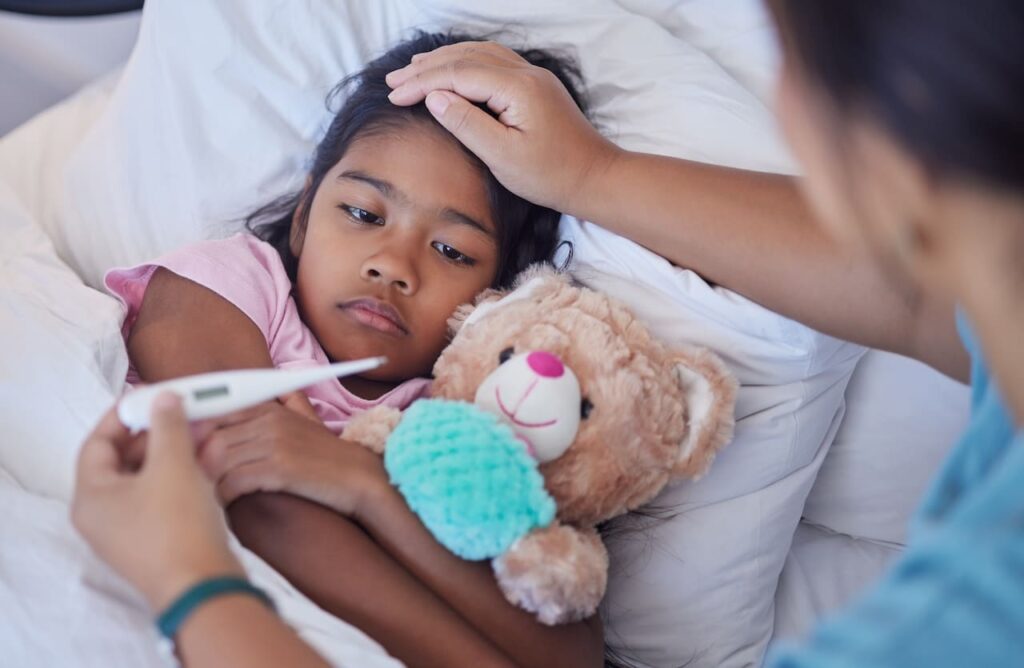
Why Your Child Gets Sick Frequently and How to Build Strong Immunity
If your child seems to have a runny nose one week, a cough the next, a fever shortly afterward, and another infection before you have even had time to relax, it is understandable to wonder whether something is wrong with their immune system.
The good news is that frequent minor illnesses do not automatically mean a child has a weak immune system. Young children are exposed to many viruses as their immune systems learn to recognize different germs, particularly when they attend daycare, preschool or school or have siblings who bring infections home. The American Academy of Pediatrics (AAP) notes that healthy children commonly experience about six colds a year, while many young children—especially those in childcare—may have six to eight colds annually.
At the same time, “normal” does not mean every recurring illness should be ignored. Infections that are unusually severe, repeatedly require antibiotics, cause poor growth, lead to repeated pneumonia or occur alongside other concerning symptoms may warrant an evaluation by a pediatrician.
Building a child’s immune health is therefore less about finding a single immunity-boosting food, syrup or supplement and more about supporting the systems that help the body function properly: adequate nutrition, sufficient sleep, physical activity, vaccination, good hygiene, appropriate medical care and a healthy environment.
Is It Normal for Children to Get Sick So Often?
One of the biggest misconceptions about childhood illness is that a healthy child should rarely become sick.
Children are constantly encountering unfamiliar viruses. Unlike adults who have already developed immunity to many common pathogens, young children have had fewer opportunities to build immune memory. A cold caused by one virus does not necessarily protect them from another virus that produces similar symptoms.
The AAP’s symptom guidance states that healthy children get about six colds a year, while its antibiotic guidance notes that many young children, particularly those in childcare, can experience six to eight colds per year.
This can create the impression that a child is sick “all the time,” especially because one respiratory infection can take around two weeks to resolve. If infections occur close together, the symptoms may appear almost continuous even when the child is experiencing separate illnesses.
For example, a preschool child might have a cold in September, recover, develop another viral infection in October, experience influenza or another respiratory infection later in the season and then have another cold. That pattern can be exhausting for the family without necessarily indicating an immune disorder.
The important question is not simply, “How many times did my child get sick?” A better question is, “How severe are the illnesses, how does my child recover, and are they growing and developing normally?”
Why Do Children Get Frequent Infections?
Their immune systems are still learning
The immune system is not a switch that is either “strong” or “weak.” It is a complex network involving physical barriers, immune cells, antibodies and other mechanisms that recognize and respond to infectious organisms.
During childhood, the immune system encounters many new viruses and bacteria. Each exposure helps the body develop immune responses, although this does not mean children should deliberately be exposed to infections.
Frequent minor respiratory infections can therefore be part of normal childhood, particularly during the preschool years.
Daycare and school increase exposure to germs
Childcare and school environments bring children into close contact with one another. They share toys, classroom materials, tables and play areas, and younger children often touch their faces or put objects in their mouths.
Respiratory viruses can spread efficiently in these settings.
The CDC recommends practical infection-control measures in early-care and education environments, including vaccination, staying home when sick, hand hygiene, cleaning and disinfection, and improving ventilation.
This means a child who attends daycare may simply encounter more infectious organisms than a child who spends most of the day at home.
Siblings can bring infections home
Even when a younger child is not attending school, older brothers and sisters may bring viruses into the household.
This is particularly noticeable during periods when respiratory infections are circulating widely. Once one child becomes ill, close household contact can make transmission easier.
Seasonal infections are common
Respiratory viruses circulate throughout the year, with many infections becoming more noticeable during colder months or periods when people spend more time indoors.
A child who experiences several illnesses during one season may therefore appear to have a chronic problem when the underlying explanation is repeated exposure to common infections.
Could Poor Nutrition Make a Child More Vulnerable?
Nutrition plays a major role in growth, development and immune function. A child’s body requires adequate protein, energy, vitamins and minerals to maintain normal physiological processes.
The relationship between nutrition and infection can also work in both directions. Poor nutritional status can increase susceptibility to infection, while repeated infections can reduce appetite and interfere with nutritional status.
WHO identifies undernutrition as an important risk factor for illness and notes that wasting can impair immune function and increase susceptibility to infectious disease.
This does not mean parents need to find a special “immune-boosting” food. A varied diet is generally more important than any single ingredient.
A child’s regular meals should ideally include a combination of nutrient-dense foods such as vegetables, fruits, whole grains, legumes, dairy or suitable alternatives, eggs, fish, poultry or other protein sources, depending on the family’s dietary pattern and the child’s age.
WHO’s current healthy-diet guidance emphasizes dietary variety and nutrient-dense foods, including fruits, vegetables, whole grains, legumes, nuts, seeds and appropriate animal-source foods.
For children with restricted diets, poor appetite, growth concerns or suspected deficiencies, individualized advice from a pediatrician or qualified dietitian may be appropriate.
The Importance of Protein, Iron, Zinc and Other Nutrients
Parents often focus heavily on vitamin C when thinking about immunity, but immune health depends on much more than one nutrient.
Protein is needed for growth and the production of many biological components involved in normal body function. Iron is important for blood formation and development. Zinc is involved in numerous cellular processes. Vitamins A, C, D and other micronutrients also have important biological roles.
WHO notes that micronutrients include approximately 30 essential vitamins and minerals, and that deficiencies can contribute to serious health problems. Its current healthy-diet guidance recommends obtaining micronutrients through a diverse, nutrient-dense diet.
This is particularly important for children who are picky eaters or who follow restrictive diets.
However, more is not necessarily better.
The AAP states that most healthy children who eat a balanced diet do not need vitamin supplements beyond recommended dietary allowances. It also warns that excessive amounts of certain vitamins and minerals can cause toxicity.
Parents should therefore avoid giving high-dose vitamins, minerals or herbal products simply because a child catches frequent colds.
Does Vitamin C Prevent Children From Getting Sick?
Vitamin C is essential for normal health, but claims about vitamin C supplements need to be kept in perspective.
The AAP explains that vitamin C supports normal immune function, but there is no evidence that vitamin C supplements prevent children from catching a cold in the first place. Some research suggests supplementation may modestly affect the duration or severity of cold symptoms in some circumstances, but it does not make children immune to respiratory viruses.
This distinction is important for parents searching for “best vitamins for child immunity.”
A child who is eating fruits and vegetables regularly may already be receiving adequate vitamin C. Citrus fruits, berries, tomatoes, peppers and many other fruits and vegetables can contribute to dietary intake without relying on high-dose supplements.
What About Vitamin D and Child Immunity?
Vitamin D has important roles in bone health and normal biological function, and deficiency should be addressed when present or when supplementation is recommended for a particular child.
The AAP currently notes that infants younger than one year require 400 IU (10 mcg) of vitamin D per day, while children older than one year require 600 IU (15 mcg) per day, with supplementation decisions depending on the child’s circumstances and dietary intake.
Parents should not assume that giving a large dose of vitamin D will prevent every infection. High doses can be harmful, and supplementation should be discussed with a pediatrician when there is uncertainty about a child’s needs.
Sleep Is an Important Part of Immune Health
Sleep is sometimes overlooked when parents are trying to understand why their child seems to get sick frequently.
Children’s bodies are developing rapidly, and adequate sleep supports physical health, learning, behavior and emotional well-being. The AAP notes that children who get enough sleep have healthier immune systems along with benefits for memory, school performance and mental health.
Current CDC recommendations provide useful age-based targets:
- Infants 4–12 months: 12–16 hours per 24 hours, including naps
- Toddlers 1–2 years: 11–14 hours, including naps
- Preschool children 3–5 years: 10–13 hours, including naps
- Children 6–12 years: 9–12 hours
- Teenagers 13–17 years: 8–10 hours
These are daily recommendations rather than a guarantee that every child will sleep exactly the same number of hours.
A predictable bedtime, consistent wake time, a calming pre-sleep routine and an appropriate sleep environment can help children obtain sufficient rest.
Vaccination Is One of the Most Effective Ways to Protect Children
When discussing how to strengthen a child’s immune system, vaccination should be near the top of the conversation.
Vaccines do not make a child’s immune system “stronger” in a vague sense. They train the immune system to recognize specific pathogens or components of them before the child encounters the actual disease.
The public-health impact is substantial. A WHO-led analysis published in 2024 estimated that global immunization efforts prevented approximately 154 million deaths over the previous 50 years, including about 101 million infant lives.
Routine childhood vaccination therefore has a much stronger evidence base for preventing specific serious infections than unproven “immune booster” products.
Vaccination schedules vary by country and individual circumstances, so parents should follow the schedule recommended by their local health authority and pediatric healthcare professional.
Importantly, a mild illness does not necessarily mean a child must postpone vaccination. The CDC states that children can generally receive vaccines when they have mild illnesses such as a cold, runny nose, cough, mild diarrhea or low-grade fever, although healthcare professionals can advise based on the individual situation.
Teach Good Hand Hygiene Without Creating Fear of Germs
Children cannot and should not live in a completely germ-free environment. Instead, families can teach practical hygiene habits that reduce unnecessary exposure.
Handwashing is particularly important before eating, after using the toilet, after coughing or sneezing and after activities that make the hands visibly dirty.
The CDC recommends washing hands with soap and water for at least 20 seconds. When soap and water are unavailable, an alcohol-based hand sanitizer containing at least 60% alcohol can be used in appropriate circumstances.
For younger children, parents can make handwashing part of a routine rather than presenting it as a punishment or something to fear.
The goal is sensible infection prevention, not excessive sanitizing.
Physical Activity and Outdoor Play Matter Too
Children need opportunities to move, play and explore.
Physical activity supports overall health, cardiovascular fitness, muscular development, sleep and emotional well-being. Rather than treating exercise as a medical treatment for frequent colds, parents should view active play as part of a healthy lifestyle that supports the child’s overall resilience.
Outdoor play also gives children opportunities to develop motor skills and spend time away from sedentary activities.
There is no need to turn every healthy habit into an “immunity hack.” A consistent lifestyle is more meaningful than a short-term intervention marketed as a way to boost immunity.
A Healthy Diet Is Better Than an “Immunity Booster” Product
The market is filled with children’s gummies, syrups, powders, herbal products and supplements promoted for immune health.
Some products may have a legitimate role when a child has a documented nutritional deficiency or a specific medical indication. But that is different from claiming that every healthy child needs an immunity supplement.
The AAP’s current guidance says most healthy children eating a varied diet do not need additional vitamin or mineral supplementation. It also warns that megadoses can cause harmful effects.
This makes a food-first strategy sensible for most healthy children.
Instead of asking, “Which supplement is best for immunity?” parents can ask:
Is my child eating a reasonably varied diet?
Are they growing appropriately?
Are they getting enough protein and nutrient-rich foods?
Are they sleeping enough?
Are vaccinations up to date?
Is there exposure to cigarette smoke or other environmental irritants?
Are repeated infections interfering with school, growth or daily life?
Those questions are much more useful when assessing overall child health.
Avoid Unnecessary Antibiotics
Another important part of managing frequent childhood illness is understanding the difference between viral and bacterial infections.
Antibiotics treat bacterial infections; they do not treat viruses that cause ordinary colds.
The AAP notes that most common cold symptoms, including runny nose, cough and congestion, improve without antibiotics. It also explains that yellow or green nasal mucus does not automatically mean a child needs an antibiotic.
Using antibiotics when they are not needed can expose children to side effects without providing a benefit.
That does not mean antibiotics should be avoided when a pediatrician determines that a bacterial infection requires them. Rather, the decision should be based on clinical evaluation rather than the assumption that every prolonged cold needs an antibiotic.
What Environmental Factors Can Make Children Sick More Often?
A child’s environment can influence exposure to respiratory and gastrointestinal infections.
Crowded indoor spaces, close contact with sick individuals, inadequate ventilation and poor hand hygiene can increase opportunities for infectious organisms to spread.
Tobacco smoke exposure is another important concern. Parents and caregivers should keep children away from secondhand smoke.
For children attending daycare or school, parents can also ask about the facility’s policies for ventilation, cleaning, hand hygiene and managing children who are ill.
The CDC recommends infection-prevention practices in early-childhood settings that include vaccination, staying home when sick, ventilation, hand hygiene, cleaning and appropriate disinfection.
When Frequent Illness May Need a Pediatric Evaluation
Most frequent childhood colds are not caused by an immune deficiency. Nevertheless, there are situations where recurrent infections deserve closer assessment.
Speak with your child’s pediatrician if infections are unusually severe, repeatedly require hospitalization, frequently progress to pneumonia, repeatedly require multiple courses of antibiotics, are difficult to clear, or are accompanied by poor weight gain or other concerning developmental or health problems.
Recurrent ear or sinus infections may also deserve discussion when they are unusually frequent or severe.
The Immune Deficiency Foundation notes that severe pneumonia, recurrent respiratory infections, recurrent sinus or ear infections and infections requiring multiple rounds of antibiotics can be warning signs that warrant medical assessment in the appropriate clinical context.
This does not mean that a child with repeated colds automatically has an immune deficiency. There are many other explanations, including normal exposure to viruses, asthma, allergies, enlarged adenoids, environmental irritants and other common pediatric conditions.
A pediatrician can look at the overall pattern rather than judging immune health from the number of colds alone.
Signs That Your Child’s Illness May Be More Than an Ordinary Cold
Parents should seek medical advice when symptoms are severe, persistent, worsening or unusual for their child.
Depending on the situation, concerning features can include difficulty breathing, dehydration, persistent or unusually high fever, unusual sleepiness, severe pain, repeated pneumonia, significant weight loss or poor growth, or a child who seems substantially more unwell than expected.
For babies and very young children, the threshold for seeking medical advice may be lower because they can deteriorate more quickly.
Emergency symptoms such as significant breathing difficulty, bluish or gray discoloration, severe dehydration, unresponsiveness, seizures or other signs of serious illness require urgent medical attention.
Online information cannot determine whether a particular child’s recurrent infections are normal. If you are worried about your child’s pattern of illness, a pediatric evaluation is the appropriate way to assess it.
A Practical Daily Routine for Supporting Child Immunity
There is no single daily routine that guarantees a child will stay healthy. However, families can build habits that support normal immune function and general well-being.
A typical healthy routine might include a nutritious breakfast, regular meals containing varied food groups, plenty of appropriate fluids, active play, outdoor time, handwashing at key moments, a predictable bedtime and age-appropriate sleep.
Parents should also keep routine medical and dental appointments, follow the recommended vaccination schedule and address persistent health concerns rather than repeatedly treating symptoms at home.
For children with allergies, asthma, eczema, nutritional deficiencies or other medical conditions, following the treatment plan provided by the child’s healthcare professional can be particularly important.
The objective is not to create a child who never gets sick. That is unrealistic.
The objective is to help the child grow, develop and recover normally while reducing preventable infections and identifying medical problems when they occur.
What Parents Should Not Do to “Strengthen” Immunity
Parents may encounter advice recommending megadoses of vitamin C, vitamin D, zinc, herbal mixtures, essential oils or other products to prevent childhood infections.
These approaches should be treated cautiously.
The AAP specifically warns that excessive amounts of vitamins such as A, C and D can cause toxicity. It also emphasizes that supplements should be used when genuinely needed rather than assuming every child benefits from additional nutrients.
Parents should also avoid giving prescription medicines or antibiotics without appropriate medical advice.
A child’s immune system does not need to be constantly “boosted.” It needs adequate nutrition, sleep, protection from preventable disease and appropriate medical support.
The Bottom Line: Frequent Colds Do Not Always Mean Weak Immunity
If your child gets sick frequently, the first step is not to panic and not to immediately buy an immune-boosting supplement.
Healthy children can experience several respiratory infections each year, particularly during the early years and when they attend childcare or school. The AAP’s guidance of approximately six colds per year in healthy children—and six to eight in many young children in childcare—provides useful context.
The strongest foundation for child immune health is remarkably practical: a varied and nutritious diet, sufficient sleep, regular physical activity, recommended vaccinations, good hand hygiene, a healthy smoke-free environment and timely medical care.
Nutrition deserves particular attention because undernutrition and micronutrient deficiencies can increase vulnerability to infection, while repeated illness can make nutritional problems worse.
At the same time, parents should not assume that every frequent infection is normal. Severe, persistent or unusual infections, repeated pneumonia, poor growth or other warning signs deserve assessment by a pediatrician.
In other words, strong immunity is not about never getting sick. It is about giving a child’s body the resources it needs to function normally, preventing serious infections where possible and recognizing when illness falls outside the expected pattern.
Frequently Asked Questions
How many times a year is it normal for a child to get sick?
Healthy children can get around six colds per year, according to the AAP, while young children in childcare may experience approximately six to eight colds annually. The number alone does not determine whether a child’s immune system is weak. The severity of infections, recovery, growth and overall health are also important.
Why does my child keep getting colds?
Repeated colds are often related to exposure to different respiratory viruses, especially in daycare, preschool or school environments. Children are still developing immune memory against many pathogens, and siblings can also bring infections into the home.
What foods help strengthen a child’s immune system?
There is no single food that makes a child’s immune system exceptionally strong. A varied diet containing fruits, vegetables, whole grains, legumes, protein-rich foods and appropriate dairy or alternatives provides nutrients needed for normal growth and immune function.
Should I give my child vitamins to prevent frequent illness?
Not automatically. The AAP says most healthy children eating a balanced diet do not need additional vitamin or mineral supplements. Supplements may be appropriate when a child has a nutritional deficiency, restrictive diet or another medical reason, but parents should discuss supplementation with a pediatrician.
Does vitamin C prevent colds in children?
Vitamin C is important for normal health, but the AAP states that there is no evidence vitamin C supplements prevent children from catching a cold. Some evidence suggests supplementation may affect cold duration or severity in some situations, but it should not be viewed as a guaranteed cold-prevention strategy.
How much sleep does my child need?
Sleep requirements vary by age. Infants aged 4–12 months generally need 12–16 hours per day including naps; toddlers need 11–14 hours; preschoolers need 10–13 hours; school-age children need 9–12 hours; and teenagers need 8–10 hours.
Can vaccines help protect my child’s immune system?
Vaccines train the immune system to recognize specific infections and are among the most effective tools for preventing vaccine-preventable diseases. WHO estimates that global immunization efforts have saved approximately 154 million lives over the past 50 years.
Should antibiotics be given whenever my child has a cold?
No. Antibiotics treat bacterial infections and do not treat ordinary viral colds. The AAP notes that most common cold symptoms improve without antibiotics, and colored nasal mucus alone does not mean an antibiotic is necessary.
When should I worry that my child has a weak immune system?
Talk to a pediatrician if your child’s infections are unusually severe, repeatedly require multiple antibiotic courses or hospitalization, involve recurrent pneumonia, are difficult to clear, or occur alongside poor growth or other concerning symptoms. Recurrent infections do not automatically mean immune deficiency, but unusual patterns deserve professional evaluation.
Does daycare make children sick more often?
Daycare and early-childhood settings can increase exposure to infectious organisms because children spend considerable time together and share spaces and objects. Good hand hygiene, vaccination, ventilation, cleaning and keeping sick children home when appropriate can help reduce transmission.
Can lack of sleep make a child more vulnerable to illness?
Adequate sleep supports overall health and normal immune function. Children who regularly sleep less than recommended may experience broader health and developmental consequences. Establishing consistent sleep routines is an important part of healthy childhood development.
Is it possible to make a child never get sick?
No. Frequent minor infections are part of normal childhood for many children. The realistic goal is not eliminating every infection but supporting healthy growth, reducing preventable disease and recognizing infections that need medical attention.
What is the best way to improve a child’s immunity naturally?
The most evidence-based approach is not a single natural remedy. Focus on adequate nutrition, sufficient sleep, regular physical activity, recommended vaccinations, hand hygiene, a healthy environment and appropriate healthcare. If your child has unusually frequent or severe infections, speak with a pediatrician rather than relying on supplements or home remedies alone.