
Common Vaginal Infections: Symptoms, Causes, and Prevention
Vaginal itching, burning, unusual discharge, odor, irritation, and discomfort are common reasons women seek medical care. Yet these symptoms do not automatically mean the same infection is responsible. A thick white discharge with intense itching may point toward a yeast infection, while a thin discharge with a fishy odor is more characteristic of bacterial vaginosis (BV). Trichomoniasis, a sexually transmitted infection (STI), can cause yellow-green discharge, irritation, and discomfort when urinating.
That distinction matters because the treatments are different. Using an antifungal medication for bacterial vaginosis will not treat the underlying problem, and treating presumed yeast infection repeatedly without confirming the diagnosis can delay appropriate care.
The American College of Obstetricians and Gynecologists (ACOG) describes vaginitis as inflammation of the vagina that can cause itching, burning, odor, or increased discharge. Common causes include yeast infections, bacterial vaginosis, trichomoniasis, and changes associated with low estrogen.
Vaginal infections are also common enough to make accurate education important. The World Health Organization reports that global bacterial vaginosis prevalence among women of reproductive age is estimated at approximately 23%–29%, although prevalence varies considerably between populations. The CDC also estimates that about 75% of women experience at least one episode of vulvovaginal candidiasis during their lifetime, with 40%–45% experiencing two or more episodes.
This guide explains the most common vaginal infections, how their symptoms differ, what causes them, how doctors diagnose them, how they are treated, and what women can do to reduce their risk.
What Is a Vaginal Infection?
A vaginal infection or inflammatory condition occurs when the normal vaginal environment is disrupted or when a disease-causing organism is introduced.
The vagina is not sterile. It naturally contains bacteria, yeast, and other microorganisms. In a healthy vaginal environment, these organisms coexist without causing symptoms. Lactobacilli are particularly important because they contribute to an acidic vaginal environment that can discourage the overgrowth of some harmful microorganisms.
Vaginal health can change because of antibiotics, hormonal changes, sexual activity, pregnancy, diabetes, immune-system problems, douching, certain products, and other factors.
Not every vaginal symptom is caused by an infection. Low estrogen during perimenopause and menopause can produce vaginal dryness, burning, irritation, pain with sex, and urinary symptoms. This condition, known as genitourinary syndrome of menopause (GSM), can resemble an infection but requires different treatment.
This is one reason accurate diagnosis is more useful than simply searching for a “vaginal infection treatment” and choosing an over-the-counter product.
The Three Most Common Vaginal Infections
The three conditions most often discussed when women experience vaginal discharge, odor, itching, or irritation are:
- Bacterial vaginosis
- Vulvovaginal candidiasis, commonly called a yeast infection
- Trichomoniasis
Although these conditions can produce overlapping symptoms, their underlying causes are different.
Bacterial Vaginosis
Bacterial vaginosis occurs when the normal balance of vaginal bacteria changes, with a reduction in beneficial Lactobacillus species and an increase in various anaerobic bacteria.
The CDC describes BV as vaginal dysbiosis rather than a conventional single-organism infection. It is the most common cause of vaginal discharge worldwide.
The WHO estimates global BV prevalence among women of reproductive age at approximately 23%–29%, demonstrating how widespread the condition is.
BV can occur in women who are sexually active and in women who have never had sex. It is not classified in the same way as an STI, although sexual activity is associated with increased risk and BV can increase susceptibility to some sexually transmitted infections.
Symptoms of Bacterial Vaginosis
Common BV symptoms include:
- Thin white, gray, or sometimes greenish discharge
- Strong fish-like vaginal odor
- Odor that may become more noticeable after sex
- Vaginal irritation or burning
- Burning during urination in some women
Importantly, many women with BV have no symptoms. The CDC notes that a majority of women with BV in a nationally representative survey were asymptomatic.
The absence of symptoms therefore does not necessarily mean the vaginal microbiome is unchanged.
What Causes Bacterial Vaginosis?
The exact biological cause of BV is complex and is not completely understood.
Risk factors include douching, having a new or multiple sex partners, and inconsistent condom use. The CDC also identifies associations with certain sexual behaviors and HSV-2 infection.
Douching is particularly important because it can disturb the natural vaginal bacterial environment. A common misconception is that stronger cleaning produces better vaginal hygiene. In reality, the vagina is self-cleaning, and unnecessary internal cleansing can increase the risk of problems.
Vulvovaginal Candidiasis: Yeast Infection
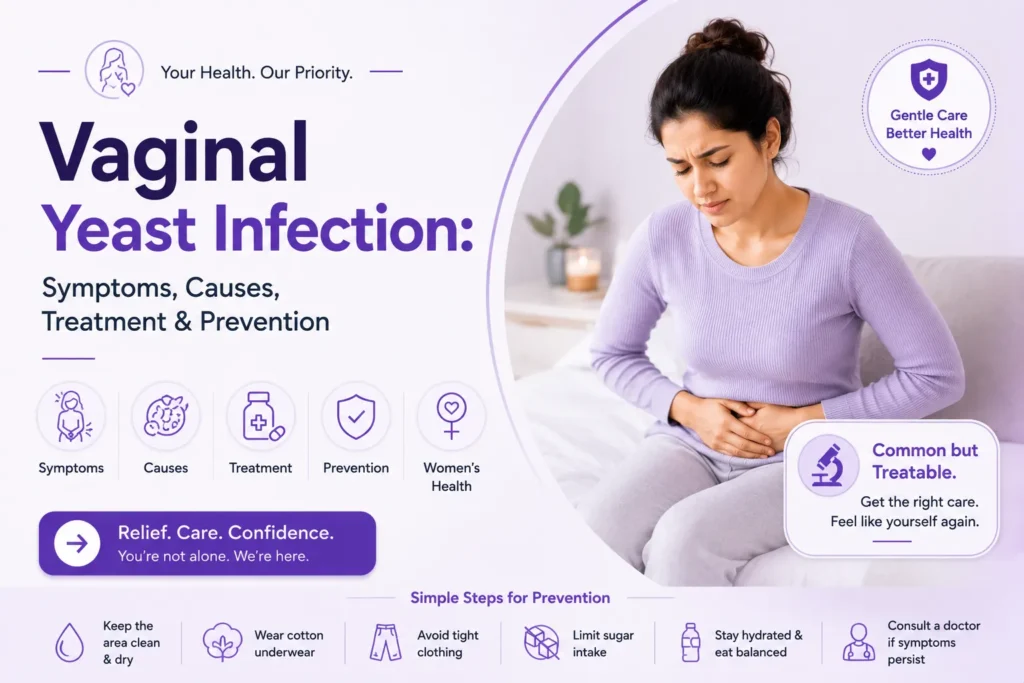
Vulvovaginal candidiasis, commonly called a vaginal yeast infection, is caused by an overgrowth of Candida yeast.
Candida can normally exist in the body without causing disease. Problems occur when the organism grows excessively or when the vaginal environment changes in a way that allows symptomatic infection to develop.
Candida albicans causes most cases, although other Candida species can also be responsible.
The CDC estimates that approximately 75% of women experience at least one episode of vulvovaginal candidiasis during their lifetime, while 40%–45% experience two or more episodes.
Symptoms of a Vaginal Yeast Infection
Typical symptoms include:
- Intense vaginal or vulvar itching
- Burning or soreness
- Vulvar redness or swelling
- Pain or discomfort during sex
- Burning or discomfort during urination
- Thick, white, clumpy discharge
- Vaginal or vulvar irritation
The discharge associated with yeast infection is often described as cottage-cheese-like and typically does not have a strong odor. However, symptoms vary between individuals.
The CDC emphasizes that none of these symptoms alone is specific to yeast infection. This is important because itching, burning, and discharge can also occur with BV, trichomoniasis, sexually transmitted infections, skin conditions, or noninfectious irritation.
What Increases the Risk of Yeast Infections?
Several factors can increase the likelihood of vulvovaginal candidiasis.
Antibiotic use is a well-known risk factor because antibiotics can reduce normal vaginal bacteria that help keep Candida growth under control.
Pregnancy can also increase the risk because of hormonal changes. Diabetes, especially when blood glucose is poorly controlled, can increase susceptibility as well. Conditions or treatments that affect immune function can also make yeast infections more likely or more difficult to treat.
However, many women who develop yeast infections do not have an obvious trigger. It is therefore inaccurate to assume that every yeast infection results from poor hygiene, sexual activity, or dietary choices.
Trichomoniasis
Trichomoniasis is different from BV and yeast infection because it is an STI caused by the parasite Trichomonas vaginalis.
The CDC identifies trichomoniasis as the most prevalent nonviral STI worldwide. In U.S. population-based data cited by the CDC, prevalence was approximately 2.1% among females and 0.5% among males, with prevalence varying substantially among demographic groups.
Trichomoniasis can be asymptomatic, meaning someone may have the infection without recognizing any symptoms.
Symptoms of Trichomoniasis
Possible symptoms include:
- Yellow, green, or gray vaginal discharge
- Unpleasant or fishy odor
- Vaginal or vulvar irritation
- Burning
- Redness or swelling
- Discomfort during urination
- Pain during sex
Because symptoms can overlap with BV and other causes of vaginitis, testing is important.
Unlike uncomplicated yeast infection, sexual partners need to be treated when trichomoniasis is diagnosed to reduce the risk of reinfection.
Vaginal Infection Symptoms: How Do They Differ?
Symptoms can provide clues, but they cannot reliably establish the diagnosis by themselves.
| Condition | Common discharge pattern | Odor | Itching/irritation | STI? |
| Yeast infection | Thick, white, clumpy | Usually minimal | Often prominent | No |
| Bacterial vaginosis | Thin, white/gray | Often fishy | Variable | No, although sexually associated |
| Trichomoniasis | Yellow/green/gray | May be unpleasant | Common | Yes |
These patterns are useful for understanding the differences, but they should not be used as a substitute for testing.
The CDC specifically notes that a medical history alone is insufficient for accurately diagnosing vaginitis. Examination and laboratory testing may be necessary to identify the cause.
Why You Should Not Assume Every Itchy Vagina Has a Yeast Infection
One of the most common mistakes in vaginal health is assuming that itching automatically means Candida.
A woman may experience itching because of:
- Yeast infection
- Bacterial vaginosis
- Trichomoniasis
- Contact dermatitis
- Irritation from soaps or fragrances
- Allergic reactions
- Skin disorders
- Low-estrogen vaginal changes
- Certain STIs
ACOG specifically cautions that women can mistake another vaginal condition for a yeast infection. Using an over-the-counter antifungal when the actual problem is something else may delay correct diagnosis and treatment.
This is particularly important when symptoms are occurring for the first time, are severe, keep returning, or do not improve after treatment.
How Are Vaginal Infections Diagnosed?
Diagnosis typically starts with a discussion of symptoms, menstrual history, sexual history, medications, recent antibiotic use, and other relevant factors.
A healthcare professional may examine the vulva and vagina and collect a sample of vaginal discharge.
Testing can include vaginal pH measurement, microscopy, cultures, antigen tests, or molecular/NAAT-based testing depending on the suspected condition and the clinical setting.
For example, vaginal pH is often higher than 4.5 with BV or trichomoniasis, whereas uncomplicated yeast infection typically has a vaginal pH below 4.5. However, pH alone cannot establish the diagnosis.
Microscopy can identify some yeast forms, clue cells associated with BV, or motile trichomonads. However, microscopy is not perfectly sensitive. The CDC notes that its sensitivity for trichomonads or fungal elements can be substantially lower than more sensitive laboratory methods.
This is why recurrent or unclear symptoms deserve clinical evaluation rather than repeated trial-and-error treatment.
How Are Vaginal Infections Treated?
Treatment depends entirely on the cause.
Treatment for Bacterial Vaginosis
Symptomatic BV is treated with antibiotics. CDC-recommended options include oral metronidazole, intravaginal metronidazole gel, or intravaginal clindamycin cream, among other regimens.
Treatment should be completed according to the prescribed instructions even if symptoms improve early.
BV can recur, so repeated episodes should be discussed with a healthcare professional rather than repeatedly self-treating without confirmation.
Treatment for Yeast Infection
Uncomplicated yeast infections can be treated with topical antifungal medications or, when appropriate, oral antifungal treatment.
The CDC reports that recommended azole therapies produce symptom relief and negative cultures in approximately 80%–90% of patients who complete treatment for uncomplicated vulvovaginal candidiasis.
However, treatment choices are different during pregnancy. Women who are pregnant should speak with a healthcare professional rather than selecting an oral antifungal independently.
Treatment for Trichomoniasis
Trichomoniasis is treated with oral medication, most commonly a nitroimidazole such as metronidazole according to current clinical guidance.
Because it is sexually transmitted, sexual partners require evaluation and treatment to reduce reinfection. Sexual activity should be avoided until treatment has been completed as advised by the healthcare professional.
A diagnosis of trichomoniasis should also prompt discussion about testing for other STIs.
Recurrent Vaginal Infections Need a Different Approach
Repeated symptoms should not automatically lead to repeated use of the same medication.
The CDC defines recurrent vulvovaginal candidiasis as three or more episodes of symptomatic infection in less than one year. It affects fewer than 5% of women but can be difficult to manage.
Recurrent yeast infections may be associated with frequent antibiotic use, diabetes, immune-system conditions, or other factors, although many women have no obvious underlying cause.
Non-albicans Candida species account for approximately 10%–20% of recurrent cases, and these organisms may respond differently to standard antifungal therapy.
Persistent or recurrent symptoms may therefore require culture or other testing to confirm what organism is responsible.
Can Vaginal Infections Be Prevented?
Not every vaginal infection can be prevented, but several behaviors can reduce risk.
Avoid Douching
Douching involves rinsing or cleaning inside the vagina, often using water, vinegar, fragrances, or commercially marketed solutions.
It is not necessary for routine hygiene and can disrupt the normal vaginal environment.
Both CDC and ACOG recommend avoiding douching.
The external genital area, or vulva, can generally be cleaned gently with water. Strong fragrances, sprays, deodorants, and harsh cleansers can irritate sensitive tissue.
Use Condoms Consistently
Condoms can reduce exposure to many sexually transmitted infections and may also reduce some factors associated with BV.
They are particularly important when there is a new sexual partner or when STI status is unknown.
Condoms do not eliminate every STI risk, but consistent and correct use is an important part of sexual health.
Avoid Unnecessary Irritating Products
Scented pads, sprays, vaginal deodorants, harsh soaps, and fragranced products can cause irritation that may be mistaken for infection.
A simple vaginal-health routine is often better than an aggressive hygiene routine.
Take Antibiotics Only When Appropriate
Antibiotics can be essential for bacterial infections, but unnecessary antibiotic use can disturb normal vaginal bacteria and increase the risk of yeast infection.
If you repeatedly develop yeast infections after taking antibiotics, discuss this pattern with your healthcare professional.
Do not stop a medically necessary antibiotic without professional advice.
Keep Diabetes Under Good Control
High blood glucose can increase susceptibility to Candida infections.
Women with recurrent yeast infections, especially when accompanied by other symptoms or risk factors for diabetes, may benefit from discussing blood glucose evaluation with their clinician.
What About Probiotics and Yogurt?
Probiotics and yogurt are often promoted as a universal solution for vaginal infections.
The evidence is more complicated.
Some research suggests that specific probiotic strains may have potential benefits for vaginal microbiota, but evidence is not strong enough to treat probiotics as a replacement for diagnosis and appropriate antimicrobial therapy.
The CDC states that there is no substantial evidence supporting probiotics or homeopathic medications as treatment for vulvovaginal candidiasis.
Eating yogurt can be part of a healthy diet, but it should not be presented as a proven treatment for an active vaginal infection.
Can Vaginal Infections Affect Pregnancy?
Some vaginal infections require particular attention during pregnancy.
The CDC recommends treatment for symptomatic BV during pregnancy because symptomatic BV is associated with adverse pregnancy outcomes, including premature rupture of membranes, preterm birth, intra-amniotic infection, and postpartum endometritis.
Certain infections can also have implications for pregnancy and newborn health.
This does not mean every change in vaginal discharge during pregnancy represents an emergency. Pregnancy itself can produce increased discharge. But unusual odor, itching, burning, pain, bleeding, or a significant change in discharge should be discussed with an obstetric or gynecologic professional.
Pregnant women should also avoid self-prescribing vaginal or oral medications without checking whether they are appropriate during pregnancy.
Vaginal Infections and Sexual Health
A common misconception is that every vaginal infection is sexually transmitted.
That is incorrect.
Yeast infections are generally not considered STIs. BV is not classified as an STI either, although sexual activity is associated with its occurrence and recurrence.
Trichomoniasis, however, is an STI.
This distinction matters because partner management is different for each condition. For uncomplicated yeast infection, treatment of a sexual partner is usually unnecessary. Trichomoniasis requires treatment of sexual partners to prevent reinfection.
A diagnosis of trichomoniasis can also be an opportunity to discuss comprehensive STI testing, depending on individual circumstances.
Vaginal Health During Perimenopause and Menopause
Not every vaginal symptom after age 40 or 50 is an infection.
Estrogen plays an important role in maintaining vaginal tissue and supporting Lactobacillus-dominated vaginal microbiota. When estrogen levels fall during perimenopause and menopause, vaginal tissues can become thinner, drier, and more sensitive.
Genitourinary syndrome of menopause can cause:
- Vaginal dryness
- Burning
- Irritation
- Pain during sex
- Urinary symptoms
- Recurrent urinary tract infections
- Vaginal discomfort
ACOG emphasizes that these symptoms can occur because of declining estrogen and are not necessarily caused by an infection.
This distinction is especially important for women who repeatedly use antifungal medication without improvement.
When Should You See a Gynecologist?
Medical evaluation is recommended when symptoms are new, severe, persistent, recurrent, or unusual.
You should consider seeing a gynecologist or other qualified healthcare professional if you have:
- A first episode of significant vaginal symptoms
- Persistent itching or burning
- Strong or unusual vaginal odor
- Green, yellow, gray, or bloody discharge
- Pain during sex
- Burning when urinating
- Recurrent vaginal infections
- Symptoms that return shortly after treatment
- Symptoms following a new sexual partner
- Possible exposure to an STI
- Symptoms during pregnancy
- Pelvic or lower abdominal pain
- Fever or feeling systemically unwell
Urgent medical evaluation is particularly important when vaginal symptoms occur with severe pelvic pain, fever, significant bleeding, pregnancy-related concerns, or signs of a serious infection.
Why Self-Diagnosis Can Be Risky
The symptoms of yeast infection, BV, trichomoniasis, and other vaginal conditions overlap.
For example, itching can occur with yeast infection, trichomoniasis, irritation, or skin disorders. Discharge can occur with normal hormonal changes, BV, yeast infection, trichomoniasis, and cervicitis.
The CDC therefore recommends evaluation and laboratory testing when appropriate rather than relying exclusively on symptoms.
Self-treatment becomes particularly risky when symptoms keep recurring. Repeatedly treating presumed yeast infections without confirming Candida may allow another condition to remain untreated.
Common Myths About Vaginal Infections
Myth: Every vaginal infection is an STI
False.
Yeast infections and bacterial vaginosis are not classified as STIs, although sexual activity can influence the risk of BV. Trichomoniasis is an STI.
Myth: Vaginal odor always means poor hygiene
False.
Changes in vaginal odor can occur with BV, trichomoniasis, hormonal changes, and other conditions. Excessive washing or douching can actually disrupt the vaginal environment.
Myth: Douching prevents infection
False.
Douching can disturb the normal vaginal microbiome and is associated with increased BV risk. Major medical organizations recommend avoiding it.
Myth: Any white discharge means yeast infection
False.
Normal vaginal discharge can be clear or white and can change in amount and consistency during the menstrual cycle. ACOG notes that normal discharge is part of a healthy vaginal environment.
Myth: Probiotics can replace treatment
Not established.
Some probiotic research is promising, but probiotics should not be treated as a substitute for appropriate diagnosis and antimicrobial or antifungal treatment. The CDC does not find substantial evidence supporting probiotics as treatment for vulvovaginal candidiasis.
A Practical Vaginal Health Routine
Good vaginal health does not require an elaborate collection of products.
A practical routine is simple: avoid douching, clean the vulva gently, avoid unnecessary fragrances and irritants, practice safer sex, use antibiotics only when medically indicated, and seek medical evaluation when symptoms change or persist.
Women who experience recurrent infections should discuss possible contributing factors with a healthcare professional rather than repeatedly treating symptoms without determining the cause.
For sexually active women, regular STI testing should be based on age, sexual practices, partners, pregnancy status, and individual risk.
Final Thoughts
Common vaginal infections can produce similar symptoms, but they are not interchangeable.
Bacterial vaginosis results from a change in the vaginal bacterial ecosystem. Yeast infection results from Candida overgrowth. Trichomoniasis is a sexually transmitted parasitic infection. Other conditions, including menopause-related vaginal changes, skin disorders, and chemical irritation, can produce similar symptoms without being infections at all.
That is why an accurate diagnosis matters.
The strongest prevention strategy is not aggressive vaginal cleansing or a collection of “vaginal detox” products. It is maintaining healthy vaginal practices, avoiding douching and unnecessary irritants, practicing safer sex, using medications appropriately, and seeking professional assessment when symptoms are persistent, recurrent, severe, or unusual.
For a women’s health website, this topic can also serve as a cornerstone page connecting readers to deeper content about irregular periods, menopause, sexual health, STI testing, PCOS, pelvic health, and gynecology services.
Most importantly, women should not feel embarrassed about seeking care for vaginal symptoms. Vaginitis is common, treatable, and medically routine. Getting the right diagnosis is often the fastest route to effective treatment and relief.
Frequently Asked Questions
What are the most common vaginal infections?
The most common conditions associated with vaginal symptoms include bacterial vaginosis, vulvovaginal candidiasis (yeast infection), and trichomoniasis. Other causes of vaginal irritation include sexually transmitted infections, chemical irritation, skin disorders, and menopause-related changes.
How can I tell if I have a yeast infection or bacterial vaginosis?
Yeast infections commonly cause intense itching, burning, vulvar redness, and thick white discharge. BV more commonly causes thin discharge and a strong fishy odor. However, symptoms overlap, so testing may be necessary to confirm the cause.
Is bacterial vaginosis an STI?
No. BV is not classified as an STI. However, it is associated with sexual activity and certain sexual behaviors, and it can increase susceptibility to some STIs.
Is a yeast infection an STI?
A typical vaginal yeast infection is not considered an STI. Sexual activity may sometimes be associated with symptoms, but uncomplicated vulvovaginal candidiasis is generally not acquired through sexual intercourse, and routine treatment of sexual partners is not recommended.
Can vaginal infections go away without treatment?
Some mild symptoms may resolve, but it is not safe to assume that an unusual discharge, odor, or persistent itching will disappear without treatment. Different conditions require different management, and untreated infections such as trichomoniasis or symptomatic BV may have important health implications.
What causes vaginal infections?
Causes vary. Yeast infections involve Candida overgrowth, BV involves disruption of the normal bacterial ecosystem, and trichomoniasis is caused by Trichomonas vaginalis. Antibiotics, pregnancy, diabetes, hormonal changes, sexual activity, douching, and immune-system factors can influence the risk of some vaginal conditions.
Does vaginal discharge always mean an infection?
No. Normal vaginal discharge is common and can vary during the menstrual cycle. It may be clear or white and does not normally have a strong unpleasant odor. Changes in color, smell, amount, or consistency can indicate infection or another condition and may warrant evaluation.
Can antibiotics cause vaginal yeast infections?
Yes. Antibiotics can alter normal vaginal bacteria, which may allow Candida to overgrow. This is a recognized risk factor for vulvovaginal candidiasis.
How can I prevent vaginal infections?
Not every vaginal infection can be prevented, but avoiding douching, limiting unnecessary vaginal products, using condoms correctly, practicing safer sex, and using antibiotics only when appropriate can reduce risk.
When should I see a doctor for a vaginal infection?
See a healthcare professional if symptoms are new, severe, persistent, recurrent, associated with a new sexual partner, occur during pregnancy, or do not improve after appropriate treatment. Pelvic pain, fever, significant bleeding, or other concerning symptoms require prompt medical evaluation.
Can menopause cause symptoms that feel like a vaginal infection?
Yes. Declining estrogen during perimenopause and menopause can cause vaginal dryness, burning, irritation, painful sex, and urinary symptoms. These changes are part of genitourinary syndrome of menopause and are not necessarily caused by an infection.
Should I use an over-the-counter yeast infection treatment?
If symptoms are new, uncertain, severe, recurrent, or do not improve after treatment, it is better to seek medical advice. ACOG notes that women may mistake another condition for a yeast infection, which can delay appropriate treatment.
Does trichomoniasis require treatment for both partners?
Yes. Sexual partners should be treated when trichomoniasis is diagnosed to reduce the risk of reinfection. Sexual activity should be avoided until treatment has been completed as advised by a healthcare professional.