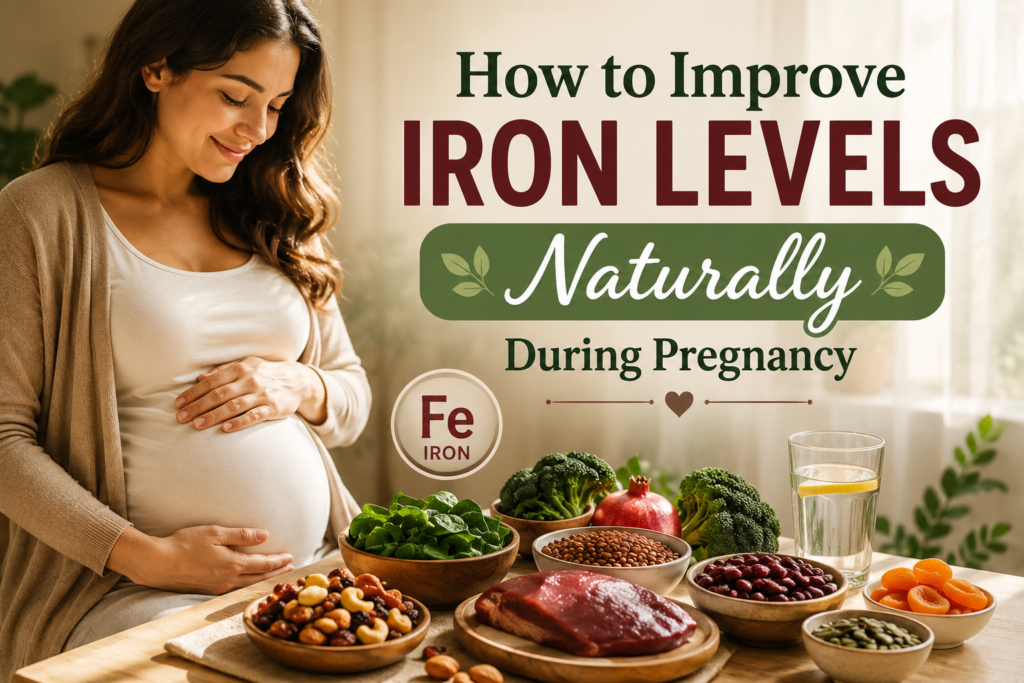
How to Improve Iron Levels Naturally During Pregnancy
Iron is one of the most important nutrients during pregnancy because the body needs it to produce hemoglobin, support the expansion of maternal blood volume, and help deliver oxygen to the developing baby. As pregnancy progresses, iron requirements increase substantially, making it important to pay attention to both dietary iron intake and how effectively the body absorbs it.
The good news is that many everyday foods can contribute meaningful amounts of iron. However, “improving iron levels naturally” does not always mean relying on food alone. If blood tests show iron-deficiency anemia, dietary changes may need to be combined with an iron supplement recommended by an obstetrician, midwife, or other qualified healthcare professional.
According to the NIH Office of Dietary Supplements, the recommended dietary allowance for iron rises to 27 mg per day during pregnancy, compared with 18 mg per day for nonpregnant women ages 19–50. The same source notes that 83.8% of pregnant women in the United States have dietary iron intakes below the estimated average requirement, illustrating how difficult it can be to meet pregnancy needs through diet alone.
Globally, the issue is even more significant. WHO estimates that 35.5% of pregnant women aged 15–49 had anemia in 2023. Anemia has multiple possible causes, but iron deficiency is a major contributor.
This guide explains how to increase iron intake naturally during pregnancy, which foods contain heme and non-heme iron, how vitamin C can improve absorption, which eating habits can interfere with absorption, when supplements may be necessary, and what symptoms should prompt medical evaluation.
Why Iron Is So Important During Pregnancy
Iron plays a central role in producing hemoglobin, the protein in red blood cells responsible for carrying oxygen throughout the body. Pregnancy creates additional demand because the mother’s blood volume expands and the placenta and fetus require oxygen and nutrients.
Iron also supports myoglobin, muscle metabolism, cellular function, physical growth, neurological development, and hormone synthesis. These functions make adequate iron important for both maternal health and fetal development.
During pregnancy, the recommended iron intake is 27 mg per day for women ages 19–50. Teenagers who are pregnant have the same 27 mg daily recommendation. For comparison, the recommendation for nonpregnant women ages 19–50 is 18 mg per day.
When iron stores are insufficient, the body may eventually struggle to produce enough healthy red blood cells. This can result in iron-deficiency anemia.
According to the CDC, pregnant women are more likely to develop iron-deficiency anemia because their bodies require more iron than usual. Anemia can cause tiredness and weakness, while pregnancy-related anemia may also increase the risk of poor fetal growth, preterm birth, and low birth weight.
How Much Iron Do You Need During Pregnancy?
For most pregnant women, the recommended dietary allowance is 27 mg of iron per day.
That number should not be interpreted as a requirement to obtain exactly 27 mg from food every day. Nutritional needs are assessed as part of the overall diet, and absorption varies depending on the form of iron and what foods are eaten with it.
Iron exists in two primary dietary forms:
- Heme iron, found mainly in meat and seafood.
- Non-heme iron, found in plant foods and fortified foods.
Heme iron is generally absorbed more efficiently than non-heme iron. Non-heme iron can still make a substantial contribution to total intake, especially when combined with foods rich in vitamin C.
This distinction is particularly relevant for vegetarians and vegans. Someone avoiding meat can still obtain iron from beans, lentils, tofu, nuts, seeds, leafy green vegetables, and fortified grains, but food combinations and meal timing can become more important.
Signs You May Have Low Iron During Pregnancy
Low iron does not always cause obvious symptoms at first. Mild iron deficiency can develop before significant anemia is present, which is one reason prenatal blood testing is important.
Possible symptoms of iron-deficiency anemia include:
- Unusual or persistent tiredness
- Weakness
- Shortness of breath
- Dizziness or lightheadedness
- Headaches
- Pale skin
- Reduced ability to tolerate normal activity
- Rapid heartbeat or awareness of a racing heart in some cases
However, many pregnancy symptoms overlap with ordinary pregnancy changes. Feeling tired, for example, does not automatically mean you have an iron deficiency.
The CDC notes that people with anemia may feel tired and weak and recommends working with a healthcare provider to identify and treat the underlying cause.
For this reason, symptoms alone should not be used to diagnose iron deficiency. Blood tests are much more useful for determining whether anemia or depleted iron stores are present.
The Difference Between Low Iron Stores and Iron-Deficiency Anemia
The terms “low iron” and “anemia” are sometimes used interchangeably, but they are not exactly the same.
Iron deficiency refers to inadequate iron stores or insufficient available iron. If the deficiency becomes significant enough to impair red blood cell production, iron-deficiency anemia can develop.
A person may therefore have depleted iron stores before developing pronounced anemia.
Healthcare professionals may evaluate hemoglobin and other iron-related laboratory measurements depending on the clinical situation. ACOG identifies iron deficiency and acute blood loss as the two most common causes of anemia during pregnancy and recommends screening and appropriate clinical management.
This distinction matters because simply eating more iron-rich foods may be useful for prevention and general nutrition but may not be sufficient treatment for established anemia.
Best Iron-Rich Foods to Eat During Pregnancy
A practical approach to increasing dietary iron is to include an iron-rich food regularly rather than trying to consume a very large amount occasionally.
Lean Red Meat
Beef and other lean meats provide heme iron, which has relatively high bioavailability.
For pregnant women who eat meat, lean beef can be an efficient way to increase dietary iron. It can be incorporated into meals such as stews, soups, curries, meatballs, or grilled dishes.
Meat should be thoroughly cooked during pregnancy because raw or undercooked meat can increase the risk of foodborne infections such as toxoplasmosis.
Poultry
Chicken and turkey contain iron and can contribute to overall protein and micronutrient intake.
Although poultry generally contains less iron than some red meats, it can still be useful when included as part of a varied pregnancy diet.
Fish and Seafood
Some seafood provides iron along with protein and other nutrients. However, pregnancy dietary choices should also consider mercury exposure and food safety.
Seafood should be selected and prepared according to current pregnancy recommendations, and raw or undercooked seafood should be avoided.
Lentils and Beans
Lentils, chickpeas, kidney beans, black beans, and other legumes are valuable sources of non-heme iron.
They are especially useful for vegetarian and plant-based pregnancy diets because they provide iron alongside protein, fiber, folate, and other nutrients.
A simple meal such as lentils with tomatoes, peppers, or another vitamin-C-rich vegetable can be a practical way to combine iron and an absorption enhancer.
Fortified Breakfast Cereals and Grains
Iron-fortified cereals can be particularly useful because some products contain substantial amounts of iron per serving.
Fortified breads, cereals, and grain products can make an important contribution to dietary iron intake. NIH notes that wheat and other flours are often fortified with iron, making grain products meaningful sources of non-heme iron.
When selecting packaged foods, check the nutrition label rather than assuming that every cereal or bread contains the same amount of iron.
Dark Green Vegetables
Spinach and other leafy green vegetables contain non-heme iron.
They are not necessarily the most concentrated source of absorbable iron on their own, but they can contribute to an overall nutrient-dense pregnancy diet.
Combining leafy greens with vitamin-C-rich foods can help increase the absorption of non-heme iron.
Nuts and Seeds
Nuts and seeds can contribute iron while also providing protein, healthy fats, and other micronutrients.
Examples include pumpkin seeds, sesame seeds, cashews, and other nuts and seeds.
They can be added to oatmeal, yogurt, salads, cooked vegetables, or grain-based meals.
Tofu and Soy Foods
Tofu and other soy foods can be useful sources of plant-based iron and protein.
For vegetarian or vegan pregnant women, incorporating a variety of legumes, soy foods, fortified grains, nuts, and seeds can make it easier to build a balanced iron-containing diet.
Heme Iron vs. Non-Heme Iron: Why It Matters
One of the most important concepts for improving iron intake naturally is that the amount of iron listed in a food is not the same as the amount your body will absorb.
Heme iron, found in animal foods such as meat and seafood, generally has greater bioavailability. Non-heme iron, found primarily in plant foods and fortified foods, is more strongly affected by other components of the meal.
That does not mean plant-based iron is ineffective.
It means meal composition matters.
For example, a bowl containing lentils and vegetables can be nutritionally different from eating lentils alone because vitamin C from certain vegetables can enhance non-heme iron absorption.
Pair Iron-Rich Foods With Vitamin C
Vitamin C is one of the simplest ways to improve the absorption of non-heme iron.
Good vitamin-C-rich foods include oranges, strawberries, kiwi, tomatoes, bell peppers, broccoli, and citrus fruits.
For example, you could combine:
- Lentils with tomatoes
- Chickpeas with bell peppers
- Beans with a tomato-based sauce
- Spinach with strawberries
- Iron-fortified cereal with fruit
- Tofu with broccoli and peppers
The NIH notes that vitamin C enhances non-heme iron absorption.
This is an important practical principle: improving iron absorption is not only about adding more iron-rich foods; it is also about creating meals in which the iron is more readily available to the body.
Foods and Drinks That Can Reduce Iron Absorption
Some components of food can interfere with iron absorption, particularly non-heme iron.
Calcium can reduce iron bioavailability, while compounds such as phytates and certain polyphenols can also affect non-heme iron absorption. The effects vary according to the overall meal and diet, so this does not mean these foods need to be eliminated.
Instead, if you have been diagnosed with iron deficiency, your healthcare professional may suggest paying attention to when you consume iron-rich meals and when you consume calcium-rich foods or beverages.
Tea and coffee can also be relevant because certain polyphenols can inhibit non-heme iron absorption.
A practical strategy is to make your main iron-rich meal distinct from tea or coffee rather than drinking them together.
This does not mean you have to eliminate your favorite beverage. The goal is to improve the nutritional efficiency of your meals without unnecessarily restricting your pregnancy diet.
Does Cooking Affect Iron Absorption?
Food preparation can influence nutrient availability, although the effect varies significantly by food.
For legumes and grains, soaking, sprouting, fermenting, or cooking can influence compounds such as phytates that affect mineral absorption.
However, there is no need to make your diet unnecessarily complicated. Thorough cooking of appropriate foods, a varied diet, and combining plant-based iron sources with vitamin-C-rich foods are more practical strategies for most people.
Pregnancy food safety should remain a priority. Meat, poultry, and seafood should be handled and cooked safely, and fruits and vegetables should be washed appropriately. FDA recommends careful food selection, preparation, and handling during pregnancy because foodborne illness can create serious risks for both mother and baby.
Can a Prenatal Vitamin Help With Iron?
Yes, many prenatal vitamins contain iron and can help pregnant women reach recommended intake levels.
ACOG states that pregnant women need 27 mg of iron per day and notes that this amount can be found in most prenatal vitamins. It also recommends blood testing during pregnancy to check for anemia and says that additional iron may be recommended when anemia is present.
However, prenatal vitamins and therapeutic iron supplements are not necessarily interchangeable.
A prenatal vitamin may be designed to provide routine nutritional support, whereas someone with confirmed iron-deficiency anemia may need a specific iron treatment plan.
WHO recommends daily oral iron and folic acid supplementation during pregnancy, with 30–60 mg of elemental iron and 400 micrograms of folic acid, to reduce maternal anemia and certain adverse pregnancy outcomes. Recommendations can differ according to country, clinical circumstances, and individual health status.
This is why pregnant women should not independently increase iron doses simply because they feel tired.
Why You Should Not Take High-Dose Iron Without Medical Advice
More iron is not automatically better.
The NIH Office of Dietary Supplements lists the tolerable upper intake level for iron during pregnancy as 45 mg per day for individuals in the United States. It also notes that about 27.9% of pregnant women in the U.S. exceed this level when iron from food and supplements is combined.
The upper limit does not mean a healthcare professional can never prescribe more iron. Treatment of confirmed deficiency can involve doses above routine dietary recommendations when medically indicated.
The important point is that high-dose iron should be used for a reason and under appropriate supervision.
Iron supplements can also cause gastrointestinal side effects such as constipation, nausea, abdominal discomfort, or dark stools.
If a supplement is difficult to tolerate, speak with your healthcare professional rather than simply stopping treatment or switching to an unverified “natural iron” product.
Why Liver Is Not a Good Pregnancy Iron Strategy
The liver is famously rich in iron, but it should not be used as a strategy to increase iron during pregnancy.
The problem is its very high vitamin A content in the form of retinol. Excessive preformed vitamin A can harm fetal development.
The NHS advises pregnant women to avoid liver and liver products because they contain high levels of vitamin A.
This is an important example of why pregnancy nutrition cannot be reduced to a single nutrient.
A food can be exceptionally high in one nutrient while still being inappropriate during pregnancy because of another component.
If you want more iron, use pregnancy-safe sources such as lean meat, legumes, fortified grains, nuts, seeds, vegetables, and appropriately selected seafood rather than relying on liver.
Iron-Rich Foods for Vegetarian and Vegan Pregnancy Diets
A plant-based pregnancy diet can provide iron, but careful meal planning becomes especially important because plant foods primarily provide non-heme iron.
Useful choices include lentils, chickpeas, kidney beans, soy foods, tofu, fortified cereals, whole grains, nuts, seeds, and leafy green vegetables.
The key is variety.
Instead of depending heavily on spinach alone, build meals around several iron-containing foods across the day.
For example, breakfast could include an iron-fortified cereal with fruit. Lunch could include chickpeas or lentils with tomatoes and peppers. A snack could include nuts or seeds with fruit. Dinner could include tofu or beans with vegetables and a grain.
The NIH notes that iron supplements may be particularly useful for people following vegetarian or vegan diets because obtaining sufficient iron can be more challenging.
If you follow a strict plant-based diet during pregnancy, discuss your nutritional intake with your prenatal care provider or a registered dietitian, especially if your blood tests show low iron.
A Simple One-Day Iron-Friendly Pregnancy Meal Pattern
A practical iron-supportive meal pattern does not need to be complicated.
For breakfast, consider iron-fortified whole-grain cereal with strawberries or another vitamin-C-rich fruit.
For lunch, try lentil or chickpea curry with tomatoes, peppers, and a whole-grain accompaniment.
For a snack, nuts or pumpkin seeds with fruit can provide additional non-heme iron and other nutrients.
For dinner, lean beef, chicken, tofu, beans, or appropriately selected seafood can form the protein component of a meal alongside vegetables and grains.
Water can be the primary beverage around meals, particularly when the meal is intended to maximize iron absorption.
Tea or coffee can be consumed at another time rather than immediately alongside the iron-rich meal.
The goal is not perfection at every meal. Consistency across days and weeks matters more.
What If Diet Is Not Raising Your Iron Levels?
If you have increased your intake of iron-rich foods but your blood tests remain abnormal, do not assume that you simply need to eat more spinach, beans, or meat.
Persistent low iron can have several possible explanations.
You may have an inadequate intake, reduced absorption, increased requirements, blood loss, or another medical condition contributing to anemia.
Pregnancy itself increases iron requirements, and previous pregnancies, closely spaced pregnancies, heavy menstrual bleeding before pregnancy, restricted diets, gastrointestinal conditions, or certain chronic illnesses can influence iron status.
ACOG emphasizes the importance of identifying the cause of anemia rather than treating every case as though it were automatically iron deficiency.
Your healthcare professional may recommend blood tests and determine whether dietary changes, oral iron, intravenous iron, or another treatment approach is appropriate.
When Should You Talk to Your Doctor or Midwife?
Contact your prenatal care provider if you have persistent fatigue, dizziness, shortness of breath, weakness, unusual paleness, or other symptoms that concern you.
You should also discuss iron with your healthcare professional if:
- You have previously been diagnosed with anemia.
- Your prenatal blood tests show low hemoglobin or other abnormal results.
- You follow a vegetarian or vegan diet.
- You have difficulty tolerating your prenatal vitamins.
- You have a history of significant blood loss.
- You are considering taking a separate iron supplement.
- You are already taking an iron supplement and want to increase the dose.
Severe shortness of breath, fainting, chest pain, a very rapid heartbeat, heavy bleeding, or other serious symptoms require prompt medical assessment rather than self-treatment with food or supplements.
How to Improve Iron Absorption: A Practical Daily Strategy
The most effective natural approach is to think about iron as a combination of intake, absorption, and medical monitoring.
First, include at least one meaningful iron source in your meals throughout the day. Use a combination of animal and plant sources if they fit your diet.
Second, add vitamin-C-rich foods to meals containing non-heme iron.
Third, avoid routinely pairing tea or coffee with your main iron-rich meal if your iron stores are low.
Fourth, pay attention to calcium timing if your healthcare professional has advised you to optimize iron absorption.
Fifth, continue taking your prenatal vitamin as directed unless your healthcare professional tells you otherwise.
Finally, use blood testing rather than symptoms alone to determine whether your iron status is improving.
This approach is much more reliable than relying on internet claims about a single “superfood” for anemia.
The Bottom Line: Improving Iron Levels Naturally During Pregnancy
The best natural strategy for supporting iron levels during pregnancy is not a single food or supplement. It is a combination of adequate dietary intake, improved absorption, appropriate prenatal nutrition, safe food choices, and regular medical monitoring.
Pregnancy increases the recommended iron intake to 27 mg per day, and iron deficiency remains a major contributor to anemia worldwide. WHO’s latest available global estimate indicates that 35.5% of pregnant women aged 15–49 experienced anemia in 2023.
Build meals around iron-rich foods such as lean meat, poultry, seafood, lentils, beans, tofu, nuts, seeds, leafy greens, and iron-fortified grains. Pair plant-based iron sources with vitamin-C-rich foods to improve non-heme iron absorption.
At the same time, remember that pregnancy nutrition involves safety as well as nutrition. Liver, for example, should not be used as an iron remedy because its high vitamin A content can be harmful during pregnancy.
If blood tests confirm anemia or significant iron deficiency, food alone may not be enough. Work with your prenatal care provider to determine whether you need additional iron, what form and dose is appropriate, and whether another cause of anemia needs to be investigated.
Frequently Asked Questions
How can I increase my iron levels naturally during pregnancy?
Eat iron-rich foods regularly, including lean meat, beans, lentils, tofu, fortified grains, nuts, seeds, and leafy green vegetables. Pair plant-based iron sources with vitamin-C-rich foods to improve absorption. If blood tests show anemia or significant iron deficiency, dietary changes may need to be combined with medical treatment.
What foods are highest in iron during pregnancy?
Good options include lean red meat, seafood, poultry, beans, lentils, tofu, fortified breakfast cereals, nuts, seeds, and certain vegetables. Animal foods generally provide more bioavailable heme iron, while plant foods provide non-heme iron.
Is 27 mg of iron enough during pregnancy?
The recommended dietary allowance for pregnancy is 27 mg of iron per day for women ages 19–50. However, someone with diagnosed iron-deficiency anemia may need a higher therapeutic dose prescribed or recommended by a healthcare professional.
Can vitamin C increase iron absorption?
Yes. Vitamin C enhances the absorption of non-heme iron, which is the form primarily found in plant foods and fortified grains. Pairing beans, lentils, tofu, or leafy greens with foods such as tomatoes, peppers, strawberries, oranges, or broccoli can therefore be useful.
Should I drink orange juice with my iron-rich meal?
A vitamin-C-rich food or drink can help non-heme iron absorption. Orange juice is one possible option, although whole fruits and vegetables can also provide vitamin C along with fiber and other nutrients.
Can I eat liver to increase iron during pregnancy?
No. Although the liver is rich in iron, it is also extremely high in preformed vitamin A. Health authorities such as the NHS advise pregnant women to avoid liver and liver products because excessive vitamin A can harm the developing baby.
Can I improve low iron without taking supplements?
Sometimes diet can help prevent or improve mild dietary insufficiency, but confirmed iron-deficiency anemia may require supplementation. Whether supplements are necessary depends on blood-test results, the severity of deficiency, symptoms, diet, and individual medical circumstances.
What happens if I have low iron during pregnancy?
Low iron can progress to iron-deficiency anemia. Anemia can cause symptoms such as tiredness and weakness, and pregnancy-related anemia is associated with risks including poor fetal growth, preterm birth, and low birth weight.
Does tea reduce iron absorption?
Certain compounds in tea can interfere with non-heme iron absorption. If you have low iron, consider drinking tea separately from your main iron-rich meals rather than consuming it at the same time.
Can vegetarians get enough iron during pregnancy?
Yes, but careful dietary planning is important. Lentils, beans, chickpeas, tofu, fortified cereals, nuts, seeds, and leafy green vegetables can provide non-heme iron. Pairing these foods with vitamin C can improve absorption. Your healthcare provider may also recommend an iron-containing prenatal supplement based on your nutritional intake and blood tests.
Can prenatal vitamins prevent iron deficiency?
Prenatal vitamins containing iron can help increase iron intake, and many prenatal vitamins provide substantial amounts of iron. However, they are not necessarily sufficient to treat established iron-deficiency anemia. ACOG recommends blood testing during pregnancy and additional iron when anemia is identified.
When should I get tested for anemia during pregnancy?
Routine prenatal care commonly includes blood testing for anemia. Your healthcare professional may recommend additional testing if you have symptoms, risk factors, or previously abnormal results. Follow the screening schedule recommended by your prenatal care provider.
Is it safe to take extra iron during pregnancy?
Iron is essential during pregnancy, but high-dose supplementation should not be started without professional advice. Excessive iron can cause side effects and is not appropriate for everyone. Discuss the correct dose and type of iron supplement with your doctor, midwife, or other qualified healthcare professional.