
Croup in Children: Symptoms, Causes, and Treatment
Croup in Children: Symptoms, Causes, and Treatment
Croup is a common respiratory illness in young children that can cause a distinctive barking cough, hoarse voice, and noisy breathing. It often begins like an ordinary cold but can become more noticeable at night when swelling around the upper airway makes breathing more difficult.
For most children, croup is mild and improves within a few days. However, swelling of the larynx and upper trachea can occasionally become significant enough to cause breathing difficulty. Recognizing the characteristic symptoms—and knowing when a child needs urgent medical attention—is therefore important for parents and caregivers.
Current evidence indicates that croup primarily affects children between about 6 months and 3 years of age. A 2026 clinical review estimates approximately 352,000 croup cases annually in the United States and reports that croup accounts for about 1.4% of pediatric emergency department visits in a large epidemiologic study. Around 3% of children presenting to an emergency department with a croup are hospitalized.
This guide explains what croup is, what causes it, the symptoms parents should watch for, how doctors diagnose it, available croup treatment options, safe home care, and the warning signs that require urgent medical evaluation.
Medical disclaimer: This article is for general educational purposes and does not replace examination, diagnosis, or treatment by a qualified healthcare professional. Breathing difficulty in a child can become serious quickly. If a child is struggling to breathe, becoming unusually sleepy, developing blue or gray lips or skin, or having difficulty swallowing, seek emergency medical care.
What Is a Croup in Children?
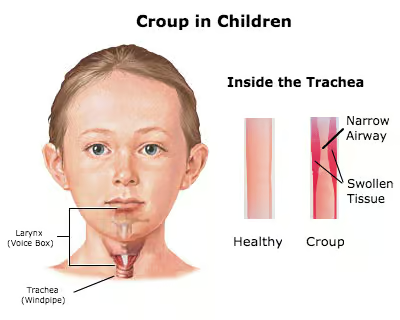
Croup is an infection and inflammation of the upper respiratory tract, particularly the larynx (voice box) and trachea (windpipe). The medical terms laryngotracheitis and laryngotracheobronchitis are sometimes used within the broader croup spectrum.
The inflammation causes swelling around the upper airway. Because young children’s airways are relatively narrow, even a modest amount of swelling can substantially increase resistance to airflow.
This explains why a child with croup may suddenly develop:
- A harsh, barking cough
- A hoarse or croaky voice
- Stridor, which is a high-pitched or harsh sound when breathing in
- Difficulty breathing when the illness becomes more severe
Croup commonly follows several days of cold-like symptoms. Symptoms may become particularly prominent during the evening or overnight. NHS guidance notes that symptoms are often worse at night, while pediatric hospital guidance describes symptoms commonly peaking during the first 1 to 3 days before gradually improving.
The characteristic barking cough occurs because inflammation and swelling affect the area around the larynx and upper trachea.
How Common Is Croup?
Croup is one of the more common acute respiratory illnesses in young children. Earlier epidemiologic literature has estimated that approximately 3% of children experience croup, particularly between 6 months and 3 years of age. A newer 2026 evidence review reports an annual U.S. incidence of approximately 352,000 cases and identifies the peak age range as 6 months to 3 years, with an average age of about 2.5 years.
Most cases are not severe. Historical clinical data suggest that approximately 85% of children presenting with croup have mild disease, while severe cases represent a small minority.
This distinction matters because a barking cough alone does not necessarily mean a child is in danger. The child’s breathing effort, presence of stridor at rest, alertness, hydration, and overall appearance are more important indicators of severity.
What Causes Croup in Children?
Croup is usually caused by a viral infection. Human parainfluenza viruses are strongly associated with croup, although several respiratory viruses can cause the illness.
The CDC states that human parainfluenza viruses commonly cause mild respiratory infections but can also cause more serious illnesses in children, including croup.
Other viruses associated with croup can include influenza viruses, respiratory syncytial virus (RSV), adenoviruses, rhinoviruses, enteroviruses, and some coronaviruses.
The exact virus does not always need to be identified because testing usually does not change treatment for typical croup.
Why Does a Viral Infection Cause the Barking Cough?
When a respiratory virus infects the upper airway, the tissues around the larynx and trachea become inflamed. Swelling narrows the airway.
In an adult, the same degree of swelling may produce relatively little airflow restriction because the airway is larger. In a toddler, however, the airway is much narrower. Consequently, relatively small changes in airway diameter can produce noticeable breathing symptoms.
This is why croup is particularly common in toddlers and preschool-aged children.
Risk Factors for Croup
Any young child can develop croup after exposure to a respiratory virus. Some characteristics make the typical presentation more likely.
Age is one of the strongest factors. Croup occurs most commonly between 6 months and 3 years and becomes less common as children grow because the airway becomes larger. It can still occur in older children, but significant upper-airway symptoms are less typical after early childhood.
Seasonal respiratory-virus circulation also affects croup patterns. Croup often increases during autumn and early winter, although seasonal patterns vary by location and circulating viruses.
Exposure to other children can increase the opportunity for respiratory-virus transmission, particularly in daycare, preschool, and school environments.
Some children also experience recurrent croup. Repeated episodes do not necessarily mean that something is seriously wrong, but frequent or atypical episodes deserve discussion with a pediatrician. Recurrent croup can occasionally be associated with underlying airway abnormalities or other conditions.
Croup Symptoms: What Does Croup Sound and Look Like?
The symptoms of croup can initially resemble an ordinary cold. A child may have a runny nose, mild fever, sore throat, congestion, or a cough.
The distinctive symptoms usually become easier to recognize as the illness progresses.
1. Barking Cough
The classic croup cough is often described as sounding like a seal or dog barking. It is typically harsh, dry, and noticeably different from an ordinary cold cough.
This barking quality is one of the most recognizable features of croup.
2. Hoarse or Croaky Voice
Inflammation around the larynx can make the child’s voice sound hoarse, rough, or unusually low.
A child may also cry or speak differently because the vocal cords and surrounding tissues are inflamed.
3. Stridor
Stridor is a harsh, high-pitched or raspy noise that occurs when air moves through a narrowed upper airway.
It is particularly important to distinguish between stridor occurring only when a child is upset and stridor occurring while the child is calm.
Stridor only with crying or agitation may occur with milder disease. Stridor that is persistent while the child is resting can indicate more significant airway narrowing and warrants prompt medical assessment.
4. Breathing Difficulty
As airway swelling increases, a child may begin working harder to breathe.
Parents may notice:
- Faster breathing
- Pulling in around the ribs or neck
- Increased movement of the abdomen during breathing
- Difficulty speaking or crying normally
- Restlessness or agitation
- Difficulty drinking because of breathlessness
These signs are more important than the sound of the cough alone when determining whether urgent care is necessary.
5. Fever and Cold Symptoms
A child with croup may have a low-grade fever, runny nose, congestion, sore throat, or reduced appetite.
However, fever is not required for croup. A barking cough and stridor can occur without a significant fever.
Why Is Croup Worse at Night?
Many parents notice that their child’s croup symptoms suddenly become more pronounced during the night.
This is a recognized feature of croup. NHS and pediatric hospital guidance specifically notes that symptoms are commonly worse at night.
Several factors may contribute, including normal nighttime changes in airway physiology, the progression of inflammation during the illness, and the child’s position and level of activity.
Regardless of the mechanism, nighttime worsening is one reason parents should monitor a child with croup carefully during the first few nights.
If the child develops persistent stridor at rest or obvious breathing difficulty, do not assume that nighttime worsening is simply a normal part of croup.
Croup Severity: Mild, Moderate, and Severe
Doctors generally assess croup severity based on breathing rather than the intensity of the cough alone.
Mild Croup
A child with mild croup may have a barking cough and hoarse voice but breathe comfortably while resting.
Stridor may occur when the child cries, coughs, or becomes upset, but there is no significant increased work of breathing.
Many children with mild croup can be managed at home after appropriate clinical assessment.
Moderate Croup
Moderate croup may involve stridor even when the child is calm, along with increased work of breathing.
The child may breathe faster, pull in around the ribs or neck, or appear more distressed.
Moderate croup requires medical assessment because airway swelling can progress.
Severe Croup
Severe croup involves significant airway obstruction and respiratory distress.
Warning signs include pronounced chest or neck retractions, persistent or worsening stridor, severe agitation followed by exhaustion, difficulty speaking or feeding, unusual sleepiness, pale or blue/gray skin, or reduced responsiveness.
Severe breathing difficulty is an emergency.
A 2025 pediatric review emphasizes that mild croup is generally self-limited, while severe croup requires acute medical intervention and may require hospitalization.
When Should Parents Seek Emergency Care for a Croup?
Parents should seek emergency medical care immediately if a child is struggling to breathe.
Emergency warning signs include:
- Severe or rapidly worsening difficulty breathing
- Stridor that is persistent while the child is resting
- Significant pulling in of the chest, ribs, or neck
- Blue, gray, pale, or markedly mottled lips or skin
- Difficulty speaking, crying, eating, or drinking because of breathlessness
- Drooling or difficulty swallowing
- Unusual sleepiness, confusion, limpness, or difficulty waking
- Pauses in breathing
- Severe agitation that cannot be calmed
- A child who appears exhausted after struggling to breathe
NHS guidance specifically recommends emergency evaluation for children who are struggling to breathe, becoming unusually sleepy, developing blue/gray/pale discoloration, becoming limp or unresponsive, or having increased drooling with difficulty swallowing.
Parents should also avoid forcing a distressed child to lie down. Keeping a child calm and in a comfortable upright position while arranging medical care can be helpful.
How Is Croup Diagnosed?
Croup is usually a clinical diagnosis.
A pediatrician or emergency clinician typically considers:
- The child’s age
- The characteristic barking cough
- Presence and timing of stridor
- Breathing effort
- Voice changes
- Recent cold-like symptoms
- Fever and general appearance
- Hydration and ability to drink
- Medical and respiratory history
Routine blood tests, throat cultures, and imaging are generally unnecessary for typical croup. The 2026 American Family Physician evidence review states that radiography and laboratory testing are not typically required when the presentation is characteristic.
Testing may be considered when the child’s symptoms are unusual or the clinician suspects another diagnosis.
Conditions That Can Look Like Croup
Not every barking cough or noisy breath is croup.
Important conditions that can produce similar upper-airway symptoms include epiglottitis, bacterial tracheitis, foreign-body aspiration, allergic airway swelling, and other structural airway problems.
Croup vs Bronchiolitis
Bronchiolitis primarily affects the smaller airways and is especially common in infants. Wheezing, rapid breathing, feeding difficulty, and increased work of breathing are common features.
Croup, in contrast, characteristically produces a barking cough, hoarseness, and inspiratory stridor.
Croup vs Asthma
Asthma generally produces wheezing, particularly during exhalation, rather than the classic barking cough and inspiratory stridor of croup.
A child can have both conditions, so recurrent respiratory symptoms should be evaluated rather than automatically attributed to croup.
Croup vs Epiglottitis
Epiglottitis is uncommon but potentially life-threatening. A child with severe illness, drooling, difficulty swallowing, a muffled voice, and significant breathing difficulty requires emergency evaluation.
Parents should not attempt to examine the throat of a severely distressed child with suspected epiglottitis.
Croup vs Foreign-Body Aspiration
A sudden onset of coughing, choking, or breathing difficulty—especially while eating or playing with small objects—can suggest an inhaled foreign body rather than a viral illness.
This situation requires urgent medical assessment.
Croup Treatment: What Helps?
Treatment depends on the severity of symptoms.
Corticosteroids
Corticosteroids are the main medical treatment for croup because they reduce airway inflammation and swelling.
Dexamethasone is commonly used. A 2026 clinical review identifies corticosteroids as first-line therapy and notes that dexamethasone is commonly administered as a single dose.
The exact dose and route should be determined by a healthcare professional based on the child’s clinical situation.
Evidence supporting corticosteroids is substantial. A 2023 Cochrane review included 45 randomized controlled trials involving 5,888 children and concluded that glucocorticoids improve croup symptoms, reduce return visits, and shorten hospital stays.
This is important because parents sometimes assume that medication is unnecessary if the croup appears mild. Clinical evidence supports corticosteroid use across croup severity categories when prescribed appropriately.
Nebulized Epinephrine
Nebulized epinephrine may be used in children with moderate to severe croup.
It can rapidly reduce upper-airway swelling and improve breathing symptoms, but its effects are relatively short-lived. Children receiving nebulized epinephrine are therefore generally observed after treatment to make sure symptoms do not recur.
The 2026 AAFP review recommends nebulized epinephrine for moderate to severe croup and notes that children should be monitored for approximately 2 to 4 hours after treatment because of the medication’s short duration of action.
Oxygen and Hospital Care
Children with significant respiratory distress or low oxygen levels may require oxygen and hospital monitoring.
In severe cases, clinicians may need to provide additional airway support. Fortunately, most children with croup do not progress to respiratory failure.
Can Croup Be Treated at Home?
Mild croup can often be managed at home after a clinician has assessed the child or provided appropriate guidance.
The goal of home care is to keep the child comfortable, hydrated, and calm while monitoring for deterioration.
Keep the Child Calm
This is particularly important.
Crying and agitation can increase airflow turbulence through a narrowed upper airway and make stridor more noticeable.
Hold the child, speak calmly, and avoid unnecessary procedures that make them frightened.
Keep the Child Upright
If the child is comfortable sitting upright, allow them to remain in that position.
Do not force a child with breathing difficulty to lie flat.
Encourage Fluids
Offer frequent small amounts of fluid.
Hydration is particularly important if fever, rapid breathing, or poor appetite is present.
If a child is too breathless to drink safely, that is a warning sign requiring medical assessment rather than something to manage by repeatedly encouraging fluids.
Treat Fever or Discomfort
Paracetamol/acetaminophen or ibuprofen may be appropriate for fever or discomfort depending on the child’s age, health status, and dosing instructions.
Parents should use the correct pediatric dose and avoid giving medicines that are inappropriate for the child’s age.
Does Steam Help Croup?
Steam inhalation is not recommended as a routine treatment for croup.
Despite the longstanding belief that humidified or steamy air helps, evidence has not demonstrated a reliable clinical benefit. More importantly, hot steam creates a real risk of burns.
NHS guidance specifically advises against placing children in a steamy environment for croup.
Parents should therefore avoid bowls of boiling water, steam inhalation devices, or other methods that could cause scalding.
Are Cough Syrups Safe for Children With Croup?
Cough medicines are generally not useful for treating the airway inflammation responsible for croup.
Some cough medicines can cause drowsiness, which is particularly undesirable in a child whose breathing needs to be monitored.
Pediatric guidance recommends against routine cough syrup use for young children with croup.
Parents should also avoid giving adult cough or cold medicines to children unless specifically instructed by a healthcare professional.
Do Antibiotics Treat Croup?
Usually, no.
Typical croup is caused by viruses, so antibiotics do not treat the underlying infection.
The CDC emphasizes that antibiotics do not work against viral respiratory infections, while pediatric croup guidance notes that antibiotics are not normally prescribed for uncomplicated croup.
Antibiotics may be considered only if a clinician identifies a separate bacterial infection or an alternative diagnosis.
How Long Does Croup Last?
Croup often develops over several days and is typically most noticeable during the first few days.
Many children improve substantially within approximately 48 hours, although a mild cough can continue for around a week or sometimes longer.
The exact duration varies by child and severity.
A child who initially improves but then develops worsening breathing difficulty, persistent fever, dehydration, or other concerning symptoms should be reassessed rather than simply waiting for the illness to end.
Can a Child Get Croup More Than Once?
Yes.
Having croup once does not provide lifelong immunity because different respiratory viruses can cause the condition.
Some children experience multiple episodes during childhood.
However, recurrent croup—particularly frequent episodes, atypical age of presentation, unusually severe symptoms, or symptoms that persist—may warrant additional evaluation.
A 2026 clinical review recommends considering underlying anatomic abnormalities or medical conditions when croup repeatedly recurs.
Depending on the clinical history, a pediatrician may consider referral to pediatric pulmonology, otolaryngology, or another specialist.
Recurrent Croup: When Does It Need Further Evaluation?
Parents should mention repeated croup episodes to their child’s pediatrician.
Evaluation becomes particularly relevant when:
- Croup occurs several times a year
- Episodes are unusually severe
- Symptoms occur outside the typical age range
- The child has persistent stridor between illnesses
- Symptoms do not follow the usual improvement pattern
- The child has a history of airway surgery or intubation
- There are feeding, swallowing, or chronic breathing problems
Potential contributing factors can include airway narrowing, congenital airway abnormalities, inflammation, or other medical conditions.
Recurrent croup should therefore not automatically be treated as repeated ordinary viral infections without considering the broader clinical history.
Can Croup Be Prevented?
There is no guaranteed way to prevent every episode of viral croup.
Because viruses commonly cause croup, measures that reduce respiratory-virus transmission can help reduce exposure.
Useful practices include regular handwashing, avoiding close contact with people who are actively ill when practical, improving ventilation in crowded indoor settings, and following recommended childhood immunizations.
The CDC recommends hand hygiene, avoiding face touching, and reducing close contact with people who are sick as ways to reduce transmission of human parainfluenza viruses.
There is no supplement, special food, or home remedy proven to prevent croup reliably.
Croup in Babies and Very Young Infants
Croup is most common after infancy, particularly from approximately 6 months to 3 years. A very young infant with noisy breathing should therefore be assessed carefully because other causes of respiratory distress may need to be considered.
Any infant with significant breathing difficulty, poor feeding, blue or gray discoloration, unusual sleepiness, pauses in breathing, or rapidly worsening symptoms requires urgent medical evaluation.
Age alone should never be used to determine that breathing symptoms are harmless.
Croup and Daycare or School
A child with croup may need to stay home while they are unwell, particularly if they have fever, significant coughing, breathing symptoms, or cannot participate comfortably in normal activities.
Because the underlying cause is usually viral, good respiratory hygiene is important to reduce transmission.
The child can generally return to normal activities when they are clinically improved and able to participate normally, subject to local daycare or school policies.
Parents should prioritize breathing status and overall wellbeing rather than simply waiting for the cough to disappear completely.
Croup and the Child’s Sleep
Nighttime symptoms can be especially stressful for parents.
A child with mild croup may sleep better with a caregiver nearby, provided the caregiver continues monitoring for worsening symptoms.
However, parents should not rely on sleep position or home remedies if a child is developing respiratory distress.
If the child is unusually sleepy because of exhaustion, difficulty to wake, struggling to breathe, or showing color changes, emergency medical assessment is required.
What Parents Should Monitor During a Croup Episode
The most useful observations are not simply how loud the cough sounds.
Parents should monitor whether the child:
- Is breathing comfortably while resting
- Has stridor while calm
- Is pulling in around the ribs or neck
- Can drink normally
- Is producing normal urine
- Remains alert and responsive
- Has normal skin and lip color
- Is becoming increasingly tired or distressed
- Is getting better or worse over time
A loud barking cough can sound frightening while the child’s breathing remains comfortable. Conversely, a quieter child with severe fatigue or reduced responsiveness may be more concerning even if the cough does not sound dramatic.
When Should You Call a Pediatrician for a Croup?
Medical advice is appropriate when you suspect croup, particularly for younger children or when symptoms include stridor.
A pediatric evaluation is especially important if:
- The child has noisy breathing
- Symptoms are worsening
- The child has recurrent croup
- The child is drinking poorly
- Fever is persistent or concerning
- The diagnosis is uncertain
- The child has another chronic medical condition
- You are unsure whether the breathing sound is stridor or wheezing
A clinician can determine the severity and decide whether corticosteroid treatment is appropriate.
Croup Treatment: What the Evidence Says
Modern croup management is supported by a substantial evidence base.
The 2023 Cochrane review analyzed 45 randomized controlled trials involving 5,888 children and found that glucocorticoids improved symptoms within hours, reduced return visits, and shortened hospital stays.
The 2026 AAFP evidence review identifies corticosteroids as first-line treatment and recommends nebulized epinephrine for moderate to severe croup.
These findings have shifted management away from relying primarily on humidification or other traditional home remedies and toward evidence-based anti-inflammatory treatment when clinically indicated.
A 2024 population-based study of children under 5 also documented changing treatment patterns from 2002 through 2019, including declining antibiotic and oxygen use and increased use of nebulized epinephrine.
Key Takeaway
Croup is a common childhood respiratory illness, especially in children between 6 months and 3 years of age. Its hallmark features are a barking cough, hoarse voice, and sometimes inspiratory stridor. Most cases are mild and improve over several days, but airway swelling can occasionally become severe.
The most important issue for parents is recognizing changes in breathing. Stridor while resting, significant chest retractions, difficulty drinking or speaking, blue or gray discoloration, unusual sleepiness, drooling with difficulty swallowing, or severe respiratory distress should prompt urgent medical attention.
For children who require medical treatment, corticosteroids such as dexamethasone are the evidence-supported mainstay of therapy, while nebulized epinephrine can be used for moderate to severe cases under medical supervision.
Parents should avoid steam inhalation and unnecessary cough medicines and should focus on keeping the child calm, comfortable, hydrated, and appropriately monitored.
Most importantly, a frightening-sounding barking cough does not automatically mean severe disease—but breathing difficulty should always be taken seriously.
Frequently Asked Questions
1. What are the first signs of croup in a child?
Croup often begins with cold-like symptoms such as a runny nose, congestion, mild fever, and cough. A distinctive barking cough, hoarse voice, and noisy breathing may develop as inflammation around the upper airway increases.
2. What does a croup cough sound like?
A croup cough is typically harsh and barking and is often described as sounding like a seal or dog. The sound results from inflammation and narrowing around the larynx and upper trachea.
3. Is croup dangerous for children?
Most croup cases are mild and resolve without complications. However, severe airway swelling can cause significant breathing difficulty. Persistent stridor at rest, chest retractions, color changes, exhaustion, or reduced responsiveness are emergency warning signs.
4. How long does a croup usually last?
Symptoms commonly peak during the first 1 to 3 days and then improve. Many children are substantially better within approximately 48 hours, although a mild cough can continue for about a week or longer.
5. Is croup caused by a virus?
Yes. Croup is usually caused by a viral respiratory infection. Human parainfluenza viruses are strongly associated with croup, although several respiratory viruses can cause it.
6. Does croup require antibiotics?
Usually not. Typical croup is viral, and antibiotics do not treat viral infections. Antibiotics may be appropriate only if a clinician identifies a separate bacterial infection or another diagnosis.
7. Does dexamethasone help croup?
Yes. Corticosteroids such as dexamethasone reduce airway inflammation and are considered first-line medical treatment for croup. Evidence from randomized controlled trials supports their ability to improve symptoms and reduce return visits and hospital stays.
8. When is nebulized epinephrine used for croup?
Nebulized epinephrine is generally used for moderate to severe croup when significant upper-airway narrowing is causing stridor or respiratory distress. Because its effect can wear off, children receiving it are usually observed afterward.
9. Does steam help a child with croup?
Steam is not recommended as a routine treatment for croup. There is insufficient evidence of meaningful benefit, and hot steam can cause serious burns in children.
10. Should a child with a croup sleep upright?
A child with a croup should be allowed to remain in a comfortable position, and an upright position may make breathing easier. However, parents should not rely on positioning if the child is experiencing significant breathing difficulty.
11. Why does croup get worse at night?
Croup symptoms commonly become more noticeable at night. The exact reasons are not completely established, but nighttime worsening is a recognized feature of the illness.
12. Can a child get a croup more than once?
Yes. Different respiratory viruses can cause croup, so having one episode does not prevent future episodes. Frequent or unusually severe recurrent croup should be discussed with a pediatrician because some children may have an underlying airway or medical condition.
13. What is stridor in a child?
Stridor is a harsh, high-pitched or raspy sound that usually occurs when a child breathes in. In croup, it results from narrowing of the upper airway. Stridor while a child is resting is more concerning than stridor that occurs only when crying or upset.
14. When should I take my child to the emergency room for a croup?
Seek emergency care if your child is struggling to breathe, has persistent stridor at rest, has severe chest or neck retractions, becomes blue or gray around the lips or skin, cannot drink because of breathlessness, is unusually sleepy or difficult to wake, or has drooling with difficulty swallowing.
15. Can croup turn into pneumonia?
Croup itself is an upper-airway viral illness and is different from pneumonia. A child who develops new or persistent high fever, worsening cough, rapid breathing, chest pain, or other concerning symptoms should be reassessed because another respiratory infection or complication may be present.
16. Is croup contagious?
Because croup is usually caused by respiratory viruses, the underlying infection can spread from person to person. Hand hygiene, avoiding close contact with people who are sick, and respiratory hygiene can help reduce transmission.
17. Can babies get croup?
Yes, although croup is most common in older infants and toddlers. Significant breathing problems in very young babies require careful medical assessment because other causes of respiratory distress must also be considered.
18. Does recurrent croup mean a child has asthma?
Not necessarily. Asthma and recurrent croup are different conditions. A child with repeated episodes of croup may need evaluation for airway abnormalities or other underlying conditions, depending on the clinical history.
19. Can I give my child cough syrup for croup?
Cough syrup does not treat the airway swelling responsible for croup and is generally not recommended for young children. Some products may cause drowsiness, which can complicate monitoring of a child with breathing symptoms.
20. What is the most important thing to watch for with a croup?
Watch the child’s breathing rather than focusing only on the cough. Persistent stridor, increased work of breathing, chest retractions, difficulty drinking or speaking, unusual sleepiness, and changes in skin or lip color are more concerning than the barking cough itself.