
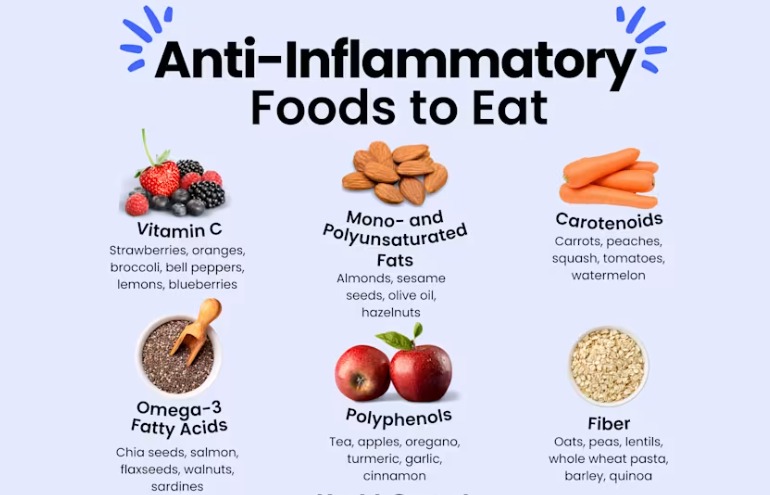
Best Foods to Reduce Inflammation Naturally
Inflammation is a normal biological process that helps the body respond to infection, injury, and other threats. The problem begins when inflammatory activity remains elevated for long periods without resolving. Persistent low-grade inflammation is associated with a range of chronic health conditions, including cardiovascular disease, metabolic disorders, and some neurodegenerative diseases.
Food cannot switch inflammation “off,” and no single ingredient can cure an inflammatory condition. However, dietary patterns can influence inflammatory biomarkers and overall cardiometabolic health. Research increasingly points toward eating patterns rich in vegetables, fruits, legumes, whole grains, nuts, seeds, fish, and unsaturated fats rather than relying on isolated “superfoods.”
A 2025 systematic review and meta-analysis of 33 randomized controlled trials involving 3,476 adults found that a Mediterranean-style diet significantly reduced several inflammatory biomarkers, including high-sensitivity C-reactive protein (hs-CRP), interleukin-6 (IL-6), and interleukin-17 (IL-17), although not every inflammatory marker improved.
That distinction matters. The strongest evidence is generally for an overall dietary pattern rather than one particular food.
This guide explains which foods have the best scientific rationale, how to incorporate them into everyday meals, which foods may be worth limiting, and how to build an anti-inflammatory eating pattern that is realistic enough to maintain throughout the year.
What Is Inflammation and Why Does Diet Matter?
Inflammation is part of the immune system’s defense mechanism. When you get an infection or injury, immune cells and signaling molecules help identify and respond to the problem. Once the threat is controlled, the inflammatory response should generally resolve.
Chronic inflammation is different. It can involve persistent or recurring activation of inflammatory pathways and may accompany conditions such as obesity, insulin resistance, cardiovascular disease, and other chronic illnesses.
Diet can influence several factors connected with inflammation, including body weight, blood glucose regulation, lipid metabolism, oxidative stress, gut microbial activity, and the balance of dietary fats.
However, it is important not to oversimplify the science. A food that contains antioxidants does not automatically produce a clinically meaningful anti-inflammatory effect. Likewise, a reduction in one laboratory biomarker does not necessarily prove that a food prevents a particular disease.
A 2022 systematic review of randomized controlled trials found evidence that Mediterranean dietary patterns could improve several inflammatory markers, but researchers also noted the need for better-designed studies and more consistent protocols.
The practical lesson is straightforward: focus on the quality and pattern of your entire diet rather than searching for one miracle ingredient.
1. Fatty Fish: A Major Source of Omega-3 Fatty Acids
Fatty fish are among the most useful foods to include in an inflammation-conscious eating pattern.Salmon, sardines, mackerel, trout, herring, and anchovies provide the long-chain omega-3 fatty acids EPA and DHA. These fats participate in biological processes involved in immune signaling and inflammation resolution.
The evidence for fish is broader than inflammation alone. Regular consumption of fish can also contribute protein, vitamin D in some species, selenium, and other nutrients.
The key is to consider fish as part of an overall dietary pattern rather than treating omega-3 intake as a guarantee against inflammation.
For practical meals, grilled salmon with vegetables and brown rice, sardines with whole-grain toast and salad, or baked trout with lentils can provide a nutrient-dense combination of protein, unsaturated fats, fiber, and micronutrients.
If you do not eat fish, plant sources such as flaxseed, chia seeds, and walnuts provide alpha-linolenic acid (ALA), another omega-3 fatty acid. The body can convert ALA into EPA and DHA, but the conversion is limited, so plant and marine omega-3 sources should not be considered nutritionally identical.
Internal linking opportunity: A health website can naturally link this section to articles such as “Omega-3 Fatty Acids: Benefits and Food Sources,” “Best Fish to Eat for Heart Health,” or an available nutrition counseling or dietary assessment service page.
2. Extra-Virgin Olive Oil and Other Unsaturated Fats
Extra-virgin olive oil is a defining ingredient of Mediterranean-style eating and provides monounsaturated fat along with phenolic compounds.Research has specifically examined whether olive oil consumption affects inflammatory biomarkers. A 2019 systematic review and meta-analysis of randomized controlled trials found reductions in CRP and IL-6 with olive oil interventions compared with controls.
More recent research continues to investigate the relationship. A 2025 systematic review of 23 randomized controlled trials involving 1,138 participants reported that extra-virgin olive oil was associated with changes in several inflammatory and oxidative-stress biomarkers, including a reduction in CRP compared with low-phenolic olive oil, although the certainty of evidence ranged from moderate to very low and study limitations were present.
Another 2025 meta-analysis examined Mediterranean diets supplemented with olive oil across 15 clinical trials involving 2,477 adults. The researchers reported reductions in IL-6 and CRP/hs-CRP, while also emphasizing substantial heterogeneity between studies.
In everyday cooking, olive oil can replace some butter or other fats. Use it for salad dressings, roasted vegetables, sautéed greens, beans, lentils, and grain dishes.
The important point is replacement. Adding large quantities of olive oil to an already calorie-dense diet is not automatically beneficial. Its advantages are most meaningful when it replaces less favorable sources of fat and forms part of a balanced dietary pattern.
3. Berries for Polyphenols and Dietary Fiber
Berries such as blueberries, strawberries, raspberries, and blackberries provide fiber, vitamin C, and numerous plant compounds, including polyphenols.Their deep red, blue, and purple colors are partly associated with compounds such as anthocyanins. These substances have been investigated for their antioxidant and inflammation-related effects.
Whole berries are preferable to fruit-flavored drinks or heavily sweetened berry products because whole fruit retains its fiber and does not typically deliver the same concentrated free-sugar load found in sweetened beverages.
Frozen berries can also be a practical option. They can be added to plain yogurt, oats, smoothies, or eaten with nuts and seeds.
It is not necessary to buy expensive imported berries. Other locally available colorful fruits can contribute to dietary diversity. Depending on where you live, guava, citrus, pomegranate, apples, plums, or other seasonal fruits may provide valuable nutrients and plant compounds.
WHO recommends that adults and children over age 10 consume at least 400 grams of fruits and vegetables per day.
Internal linking opportunity: Link to “Best Antioxidant-Rich Foods,” “High-Fiber Fruits,” “How Much Fruit Should You Eat Per Day?” and relevant nutrition or dietary planning services.
4. Leafy Green Vegetables
Spinach, kale, mustard greens, collard greens, arugula, and other leafy vegetables are nutrient-dense foods that can make a strong contribution to an anti-inflammatory eating pattern.They provide fiber, folate, vitamin K, carotenoids, vitamin C, and numerous phytochemicals.
The advantage of leafy greens is not that they possess a magical inflammation-fighting compound. Their value comes from the combination of nutrients and their ability to increase overall dietary quality without contributing large amounts of added sugar or saturated fat.
Try adding greens to omelets, soups, lentil dishes, curries, grain bowls, salads, or sandwiches.
For people who dislike raw salads, cooked vegetables may be easier to consume consistently. Frozen spinach, for example, can be incorporated into soups and stews without requiring extensive preparation.
Increasing vegetable intake also makes it easier to displace foods that are high in refined carbohydrates, added sugars, sodium, or saturated fats.
5. Cruciferous Vegetables
Broccoli, cauliflower, cabbage, Brussels sprouts, bok choy, and other cruciferous vegetables contain compounds such as glucosinolates that are metabolized into biologically active compounds.These vegetables also provide fiber and micronutrients.
Rather than focusing on one compound, consider cruciferous vegetables as part of the larger vegetable category recommended by public-health organizations.
Roasted broccoli with olive oil, cabbage added to a lentil curry, cauliflower served alongside fish, or shredded cabbage in a bean salad are simple ways to increase variety.
The broader evidence for fruit and vegetable consumption is stronger than evidence for any single vegetable. WHO notes that fruits and vegetables provide vitamins, minerals, dietary fiber, flavonoids, plant sterols, and other beneficial compounds and recommends more than 400 grams per day as part of a healthy diet.
6. Beans, Lentils, Chickpeas, and Other Pulses
Legumes are one of the most practical foods for building an inflammation-conscious diet.
Beans, chickpeas, lentils, peas, and other pulses provide plant protein, dietary fiber, minerals, and complex carbohydrates.
Their high fiber content can support digestive health and help improve the overall quality of carbohydrate intake.
Legumes can also replace some meals based around processed meats or large quantities of red meat. That replacement effect matters because dietary health depends not only on what you add, but also on what those foods displace.
A lentil soup, chickpea salad, bean curry, hummus with vegetables, or dal served with whole grains can become the foundation of a balanced meal.
WHO recommends pulses such as lentils, chickpeas, beans, and dried peas as important sources of healthier carbohydrates and plant-based protein.
Internal linking opportunity: This section can connect to “High-Fiber Foods for Gut Health,” “Best Plant-Based Protein Sources,” “How to Increase Fiber Without Bloating,” and nutrition counseling pages.
7. Nuts and Seeds
Almonds, walnuts, pistachios, peanuts, chia seeds, flaxseeds, and pumpkin seeds can provide unsaturated fats, fiber, protein, minerals, and plant compounds.Walnuts are particularly notable because they provide ALA omega-3 fatty acids.
Research has investigated whether nut consumption influences inflammation and vascular function. A systematic review and meta-analysis included 32 randomized controlled trials examining nuts and markers such as CRP, adiponectin, TNF-alpha, IL-6, and endothelial function.
Nuts are calorie-dense, so portion size still matters. A small handful can be an appropriate addition to meals or snacks, while eating several large handfuls daily can substantially increase calorie intake.
Choose unsalted or lightly salted varieties when possible, especially if sodium intake is a concern.
Seeds can be added to oatmeal, yogurt, salads, soups, or smoothies.
8. Whole Grains Such as Oats, Barley, and Brown Rice
Whole grains contain the bran, germ, and endosperm and generally provide more fiber and nutrients than refined grains.Examples include oats, barley, brown rice, whole-wheat products, bulgur, quinoa, and other minimally processed whole grains.
The evidence specifically linking whole grains to inflammatory biomarkers is mixed, which is important to acknowledge.
A 2018 meta-analysis of randomized trials found modest improvements in hs-CRP and IL-6 with whole-grain consumption, but substantial heterogeneity existed between studies.
A later systematic review of 31 randomized controlled trials found that 12 of the 31 trials showed a significant reduction in at least one inflammatory marker, with effects appearing more often in people who were overweight or had existing health conditions.
Other meta-analysis findings have been less conclusive, demonstrating why it would be inaccurate to say that whole grains universally reduce inflammation.
Still, whole grains have strong nutritional value and are recommended as major carbohydrate sources by WHO.
9. Avocados
Avocados provide monounsaturated fats, fiber, potassium, folate, and other nutrients.Their role in an anti-inflammatory eating pattern is largely related to the overall nutrient profile rather than evidence that eating avocado alone treats chronic inflammation.
Avocado can replace less favorable spreads or toppings. For example, mashed avocado on whole-grain toast can replace butter-based spreads, while avocado in a bean salad adds texture and unsaturated fat.
Again, portion awareness matters because avocados are energy-dense.
The broader dietary principle is to favor unsaturated plant fats over saturated and trans fats when possible. WHO recommends replacing saturated and trans fats with unsaturated fats from sources such as fish, avocado, nuts, and plant oils.
10. Tomatoes and Other Colorful Vegetables
Tomatoes contain lycopene and other carotenoids, while red peppers, carrots, pumpkin, and sweet potatoes provide carotenoids and other plant compounds.Eating a variety of colors is a simple way to increase the range of phytochemicals in your diet.
Tomatoes are especially versatile. Fresh tomatoes can be used in salads, while cooked tomato-based sauces can form the foundation of vegetable-rich meals.
The objective is not to identify a single “best” vegetable. Variety matters because different plant foods provide different combinations of fiber, vitamins, minerals, and phytochemicals.
A practical goal is to rotate vegetables rather than eating the same two or three every day.
11. Garlic, Onions, and Other Allium Vegetables
Garlic, onions, leeks, and related vegetables contain sulfur-containing compounds and contribute flavor without requiring large quantities of added salt.These foods can make healthy meals more enjoyable, which is an underrated part of sustainable nutrition.
Garlic and onions can be added to lentils, beans, vegetable soups, whole-grain dishes, fish, and stir-fries.
Although laboratory research has identified potentially beneficial compounds in these foods, it would be an exaggeration to claim that eating garlic alone will treat systemic inflammation.
Their best role is as part of a diverse dietary pattern rich in minimally processed plant foods.
12. Green Tea and Unsweetened Tea
Tea contains polyphenols that have been studied for potential antioxidant and metabolic effects.Green tea is particularly rich in catechins such as epigallocatechin gallate (EGCG).
However, the evidence for using green tea specifically as an anti-inflammatory treatment is not strong enough to justify therapeutic claims.
If you enjoy tea, unsweetened green tea can be a useful beverage choice because it provides plant compounds without the added sugars found in many soft drinks and sweetened beverages.
The main benefit may therefore come partly from what tea replaces.
Replacing a sugar-sweetened beverage with unsweetened tea can reduce free-sugar intake while increasing fluid consumption.
13. Fermented Foods and the Gut-Inflammation Connection
Yogurt with live cultures, kefir, kimchi, sauerkraut, and other fermented foods are often included in discussions about inflammation because of their relationship with the gut microbiome.The gut contains a large microbial community that interacts with dietary components and produces metabolites that can influence host physiology.
Dietary fiber is particularly important because certain gut microbes can ferment it into short-chain fatty acids.
However, the microbiome is extremely complex, and evidence does not justify saying that one fermented food will “heal the gut” or eliminate inflammation.
When choosing fermented foods, pay attention to added sugar and sodium. A plain yogurt may be a more suitable everyday choice than a highly sweetened yogurt dessert.
For people with lactose intolerance, fermented dairy products may sometimes be easier to tolerate, but individual responses differ.
14. Dark Chocolate: A Food to Use in Moderation
Dark chocolate contains cocoa polyphenols, which have attracted research interest because of their potential effects on vascular and metabolic pathways.But chocolate is not automatically a healthy food.
Many commercial chocolate products contain substantial amounts of added sugar and saturated fat. The amount of cocoa also varies considerably between products.
If you enjoy dark chocolate, a small portion of a higher-cocoa product can fit into a balanced diet.
The goal is not to consume chocolate specifically to treat inflammation. It is to choose a minimally processed option and keep portions reasonable.
The Mediterranean Diet: The Bigger Picture
The strongest practical lesson from anti-inflammatory nutrition research is that dietary patterns matter more than isolated foods.The Mediterranean diet emphasizes vegetables, fruits, legumes, whole grains, nuts, seeds, fish, olive oil, and other minimally processed foods while generally limiting highly processed foods and excessive amounts of red and processed meat.
A 2025 systematic review and meta-analysis of 33 randomized controlled trials involving 3,476 adults found significant reductions in hs-CRP, IL-6, and IL-17 among people following Mediterranean diets compared with control diets. However, effects were not observed for every inflammatory marker, demonstrating that the evidence is promising but not uniform.
A separate 2025 umbrella review covering 30 systematic reviews and 225 eligible primary studies found that Mediterranean dietary patterns were associated with improvements in inflammatory markers including CRP and IL-6, although certainty varied from high to low.
This makes the Mediterranean-style pattern a more scientifically defensible recommendation than promoting a single “anti-inflammatory food.”
Foods That May Promote an Unfavorable Inflammatory Environment
Reducing inflammation is not only about adding berries, fish, and vegetables.It is also about reducing the frequency of foods that can make the overall dietary pattern less nutritious.
Highly processed foods may be high in refined carbohydrates, sodium, unhealthy fats, and added sugars. WHO notes that diets containing substantial amounts of highly processed foods are associated with negative health outcomes.
Common foods worth limiting include sugar-sweetened beverages, heavily processed snacks, refined baked goods, processed meats, foods high in trans fats, and meals that are consistently high in sodium and saturated fat.
This does not mean that one cookie or one restaurant meal “causes inflammation.”
Dietary patterns develop over weeks, months, and years. Occasional indulgences can fit within an otherwise nutrient-rich eating pattern.
How Much Fruit and Vegetables Should You Eat?
WHO recommends at least 400 grams of fruits and vegetables per day for adults and children over age 10. It also recommends at least 25 grams of naturally occurring dietary fiber per day for this age group.
Four hundred grams may sound complicated, but it does not require weighing every meal.
A practical approach is to include vegetables at lunch and dinner, add fruit to breakfast or snacks, and use legumes regularly.
For example, breakfast could include oats with berries; lunch could include chickpeas and vegetables; dinner could include fish, brown rice, and cooked greens; and fruit could be used as a snack.
The exact quantities should still be adapted to individual energy needs, medical conditions, and dietary preferences.
What Does an Anti-Inflammatory Day of Eating Look Like?
A practical day might begin with oatmeal topped with berries, walnuts, chia seeds, and plain yogurt.Lunch could be a large vegetable and chickpea bowl containing leafy greens, tomatoes, cucumber, carrots, whole grains, and an olive-oil-based dressing.
For an afternoon snack, fruit with a small portion of nuts can provide fiber and unsaturated fats.
Dinner could include grilled salmon, lentils or another whole grain, and several servings of cooked vegetables.
Water, unsweetened tea, or another low-sugar beverage can replace sugar-sweetened drinks.
This approach works because multiple beneficial food groups appear throughout the day rather than relying on one supposed superfood.
How to Make Anti-Inflammatory Eating Affordable
Healthy eating does not have to depend on expensive imported foods.Frozen vegetables can be nutritious and convenient. Beans, lentils, chickpeas, oats, brown rice, seasonal fruits, cabbage, carrots, leafy greens, and locally available fish can form the foundation of a nutrient-dense diet.
In many regions, dried legumes are considerably cheaper per serving than meat.
You also do not need blueberries every day to obtain plant compounds. Seasonal fruits and locally available vegetables provide valuable nutrients and dietary fiber.
The WHO recommendation emphasizes diversity rather than a specific shopping list.
For people in South Asian diets, traditional foods such as dal, chickpeas, beans, vegetables, whole grains, yogurt, nuts, seeds, and fish can fit naturally into an inflammation-conscious eating pattern.
The key is often preparation: increasing vegetables and legumes while reducing excessive frying, refined carbohydrates, added sugars, and highly processed ingredients.
Anti-Inflammatory Eating and Weight Management
Body fat, particularly excess visceral adiposity, is associated with metabolic dysfunction and chronic low-grade inflammation.This does not mean that weight loss is the only path to improving inflammatory health, nor does it mean that a person’s health can be judged by body weight alone.
However, for people with overweight or obesity, improving overall diet quality and achieving clinically appropriate weight reduction can be part of a broader health strategy.
This is another reason dietary patterns are more useful than isolated foods.
A diet centered on vegetables, legumes, whole grains, fruit, fish, nuts, and unsaturated fats can improve nutrient density while helping some people manage calorie intake.
Anti-Inflammatory Foods and Chronic Disease
Inflammation is connected with many chronic conditions, but it is important not to imply that food can independently prevent or cure all of them.
WHO reports that inadequate fruit and vegetable consumption is associated with poorer health and estimates that 3.9 million deaths worldwide were attributable to inadequate fruit and vegetable intake in 2017.
The evidence is strongest for overall healthy dietary patterns and their relationship with cardiovascular and metabolic health.
Therefore, an anti-inflammatory diet should be viewed as one component of preventive healthcare alongside physical activity, adequate sleep, avoiding tobacco, appropriate medical screening, and treatment of diagnosed conditions.
When Food Alone Is Not Enough
Persistent inflammation may sometimes reflect an underlying medical condition.If you have unexplained joint swelling, prolonged fever, persistent digestive symptoms, unexplained weight loss, ongoing fatigue, recurrent infections, or other concerning symptoms, changing your diet should not replace medical evaluation.
Similarly, people with inflammatory diseases such as rheumatoid arthritis, inflammatory bowel disease, or certain autoimmune conditions may need prescription treatment.
Food can complement medical care, but it should not be presented as a substitute for evidence-based treatment.
Anyone taking medication or managing kidney disease, diabetes, heart disease, gastrointestinal disorders, food allergies, or other conditions should discuss significant dietary changes with a qualified healthcare professional.
A Simple Anti-Inflammatory Food Formula
Instead of memorizing dozens of individual foods, use a simple meal-building formula.Start with a large portion of vegetables. Add a source of protein such as fish, beans, lentils, yogurt, eggs, or another suitable protein. Choose a whole-grain or minimally refined carbohydrate when appropriate. Add a source of unsaturated fat such as olive oil, nuts, seeds, or avocado. Finish with fruit when desired.
This approach naturally increases dietary fiber, vitamins, minerals, unsaturated fats, and plant compounds.
It also reduces the need to rely on highly processed convenience foods.
The most important factor is consistency. Eating vegetables, legumes, whole grains, fish, nuts, and fruit occasionally is unlikely to matter as much as making them routine components of your diet.
Final Thoughts
The best foods to reduce inflammation naturally are not necessarily exotic or expensive. Fatty fish, vegetables, berries, legumes, whole grains, nuts, seeds, olive oil, avocados, and other minimally processed foods can form the foundation of a nutrient-rich dietary pattern.
The strongest evidence supports the overall pattern rather than a single food.
Recent research involving thousands of participants has found that Mediterranean-style diets can improve certain inflammatory biomarkers, while evidence for individual foods varies in strength and consistency.
WHO recommends at least 400 grams of fruits and vegetables and at least 25 grams of naturally occurring dietary fiber daily for people over age 10, while emphasizing dietary diversity and limiting foods high in unhealthy fats, free sugars, and sodium.
The practical goal, therefore, is not to follow a restrictive “anti-inflammatory diet” for a few weeks. It is to build an eating pattern you can maintain: more plants, more fiber, healthier fats, adequate protein, regular fish or suitable alternatives, and fewer highly processed foods.
If you have persistent symptoms or a diagnosed inflammatory condition, nutrition should complement—not replace—appropriate medical care.
Frequently Asked Questions
What are the best foods to reduce inflammation naturally?
Foods commonly included in an inflammation-conscious dietary pattern include fatty fish, berries, leafy greens, broccoli, beans, lentils, whole grains, nuts, seeds, olive oil, avocados, and other minimally processed plant foods.
What is the best diet for reducing inflammation?
The Mediterranean dietary pattern has some of the strongest evidence for improving inflammatory biomarkers. A 2025 meta-analysis of 33 randomized controlled trials involving 3,476 adults found significant improvements in hs-CRP, IL-6, and IL-17, although not every inflammatory marker improved.
Do berries reduce inflammation?
Berries provide fiber and polyphenols, including anthocyanins, and can be part of a healthy dietary pattern. However, eating berries should not be described as a treatment or cure for chronic inflammation.
Is olive oil anti-inflammatory?
Research suggests olive oil may influence inflammatory biomarkers. Systematic reviews of randomized trials have reported reductions in markers such as CRP and IL-6, although study results vary and olive oil works best as part of an overall healthy dietary pattern.
Are eggs inflammatory?
There is no sound basis for labeling eggs universally “inflammatory.” Their health effects depend on the individual’s overall diet, health status, preparation method, and what foods they replace.
Are tomatoes good for inflammation?
Tomatoes provide lycopene, carotenoids, vitamin C, and other nutrients. They can easily fit into a healthy, plant-rich eating pattern.
Is oatmeal good for inflammation?
Oats provide beta-glucan fiber and other nutrients. Research specifically examining oats and inflammatory markers has produced mixed results, so oats should be viewed as a nutritious whole grain rather than a guaranteed anti-inflammatory treatment.
How much fruit and vegetables should I eat daily?
WHO recommends at least 400 grams of fruits and vegetables per day for adults and children over age 10.
What foods should I avoid if I have chronic inflammation?
Rather than completely banning individual foods, focus on reducing frequent consumption of highly processed foods, sugar-sweetened beverages, foods high in trans fats, excessive saturated fat, and foods containing excessive sodium or added sugars. WHO recommends limiting free sugars, saturated fats, trans fats, and sodium as part of a healthy diet.
Can changing my diet cure chronic inflammation?
No. Diet can influence health and inflammatory biomarkers, but it should not be presented as a cure for chronic inflammatory diseases. Conditions such as rheumatoid arthritis, inflammatory bowel disease, and autoimmune disorders may require medical diagnosis and treatment.
How quickly can an anti-inflammatory diet work?
There is no universal timeframe. Clinical studies vary considerably in duration, and changes in inflammatory biomarkers do not necessarily occur at the same rate in every person. Sustainable dietary improvements are more important than expecting an immediate result.
Is the Mediterranean diet better than eating individual anti-inflammatory foods?
The evidence generally favors the overall dietary pattern because multiple foods and nutrients interact. Research has found beneficial effects of Mediterranean-style diets on several inflammatory biomarkers, whereas evidence for individual foods is often more limited or inconsistent.
Can I follow an anti-inflammatory diet on a budget?
Yes. Beans, lentils, chickpeas, oats, seasonal vegetables, frozen vegetables, whole grains, seeds, and locally available fruits can provide many of the same dietary principles without requiring expensive specialty foods.
Does inflammation always mean I have a disease?
No. Inflammation is a normal biological response and is essential for healing and immune defense. Persistent or inappropriate inflammation can be associated with disease, but an inflammatory marker alone cannot diagnose a specific condition.
Should I take supplements instead of eating anti-inflammatory foods?
Food should generally be the foundation of a healthy diet. Supplements may be appropriate for specific nutrient deficiencies or medical circumstances, but they should not automatically be considered superior to obtaining nutrients from a varied diet. Discuss supplements with a qualified healthcare professional, particularly if you take medications or have a chronic condition.